Root Rot in Bonsai: Causes, Symptoms, and Treatment

Quick Answer
Root rot in bonsai happens when roots become damaged in persistently wet, poorly aerated soil, sometimes followed by infection from root-rot pathogens. Common signs include yellowing foliage, weak growth, dieback, constantly wet soil, and dark or soft roots. Start by correcting watering and drainage, then inspect the roots if the tree continues declining. For broader symptom troubleshooting, see this bonsai troubleshooting guide.
Common Causes and Warning Signs
- Excess water: Soil remains saturated long enough to reduce oxygen around the roots.
- Poor drainage: Compacted soil or blocked drainage holes keep excess water inside the pot.
- Weak roots: Damaged roots may become dark, limp, soft, or unable to support healthy growth.
- Foliage decline: Leaves may yellow, wilt, drop, or grow poorly as root function declines.
- Root pathogens: Organisms such as Phytophthora can become more troublesome under saturated conditions.
How to Verify the Problem
- Check moisture, drainage, root color, root firmness, and recent watering before assuming every yellow leaf means root rot.
Bonsai root rot can become serious because a bonsai has little spare soil or root volume compared with a landscape tree. A small watering or drainage problem can therefore affect much of the root system quickly.
I approach suspected root rot as a diagnosis problem first, not a repotting emergency. This guide explains what causes it, what the symptoms look like, how to check the roots, and how to help a stressed tree recover.
In This Guide
What Is Root Rot in a Bonsai Tree?
Root rot is deterioration of a tree’s root system that can result from prolonged oxygen-starved conditions, disease organisms, or both. In bonsai, poor drainage and chronically wet substrate are major risk factors.
Roots need both moisture and oxygen. When the air spaces in a pot stay filled with water, healthy root respiration becomes harder.
That distinction matters because overwatering and infectious root disease are related but not identical. A waterlogged tree can suffer root damage without proving that a particular fungus or water mold is present.
- Waterlogging: Excess water displaces air from pore spaces in the substrate.
- Root decline: Stressed roots become less effective at taking up water and nutrients.
- Pathogen pressure: Wet conditions can favor some soil-borne disease organisms.
- Top growth symptoms: Foliage begins showing the effects of the failing root system.
Penn State’s plant-disease guidance notes that dark or limp roots may be associated with overwatering, fertilizer injury, pathogens, and other problems. That’s why root color alone should never be your entire diagnosis.
Shallow bonsai pots make drainage especially important. A well-structured substrate should hold useful moisture while still leaving air around the roots.
The Bonsai Empire soil guide emphasizes granular substrates because good structure improves both drainage and aeration.
Section Takeaway: Root rot isn’t simply “too much water.” The real problem is declining root health, often associated with persistent saturation, poor aeration, and sometimes disease.
What Are the Symptoms of Bonsai Root Rot?
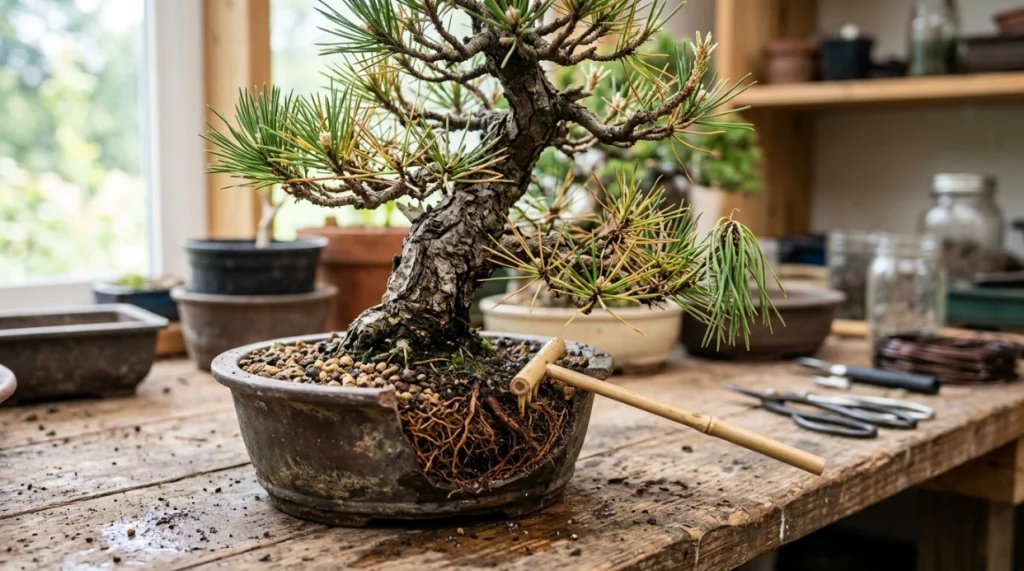
Root rot often causes yellow foliage, weak growth, wilting, branch dieback, and unhealthy roots. However, none of these symptoms proves root rot by itself.
The first clue I look for is a pattern. Declining foliage combined with soil that stays wet for an unusually long time deserves much more attention than one yellow leaf.
Above-Ground Warning Signs
- Yellowing leaves: Several leaves begin losing color outside normal seasonal leaf drop.
- Weak growth: New shoots remain short or fail to develop normally.
- Wilting: The tree looks thirsty even while its soil remains damp.
- Leaf drop: Foliage may fall as root function deteriorates.
- Branch dieback: Severe root damage can eventually affect individual branches.
Root and Soil Warning Signs
Healthy root appearance varies by species, so don’t expect every healthy root system to be bright white. Fine active root tips, firmness, and a healthy root structure are more useful clues.
| Clue | Healthy or Normal | Possible Water Stress | More Concerning for Root Decline |
|---|---|---|---|
| Soil moisture | Moist after watering, then gradually dries | Stays wet longer than expected | Repeatedly saturated with poor drainage |
| Roots | Firm with healthy fine roots | Reduced fine-root activity | Soft, limp, deteriorating roots |
| Foliage | Normal color for species and season | Yellowing or weak growth | Progressive wilt, leaf loss, or dieback |
| Growth | Normal seasonal growth | Slower than expected | Continuing decline despite otherwise suitable care |
Conifers require extra patience. Junipers and pines may show visible symptoms after the damaging event occurred, so don’t make repeated care changes every few days.
What Causes Root Rot in Bonsai?
The most common setup for root trouble is a pot that stays wet and poorly aerated for too long. Watering frequency, substrate structure, drainage, temperature, and tree activity all affect that balance.
1. Watering Too Frequently
Watering by a fixed calendar is risky. A bonsai may need water daily during hot active growth but much less during cool, cloudy, or dormant periods.
Check the substrate before watering. The goal isn’t to keep every particle constantly wet.
2. Compacted or Water-Retentive Soil
Old organic potting soil can collapse and lose air spaces. Water may then move slowly through the root ball.
Granular components such as akadama, pumice, and lava rock are widely used because they help maintain structure. The exact mix should match the species, climate, pot, and your watering habits.
3. Blocked Drainage Holes
Drainage holes can become obstructed by compacted substrate or fine material. Water then remains in the container longer than expected.
A drainage mesh should keep larger particles in the pot without stopping water flow. Also make sure the pot sits where water can leave freely.
4. A Large Soil Mass Around a Weak Root System
A recently collected, heavily root-pruned, or weak bonsai may use water slowly. The same watering routine that suits a vigorous tree may keep a struggling tree too wet.
This is why I watch the tree and substrate together. I don’t decide that every bonsai on one bench needs water simply because the first pot feels dry.
5. Soil-Borne Pathogens
Some root diseases become more damaging under wet conditions. Phytophthora, for example, is a fungus-like water mold associated with root and crown diseases in many woody plants.
The University of Illinois Extension notes that saturated soil favors Phytophthora and that drainage correction is an important part of management.
Section Takeaway: Most bonsai root-rot problems begin with an unhealthy root environment. Correcting moisture, aeration, and drainage matters whether or not a specific pathogen is involved.
How Do You Confirm Root Rot?
Start with the least invasive checks. Look at soil moisture, drainage speed, recent watering, light, temperature, fertilizing, and the pattern of foliage decline.
Check How Long the Soil Stays Wet
Water should pass through an established bonsai substrate instead of sitting on the surface for long periods. Slow drainage suggests compaction, clogged drainage, or a dense root mass.
A wet surface alone doesn’t prove the entire pot is saturated. Check a little deeper without repeatedly disturbing the roots.
Compare Other Possible Causes
- Underwatering: Often comes with dry substrate and rapid wilting or leaf loss.
- Low light: Can produce weak growth and gradual foliage decline.
- Fertilizer injury: High salt concentrations can damage roots.
- Cold damage: Root injury can follow freezing conditions in vulnerable trees.
- Normal seasonality: Deciduous bonsai naturally yellow and shed leaves in autumn.
Inspect the Roots When Necessary
If symptoms continue and the substrate remains problematic, root inspection may be justified. Healthy and diseased roots can differ in firmness, fine-root development, and tissue integrity.
Penn State describes diseased roots as potentially dark, limp, and lacking healthy root tips. Outer tissue may also deteriorate, although only a proper diagnostic test can identify a particular pathogen with confidence.
Pro tip: Removing soil or cutting live roots is irreversible. If the tree is valuable, old, collected, or severely weakened, ask an experienced grower or local bonsai club for hands-on help before disturbing the root ball.
How Do You Treat Root Rot in Bonsai?
Treatment starts by removing the conditions that caused root decline. Don’t automatically reach for fungicide or perform a severe emergency repot without evaluating the tree first.
- Stop automatic watering. Check moisture before watering again.
- Improve drainage. Confirm that drainage holes are open and the pot isn’t sitting in standing water.
- Give appropriate light. Keep the tree in the light conditions required by its species without suddenly scorching a weakened tree.
- Reduce extra stress. Avoid major styling, heavy pruning, or unnecessary wiring while recovery begins.
- Inspect the roots if decline continues. Look for widespread loss of firm, functional roots.
- Repot when necessary and appropriate. Replace unsuitable substrate with an aerated bonsai mix that matches the species and climate.
- Resume fertilizer cautiously. Wait for evidence of active recovery instead of feeding a severely stressed root system.
Should You Cut Off Rotten Roots?
Clearly dead, decomposing root tissue may need removal during a necessary repot. Preserve as much healthy functional root tissue as possible.
Don’t remove roots simply because they’re brown. Species differ in natural root color, and aggressive root pruning can make an already weak tree harder to save.
Should You Use Fungicide?
A fungicide isn’t a universal cure for bonsai root rot. Different pathogens respond to different products, and noninfectious waterlogging won’t be fixed by fungicide.
For valuable specimens with rapidly progressing symptoms, professional diagnosis can be worth the effort. University plant-disease clinics can help distinguish pathogen problems from environmental root damage.
What About Emergency Repotting?
Normal bonsai repotting is often timed around the species’ growth cycle. For many temperate trees, early spring is the standard repotting window.
A genuine emergency may justify action outside the ideal season, but that decision carries risk. A weak tree can struggle after major root disturbance.
For normal timing and substrate principles, the Bonsai Empire repotting guide provides a useful reference.
Pro tip: If an emergency repot requires cutting live roots outside the normal season, get species-specific guidance from an experienced grower or bonsai club before proceeding.
Section Takeaway: Fix the root environment first. Use pruning, repotting, or disease treatments only when the tree’s condition and diagnosis justify them.
How Can You Prevent Root Rot?
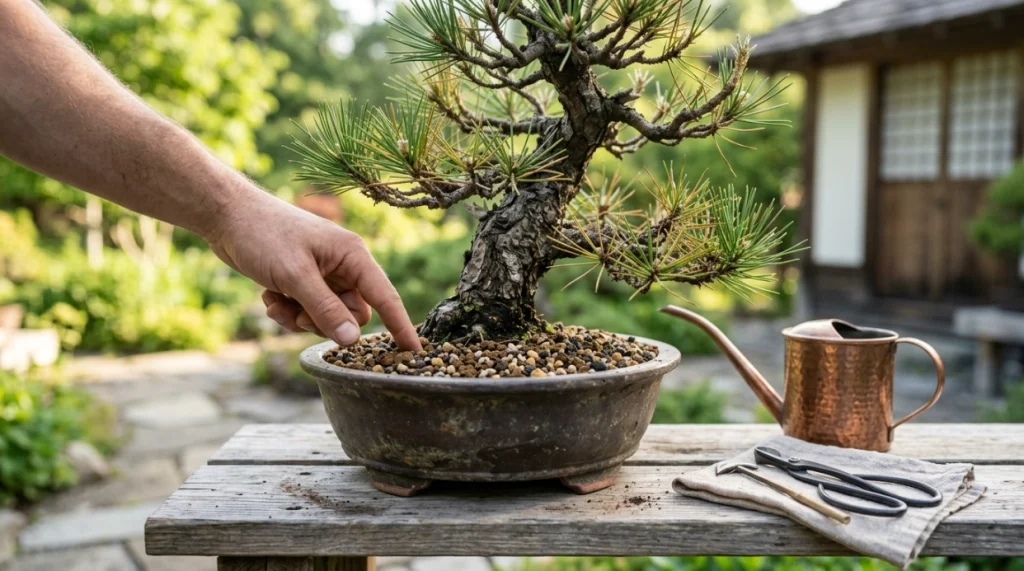
Prevention comes down to balancing water with oxygen. A bonsai substrate should absorb enough moisture for the tree while draining well enough to keep useful air spaces.
Use a Free-Draining Substrate
A common starting mix for many bonsai is equal parts akadama, pumice, and lava rock. That isn’t a universal prescription.
Growers in hot, dry climates may need greater moisture retention. Humid climates and moisture-sensitive species may benefit from faster drainage.
Water the Tree, Not the Calendar
Check each bonsai before watering. Temperature, wind, sunlight, pot depth, foliage mass, and season can change water use dramatically.
- Hot and windy: Substrate can dry much faster.
- Cool and cloudy: Water demand often falls.
- Active growth: A vigorous tree generally uses more moisture.
- Dormancy: Many temperate trees use water more slowly.
- Recently repotted: Water use may differ while roots re-establish.
Keep Pots and Tools Clean
Don’t reuse obviously contaminated substrate around healthy roots. Clean tools after working on diseased or decaying plant material.
Good hygiene becomes even more important when several bonsai share a watering area. Contaminated soil and water movement can spread some plant pathogens.
Learn the Normal Behavior of Your Species
A ficus, Japanese maple, juniper, and azalea don’t respond to stress in identical ways. Species knowledge helps separate root trouble from normal dormancy, old-leaf shedding, or seasonal color changes.
For continuing education and local grower support, the American Bonsai Society maintains educational resources and a directory of bonsai clubs. The National Bonsai & Penjing Museum is another useful reference for serious bonsai enthusiasts.
As of 2026, my preferred prevention strategy remains simple: use structured soil, check moisture before watering, understand the species, and respond to declining drainage before the tree becomes weak.
Section Takeaway: Healthy roots need both water and air. A good substrate and responsive watering routine prevent most avoidable root problems.
Frequently Asked Questions About Bonsai Root Rot
Can a bonsai recover from root rot?
Yes, a bonsai can recover if enough healthy root and vascular tissue remains. Recovery depends on correcting the underlying drainage or watering problem and avoiding additional stress while the tree rebuilds functional roots.
What do rotten bonsai roots look like?
Seriously damaged roots may appear dark, limp, soft, or deteriorated and may lack healthy fine root tips. Root color varies by species, so texture, tissue integrity, foliage symptoms, and growing conditions should also guide your diagnosis.
Does root rot smell bad?
Badly decomposing organic material can develop an unpleasant smell, but odor isn’t a reliable standalone diagnosis. A bonsai can have unhealthy roots without a strong smell, while stale organic substrate can smell unusual for other reasons.
Should I water a bonsai with root rot?
Don’t stop watering indefinitely. Instead, water according to actual moisture needs and avoid keeping damaged roots continuously saturated. The tree still needs water, but a poorly aerated root system needs better moisture management.
Should I repot a bonsai immediately if the leaves turn yellow?
No. Yellow leaves can result from overwatering, underwatering, low light, seasonal changes, pests, or other stress. Check the growing conditions first because unnecessary repotting can create another major stress event.
Can root rot spread to other bonsai?
Some soil-borne pathogens can move through contaminated soil, water, plant material, pots, or tools. Keep questionable material away from healthy root systems and clean equipment after handling a tree with suspected infectious disease.
How long does a bonsai take to recover from root damage?
Recovery can take weeks or an entire growing season depending on the species, season, and amount of healthy root tissue remaining. Look for stable foliage and new growth instead of expecting an immediate response.
Root rot in bonsai is easier to manage when you catch the underlying moisture problem early. Watch drainage, root-zone aeration, foliage behavior, and seasonal water use rather than relying on a fixed watering schedule.
If you’re unsure before cutting roots, get another set of experienced eyes on the tree. A local bonsai club can often prevent an unnecessary emergency repot and help you choose the safest next step.
