
Why Are My Bonsai Leaves Wilting?

Quick Answer
Bonsai leaves usually wilt because the roots cannot supply enough water to the foliage. Underwatering is common, but overwatering, poor drainage, root damage, heat, low humidity, pests, disease, or recent stress can cause the same symptom. Check the soil before adding water, and use reliable bonsai watering guidance rather than following a fixed schedule.
Common Causes to Check
- Dry root ball: Leaves droop because the roots cannot replace moisture lost through the foliage.
- Wet, airless soil: Saturated growing media can reduce root function and cause wilting even when plenty of water is present.
- Heat or sun: Leaves may lose water faster than stressed roots can replace it.
- Root problems: Compaction, damaged roots, or root disease can interrupt water uptake.
- Pests or disease: Mites, insects, or pathogens may weaken foliage and produce drooping alongside other symptoms.
Best First Move
- Check moisture deeper in the pot, inspect the drainage holes, and look for pests before changing several parts of your care routine at once.
Wilting is one of those bonsai symptoms that can make a healthy-looking tree suddenly seem desperate. The tricky part is that both a dry tree and a waterlogged tree can droop.
I approach wilting as a diagnosis problem rather than a signal to grab the watering can. In this guide, I’ll show you what to check first, how to separate the common causes, and how to help the tree recover without adding more stress.
In This Guide
Why Do Bonsai Leaves Wilt?
Bonsai leaves wilt when their cells lose enough internal water pressure that the foliage becomes soft, limp, curled, or droopy. The visible symptom happens in the canopy, but the cause often begins around the roots.
Definition: Wilting is a loss of firmness in leaves or young shoots caused when water supply cannot keep pace with water loss or when damaged roots cannot move water effectively.
A shallow bonsai pot contains far less growing medium than garden soil. That means moisture and root-zone conditions can change quickly during hot, windy, or dry weather.
Before treating the tree, look at the entire pattern rather than one leaf. A single drooping shoot may mean something different from an entire canopy collapsing within hours.
What should you inspect first?
- Soil moisture: Is the root zone dry, damp, or constantly saturated?
- Leaf texture: Are the leaves soft, crispy, yellow, spotted, sticky, or otherwise discolored?
- Drainage: Does water pass freely through the drainage holes?
- Recent changes: Was the tree moved, repotted, fertilized, sprayed, pruned, or exposed to unusual heat?
- Pests: Check leaf undersides, tender shoots, branch joints, and the soil surface.
Species matters too. A tropical ficus, deciduous maple, and outdoor juniper do not respond to indoor conditions or seasonal changes in the same way.
The American Bonsai Society is also a useful starting point when you need species-specific education or help locating experienced growers.
Is Underwatering or Overwatering Causing the Wilt?
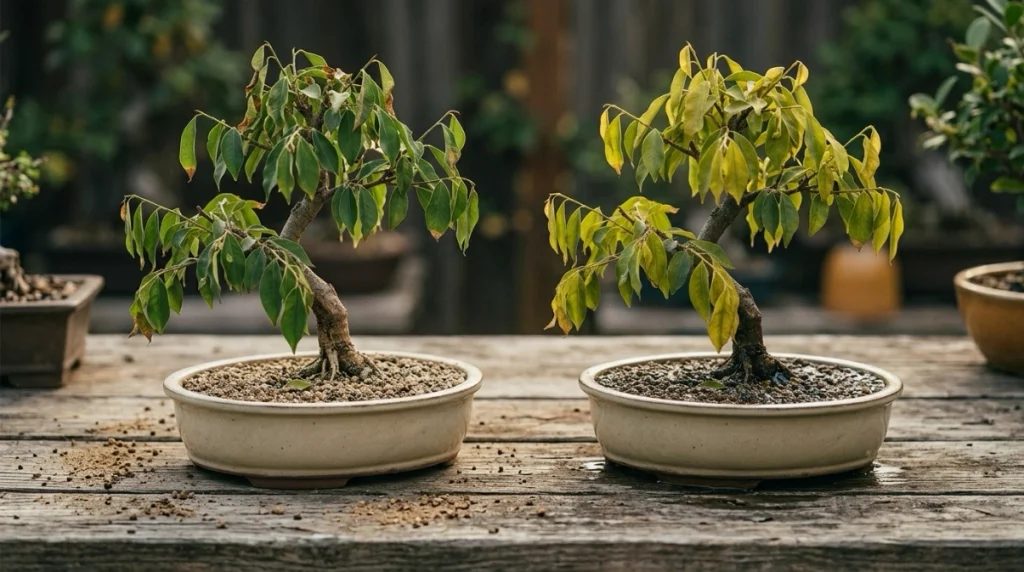
Both problems can produce limp leaves, so the soil must guide your diagnosis. Do not assume a wilted bonsai automatically needs more water.
Signs of underwatering
An underwatered bonsai often has a dry root ball, lighter pot weight, and foliage that becomes limp before turning dry or crispy. The growing medium may also pull slightly away from the edge of the pot after severe drying.
- Dry soil below the surface
- Limp leaves with dry or curling edges
- Rapid decline during hot or windy weather
- Water rushing around a badly dried root ball instead of soaking into it
- Pot feeling unusually light
If the mix is genuinely dry, water thoroughly so the entire root mass becomes moist. A badly dried organic root ball may need a second gentle watering after the first pass begins rewetting the soil.
Signs of overwatering or poor drainage
Overwatering is usually a root-zone problem rather than a single large drink. Trouble develops when the soil remains saturated long enough to reduce the air available around active roots.
- Wilting while the soil is still wet
- Yellowing or soft leaves
- Weak new growth
- Slow drainage
- Soil remaining wet much longer than expected
- Dark, soft, or unhealthy roots when inspection is appropriate
| What You See | More Likely Cause | Check Next | First Response |
|---|---|---|---|
| Wilted leaves and dry root zone | Underwatering | Pot weight and deeper moisture | Water thoroughly |
| Wilted leaves and wet soil | Root stress or poor drainage | Drainage and soil condition | Pause unnecessary watering and diagnose |
| Drooping during afternoon heat | Heat-driven water loss | Soil moisture and sun exposure | Protect from excessive heat if appropriate |
| Wilting plus sticky residue or webbing | Possible pest stress | Leaf undersides and shoots | Identify the pest before treating |
A fixed watering calendar is one of the first habits I encourage new growers to drop. Soil type, species, pot size, wind, temperature, and season can change water demand from one day to the next.
Can Light, Heat, Humidity, or Temperature Cause Wilting?
Yes. A bonsai can wilt even when the soil contains water if environmental conditions make the foliage lose moisture faster than the roots can replace it.
Heat and intense sunlight
Hot afternoon sun can raise leaf and pot temperatures quickly. Recently repotted trees and moisture-sensitive species may show stress sooner than established, sun-adapted trees.
Look for wilting that appears mainly during the hottest part of the day. Crispy leaf edges, bleaching, or damage concentrated on the sun-facing side strengthen the case for heat or light stress.
Low humidity and dry indoor air
Tropical bonsai may react poorly to heated or air-conditioned rooms with dry air. However, increasing humidity will not rescue roots sitting in saturated soil.
- Keep the tree away from strong heating or cooling vents.
- Give tropical species adequate light.
- Avoid placing the pot in standing water.
- Watch soil moisture rather than relying on misting alone.
Sudden temperature changes
A fast move between environments can also trigger drooping or leaf loss. This is common when an indoor-adapted tropical tree suddenly receives intense outdoor sun.
Temperate bonsai such as many junipers and maples also have seasonal needs that differ from tropical indoor species. When you’re uncertain about placement, species identification should come before a major care change.
The structure and drainage of bonsai soil also affect how quickly heat and dry air translate into root-zone moisture changes.
Could Roots, Fertilizer, Pests, or Disease Be the Problem?
Yes, especially when wilting continues even though moisture and temperature appear reasonable. In that situation, I look for a second symptom rather than treating the wilt by itself.
Compacted or damaged roots
A root-bound tree may struggle to absorb water evenly because the pot contains dense roots and little functional growing medium. Compacted soil can create a similar problem by interfering with both drainage and aeration.
Do not pull a weak tree from its pot repeatedly just to check. Start with drainage behavior, pot weight, soil condition, and visible roots near drainage holes.
Fertilizer or salt stress
Too much fertilizer can injure roots and leaf tissue. Suspect this more strongly when wilting begins soon after a heavy feeding or when salt residue is visible around the soil or pot.
Do not keep feeding a declining tree because you assume it needs extra nutrients. Correct the underlying stress first.
Pests
Spider mites, aphids, scale, mealybugs, and other sap-feeding pests can weaken leaves and new shoots. Pest-related wilting usually comes with additional clues.
- Fine webbing
- Sticky honeydew
- Cotton-like clusters
- Raised scale-like bumps
- Fine pale stippling
- Distorted young growth
Disease and root rot
Plant diseases can mimic environmental or watering problems. Dark spots, spreading lesions, branch dieback, unhealthy roots, or rapid decline deserve closer attention.
Penn State Extension’s plant diagnosis guidance emphasizes examining the whole pattern because insects, disease, environment, soil, and cultural problems can produce similar symptoms.
If you suspect contagious pests or disease, isolate the affected bonsai from nearby plants while you identify the problem. Clean tools between trees as well.
How Do I Revive a Wilting Bonsai Safely?
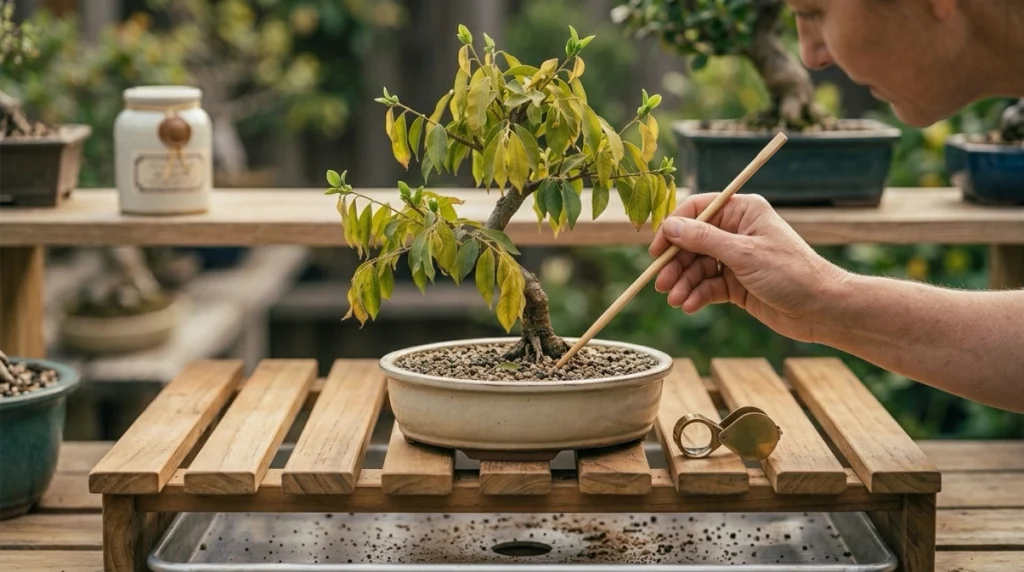
The safest recovery plan is to correct the most likely cause while minimizing extra stress. Avoid changing water, fertilizer, light, soil, and potting conditions all at once.
- Check the root-zone moisture. Test below the surface rather than judging from leaf appearance alone.
- Confirm drainage. Make sure water can leave the pot freely and the bonsai is not sitting in standing water.
- Review recent changes. Think about repotting, fertilizer, pruning, spraying, relocation, heat, cold, or missed watering.
- Inspect the foliage. Look beneath leaves and around shoots for webbing, insects, sticky residue, spots, or mildew-like growth.
- Stabilize the environment. Protect an already stressed tree from unnecessary extremes while respecting its species needs.
- Delay fertilizer. Do not push new growth until the tree is actively recovering.
- Monitor new growth. Old damaged leaves may not become perfect again, so watch buds, shoots, and overall vigor.
Should you repot a wilting bonsai?
Not automatically. Repotting involves disturbing roots, so it can make a stressed tree worse when the real problem is temporary drought, pests, heat, or poor placement.
Repotting becomes more reasonable when you have evidence of severe compaction, a badly root-bound tree, failed drainage, or serious root problems. Timing still depends on the species and season.
Pro tip: Root pruning and emergency repotting are irreversible. If the tree is valuable or declining quickly, ask an experienced grower or local bonsai club to inspect it before removing major roots.
How fast should a bonsai recover?
Recovery time depends on the cause and severity. Mild temporary drought may improve quickly after proper watering, while damaged roots can require much longer before healthy new growth appears.
Judge recovery by stable foliage, healthy buds, firm shoots, and new growth. Do not repeatedly disturb the roots just because old leaves remain damaged.
Frequently Asked Questions About Wilting Bonsai Leaves
Why is my bonsai wilting even though the soil is wet?
Wet soil combined with wilting can point to poor drainage, compacted growing media, damaged roots, or root disease. The roots may have access to water but still function poorly, so check drainage and root-zone conditions before watering again.
Can a bonsai recover after completely wilting?
Sometimes. Recovery depends on the species, how long the tree stayed stressed, and whether the roots and branches remain alive. Correct the cause first, then monitor buds and flexible living shoots instead of expecting damaged leaves to recover.
Should I water my bonsai immediately when its leaves droop?
Only if the root zone is becoming dry. If the soil is already wet, adding more water can worsen a drainage or root problem. Always check moisture before deciding.
Why does my bonsai wilt in the afternoon but look better later?
Temporary afternoon wilting can happen when heat and sunlight increase water loss faster than the roots can replace it. Check soil moisture, pot temperature, species requirements, and whether the tree receives excessive afternoon exposure.
Can too much fertilizer make bonsai leaves wilt?
Yes. Excess fertilizer or accumulated salts can injure roots, which may lead to wilting, browning, weak growth, or leaf drop. Stop unnecessary feeding while you determine whether root stress is involved.
Do wilted bonsai leaves need to be removed?
Not automatically. A wilted leaf may still photosynthesize if the tissue remains alive. Remove leaves that are clearly dead or diseased when appropriate, but avoid heavy pruning on an already stressed tree without a specific reason.
When should I get expert help?
Seek experienced help when the tree declines rapidly, important branches begin dying, roots appear black or soft, or the cause remains unclear after checking moisture, drainage, light, temperature, and pests. A local bonsai club can be especially useful for species-specific advice.
Final takeaway: A wilting bonsai is telling you that its water balance or root function is under stress, but it is not telling you why. Check the soil first, then drainage, environment, roots, and pests in that order. Make one informed correction at a time and give the tree a stable chance to respond.
If you keep that diagnostic habit, wilting becomes far less mysterious. In 2026 and beyond, careful observation still beats treating every drooping bonsai with more water.
