Jade Bonsai Pests and Diseases: Identification, Treatment, and Prevention

Quick Answer
The most common jade bonsai pests and diseases include mealybugs, scale insects, spider mites, root rot, powdery mildew, and bacterial soft rot. White cottony clusters usually indicate mealybugs, while soft stems and wet soil suggest root problems. Identify the cause before treating your tree, since pesticides cannot correct poor drainage. The University of Wisconsin’s jade plant guide also identifies mealybugs as a leading insect problem.
Common Problems and Warning Signs
- Mealybugs: White, cotton-like insects gather around leaf joints and growing tips.
- Scale insects: Small brown or tan bumps attach to stems and leaves.
- Spider mites: Fine speckling, dull foliage, and sometimes delicate webbing appear.
- Root rot: Yellowing leaves, soft roots, and persistent soil moisture signal trouble.
- Powdery mildew: Pale surface growth or unusual corky patches develop on leaves.
- Bacterial soft rot: Stems become mushy and may collapse unexpectedly.
What Should You Do First?
- Isolate the tree: Keep a suspected pest infestation away from healthy plants.
- Inspect closely: Examine leaf joints, undersides, stems, roots, and soil moisture.
- Treat the cause: Remove visible pests or correct watering and drainage problems.
- Monitor recovery: Check regularly for new insects, worsening spots, or fresh healthy growth.
Jade bonsai pests and diseases can be confusing because different problems often produce similar symptoms. Yellow leaves, for example, might indicate root damage, insects, or an environmental problem.
I’ve found that the most useful starting point is a careful inspection rather than an immediate treatment. This guide explains how to recognize common jade bonsai problems, respond safely, and prevent them from returning.
In This Guide
What Problems Affect Jade Bonsai Trees?
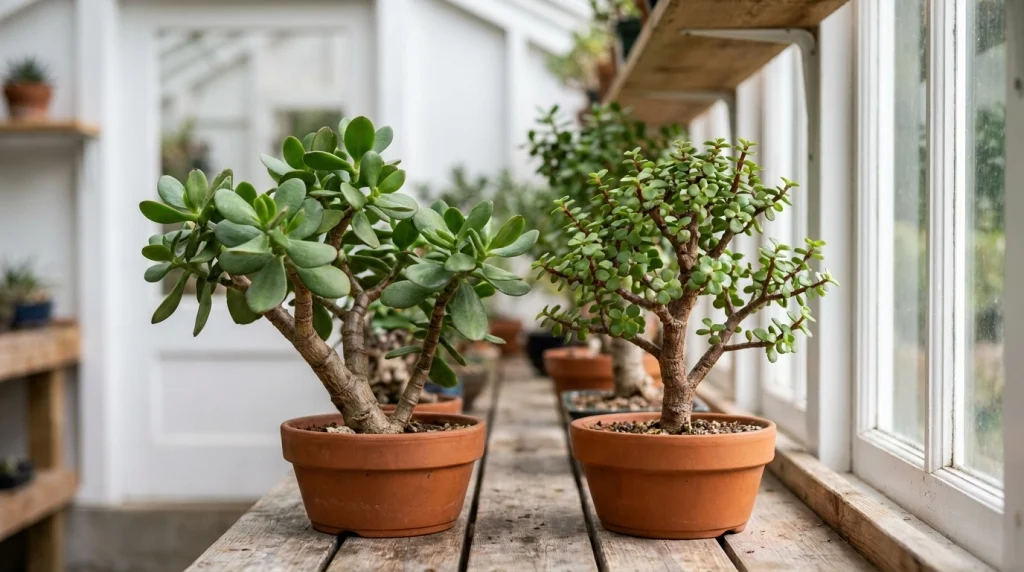
Jade bonsai problems generally fall into three groups: insect pests, plant diseases, and environmental stress. Understanding the difference helps you choose the correct response.
A bonsai is a tree or woody plant trained in a container to create a miniature landscape impression. Its limited soil volume makes water management especially important.
Know Which Jade Bonsai You Have
Most traditional jade bonsai are Crassula ovata, a succulent species native to southern Africa. Its thick leaves and woody branches make it suitable for miniature tree styling.
Another popular plant is Portulacaria afra, commonly called dwarf jade or elephant bush. Despite their similar appearance, these plants belong to different botanical families.
- Crassula ovata: Usually has relatively large, fleshy, oval leaves and thick stems.
- Portulacaria afra: Typically produces smaller rounded leaves and often has reddish young stems.
- Both plants: Need freely draining growing media and protection from prolonged soil saturation.
- Important difference: Their responses to water, fertilizers, and pesticides are not always identical.
This distinction matters when choosing pest treatments. Some products suitable for other ornamental trees can damage succulent foliage.
The University of Wisconsin’s elephant bush guide notes that this species may also experience mealybugs and pesticide sensitivity.
How Can You Tell Pests From Environmental Stress?
Visible insects, cottony clusters, sticky deposits, or webbing point toward a possible pest infestation. Soft roots, consistently wet soil, and collapsing stems suggest a moisture-related disorder.
Leaf discoloration alone is not enough for a reliable diagnosis. Always inspect the entire tree before deciding what to do.
| Symptom | Possible Cause | What to Check |
|---|---|---|
| White cottony masses | Mealybugs | Leaf joints and tender shoots |
| Brown raised bumps | Scale insects | Attached insects on stems |
| Fine pale speckling | Spider mites | Leaf undersides and fine webbing |
| Yellow leaves and wet soil | Overwatering or root rot | Drainage and root firmness |
| Corky leaf marks | Edema, mildew, or old damage | Moisture history and fungal signs |
| Soft, collapsing stems | Advanced rot | Stem interior and affected roots |
Section Takeaway: Treating jade bonsai successfully starts with identifying the actual problem. Similar-looking leaf symptoms can require completely different solutions.
What Are the Most Common Jade Bonsai Pests?
Mealybugs, scale insects, and spider mites are among the most important pests to recognize on jade bonsai. Aphids can also appear, particularly on tender new shoots.
Mealybugs: White Cotton-Like Insects
Mealybugs are small sap-feeding insects covered with a pale, waxy coating. They often hide where leaves connect to branches.
Their feeding can weaken new growth and cause distorted foliage. Some also produce sticky honeydew, which can support black sooty mold.
Common signs include:
- White cotton-like clusters around leaf joints.
- Sticky material on leaves or nearby surfaces.
- Distorted or weakened new growth.
- Recurring insects in sheltered stem crevices.
For a small infestation, I prefer targeted removal over spraying the entire bonsai. A cotton swab gives better control around delicate shoots.
Dip the swab lightly in 70% isopropyl alcohol and touch individual insects. Test a small area first, prevent alcohol from pooling, and keep the plant away from strong sunlight until dry.
Inspect the tree again every few days. Hidden insects and newly hatched young may require repeated attention.
Scale Insects: Small Bumps on Stems
Scale insects attach themselves to plant surfaces and feed on sap. Their protective coverings can make them resemble harmless bumps.
They may appear brown, tan, or pale, depending on the species. Some produce honeydew, while others do not.
Look for these warning signs:
- Small raised bumps attached firmly to stems.
- Sticky deposits associated with certain soft scales.
- Reduced vigor or yellowing near heavily affected branches.
- New insects appearing after visible adults are removed.
Use a soft swab or wooden toothpick carefully to dislodge accessible scale. Avoid scraping the bark or damaging succulent tissue.
Heavy infestations may require a pesticide labeled for that plant and pest. Confirm succulent compatibility before applying any chemical treatment.
Spider Mites: Speckled or Dull Leaves
Spider mites are tiny arachnids that feed on plant cells. They can reproduce rapidly in favorable conditions, especially in warm, dry indoor environments.
Affected leaves may develop pale speckling or lose their normal glossy appearance. Severe infestations sometimes produce fine webbing.
To inspect for mites:
- Examine the undersides of affected leaves with a magnifying glass.
- Look for moving specks or fine webbing.
- Tap a branch gently over white paper to help reveal moving mites.
- Compare damaged leaves with unaffected foliage.
Separate the plant from other houseplants. Remove mites gently with a damp swab or carefully directed water, avoiding saturated potting soil.
Repeat inspections because surviving mites and eggs may restart an infestation. Do not assume a single cleaning eliminates the problem.
Aphids: Pests on New Growth
Aphids are small, soft-bodied insects that sometimes gather on fresh succulent shoots. They may appear green, black, yellow, or brown.
Their feeding can distort tender leaves and leave sticky honeydew. A small infestation is often manageable through physical removal.
Check developing branch tips and remove insects gently. Continue monitoring because new growth can attract additional pests.
Section Takeaway: Physical removal is often the safest first response to light infestations. Pest identification and repeated inspection matter more than aggressive spraying.
Which Diseases Affect Jade Bonsai?
Root rot, powdery mildew, and bacterial soft rot are important jade plant diseases. Some noninfectious problems, especially edema, can resemble infections.
Root Rot: The Biggest Moisture-Related Threat
Root rot develops when roots deteriorate in overly wet, poorly aerated conditions. Waterlogged soil can damage roots directly and favor certain disease organisms.
A jade bonsai may initially show yellow leaves or unexpected leaf drop. More advanced cases develop dark, soft roots or decaying lower stems.
Potential signs include:
- Soil remaining wet much longer than expected.
- Yellowing foliage despite adequate light.
- Soft or darkened roots.
- Leaf drop accompanied by reduced growth.
- Softness near the base of the trunk.
The Pacific Northwest Plant Disease Management Handbook, revised in March 2026, identifies excess water as a major cause of jade root and stem decay.
Not every yellow leaf means root rot. Confirm soil conditions and inspect roots when symptoms suggest serious below-ground damage.
Powdery Mildew: Unusual Surface Growth
Powdery mildew is a fungal disease that can affect jade foliage. On this plant, symptoms may include unusual scabby or corky leaf patches.
Some infections produce pale fungal growth, but other disorders can look similar. Avoid diagnosing mildew from white marks alone.
If you suspect an infection:
- Separate the affected plant from crowded foliage.
- Improve light and airflow without exposing the plant to harsh conditions.
- Keep water off the foliage when practical.
- Confirm the diagnosis before applying a fungicide.
- Use only treatments labeled for the plant and disease.
Penn State Extension’s jade plant disease reference distinguishes powdery mildew from bacterial soft rot.
Bacterial Soft Rot: Collapsing Branches
Bacterial soft rot can destroy succulent stem tissues. Affected branches may become watery, mushy, and structurally weak.
This condition is far more serious than ordinary leaf spotting. Severely affected plants generally have a poor outlook.
If soft rot is suspected, isolate the plant and avoid spreading contaminated material. Dispose of extensively infected plants rather than attempting repeated chemical treatments.
For a valuable bonsai with uncertain symptoms, consult a plant diagnostic clinic. Cutting into an infected trunk without a clear diagnosis may cause further damage.
Edema: A Disease Look-Alike
Edema is a physiological disorder, not an infectious disease. It occurs when water uptake exceeds what the plant can comfortably manage.
Small blisters may form on leaves and later become corky brown marks. This can happen during cool, cloudy weather or when soil stays too wet.
Old corky patches usually remain even after conditions improve. Instead of trying to erase them, watch whether new leaves develop normally.
Small white mineral deposits can also appear on healthy jade foliage. If they rub off easily without revealing insects, they may not require treatment.
Section Takeaway: Root rot and bacterial soft rot need urgent attention, while edema requires better moisture management. Correct identification prevents unnecessary fungicide use.
How Do You Treat a Sick Jade Bonsai?
The safest treatment follows a simple sequence: isolate, identify, correct, and monitor. The exact intervention depends on whether the problem involves pests, damaged roots, or infection.
Step 1: Isolate and Inspect the Plant
Move the affected jade away from nearby houseplants while you investigate. Choose a bright location with suitable temperatures.
Check these areas carefully:
- Leaf junctions for mealybugs and scale.
- Leaf undersides for mites and feeding damage.
- New shoots for aphids or distorted growth.
- Soil surface and drainage holes for excess moisture.
- Lower stems for soft or discolored tissue.
Take clear photos of suspicious areas. They make it easier to compare symptoms over time or request expert help.
Step 2: Remove Visible Pests Carefully
For minor mealybug or scale infestations, use a cotton swab for targeted removal. Check the same hiding places during each inspection.
Do not automatically use neem oil, soap, or broad-spectrum insecticides on jade bonsai. Some succulent leaves are sensitive to these products.
Clemson Cooperative Extension specifically warns that insecticidal soap may damage jade plants. The safest option is to check species compatibility and follow the product label.
Never mix pesticides or increase the recommended concentration. More product does not necessarily improve control.
Step 3: Correct Root and Watering Problems
If the soil is constantly wet, stop watering until you understand why. Check for blocked drainage holes, unsuitable potting mix, or a container that holds excessive moisture.
Healthy jade roots should generally feel firm. Rotten roots may appear dark, soft, or structurally degraded.
If root inspection confirms significant rot:
- Remove the plant carefully from its container.
- Gently clear away waterlogged growing media.
- Inspect the roots and lower stem for decay.
- Remove clearly dead, mushy roots using sterilized tools.
- Repot into a clean, draining container with appropriate succulent bonsai mix.
- Place the tree in bright, protected conditions while it recovers.
Keep root removal conservative. A stressed bonsai may struggle if too much living root tissue is lost.
Pro tip: Root pruning is irreversible. If you’re unsure which roots are healthy, consult an experienced grower or local bonsai club before cutting.
Step 4: Adjust Watering After Treatment
Water jade bonsai according to soil dryness rather than a fixed calendar. A small pot in bright summer conditions can dry much faster than one in a cool room.
For established, healthy jade plants, allow the substrate to dry thoroughly before watering again. Then water properly and let excess moisture drain away.
After significant root damage or repotting, watering needs more caution. Avoid saturating damaged roots repeatedly, and adapt the approach to root condition and growing medium.
Do not let the pot sit in standing water. A drainage hole is essential, but the growing medium must also remain sufficiently open.
Step 5: Avoid Additional Stress
A recovering jade bonsai does not benefit from simultaneous pruning, wiring, heavy feeding, and repotting. Focus on restoring stable growing conditions.
Delay major styling until new growth indicates recovery. Resume fertilizer only when the tree is actively growing and its roots are functioning.
Section Takeaway: Target the cause and keep treatment gentle. A stable environment gives recovering jade bonsai the best opportunity to rebuild healthy foliage and roots.
How Can You Prevent Jade Bonsai Pests and Diseases?
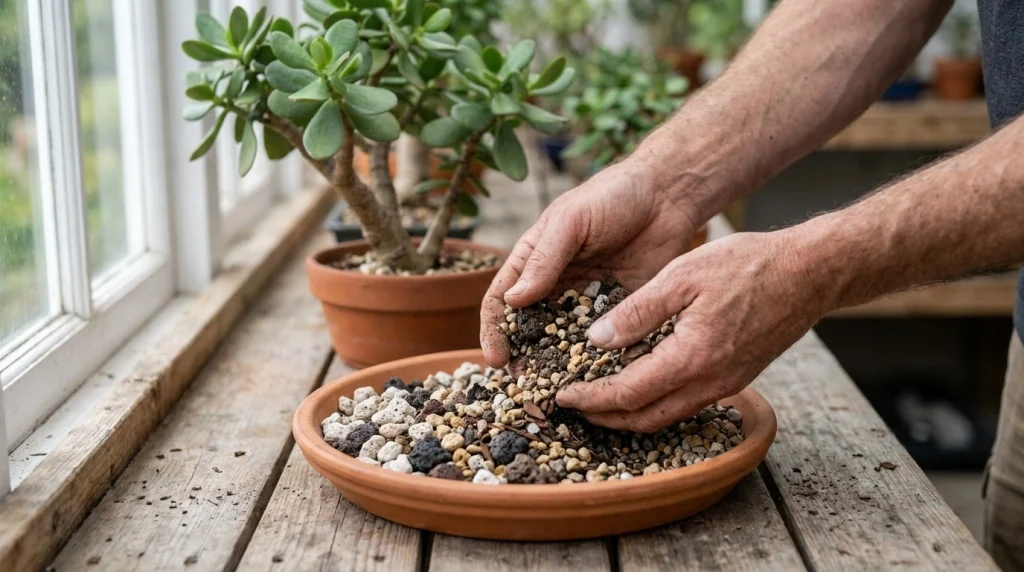
Prevention depends on good drainage, appropriate light, clean growing conditions, and regular inspections. These practices reduce many problems before visible damage becomes serious.
Use a Fast-Draining Bonsai Soil Mix
Jade roots need both moisture and oxygen. Dense soil that remains saturated can undermine root health.
A suitable growing medium may contain:
- Pumice: Provides air spaces and holds some moisture.
- Lava rock: Improves structure and drainage.
- Coarse mineral grit: Adds stability without fine compaction.
- Limited organic material: Retains some moisture and nutrients when needed.
There is no universal soil ratio for every jade bonsai. Climate, container depth, particle size, and watering habits all affect the best mixture.
A shallow bonsai pot can dry quickly at the surface while retaining moisture deeper inside. Check below the top layer before deciding to water.
Provide Enough Light Without Sudden Exposure
Jade plants grow best with strong light. Mature plants can tolerate some direct sun when acclimated properly.
A south-facing window may provide useful light in the Northern Hemisphere. However, window orientation alone does not guarantee suitable conditions.
Watch for these changes:
- Long spaces between leaves: Often indicate inadequate light.
- Weak, stretched growth: Suggests the plant is searching for stronger illumination.
- Sudden pale scorch patches: May follow abrupt exposure to intense sunlight.
- Compact new leaves: Can indicate that lighting and overall growth conditions are improving.
When moving a jade outdoors, increase sun exposure gradually. Damaged leaves cannot simply return to their original appearance.
Manage Temperature and Airflow
For indoor Crassula ovata, temperatures around 65–75°F (18–24°C) are generally comfortable during active growth. Cooler conditions may be tolerated, but freezing temperatures are dangerous.
Keep the tree away from cold window glass and heating vents. Avoid placing it in a damp corner with little air movement.
Airflow helps leaves dry after accidental wetting. It also makes regular inspection and maintenance easier.
Quarantine New Plants
New bonsai, succulents, and decorative houseplants can introduce pests into a collection. Even attractive nursery plants may hide insects around stems.
I recommend treating new arrivals as separate plants initially. A precautionary isolation period of about two to four weeks gives you time to spot developing infestations.
During quarantine:
- Inspect leaf joints and stems several times.
- Check for sticky residue and new insect activity.
- Avoid sharing tools without cleaning them.
- Keep fallen leaves and debris out of containers.
- Record unusual spots or growth changes.
Follow a Simple Maintenance Routine
A quick weekly inspection can reveal pests before they spread. Soil checks should happen whenever watering may be needed, not only on inspection day.
| Frequency | Maintenance Task | Purpose |
|---|---|---|
| As needed | Check soil and water when appropriate | Avoid prolonged saturation and severe drought |
| Weekly | Inspect foliage and stems | Detect pests early |
| Monthly | Review light, growth, and drainage | Identify developing care problems |
| Seasonally | Adjust watering and feeding | Match changing growth conditions |
Section Takeaway: Consistent care is more effective than reacting to repeated emergencies. Good drainage, suitable lighting, and early pest detection protect long-term bonsai health.
How Do You Know Whether Your Jade Bonsai Is Recovering?
A recovering jade bonsai should eventually produce healthy new growth and show no continued spread of damage. Existing scars or damaged leaves may remain unchanged.
Signs That Treatment Is Working
Improvement can be gradual, especially after significant root damage. Look for evidence that the problem has stopped progressing.
- No new colonies of mealybugs or scale insects.
- Fresh leaves developing without distortion or speckling.
- Stems remaining firm rather than becoming softer.
- Normal soil drying between appropriate waterings.
- Healthy new shoots during the active growing season.
Do not judge progress only by older leaves. Previously damaged foliage may retain marks even when the plant is healthy again.
When Should You Seek Expert Help?
Some symptoms indicate a problem beyond routine home treatment. Extensive stem collapse, widespread rot, or recurring unidentified damage deserves professional evaluation.
Consult a qualified plant diagnostic service when:
- The trunk base becomes soft or unstable.
- Rot continues after moisture problems are corrected.
- Multiple treatments fail to control a confirmed pest.
- Leaf lesions spread without an identifiable cause.
- A valuable bonsai may require major root or branch removal.
A local university extension service or established bonsai club may help identify the problem. Clear photos and a record of recent watering are useful.
For long-term success, document what changed before the symptoms appeared. This often reveals more than the damaged leaves alone.
Frequently Asked Questions About Jade Bonsai Pests and Diseases
1. Why does my jade bonsai have white cotton-like spots?
White cotton-like clusters commonly indicate mealybugs, especially around leaf joints. Inspect the spots closely for insects before treating. Small mineral deposits can also appear on jade leaves, while fungal growth may have a different appearance. Correct identification helps you avoid unnecessary pesticide use.
2. Can a jade bonsai recover from root rot?
A jade bonsai may recover when enough healthy roots and firm stem tissue remain. Remove waterlogged growing media, correct drainage, and address clearly decayed roots carefully. Recovery becomes less likely if rot has spread into the main trunk. Avoid aggressive pruning during the recovery period.
3. Is neem oil safe for jade bonsai?
Neem-based products can damage sensitive succulent foliage under certain conditions. Do not assume they are safe for every jade species or cultivar. Check the product label, test a small area when appropriate, and avoid spraying during intense heat or direct sunlight. Physical pest removal is often preferable.
4. Why are my jade bonsai leaves falling off?
Leaf drop can result from excessive watering, prolonged drought, poor light, temperature stress, or root damage. Examine soil moisture and recent environmental changes first. If the plant also has soft stems or damaged roots, investigate possible rot. Leaf drop alone does not confirm an insect infestation.
5. How often should I check my jade bonsai for pests?
A weekly close inspection is a practical preventive routine. During an active infestation, inspect every few days and repeat treatment when necessary. Pay special attention to leaf joints, new growth, and sheltered stem areas where small insects can remain unnoticed.
6. Can jade bonsai pests spread to other indoor plants?
Yes. Mealybugs, scale insects, aphids, and spider mites may spread to suitable neighboring plants. Isolate affected bonsai and examine nearby houseplants. Avoid transferring insects through shared tools or handling. Continue monitoring after visible pests disappear because additional generations may emerge.
7. What is the difference between jade bonsai edema and powdery mildew?
Edema is a noninfectious moisture-related disorder that creates blisters or corky marks. Powdery mildew is a fungal disease that can produce surface growth or unusual leaf lesions. Their symptoms may overlap, so examine the watering history and affected tissue before choosing a treatment.
Final Thoughts: Keep Your Jade Bonsai Healthy
Jade bonsai pests and diseases are easier to manage when problems are caught early. Mealybugs and scale often respond to careful removal, while root rot demands attention to moisture and drainage.
My preferred approach is to inspect first, make one targeted correction, and watch the plant’s response. This prevents unnecessary treatments that could place extra stress on succulent foliage.
Keep your jade in suitable light, use free-draining soil, and monitor new growth regularly. A consistent care routine is the strongest foundation for a healthy, attractive bonsai.
Start with a five-minute inspection today. Check the leaf joints, stem firmness, and soil conditions before your next watering.
