
Juniper Bonsai Pests and Diseases: Identification, Treatment, and Prevention

Quick Answer
The most common juniper bonsai pests and diseases include spider mites, scale insects, aphids, fungal tip blight, and root rot. Symptoms range from yellow or brown foliage to webbing, sticky residue, and dying branches. Successful treatment starts with identifying the cause, checking soil moisture, and following appropriate juniper pest management guidance.
Common Warning Signs
- Fine webbing: May indicate spider mites, particularly when tiny moving mites are present.
- Hard bumps: Often suggest scale insects attached to stems or foliage.
- Sticky foliage: Can indicate honeydew from aphids or soft scales.
- Brown branch tips: May result from fungal blight, mites, drought, or other stress.
- Blackened roots: May indicate root damage or rot when accompanied by soft, decaying tissue.
- Widespread dull foliage: Can signal watering problems, insufficient light, or declining root health.
What to Do First
- Inspect closely: Use a magnifying glass and examine foliage, stems, soil, and drainage.
- Confirm the cause: Avoid spraying pesticides before identifying a likely pest.
- Correct growing conditions: Improve watering, outdoor light exposure, and airflow before making major changes.
Juniper bonsai can look healthy for weeks before damage becomes obvious. I’ve learned to approach suspicious browning as a diagnosis problem rather than immediately reaching for a spray bottle.
This guide explains how to recognize common pests, distinguish fungal diseases from stress, and choose treatments that protect your tree.
In This Guide
How Do You Know If a Juniper Bonsai Is Sick?
A sick juniper bonsai may show discolored foliage, dead branch tips, insects, or unusually weak growth. However, some browning is natural, so symptoms need context.
Junipers are evergreen conifers, but they still shed older foliage. Interior needles may brown as the tree replaces aging growth.
Normal Browning vs. Disease Damage
Normal foliage shedding generally affects older growth deep inside the canopy. Active shoot tips should remain healthy and show seasonal growth.
Damage becomes more concerning when young foliage browns, branches decline, or discoloration spreads rapidly.
- Normal aging: Older shaded interior needles turn brown while outer growth remains vigorous.
- Spider mites: Foliage develops speckling, dull color, and sometimes fine webbing.
- Tip blight: Shoots brown from their ends, sometimes with small lesions near dead tissue.
- Root stress: Multiple branches may lose color while soil stays unusually wet or dry.
- Winter damage: Exposed foliage may discolor after freezing wind or intense winter sunlight.
One clue is never enough. I recommend checking several symptoms before choosing a treatment.
Juniper Bonsai Pest and Disease Symptom Comparison
| Problem | Main Symptoms | Best Confirmation | First Response |
|---|---|---|---|
| Spider mites | Speckling, bronzing, possible webbing | White-paper shake test | Isolate and remove mites with water |
| Scale insects | Attached bumps, yellowing, branch decline | Inspect stems with magnification | Remove small infestations manually |
| Aphids | Clusters of insects, sticky honeydew | Inspect tender growth | Rinse affected shoots |
| Fungal tip blight | Brown tips, gray lesions, twig dieback | Examine dead-to-live tissue boundary | Improve airflow and confirm diagnosis |
| Root rot | Weak foliage, declining branches, decayed roots | Review drainage and inspect roots when justified | Correct excess moisture and drainage problems |
| Drought stress | Dry soil, fading color, brittle foliage | Check moisture throughout the root mass | Rehydrate carefully and monitor drainage |
Why Juniper Bonsai Can Hide Stress
Unlike many broadleaf plants, junipers may not wilt dramatically when stressed. Their foliage can remain green temporarily despite declining root function.
That delay makes regular inspection important. By the time an entire branch turns brown, the damage may already be permanent.
A practical habit is to photograph the tree from the same angle every week. Comparing photographs helps reveal subtle changes in color and canopy density.
Section Takeaway: Not all brown juniper foliage signals disease. The location, timing, and pattern of damage provide better clues than color alone.
What Pests Attack Juniper Bonsai Trees?
Spider mites and scale insects are among the most important juniper pests. Aphids, bagworms, and several other insects may also attack certain juniper species.
Because bonsai have compact canopies, small infestations can hide between tightly arranged branches.
1. Spider Mites on Juniper Bonsai
Spider mites are tiny arachnids that feed on plant cells. Their feeding can cause pale speckling, bronze-colored foliage, and eventual needle loss.
Spruce spider mites can be important pests of junipers. They often thrive during cooler periods, unlike some other mites that multiply fastest in hot weather.
Look for these symptoms:
- Fine yellow speckles on foliage
- Green needles turning bronze or grayish
- Tiny moving dots on foliage
- Fine silk webbing during heavier infestations
- Premature shedding of damaged foliage
Webbing alone does not confirm spider mites. Ordinary spiders can also leave silk around bonsai branches.
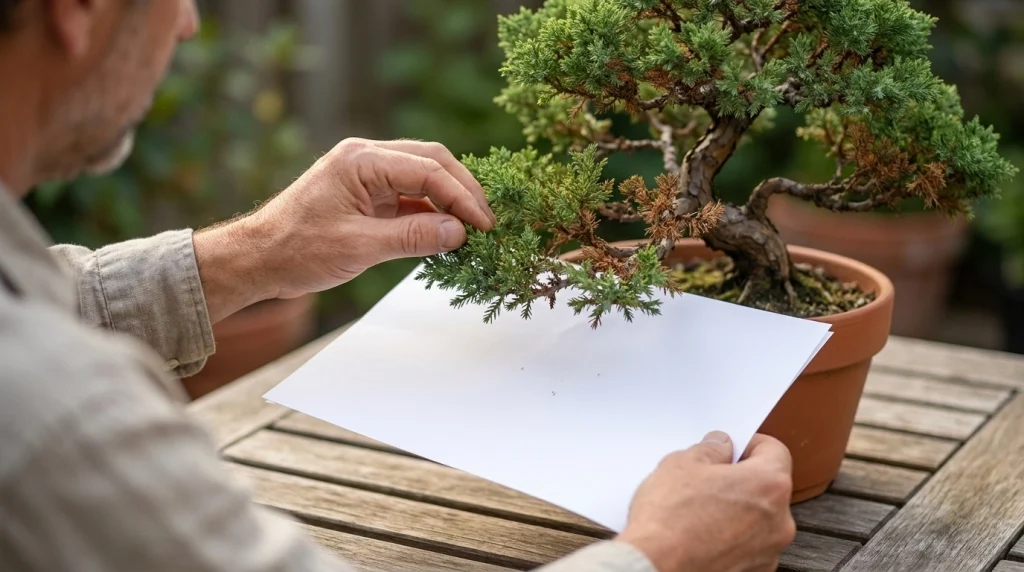
How to Test for Spider Mites
- Hold white paper under a suspicious branch.
- Tap the branch gently several times.
- Watch for tiny moving specks.
- Inspect moving dots with a magnifying glass.
- Compare the result with damage on nearby foliage.
This simple test is useful because individual mites can be hard to see against green needles.
For light infestations, a controlled stream of water may dislodge mites. Repeat inspections because surviving mites and eggs can lead to another outbreak.
Avoid broad-spectrum insecticides without a confirmed reason. Some products kill natural mite predators and can make mite outbreaks worse.
2. Scale Insects on Juniper Bonsai
Scale insects attach to foliage or woody stems and feed on plant fluids. Many species have protective coverings that make established insects difficult to control.
Armored scales and soft scales behave differently. Soft scales may produce sticky honeydew, while armored scales generally do not.
Common signs include:
- Small white, tan, brown, or gray bumps
- Weak or yellowing foliage
- Localized branch decline
- Sticky residue from honeydew-producing species
- Ant activity around honeydew
Do not mistake natural bark texture for insects. Use magnification and look for repeated, attached scale-like bodies.
On a small bonsai, gently removing individual scales may help control a light infestation. Avoid scraping delicate bark or healthy foliage.
Heavier infestations may require a product labeled for the particular scale and plant. Timing often matters because young crawlers are more vulnerable than protected adults.
3. Aphids on Juniper Bonsai
Aphids are small sap-feeding insects that sometimes gather on tender shoots. Juniper-associated aphid species may appear dark, greenish, or brown.
Their feeding can weaken new growth and leave sticky honeydew. Black sooty mold may grow on that sugary residue.
Check for:
- Clusters of small insects along shoots
- Sticky foliage or branches
- Ants attracted to honeydew
- Distorted or weakened new growth
A gentle water rinse can remove many aphids from accessible branches. Beneficial insects may also help keep populations down outdoors.
Inspect again after several days. A few surviving aphids can reproduce and rebuild a colony.
4. Bagworms and Other Caterpillars
Bagworms are caterpillars that build protective bags from silk and plant material. Their bags may resemble small bundles of dried juniper foliage.
Feeding can strip foliage from individual branches. Severe infestations may cause substantial damage.
For a small bonsai, hand-removing visible bags is often practical. Check their contents before disposal because some bags may hold eggs.
Certain sawfly larvae and foliage-feeding caterpillars may cause similar damage. Identify the insect before selecting a treatment.
5. Borers and Twig-Damaging Insects
Some insects tunnel into woody tissues or damage small twigs. These problems occur less predictably than mites or scale.
Warning signs may include:
- Sudden dieback of individual twigs
- Small holes in branches
- Fine sawdust-like material
- Visible galleries beneath damaged bark
However, these symptoms can also come from deadwood decay or mechanical injuries. Professional identification helps prevent unnecessary treatments.
For detailed pest identification, consult the Clemson Cooperative Extension juniper pest guide.
Section Takeaway: Inspect for living pests before using insecticides. Spider mites, scales, and caterpillars require different control methods.
What Diseases Affect Juniper Bonsai?
Juniper bonsai can develop fungal tip blights, root and crown diseases, rusts, and cankers. Wet conditions, poor airflow, injuries, and susceptible plant varieties can increase certain risks.
Not every fungal-looking symptom involves an active infection. Drought, fertilizer injury, and root damage can produce similar browning.
1. Phomopsis Tip Blight
Phomopsis tip blight primarily affects tender, developing juniper shoots. The disease is associated with the fungus commonly called Phomopsis juniperovora, also classified as Diaporthe juniperivora.
It tends to develop during periods of warm, wet weather. Young or recently established junipers can be especially vulnerable.
Typical symptoms include:
- Young shoot tips turning yellow or brown
- Progressive dieback toward older growth
- Brown foliage becoming gray with age
- Small lesions where healthy and dead tissue meet
- Tiny dark fungal structures on infected tissue
The infection can spread through splashing water and contaminated plant material. Crowded foliage that remains wet may create favorable conditions.
Healthy management focuses on dry foliage, good airflow, and removing infected material at suitable times.
2. Kabatina Tip Blight
Kabatina tip blight causes twig dieback that resembles Phomopsis. However, it generally attacks older, previously wounded tissue rather than healthy new growth.
In many temperate climates, visible symptoms appear during late winter or early spring. Infection often occurred months earlier.
Important clues include:
- Browning of previous-season shoots
- Small gray lesions near dead tissue
- Damage associated with wounds or insect feeding
- Symptoms appearing before the main spring growth flush
Phomopsis and Kabatina can be difficult to distinguish visually. Laboratory examination may be necessary for a reliable diagnosis.
According to Iowa State University Extension, improving plant health and removing infected material are central management measures.
Phomopsis vs. Kabatina Tip Blight
| Feature | Phomopsis | Kabatina |
|---|---|---|
| Affected tissue | Mainly tender new growth | Usually older, wounded twigs |
| Typical symptom timing | Spring through growing season | Late winter to early spring |
| Important risk factor | Wet, susceptible new growth | Wounds and previous-season infection |
| Management emphasis | Protect new growth and improve growing conditions | Prevent injuries and remove diseased twigs |
3. Root Rot and Phytophthora Diseases
Root rot describes the breakdown of root tissue from various causes. Phytophthora, a group of water molds, can infect juniper roots and crowns under favorable conditions.
Waterlogged bonsai soil reduces oxygen around roots. This stress can contribute to root death and create conditions favorable for certain root pathogens.
Possible symptoms include:
- Foliage turning dull green, gray, or brown
- Progressive decline across several branches
- Slow growth despite adequate light
- Soil that remains saturated for unusually long periods
- Soft, discolored, or decaying roots
Not every dark root is rotten. Healthy older roots can naturally have dark outer surfaces, so root firmness and internal condition matter.
Do not remove a struggling tree from its pot repeatedly. Root disturbance can increase stress and worsen existing damage.
Instead, check drainage holes, recent watering, rainfall, and soil structure first.
4. Juniper Rust Diseases
Some junipers host rust fungi such as cedar-apple rust. These fungi often alternate between junipers and plants in the rose family.
Depending on the rust species, a juniper may develop woody galls or swollen areas. Orange, gelatinous spore-producing structures may appear during wet spring weather.
Rust does not always cause major damage to established junipers. However, identifying unusual galls helps distinguish rust from insects or ordinary bark growth.
Do not remove large branches simply because a gall appears. Confirm the disease and assess its importance first.
5. Canker Diseases and Branch Dieback
Cankers are localized areas of damaged or dead bark and underlying tissue. Several pathogens, along with physical injuries, can produce canker-like symptoms.
Look for:
- Sunken or discolored stem areas
- Branches dying beyond a damaged section
- Cracked or damaged bark
- Unusual tissue changes around pruning wounds
Careful identification matters because pruning, wiring injuries, drought, and winter damage may resemble infectious cankers.
The Penn State Extension guide to juniper twig blight explains the importance of examining affected twig tissue.
Section Takeaway: Brown juniper tips can have several causes. Distinguishing new-growth disease, older-twig damage, and root decline prevents ineffective treatment.
How Do You Treat Juniper Bonsai Pests and Diseases?
The best treatment depends on whether the problem involves insects, mites, pathogens, or environmental stress. Start with the least disruptive effective response.
Step 1: Isolate the Affected Bonsai
Move a visibly infested juniper away from other bonsai when practical. Keep it outdoors in suitable light and weather conditions.
Isolation helps reduce the movement of certain pests between nearby plants.
Step 2: Inspect and Record the Damage
Examine healthy and unhealthy foliage using a magnifying glass. Record where damage started and whether it is spreading.
Use this inspection checklist:
- Check outer and inner foliage.
- Inspect shoots, branch junctions, and trunk bark.
- Perform the white-paper test for mites.
- Look for scale insects and honeydew.
- Check soil moisture and drainage.
- Photograph suspicious lesions or fungal growth.
If diagnosis remains unclear, contact a local extension office, horticultural laboratory, or experienced bonsai grower.
Step 3: Remove Visible Pests Carefully
For light infestations, physical removal may work without chemical treatments. Juniper foliage can be delicate, so avoid harsh scrubbing.
- Aphids: Use a gentle water rinse on affected shoots.
- Spider mites: Rinse foliage where practical and repeat inspections.
- Scale: Remove individual insects carefully when the infestation is small.
- Bagworms: Handpick visible bags and dispose of them appropriately.
Use enough water pressure to remove pests without breaking branches or washing soil from the pot.
Step 4: Use Insecticidal Soap or Horticultural Oil Only When Appropriate
Some labeled insecticidal soaps and horticultural oils can control susceptible pests. However, evergreen foliage may suffer spray injury under unfavorable conditions.
Not every product is suitable for junipers. The label must permit use on the relevant plant and target pest.
Before application:
- Confirm the pest identification.
- Check the product label and plant restrictions.
- Avoid applications during extreme heat or drought stress.
- Protect beneficial insects and avoid unnecessary spraying.
- Test a small foliage area when the label advises it.
- Follow the labeled application and reapplication directions.
Dish detergent is not a reliable substitute for formulated insecticidal soap. Household mixtures may damage foliage.
Likewise, neem products are not universally safe or effective for every juniper problem.
Step 5: Manage Fungal Diseases Correctly
Fungal blight management begins with reducing favorable conditions. Fungicides are not a universal cure for already dead tissue.
Useful measures include:
- Confirm whether symptoms match a likely fungal disease.
- Improve airflow around the canopy.
- Avoid prolonged periods of wet foliage.
- Remove clearly infected twigs during appropriate dry weather.
- Clean tools between cuts and dispose of infected material.
- Consider fungicides only with a confirmed diagnosis and suitable label.
Preventive fungicide programs may sometimes help with specific diseases, particularly Phomopsis. Their effectiveness depends on timing and the pathogen involved.
Applying fungicide after widespread dieback will not restore dead foliage.
Pro tip: Avoid major pruning or cutting into living branches on a weakened juniper. Consult a bonsai club or experienced grower before irreversible work.
Step 6: Correct Root and Watering Problems
If the soil stays wet for several days under conditions where it should drain, investigate the growing medium and drainage holes.
Never leave a juniper pot sitting continuously in standing water. Good drainage helps maintain oxygen around the root system.
However, severely dry bonsai soil needs careful rehydration. Water should penetrate the entire root mass rather than flowing around compacted dry sections.
Emergency repotting may be necessary in serious cases, but it carries risks. A severely weakened juniper may not tolerate substantial root disturbance.
When active root disease is suspected, professional diagnosis can help determine whether repotting or a specific disease treatment is warranted.
Pro tip: Avoid heavy root pruning on a declining juniper. Seek experienced help before removing live roots or making major changes to the rootball.
Section Takeaway: Identify the cause first, then choose a targeted response. Avoid combining heavy pruning, repotting, fertilizing, and pesticide treatments on an already stressed tree.
How Can You Prevent Future Problems?
Prevention begins with appropriate outdoor growing conditions, reliable drainage, and regular inspections. Healthy care cannot guarantee a pest-free tree, but it reduces avoidable stress.
Keep Juniper Bonsai Outdoors
Most commonly grown juniper bonsai are temperate outdoor trees. They need substantial sunlight, fresh air, and appropriate seasonal changes.
Keeping a juniper permanently inside a typical living room often produces weak growth over time.
Provide suitable outdoor conditions based on the particular juniper species, climate, and recent growing history.
Protect potted roots from temperature extremes when necessary. Small containers offer less insulation than the ground.
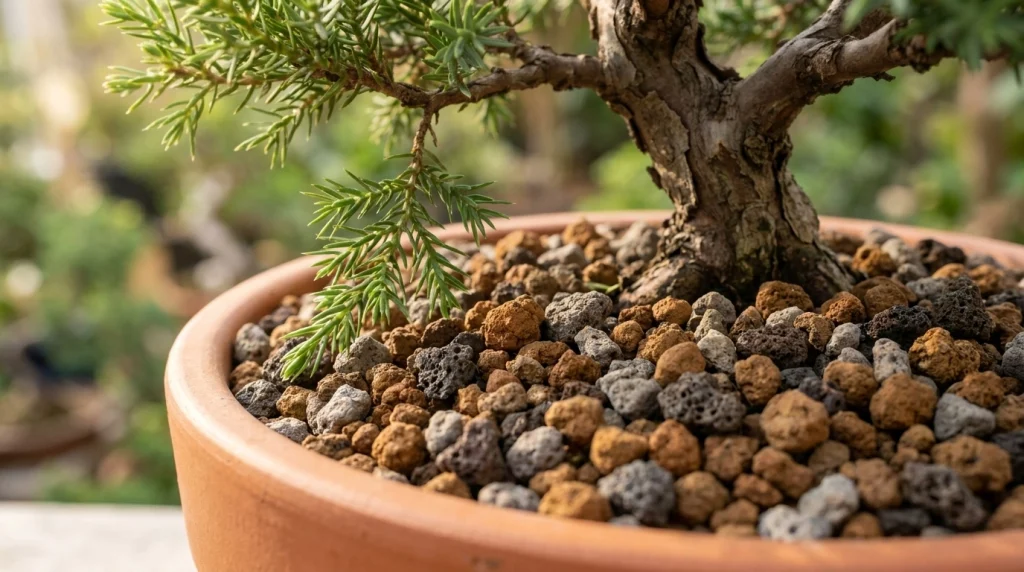
Use Well-Draining Bonsai Soil
A free-draining growing medium helps balance moisture and oxygen around roots. Akadama, pumice, lava rock, and similar granular components are common options.
No universal soil ratio fits every climate. Bonsai grown in very hot, dry conditions may need more water retention than those grown in wet climates.
Inspect the mixture as it ages. Broken-down particles can reduce drainage and aeration.
Water According to Actual Conditions
Junipers prefer moisture without prolonged waterlogging. The correct watering frequency changes with weather, pot size, roots, and soil composition.
Before watering:
- Check moisture below the surface.
- Consider recent rainfall and temperature.
- Assess pot weight when practical.
- Water thoroughly when the root mass needs it.
- Let excess water drain away.
During hot or windy weather, a small bonsai may need daily inspection. That does not mean every juniper should be watered daily.
Improve Airflow and Avoid Overcrowding
Dense, constantly wet foliage may encourage certain fungal diseases. Air movement helps foliage dry after rainfall or watering.
Leave suitable space between trees on a bench. Remove accumulated dead foliage when it can be done without damaging healthy shoots.
Avoid keeping an outdoor juniper inside an enclosed display case with stagnant air.
Quarantine New Bonsai Trees
New trees may carry pests that are not obvious at purchase. A temporary separation period makes inspection easier.
For a practical routine, keep new trees apart from the main collection for roughly two to four weeks where space allows.
During this period:
- Inspect foliage every few days.
- Check stems for scale insects.
- Watch for mites and unusual webbing.
- Look for progressing branch dieback.
- Avoid sharing contaminated tools or loose plant material.
Quarantine duration is a precaution, not a guarantee. Some pests and diseases remain hidden longer.
Maintain a Seasonal Health Checklist
| Season | Priority Checks | Common Concerns |
|---|---|---|
| Spring | Inspect new growth and older damaged tips | Tip blights, mites, winter injury |
| Summer | Monitor soil moisture and active pests | Drought, root stress, scale insects |
| Autumn | Check twig injuries and seasonal mites | Wound-related disease risks |
| Winter | Protect roots and inspect exposed foliage | Freezing damage and winter desiccation |
These seasonal patterns apply mainly to temperate Northern Hemisphere climates. Adjust your schedule for local weather and the juniper species.
As of 2026, integrated pest management remains a practical approach: monitor, identify, prevent, and treat only when necessary.
Section Takeaway: Good outdoor light, appropriate watering, drainage, airflow, and early detection provide more lasting protection than routine pesticide spraying.
Can a Sick Juniper Bonsai Recover?
A sick juniper bonsai can recover if enough living foliage, roots, and functional branches remain. Recovery depends on the cause and severity of damage.
Once an entire juniper branch has died, its brown foliage will not turn green again.
Signs Your Juniper May Still Recover
- Several branches retain healthy green growing tips.
- Discoloration has stopped spreading.
- New growth appears during the normal growing season.
- Water uptake and soil drying become more consistent.
- No new pests or disease symptoms appear.
Check multiple branches rather than relying on a single scratch test. Living bark in one area does not establish that the whole tree can recover.
What to Do During Recovery
Recovery is a time for stable care, not aggressive styling. Avoid making several major changes simultaneously.
- Keep the tree in suitable outdoor conditions.
- Correct the confirmed watering or drainage problem.
- Monitor pest activity and disease progression.
- Delay aggressive pruning and wiring.
- Avoid heavy fertilizer applications to a severely stressed tree.
- Watch for stable, healthy growth before resuming demanding bonsai work.
Recovery may take an entire growing season or longer. Some damaged branches will never produce new foliage.
When Is a Juniper Too Damaged to Save?
Recovery becomes unlikely when all foliage is brown and brittle, the root system is extensively dead, and no viable living tissue remains.
However, foliage color alone does not always establish whether a tree is completely dead. A skilled grower or nursery professional can assess uncertain cases.
Patience is useful, but repeated emergency treatments rarely help. Once the cause is corrected, provide stable growing conditions and monitor the result.
Section Takeaway: Living green growth offers the clearest reason for hope. Protect the remaining healthy tissue and avoid unnecessary disturbance during recovery.
Frequently Asked Questions About Juniper Bonsai Pests and Diseases
Why is my juniper bonsai turning brown?
Juniper bonsai can turn brown because of spider mites, fungal blight, drought, overwatering, root damage, or winter injury. Normal interior needle shedding can also cause limited browning. Check whether the damage affects young tips or old interior foliage, and inspect the soil and branches before treating.
Can spider mites kill a juniper bonsai?
Yes. Severe, uncontrolled spider mite feeding can weaken a juniper and cause extensive foliage damage. Small or already stressed trees may suffer more serious consequences. Use a white-paper shake test, inspect the foliage, and begin an appropriate control program after confirming mite activity.
Is neem oil safe for juniper bonsai?
Some neem-based products may be labeled for certain ornamental pests, but they are not automatically safe for every juniper cultivar or growing condition. Oils can injure foliage, especially during heat or drought stress. Check the exact product label and never apply homemade concentrations without reliable guidance.
How do I know if my juniper bonsai has root rot?
Possible signs include declining foliage, persistently wet soil, weak growth, and soft, decaying roots. These symptoms are not conclusive because drought or other problems can look similar. Review drainage and watering history first, then seek an expert diagnosis if the tree continues declining.
Should I cut off brown branches on my juniper bonsai?
Remove branches only after confirming that the affected tissue is dead or that pruning is needed for disease management. Avoid cutting deeply into healthy wood. Junipers often struggle to replace foliage removed from older bare branches, so irreversible cuts deserve extra caution.
Can fungal disease spread from one bonsai to another?
Yes. Some fungal pathogens can spread through splashing water, infected material, tools, or airborne spores. The actual risk depends on the disease and host species. Separate suspicious plants when practical, improve airflow, remove infected debris, and clean pruning equipment properly.
How often should I inspect my juniper bonsai for pests?
A quick inspection during routine watering is useful, especially during active growth or warm weather. Examine foliage more thoroughly at least weekly when pest pressure is high. Check new trees frequently during quarantine and increase monitoring whenever discoloration, webbing, or unusual growth appears.
Final Thoughts: Keep Your Juniper Bonsai Healthy
Juniper bonsai pests and diseases are easier to manage when you recognize problems early. Brown foliage alone does not identify the cause, so inspect carefully before choosing a treatment.
Focus on four habits: consistent inspection, suitable outdoor conditions, healthy roots, and targeted pest management.
Whether you’re caring for a young juniper or a mature styled tree, prevention protects years of patient work.
Start today: Inspect your juniper’s growing tips, inner branches, and soil. A few minutes of observation can help you catch a manageable problem before it becomes serious.
