
Ficus Bonsai Pests and Diseases: Identification, Treatment, and Prevention

Quick Answer
The most common ficus bonsai pests and diseases include spider mites, scale insects, mealybugs, aphids, root rot, and fungal leaf spots. Look for sticky leaves, tiny webs, white cottony clusters, yellowing foliage, or dark, unhealthy roots. Identify the cause before treatment, following established ficus pest management guidance when possible.
Common Warning Signs
- Fine webbing: Often points toward spider mites, especially with pale leaf speckling.
- Sticky leaves: Suggest honeydew from scale, mealybugs, aphids, or whiteflies.
- White cottony patches: Usually indicate mealybugs hiding near leaf joints.
- Brown raised bumps: May be scale insects attached to stems or leaves.
- Wet soil and wilting: Can indicate damaged roots or root rot.
- Spreading leaf spots: May indicate disease, although environmental damage can look similar.
What to Do First
- Isolate and inspect: Move the ficus away from other plants, inspect both leaf surfaces, and check soil moisture before using any pesticide.
Ficus bonsai pests and diseases can turn a healthy-looking miniature tree into a worrying sight. I’ve learned that identifying the actual cause matters much more than rushing to spray something.
Whether you grow Ficus microcarpa, ginseng ficus, or Ficus benjamina, this guide explains the warning signs, treatment options, and daily habits that protect your tree.
In This Guide
- What Are the Early Warning Signs of Ficus Bonsai Problems?
- What Pests Commonly Attack Ficus Bonsai Trees?
- What Diseases Affect Ficus Bonsai Trees?
- How Can You Tell Pests, Diseases, and Care Problems Apart?
- How Do You Treat Ficus Bonsai Pests and Diseases Safely?
- How Can You Prevent Ficus Bonsai Pests and Diseases?
- Frequently Asked Questions
What Are the Early Warning Signs of Ficus Bonsai Problems?
Early ficus bonsai problems often appear as changes in leaf color, texture, or growth. A single yellow leaf isn’t proof of disease, but a consistent pattern deserves attention.
Check the entire tree before deciding what caused the change.
Yellow Leaves and Unexpected Leaf Drop
Yellow ficus leaves can result from pests, waterlogged roots, insufficient light, or environmental changes. Ficus benjamina is particularly known for dropping leaves after changes in growing conditions.
I look at the soil and recent care history before assuming insects are responsible.
- Yellow leaves with sticky residue: Check for sap-feeding insects.
- Yellow leaves with consistently wet soil: Investigate drainage and root health.
- Leaf drop after relocation: Consider light and temperature changes.
- Yellowing with visible webbing: Inspect closely for spider mites.
Sudden leaf loss isn’t always fatal. A living ficus may produce new foliage once its conditions improve.
Sticky Residue on Leaves or Branches
Sticky ficus leaves often indicate honeydew, a sugary liquid produced by certain sap-feeding insects. Scale, mealybugs, aphids, and whiteflies can create this residue.
Honeydew may collect on leaves, branches, the pot, or nearby furniture.
Black sooty mold sometimes grows on the residue. The dark coating isn’t itself proof that the underlying leaves have a fungal infection.
Spots, Webbing, and Distorted Growth
Fine pale dots across leaves may result from spider mite feeding. Very thin webbing strengthens that suspicion, although ordinary spiders can also make webs.
Brown or black spots require a broader inspection.
- Check whether spots are spreading across multiple leaves.
- Look for insects on the leaf undersides.
- Consider recent direct sunlight or cold exposure.
- Note whether foliage remains wet for long periods.
- Examine new shoots for curling or distortion.
A useful habit is taking a clear photograph when symptoms first appear. Comparing images several days apart makes gradual changes easier to recognize.
Section Takeaway: Yellowing, spots, and leaf drop are symptoms rather than diagnoses. Inspect the whole ficus and its growing conditions before choosing treatment.
What Pests Commonly Attack Ficus Bonsai Trees?
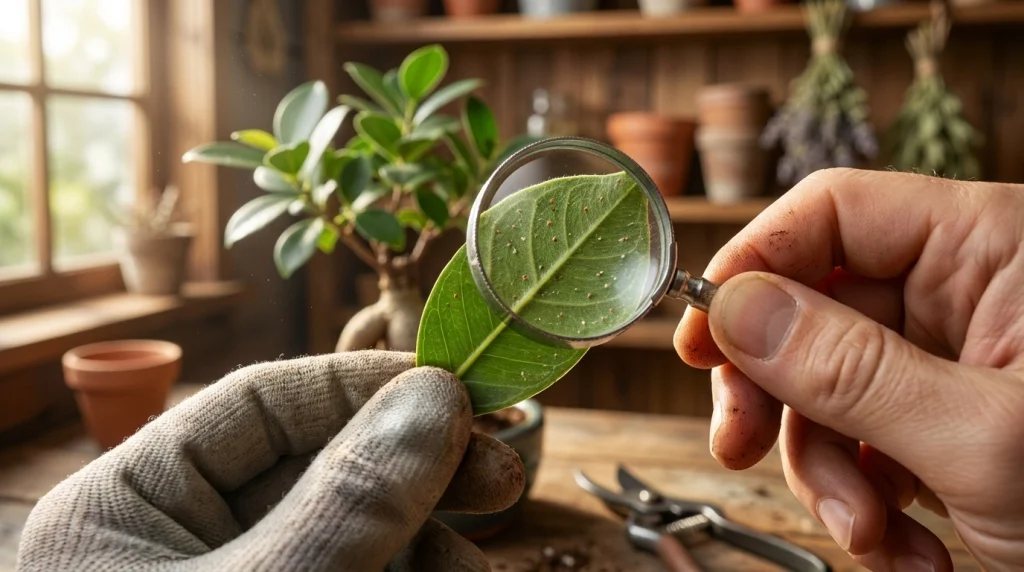
Spider mites, scale insects, and mealybugs are among the most frequent ficus bonsai pests. Aphids, whiteflies, and thrips may also appear, depending on the growing environment.
These pests damage foliage by feeding on plant tissues or sap.
Spider Mites on Ficus Bonsai
Spider mites are tiny arachnids that often multiply quickly under warm, dry conditions. Their feeding produces pale speckles, dull foliage, and sometimes fine webbing.
The mites themselves can be difficult to see without magnification.
To check for them:
- Examine the undersides of affected leaves.
- Look for tiny moving dots and delicate webbing.
- Hold white paper beneath a branch.
- Tap the branch gently and inspect fallen particles for movement.
For a light infestation, rinse the foliage carefully with water. Support delicate branches so the spray doesn’t damage the tree.
Repeat inspections because surviving mites and eggs can allow the population to return.
Scale Insects on Ficus Bonsai
Scale insects resemble small brown, gray, or pale bumps attached to stems and leaves. Some produce honeydew, while armored scale generally does not.
Unlike ordinary dirt, established scales usually remain attached when the branch moves.
Inspect these locations carefully:
- Leaf undersides and central veins
- Branch junctions
- Young woody stems
- Areas where leaves join branches
Small infestations can often be managed through careful physical removal. Avoid scraping so aggressively that you damage delicate ficus bark.
Horticultural oils or insecticidal soaps may help when their labels permit treatment of the plant and pest.
Mealybugs on Ficus Bonsai
Mealybugs look like tiny white, cotton-covered insects. They tend to gather in protected areas around leaf joints and new growth.
Severe infestations may cause yellowing, slow growth, and leaf drop.
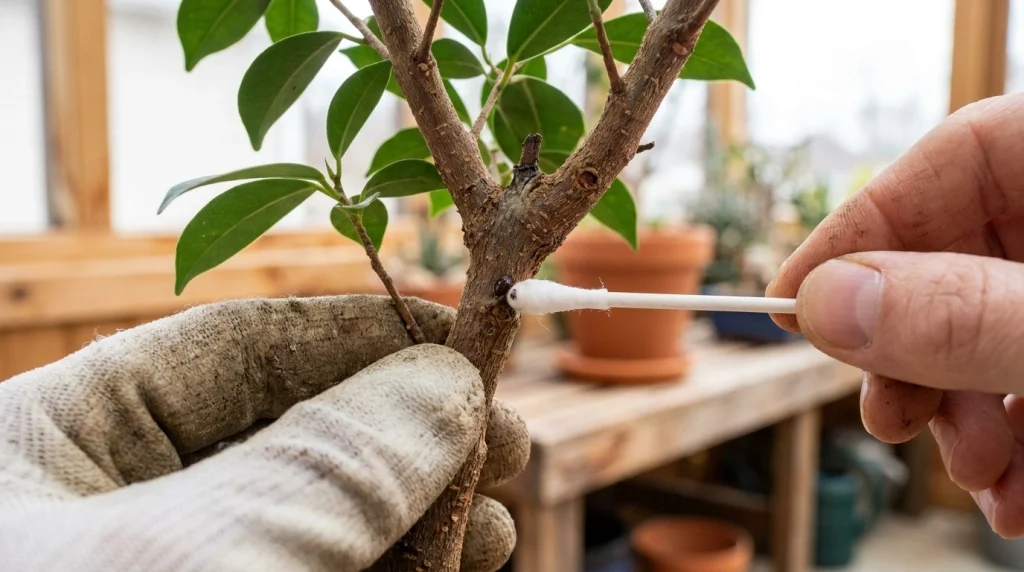
For a small cluster, I prefer targeted removal over spraying the entire tree immediately.
- Isolate the infected ficus.
- Remove visible insects with a cotton swab.
- Use a lightly alcohol-dampened swab for individual insects, testing plant sensitivity first.
- Avoid soaking foliage, buds, or bark with alcohol.
- Inspect again over the following weeks.
Mealybugs can hide in crevices, so one cleaning rarely guarantees complete control.
Aphids, Whiteflies, and Thrips
These smaller pests may also affect ficus bonsai, especially trees grown outdoors or alongside other houseplants.
- Aphids: Small, soft-bodied insects gathering on tender new shoots.
- Whiteflies: Tiny white flying insects that may rise from foliage when disturbed.
- Thrips: Slender insects associated with silvery scarring or distorted young foliage.
Gentle washing and removal of heavily infested leaves may control limited outbreaks. Larger infestations can require a properly labeled treatment.
For detailed identification, the University of Minnesota Extension’s indoor insect management guidance explains common pest signs and control options.
Section Takeaway: Match the treatment to the pest. Physical removal, washing, and repeated inspection are sensible first steps for many mild infestations.
What Diseases Affect Ficus Bonsai Trees?
Ficus bonsai diseases include root rot and several leaf-spot or blight problems. Some symptoms also result from environmental stress rather than an infectious pathogen.
Correct diagnosis matters because pesticides intended for insects won’t repair diseased roots.
Root Rot in Ficus Bonsai
Root rot describes the decay and loss of healthy root tissue. Prolonged saturation, poor aeration, and root-infecting organisms can all contribute to the problem.
Common warning signs include:
- Wilting while the soil remains wet
- Yellowing or dropping leaves
- Stalled growth
- Soft, dark, deteriorating roots
- An unpleasant smell from severely degraded growing media
Wet soil alone doesn’t confirm root rot. Inspect the drainage system and root condition before making a major intervention.
Healthy ficus roots are generally firm, while badly decayed roots may become soft and lose their outer tissue.
Why Poor Drainage Causes Trouble
Roots need oxygen as well as water. When a pot stays saturated, oxygen availability falls and root function suffers.
A compacted substrate can worsen the situation, especially in shallow bonsai containers.
Common contributing conditions include:
- Blocked drainage holes
- Heavy, compacted potting media
- Water collecting in an outer decorative container
- Frequent watering without checking moisture
- Low-light conditions that slow water use
Species-appropriate, free-draining soil helps balance moisture and oxygen. The correct mix depends on pot size, climate, and watering habits.
Leaf Spot and Fungal Problems
Ficus foliage may develop brown, black, or discolored spots from fungal or bacterial diseases. Moist conditions and poor air movement can favor some of these problems.
However, sun damage, cold injury, and watering stress may produce similar-looking marks.
Consider disease more seriously when spots spread, new lesions continue appearing, or several leaves develop the same pattern.
Remove severely affected fallen foliage and keep leaves from staying wet unnecessarily. If symptoms progress, seek identification before applying a fungicide.
The North Carolina Extension profile for Ficus microcarpa identifies root rot, leaf spot, and gray mold among its potential problems.
Can Ficus Bonsai Develop Sooty Mold?
Yes. Sooty mold is a dark fungal growth that develops on honeydew deposited by sap-feeding insects.
It usually appears as a black surface coating rather than a typical leaf-spot lesion.
Controlling the honeydew-producing insects is the main priority. Once the pests are managed, gently cleaning accessible leaf surfaces can help remove accumulated residue.
Avoid harsh scrubbing or stripping leaves while the tree is stressed.
Section Takeaway: Root health, moisture management, and correct identification are central to ficus disease care. Not every brown spot needs a fungicide.
How Can You Tell Pests, Diseases, and Care Problems Apart?
The best way to distinguish ficus pests from diseases is to combine visible evidence with growing conditions. A symptom alone rarely confirms the cause.
Use this comparison as a starting point, not a final diagnosis.
| Problem | Typical Clue | Where to Check | First Response |
|---|---|---|---|
| Spider mites | Fine speckles and webbing | Leaf undersides | Isolate and rinse foliage |
| Scale insects | Attached bumps; sometimes sticky residue | Stems and leaf veins | Careful physical removal |
| Mealybugs | White cottony clusters | Leaf joints and shoots | Remove visible insects |
| Root rot | Wilt, wet substrate, decayed roots | Root zone and drainage | Correct moisture conditions |
| Leaf spot | Localized lesions that may spread | Affected foliage | Remove fallen debris and diagnose |
| Environmental stress | Leaf drop or discoloration after change | Light, water, and temperature | Restore stable growing conditions |
Why Diagnosis Comes Before Spraying
An insecticide won’t fix low light or overwatering. Similarly, changing the soil won’t remove scale insects attached to branches.
I recommend writing down what you observe before taking action.
- What changed first?
- Are insects visible?
- Is the soil wet, dry, or evenly moist?
- Has the ficus recently moved?
- Are symptoms increasing or stabilizing?
Answering these questions usually narrows the possibilities. For confusing symptoms, a local extension service or experienced bonsai grower can help.
How Do You Treat Ficus Bonsai Pests and Diseases Safely?
Safe ficus bonsai treatment begins with isolation, diagnosis, and the least disruptive effective method. The goal is to remove the problem without adding unnecessary stress.
A weakened bonsai may tolerate aggressive treatments poorly.
Step 1: Isolate and Inspect the Tree
Move an infested ficus away from other houseplants. Choose a place with suitable light and temperature rather than placing it in a dark corner.
Check the leaves, bark, branches, and pot rim under good lighting.
A magnifying lens can reveal mites or juvenile insects that are otherwise difficult to identify.
Step 2: Remove Visible Pests
For mild infestations, washing and targeted removal often make sense before chemical treatment.
- Remove individual mealybugs or scales carefully.
- Rinse accessible leaves with gentle water pressure.
- Clean sticky residue from foliage.
- Remove badly affected fallen leaves.
- Inspect the tree again after several days.
When cutting live branches is unavoidable, disinfect tools and remove only what is necessary.
Pro tip: Avoid severe pruning on an already weakened ficus. Ask an experienced grower or local bonsai club before making irreversible cuts.
Step 3: Use Insecticidal Soap or Horticultural Oil When Appropriate
Commercial insecticidal soap and horticultural oil can help manage several soft-bodied pests. Their effectiveness depends on the target organism, coverage, and correct use.
Always choose a product labeled for the plant, growing location, and pest.
- Follow the manufacturer’s dilution instructions.
- Test a small area for plant sensitivity when advised.
- Avoid treating heat-stressed or dehydrated trees.
- Do not spray in strong direct sunlight.
- Protect surrounding surfaces and follow indoor-use precautions.
- Repeat only as the product label directs.
Household dish detergent isn’t a safe substitute for formulated insecticidal soap. Improper mixtures can injure foliage.
Neem-based products also require label-specific use and aren’t a guaranteed cure for every ficus pest.
Step 4: Correct Root Problems
If the ficus is wilting in saturated soil, inspect drainage before adding water. A tree with damaged roots may be unable to absorb moisture properly.
Start with these checks:
- Confirm that drainage holes are open.
- Empty standing water from saucers.
- Examine whether the substrate has become compacted.
- Check for additional evidence of root deterioration.
- Avoid heavy fertilizer while the tree is struggling.
Severe root damage may require careful repotting into suitable fresh substrate. However, disturbing fragile roots can also worsen the decline.
Do not automatically cut every dark-colored root. Judge root health by firmness, texture, and overall condition.
Pro tip: Major root pruning and emergency repotting are high-risk procedures for a weak bonsai. Seek experienced help when extensive root removal appears necessary.
Step 5: Monitor Recovery
After treatment, watch for new damage rather than expecting old leaves to become perfect again. Previously scarred foliage may stay discolored.
Healthy new growth is often a more useful recovery sign.
Inspect the tree every few days during an active infestation. Continue until repeated checks show no fresh pest activity or expanding symptoms.
The University of Michigan’s indoor bonsai guidance also highlights common insect problems and the importance of careful watering.
Section Takeaway: Start gently, treat only a reasonably identified problem, and track new growth. Avoid combining aggressive spraying, pruning, and root work without a clear reason.
How Can You Prevent Ficus Bonsai Pests and Diseases?
Ficus bonsai pest prevention depends on consistent care and regular inspection. Good conditions don’t guarantee immunity, but they reduce avoidable stress.
Prevention is usually simpler than managing an established infestation.
Maintain Appropriate Light and Temperature
Most commonly grown ficus bonsai prefer bright light and warm conditions. Light requirements vary by species and how gradually the tree becomes accustomed to sunlight.
A tree kept in dim light may develop weak growth and use water more slowly.
Avoid sudden exposure to intense sun, cold drafts, or large temperature changes. Adjust growing conditions gradually.
Water According to Soil Moisture
Don’t water ficus bonsai solely because a calendar says it’s time. Check the growing medium before deciding.
During active growth, a fast-draining bonsai mix may require more frequent watering. Cool, low-light conditions generally slow water use.
A practical watering routine includes:
- Check moisture below the surface.
- Water when the tree and substrate need it.
- Apply enough water to moisten the root zone thoroughly.
- Allow excess water to drain away.
- Recheck rather than following a rigid schedule.
Good drainage shouldn’t mean allowing a tropical ficus to suffer repeated severe drought.
Choose Suitable Bonsai Soil
Ficus bonsai soil should provide moisture, drainage, and air space. A dense growing medium can hold too much water around the roots.
Common ingredients include akadama, pumice, lava rock, and suitable organic components.
There is no universal mix that works equally well in every climate. Consider pot depth, local humidity, indoor heating, and how frequently you can check moisture.
Keep Tools and Growing Areas Clean
Clean tools help reduce the chance of spreading pests or pathogens between plants. Remove accumulated fallen leaves and old debris from the pot surface.
Disinfect cutting tools when dealing with suspected infectious disease, following an appropriate tool-sanitizing method.
A tidy growing area also makes newly appearing insects easier to notice.
Quarantine New Plants
New houseplants may carry pests even when they initially look healthy. A short isolation period gives hidden problems time to become visible.
The University of Minnesota Extension recommends inspecting incoming plants and isolating new acquisitions for approximately one to two weeks.
During isolation:
- Inspect foliage and stems several times.
- Check the undersides of leaves.
- Look for honeydew and webbing.
- Examine pot rims and drainage areas.
- Avoid placing new plants directly beside established bonsai.
Use a Simple Weekly Inspection Routine
I recommend building inspections into ordinary watering sessions. Five minutes of focused observation can catch a developing problem before it spreads.
For 2026 and beyond, the basic approach remains the same: identify problems early and maintain species-appropriate care.
- Leaves: Check for spots, speckling, curling, and residue.
- Branches: Look for scale, cottony clusters, and dieback.
- Soil: Check moisture and drainage.
- Pot: Look for stagnant water or insects.
- Growth: Watch whether new leaves appear healthy.
Section Takeaway: Proper light, measured watering, clean growing conditions, and regular inspections provide the strongest foundation for preventing ficus bonsai problems.
Frequently Asked Questions
What are the most common pests on ficus bonsai?
Spider mites, scale insects, and mealybugs are among the most common. Aphids, whiteflies, and thrips can also appear. Check leaf undersides, young shoots, and branch joints for insects, sticky residue, fine webbing, or unusual discoloration.
Can neem oil be used on ficus bonsai?
Some neem-based products can be used on ficus when their labels permit it. However, oils may damage foliage under unsuitable conditions. Follow the product instructions, avoid spraying heat-stressed plants, and test for sensitivity when recommended.
Why is my ficus bonsai losing leaves?
Leaf drop may result from watering problems, reduced light, temperature changes, or pest activity. Ficus benjamina can be sensitive to relocation. Check growing conditions and inspect for insects before assuming a disease is present.
How do I know if my ficus bonsai has root rot?
Possible signs include wilting despite wet soil, declining foliage, and soft or deteriorating roots. These signs aren’t conclusive individually. Examine drainage and root texture, and seek help if extensive root damage is suspected.
Can a ficus bonsai recover from spider mites?
Yes, many ficus bonsai recover when infestations are identified early and managed successfully. Remove mites using appropriate methods, maintain suitable growing conditions, and monitor new foliage. Existing leaf scars may remain even after the tree recovers.
Should I cut off diseased ficus bonsai leaves?
Removing a few badly affected leaves may help when disease is localized, but avoid stripping a weak tree unnecessarily. Identify the problem first and disinfect cutting tools when appropriate. Extensive branch pruning should be discussed with an experienced grower.
How often should I inspect my ficus bonsai for pests?
Inspect your ficus at least weekly during routine care, and more often when symptoms appear. Check the undersides of leaves, branch junctions, and the soil surface. Regular inspections are especially valuable after introducing new plants or moving trees indoors.
Final Thoughts: Keep Your Ficus Bonsai Healthy
Ficus bonsai pests and diseases are often manageable when you notice problems early. The key is recognizing whether the tree faces insects, an infectious disease, or unsuitable growing conditions.
Start by checking foliage, soil moisture, drainage, and recent environmental changes. Treat the confirmed problem rather than spraying blindly.
With attentive care and consistent inspection, your ficus has a much better chance of maintaining healthy foliage and strong new growth.
