
Japanese Maple Bonsai Pests and Diseases: Identification, Treatment, and Prevention

Quick Answer
The most common Japanese maple bonsai pests and diseases include aphids, spider mites, scale insects, fungal leaf spots, powdery mildew, root rot, and Verticillium wilt. Look for sticky leaves, webbing, unusual spots, wilting, and branch dieback. Correct identification matters because insect damage, fungal infection, and environmental stress require different treatments. The Japanese maple bonsai care guide also explains how proper placement and watering protect tree health.
Common Problems and Warning Signs
- Aphid infestations: Clusters of small insects, curled new leaves, and sticky honeydew on tender shoots.
- Spider mite damage: Tiny pale speckles, dull foliage, and sometimes delicate webbing beneath leaves.
- Scale insects: Small attached bumps or protective covers along branches and bark.
- Fungal leaf diseases: Distinct spots, powdery growth, or irregular brown leaf patches.
- Root problems: Persistent wilting, poor drainage, weak growth, and declining foliage.
- Verticillium wilt: Sudden wilting of individual branches, progressive dieback, and sometimes dark sapwood discoloration.
What Should You Do First?
- Inspect carefully: Examine leaf undersides, fresh shoots, trunk, branches, and soil moisture before applying treatment.
- Separate affected trees: Move suspected infested bonsai away from other plants when practical.
- Match treatment to cause: Avoid spraying chemicals before confirming whether the problem involves insects, disease, or growing conditions.
Japanese maple bonsai pests and diseases can turn beautiful foliage into a frustrating puzzle. I’ve learned that the most useful habit in bonsai troubleshooting is to examine the whole tree before treating one damaged leaf.
In this guide, I’ll explain which symptoms matter, how to distinguish pests from diseases, and what helps recovery. I’ll also cover the common watering and weather problems that often look like infections.
In This Guide
- How Do You Identify Japanese Maple Bonsai Problems?
- What Pests Attack Japanese Maple Bonsai?
- Which Diseases Affect Japanese Maple Bonsai?
- Are Brown Leaves Caused by Disease or Environmental Stress?
- How Do You Treat Japanese Maple Bonsai Pests and Diseases?
- How Can You Prevent Future Pest and Disease Problems?
- Frequently Asked Questions
How Do You Identify Japanese Maple Bonsai Problems?
The best way to identify a Japanese maple bonsai problem is to match visible symptoms with soil conditions, season, and recent care. A brown leaf alone rarely tells you enough.
Japanese maple, or Acer palmatum, is a deciduous outdoor tree. Its leaves change naturally through the seasons, but unusual damage during active growth deserves attention.
Start With a Complete Tree Inspection
Use a magnifying glass if you have one. Small pests often hide where branches join or beneath young foliage.
- Leaf undersides: Look for aphids, spider mites, eggs, and feeding marks.
- Fresh growth: Check for curling, distorted leaves, and insect colonies.
- Branches and trunk: Inspect for scale covers, sunken lesions, cracks, and dieback.
- Soil surface: Notice standing water, poor drainage, and unusual odors.
- Root zone: Check moisture beneath the surface without unnecessarily disturbing the roots.
- Overall canopy: Determine whether damage affects one branch or the entire tree.
I find that the pattern of damage often provides a better clue than its color. One declining branch raises different concerns than uniformly dry leaf edges.
Japanese Maple Bonsai Symptom Comparison Table
This table helps narrow the likely cause before choosing a treatment. Several problems share symptoms, so treat these as clues rather than confirmed diagnoses.
| Visible Symptom | Possible Cause | Best First Check |
|---|---|---|
| Sticky, curled young leaves | Aphids or other honeydew-producing insects | Inspect tender shoots for live insects |
| Fine yellow speckling and webbing | Spider mites | Examine leaf undersides with magnification |
| Tiny attached covers on twigs | Scale insects | Inspect bark and branch junctions |
| White powder on leaves | Powdery mildew | Check for superficial fungal growth |
| Irregular brown leaf patches | Leaf disease or environmental damage | Check lesion patterns and weather history |
| Brown, crispy leaf margins | Leaf scorch or water stress | Check sun exposure and root-zone moisture |
| Sudden wilt on individual branches | Vascular disease, root injury, or branch damage | Examine branch health and seek diagnostic advice |
| Wilting despite continuously wet soil | Root dysfunction or possible root rot | Check drainage and aeration |
Section Takeaway: Diagnose the pattern before treating the symptom. Look for physical evidence of insects, fungal growth, or root stress.
What Pests Attack Japanese Maple Bonsai?
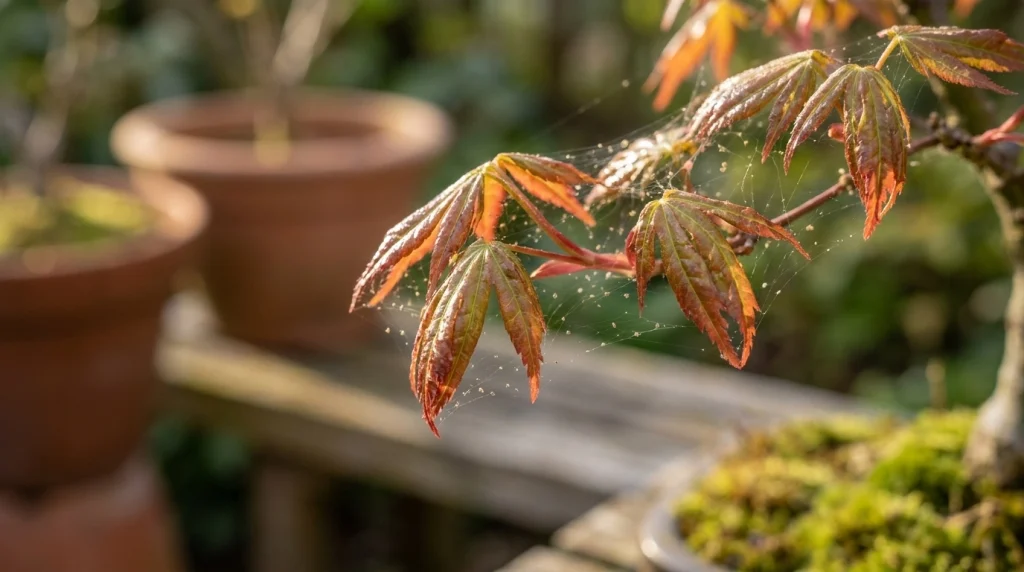
Aphids, spider mites, and scale insects are among the pests worth checking on Japanese maple bonsai. Caterpillars and other leaf-feeding insects can also cause damage.
1. Aphids on Japanese Maple Bonsai
Aphids are small, soft-bodied insects that feed on plant sap. They often gather around tender spring shoots and developing leaves.
They may be green, dark, or yellowish, depending on the species. Their feeding can distort fresh growth and leave sticky honeydew behind.
Common signs:
- Clusters of tiny insects on new shoots
- Curled or misshapen young leaves
- Sticky residue on foliage
- Ants visiting honeydew-covered branches
- Black sooty mold growing on sticky surfaces
For light infestations, I prefer starting with a gentle water rinse. A carefully directed stream can remove many aphids without unnecessary chemicals.
Check again over the next several days. If aphids return, consider a product labeled for the pest and host plant.
2. Spider Mites on Japanese Maple Leaves
Spider mites are tiny arachnids that pierce leaf cells and feed on their contents. Infested leaves often develop pale speckles before looking dull or bronze.
Hot, dry conditions can favor certain spider mite species. Fine webbing may appear when populations become substantial.
What to look for:
- Fine pale dots scattered across leaves
- Bronzed or faded leaf surfaces
- Tiny moving mites beneath foliage
- Delicate webbing around leaves and shoots
- Premature leaf drop during heavy infestations
Hold a white sheet beneath an affected branch and tap it gently. Moving dots on the paper can help reveal mites, although magnification improves identification.
Wash accessible leaves gently and improve growing conditions. If treatment becomes necessary, use a miticide or other product specifically labeled for the identified mites.
Avoid repeated broad-spectrum insecticide spraying without diagnosis. Some products harm beneficial mite predators and can worsen outbreaks.
3. Scale Insects on Trunks and Branches
Scale insects attach to woody surfaces and feed on sap. They can be difficult to notice because their protective coverings resemble small bark irregularities.
Japanese maple scale, Lopholeucaspis japonica, is one armored scale species that attacks maples and many other trees.
The University of Maryland Extension’s Japanese maple scale guide describes its appearance, monitoring, and management.
Typical scale symptoms:
- Small white-coated or brownish covers on bark
- Rough-looking areas along twigs
- Weak shoot growth
- Leaf yellowing during significant infestations
- Branch dieback when populations become severe
The protected adult stage often resists contact treatments. Control usually works better when vulnerable young crawlers are active.
For small bonsai, careful physical removal may help reduce light populations. Avoid scraping delicate living bark.
One important distinction: armored scales do not usually produce honeydew. Sticky foliage may suggest aphids or soft scale instead.
4. Caterpillars and Leaf-Chewing Insects
Caterpillars damage Japanese maple foliage by chewing holes or removing leaf edges. Unlike sap-feeding pests, their feeding often leaves obvious missing tissue.
Inspect the undersides of damaged leaves and nearby branches. Caterpillars may hide along stems or feed during less visible hours.
Hand-removal is often enough for a small infestation on a compact bonsai. Identify the caterpillar before considering additional treatment.
Section Takeaway: Match each pest to its feeding damage. Aphids cause distorted growth, spider mites cause stippling, and scale insects often hide on woody branches.
Which Diseases Affect Japanese Maple Bonsai?
Japanese maple bonsai can develop fungal leaf diseases, root diseases, and vascular infections. Some are mainly cosmetic, while others threaten branches or the entire tree.
1. Verticillium Wilt
Verticillium wilt is a serious disease caused by soilborne fungi, including Verticillium dahliae. These fungi infect the vascular system, which moves water through the tree.
Affected branches may wilt despite adequate moisture. Some trees decline gradually, while others develop sudden dieback.
Possible warning signs:
- One branch wilting while nearby branches remain healthy
- Brown or scorched-looking leaves
- Progressive twig and branch death
- Smaller or yellowing leaves
- Dark vascular streaks inside affected wood in some cases
Vascular discoloration is a clue, not a definitive diagnosis. Its absence also does not rule out infection.
University extension guidance, including Penn State Extension’s maple disease reference, explains that infected maples may develop one-sided wilt and internal wood discoloration.
There is no dependable fungicide cure for Verticillium wilt inside an infected tree. Some mildly affected trees survive with supportive care, but severe infections can be fatal.
Seek a plant diagnostic laboratory’s advice before taking irreversible action. Keep potentially contaminated tools, soil, and plant material away from healthy trees.
2. Powdery Mildew
Powdery mildew is a fungal disease that produces white or grayish growth on foliage. It can affect maples, although susceptibility varies by species and growing conditions.
The coating may appear on leaf surfaces and sometimes young shoots. Significant infection can reduce leaf quality and affect growth.
Management steps:
- Improve airflow around the canopy.
- Avoid crowding multiple bonsai together.
- Remove heavily affected fallen leaves.
- Provide suitable outdoor light without exposing tender foliage to scorching heat.
- Use a labeled fungicide only when the disease and treatment need are established.
Powdery mildew fungi differ in their environmental preferences. Do not assume every fungal disease requires continuously wet leaves.
3. Anthracnose and Other Fungal Leaf Spots
Anthracnose refers to a group of fungal diseases that can create irregular leaf lesions and shoot damage. Other fungal leaf spots may produce similar discoloration.
Symptoms can include brown patches, spots near veins, and premature leaf drop. Cool, wet spring conditions favor some anthracnose infections.
Not every leaf spot needs chemical treatment. If the damage is mild and the tree remains vigorous, sanitation and monitoring may be sufficient.
- Collect fallen infected leaves.
- Improve air circulation.
- Avoid unnecessary overhead wetting late in the day.
- Observe whether healthy new growth develops.
- Ask a diagnostic service for identification if damage spreads.
Old spots will not turn green after treatment. Recovery is better judged by healthy growth and the absence of expanding damage.
4. Root Rot and Poor Root Health
Root rot occurs when harmful organisms damage roots and impair water absorption. Waterlogged, oxygen-poor growing conditions can also injure roots without a confirmed pathogen.
Both situations may cause yellowing and wilting. This can confuse growers because a tree may look thirsty while its soil remains wet.
Warning signs include:
- Potting mix remaining saturated for unusually long periods
- Poor drainage through pot holes
- Weak growth during the active season
- Persistent wilting despite moist soil
- Soft, dark, deteriorating roots when examined
Healthy roots need both water and oxygen. A compacted or poorly structured soil mix can interfere with that balance.
If the tree is declining, first evaluate drainage and watering. Serious root damage may require expert assessment rather than immediate aggressive repotting.
5. Branch Cankers and Dieback
Cankers are localized areas of damaged or dead bark that may result from fungal infection or other injury. They can interrupt water movement into shoots.
Look for sunken bark, cracking, discolored wood, or a dead branch beyond the affected area. Drought, winter injury, and pruning wounds can increase vulnerability.
Do not automatically assume that every dead twig has a canker disease. Check for mechanical injury, frost damage, and root problems as well.
Pro tip: Never make major branch cuts solely to investigate a suspected disease. Consult an experienced grower or local bonsai club before irreversible pruning.
Section Takeaway: Leaf diseases are often manageable, but vascular infections and serious root damage require careful diagnosis. Treating the wrong disease can waste time and weaken the tree.
Are Brown Leaves Caused by Disease or Environmental Stress?
Brown Japanese maple bonsai leaves often result from environmental stress rather than pests or infection. Heat, dry soil, wind, and root damage can produce similar symptoms.
Leaf Scorch From Heat and Sun
Leaf scorch usually appears as dry brown tissue along leaf tips and margins. Delicate Japanese maple cultivars can be especially sensitive to intense summer conditions.
A useful warning threshold is around 85°F (29–30°C), particularly when heat combines with strong afternoon sunlight. Local humidity, wind, and root moisture also influence damage.
Practical adjustments:
- Provide morning sunlight and afternoon shade during hot weather.
- Keep the root zone evenly moist without waterlogging it.
- Protect the bonsai from hot, drying winds.
- Avoid placing shallow pots on surfaces that become excessively hot.
Scorched leaves cannot repair their dead edges. The goal is to protect remaining foliage and support future healthy growth.
Overwatering Versus Underwatering
Underwatering deprives roots of available moisture. Overwatering, especially in poorly draining soil, can deprive roots of oxygen.
Both problems may produce drooping foliage. That’s why I consider soil moisture more useful than judging the leaves alone.
| Factor | Underwatering | Overwatering / Poor Drainage |
|---|---|---|
| Soil condition | Unusually dry | Persistently wet |
| Leaf appearance | Drooping, crisping, drying | Yellowing, drooping, decline |
| Root condition | Dehydration risk | Oxygen shortage and decay risk |
| First response | Rehydrate thoroughly and monitor | Check drainage and reduce unnecessary watering |
Seasonal Leaf Drop Is Not a Disease
Japanese maples naturally shed foliage in autumn. Yellow, orange, and red leaves may fall as the tree enters winter dormancy.
That behavior is normal. Sudden summer leaf drop, however, deserves investigation, especially when shoots also wilt or die.
Japanese maple bonsai belong outdoors and need a seasonal rest period. Keeping them in a warm room throughout winter disrupts their normal growing cycle.
Section Takeaway: Rule out watering and weather stress before assuming disease. Leaf color alone cannot reliably distinguish infection from environmental damage.
How Do You Treat Japanese Maple Bonsai Pests and Diseases?
Effective treatment begins with confirming the likely cause and protecting the tree from additional stress. Start with the least disruptive method that fits the problem.
Step 1: Isolate and Document the Problem
Move an affected bonsai away from nearby trees when practical. Keep it outdoors in a suitable protected position.
Photograph affected leaves and branches before treatment. Record when symptoms began and whether they’re spreading.
Step 2: Check the Roots and Growing Conditions
Feel the soil below its surface and observe drainage. Review recent heat, cold, fertilizing, and watering changes.
For detailed general troubleshooting, the Bonsai Empire guide to common bonsai problems explains how watering and placement can imitate disease symptoms.
Step 3: Remove Accessible Pests Safely
Light aphid infestations may respond to gentle rinsing. Individual caterpillars can often be removed by hand.
Carefully remove accessible scale where feasible. Avoid damaging delicate bark or forcing fragile branches apart.
Step 4: Use Targeted Treatments Only When Necessary
Insecticidal soap and horticultural oil can help manage certain pests when labels permit use on the host plant. Neither product suits every insect or disease.
Before using any pesticide:
- Identify the target pest or disease.
- Confirm that the product label allows use on the plant and setting.
- Follow the specified dilution and application directions.
- Check warnings about sensitive foliage and high temperatures.
- Avoid treating drought-stressed or heat-stressed trees unless the label permits it.
- Observe the tree after application and follow label directions for repeat treatments.
Japanese maple foliage may be sensitive to certain sprays. Never assume a homemade soap mixture is safe merely because its ingredients are familiar.
Fungicides also have specific uses. Many work preventively and cannot reverse damaged tissue or cure vascular infections.
Step 5: Support Recovery Without Forcing Growth
After treatment, keep watering steady and provide suitable light. Avoid major styling work while the tree is weak.
Heavy fertilizing will not repair damaged roots. Resume appropriate feeding when the tree shows healthy active growth.
Do not rush to remove every marked leaf. Remaining green tissue may still contribute energy to recovery.
Step 6: Know When to Seek Expert Help
Rapid branch death, widespread wilting, or suspected Verticillium infection warrants professional diagnosis. Contact a university plant diagnostic clinic or knowledgeable local horticulturist.
Pro tip: Avoid major root cutting or structural pruning on a declining tree without experienced guidance. These irreversible procedures can compound existing stress.
Section Takeaway: Treat confirmed pests with targeted methods and stabilize growing conditions. Serious disease symptoms deserve diagnosis before drastic action.
How Can You Prevent Future Pest and Disease Problems?
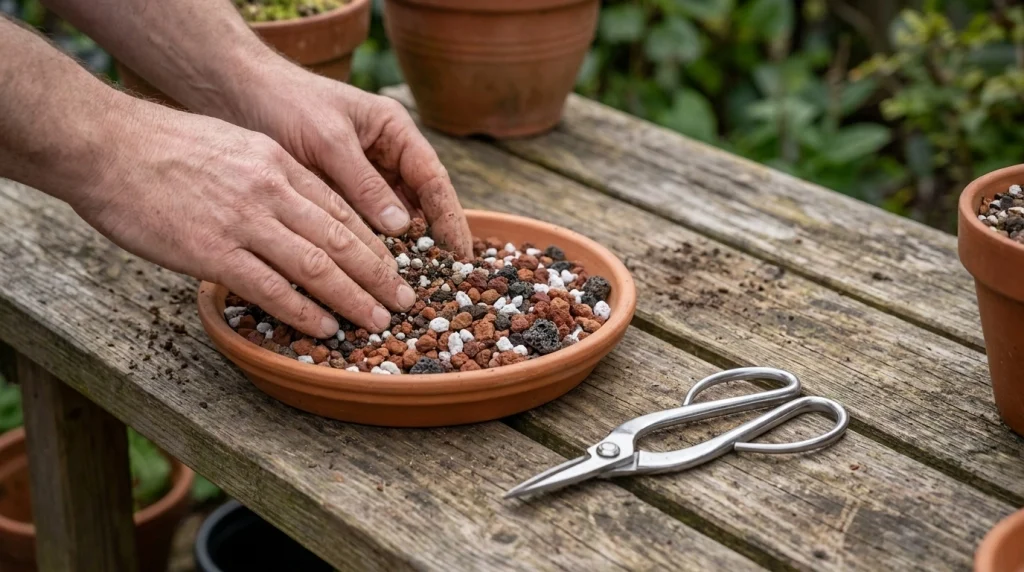
Preventing Japanese maple bonsai pests and diseases depends on healthy roots, suitable outdoor conditions, and regular inspection. No care routine eliminates every pest, but good habits reduce risk.
Use a Well-Draining Bonsai Soil Mix
Japanese maple roots need moisture and air. A structure that retains some water while draining freely supports both requirements.
Common bonsai ingredients include akadama, pumice, and lava rock. Their proportions should reflect local climate, pot depth, and watering habits.
Rather than following one fixed ratio, observe how your mix behaves. A small bonsai pot in hot weather may dry much faster than a deeper training container.
Water According to Soil Moisture
Check moisture daily during active growth, particularly in summer. Water thoroughly when the surface begins drying while moisture remains deeper in the pot.
Never rely on a rigid watering calendar alone. Rainfall, temperature, wind, and root density can change demand from day to day.
Choose the Right Outdoor Location
Morning sunlight and protection from harsh afternoon heat often work well. Avoid cramped, stagnant locations where foliage stays crowded and pests go unnoticed.
Provide seasonal protection when necessary. In cold climates, safeguard the shallow root system against extreme freezing while preserving winter dormancy.
Build a Weekly Inspection Routine
A short weekly check can reveal pest activity before visible damage becomes extensive. Inspect more frequently during rapid spring growth or known outbreaks.
- Spring: Examine new shoots for aphids and leaf distortion.
- Summer: Check for mites, leaf scorch, drainage problems, and scale.
- Autumn: Remove diseased fallen leaves and assess branch health.
- Winter: Inspect bark, dormant branches, and overwintering pest covers.
Newly purchased bonsai deserve separate observation before joining a collection. Pest eggs and protected scales can arrive unnoticed on otherwise attractive plants.
Keep Pruning Tools Clean
Clean tools after use and disinfect them when moving between potentially diseased plants. Remove debris before using an appropriate disinfectant according to its instructions.
Make clean cuts with sharp tools when pruning is appropriate. Limit unnecessary wounds, especially while the tree is recovering.
The broader bonsai pest and disease management guide provides additional identification guidance for growers managing different tree species.
Recognize Normal Seasonal Changes
In 2026, the same basic principle still applies: compare symptoms with the species’ natural growth cycle. A dormant Japanese maple without leaves is not automatically dying.
Watch for healthy spring buds and normal seasonal development. Persistent branch dieback or failure to leaf out deserves closer examination.
Section Takeaway: Well-managed growing conditions and consistent observation form the strongest long-term defense. Protect root health first, then watch new foliage and branches for early warning signs.
Frequently Asked Questions
What are the most common pests on Japanese maple bonsai?
Aphids, spider mites, and scale insects are important pests to watch for on Japanese maple bonsai. Aphids commonly attack tender shoots, mites damage leaf surfaces, and scale insects attach to woody growth. Caterpillars may also chew foliage. The exact pests present depend on location, season, and growing conditions.
Why are my Japanese maple bonsai leaves turning brown?
Brown leaves often result from strong sunlight, heat, drying winds, or irregular watering. Fungal diseases and root damage can also cause browning. Examine the soil and look for insects or distinct lesions. Crispy leaf margins across exposed foliage suggest scorch, but symptoms alone cannot confirm the cause.
Can Japanese maple bonsai recover from Verticillium wilt?
Some trees with mild Verticillium wilt symptoms survive and may recover vigor, but severe infections can be fatal. There is no dependable chemical cure once the fungus infects the vascular system. Professional diagnosis helps distinguish this disease from drought, root damage, and other causes of sudden branch wilt.
Can I use neem oil on Japanese maple bonsai?
Some neem-based horticultural products control specific pests, but Japanese maple foliage can be sensitive to sprays. Use a product only when its label permits the intended application. Avoid high heat and stressed foliage, follow label directions, and test cautiously when the label recommends it.
How do I know whether my bonsai has spider mites?
Check for tiny pale spots on leaves, bronzing, and fine webbing. Inspect leaf undersides with a magnifying glass. You can also tap a branch over white paper and examine moving specks. These signs suggest mites, but close inspection helps distinguish them from dust and other small insects.
Does overwatering cause fungal disease in Japanese maple bonsai?
Excess water combined with poor drainage can reduce root oxygen and encourage conditions favorable to some root pathogens. However, wet soil does not automatically mean a fungal infection exists. Assess drainage, root health, and watering practices before diagnosing root rot or applying fungicides.
Should I remove all damaged leaves from my Japanese maple bonsai?
No. Removing every damaged leaf can weaken a stressed tree by reducing its remaining photosynthetic surface. Remove fallen diseased debris and address confirmed infections appropriately. Leave partly green, functional leaves when possible, and avoid complete defoliation while the bonsai is recovering.
Final Thoughts: Keep Your Japanese Maple Bonsai Healthy
Japanese maple bonsai pests and diseases are easier to manage when you spot changes early. The key is separating insect damage, true disease, and everyday growing stress.
Start with careful inspection, check soil moisture, and choose treatments that address the confirmed cause. Small, informed corrections are usually safer than aggressive action.
Keep an eye on fresh shoots, leaf undersides, and branch health throughout the growing season. A steady care routine gives your Japanese maple the best chance to develop healthy foliage and beautiful seasonal color.
Your next step: Inspect your Japanese maple bonsai today, record any unusual symptoms, and make one care adjustment at a time. Clear observations will make future troubleshooting much easier.
