
Chinese Elm Bonsai Pests and Diseases: Complete Guide

Quick Answer
The most common Chinese elm bonsai pests and diseases include spider mites, scale insects, aphids, fungal leaf spots, and root rot. Most problems respond best to early detection, improved growing conditions, and pest-specific treatment. Chinese elm (Ulmus parvifolia) also has good resistance to Dutch elm disease, although resistance does not mean immunity. Proper watering, ventilation, and light are central to healthy Chinese elm bonsai care.
Common warning signs
- Fine webbing: Spider mites may be feeding beneath the leaves.
- Sticky leaves: Aphids or scale insects may be producing honeydew.
- Brown leaf spots: A fungal leaf spot or environmental injury may be involved.
- Yellowing and wilting: Check soil moisture, roots, and possible vascular disease.
- Soft, dark roots: Root rot may be developing in persistently wet soil.
- Chewed leaf edges: Inspect for caterpillars, beetles, or other leaf-feeding insects.
What to check first
- Inspect: Examine leaf undersides and branch joints with a magnifier.
- Test moisture: Check below the soil surface before adding water.
- Isolate: Separate an infested bonsai from nearby plants while identifying the problem.
Chinese elm bonsai pests and diseases can be frustrating because several problems produce nearly identical symptoms. I’ve found that understanding what a damaged leaf is telling you matters more than rushing to spray something.
In this guide, I’ll explain how to recognize the major pests, tell disease from care-related stress, and choose safer treatment methods. I’ll also cover how to protect your elm through changing seasons.
In This Guide
- What Pests Attack Chinese Elm Bonsai Trees?
- What Diseases Affect Chinese Elm Bonsai?
- How Can You Tell Pests, Disease, and Stress Apart?
- How Do You Treat Chinese Elm Bonsai Pests Safely?
- How Can You Prevent Future Pest and Disease Problems?
- Can a Damaged Chinese Elm Bonsai Recover?
- Frequently Asked Questions
What Pests Attack Chinese Elm Bonsai Trees?
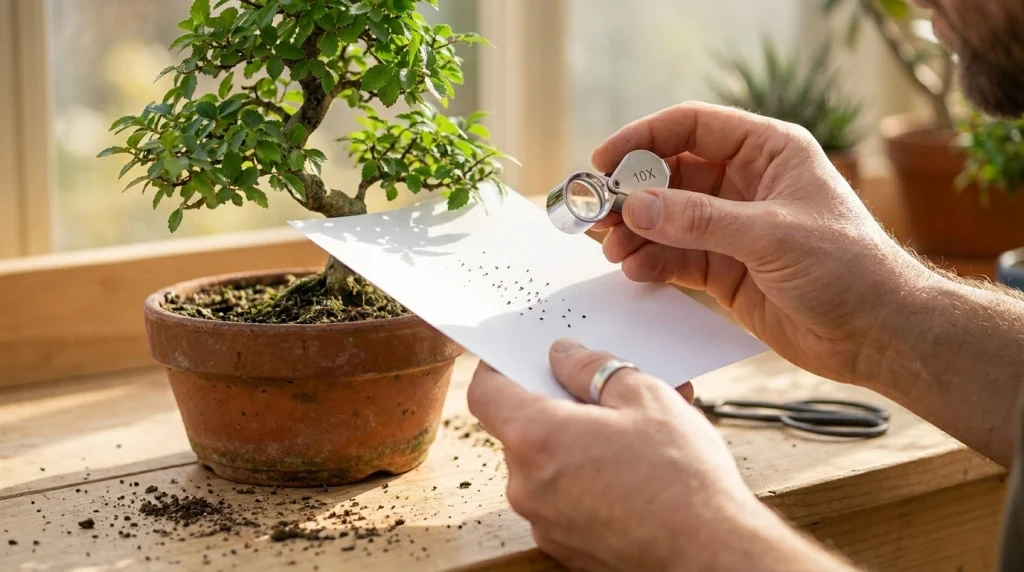
Chinese elm bonsai commonly encounter sap-feeding pests, especially spider mites and scale insects. Aphids, mealybugs, and leaf-chewing insects can also cause trouble.
A pest is an organism that damages a plant by feeding on its leaves, stems, roots, or other tissues. On bonsai, even localized feeding can become noticeable because the canopy is small.
Spider Mites: Tiny Pests That Damage Leaves
Spider mites are among the first pests I would check when Chinese elm leaves develop tiny pale speckles. They are arachnids, not insects, and often thrive in hot, dry conditions.
The mites feed on leaf cells, leaving a dotted or bronzed appearance. Heavy infestations may produce fine silk around leaves and twigs.
Look for these signs:
- Fine pale dots scattered across leaf surfaces.
- Yellow, bronze, or prematurely falling leaves.
- Delicate webbing beneath foliage or between twigs.
- Tiny moving specks on leaf undersides.
One useful test requires only white paper. Hold it beneath a suspect branch, gently tap the foliage, and look for moving specks with a magnifier.
For mild infestations, carefully rinse the leaf undersides with water. If mites persist, consider a labeled insecticidal soap or horticultural oil suitable for the plant.
The University of California’s spider mite management guidance also emphasizes avoiding unnecessary broad-spectrum insecticides. Some products kill the mites’ natural predators and allow populations to rebound.
Scale Insects: Small Bumps on Twigs and Leaves
Scale insects often resemble tiny brown shells or waxy bumps. Their protective covering makes them easy to mistake for harmless bark texture.
Chinese elm’s naturally mottled bark can make inspection harder. I recommend checking young twigs and branch junctions rather than judging the trunk alone.
Common signs include:
- Brown, gray, or pale bumps attached to stems.
- Sticky honeydew on leaves or branches.
- Black sooty mold growing on honeydew.
- Weak shoots and gradual leaf yellowing.
For a small infestation, gently remove accessible scales with a soft brush or damp cotton swab. Avoid damaging tender bark.
Insecticidal soaps and horticultural oils can help with susceptible life stages, especially mobile young scales called crawlers. Follow the product label and repeat only as directed.
Aphids: Why Are New Chinese Elm Leaves Curling?
Aphids are small, soft-bodied insects that gather around fresh growth. They feed on sap and may cause developing leaves to curl or become distorted.
You may also notice ants visiting the tree. Ants sometimes feed on aphid honeydew and protect aphid colonies from predators.
Check these areas:
- Freshly emerging leaves.
- Soft green shoots.
- Leaf undersides.
- Clusters around new buds.
A gentle stream of water can remove many aphids without pesticide use. Check the tree again afterward because surviving aphids reproduce quickly.
If needed, use a plant-safe, labeled insecticidal soap. Avoid homemade dishwashing-liquid mixtures, which can damage foliage.
Mealybugs and Leaf-Chewing Insects
Mealybugs resemble small white cottony clusters around leaf joints and sheltered stems. They can produce honeydew and weaken growth during heavy infestations.
Leaf-chewing insects cause a different pattern. Caterpillars and beetles remove leaf tissue, leaving holes, ragged edges, or partly skeletonized leaves.
Chinese elm generally resists major elm leaf beetle damage better than many other elm species. However, resistance varies and does not eliminate every possible attack.
Check the tree carefully before treating. Hand removal may be sufficient when only a few chewing insects are present.
Section Takeaway: Match the visible pest to its feeding damage before choosing a treatment. Spider mites, scale, and aphids need different monitoring approaches.
What Diseases Affect Chinese Elm Bonsai?
Chinese elm is relatively disease-resistant, but root disorders, leaf spots, cankers, and occasional twig diseases still occur. Serious vascular diseases are less common but deserve careful attention.
Root Rot: A Serious Risk in Wet Bonsai Soil
Root rot describes damage and decay of roots, often associated with oxygen-starved soil and disease-causing organisms. Poor drainage increases the risk.
The symptoms can look surprisingly similar to underwatering. Damaged roots struggle to absorb water even when the pot remains wet.
Watch for:
- Yellow leaves while the soil stays consistently wet.
- Wilting despite adequate moisture.
- Slow growth or widespread leaf loss.
- A sour smell from the root zone.
- Dark, soft, decaying roots when examined.
A waterlogged pot needs immediate attention to drainage and watering habits. Check that the drainage holes are open and the container isn’t standing in water.
Don’t assume every yellow leaf means root rot. Drought, low light, and natural seasonal changes can produce similar symptoms.
If roots are severely damaged, a carefully timed repot may become necessary. Avoid unnecessary root disturbance when the tree is already weak.
Pro tip: Removing live roots can permanently weaken a bonsai. Consult an experienced grower or local bonsai club before major root work on a declining tree.
Fungal Leaf Spot: Brown or Black Marks
Leaf spot diseases can create brown, black, or irregular patches on Chinese elm foliage. Different fungi may produce similar-looking damage.
Water remaining on foliage, crowded growth, and poor air movement may favor some leaf diseases. Environmental damage can also create spots.
Take these steps when leaf spot is suspected:
- Remove fallen, affected leaves from the soil surface.
- Separate the tree from other vulnerable plants where practical.
- Improve airflow around the canopy.
- Water the soil rather than repeatedly soaking the foliage.
- Monitor healthy new growth for spreading symptoms.
Don’t apply fungicide simply because a leaf has a black mark. Confirm the likely cause first, since chemical products cannot reverse tissue already damaged.
Powdery Mildew and Other Surface Fungal Problems
Powdery mildew appears as a pale, powder-like coating on leaves. It can occur on many woody plants, although it isn’t necessarily a frequent Chinese elm bonsai problem.
Surface fungal growth should be distinguished from mineral residue or dust. Check whether the coating spreads across living tissue or wipes away without returning.
Improve ventilation and avoid prolonged crowding. For a confirmed, persistent fungal disease, seek a treatment labeled for the host and pathogen.
Dutch Elm Disease: Is Chinese Elm Resistant?
Yes. Chinese elm has strong resistance to Dutch elm disease, but natural infections can occasionally occur.
The disease is caused by fungi in the genus Ophiostoma. Elm bark beetles spread these pathogens, which disrupt water movement through infected tissues.
Potential warning signs include:
- Sudden wilting on individual branches.
- Leaves turning yellow and then brown.
- Progressive branch dieback.
- Brown streaking inside affected sapwood.
These symptoms cannot confirm Dutch elm disease on their own. A qualified diagnostic laboratory may be needed to distinguish it from other vascular or environmental problems.
University of Illinois Extension explains the species’ resistance in its Dutch elm disease reference.
Elm Yellows, Cankers, and Twig Blight
Elm yellows is caused by a phytoplasma, a specialized bacterial plant pathogen. Chinese elm susceptibility varies, so the disease should not be dismissed as impossible.
It may produce wilting, yellowing, and rapid decline. Accurate identification requires expert assessment rather than relying on foliage color alone.
Cankers involve localized damage to bark and underlying tissue. Some Chinese elms develop trunk cankers in excessively wet conditions, while twig blight may cause shoot dieback.
For guidance on established species risks, consult the University of Florida’s Chinese elm horticultural profile.
Section Takeaway: Chinese elm has useful disease resistance, but no bonsai is immune to decline. Persistent wet soil and unexplained branch death deserve prompt investigation.
How Can You Tell Pests, Disease, and Stress Apart?
Start with the pattern of damage instead of treating every yellow leaf as an infection. Distribution, timing, soil moisture, and visible organisms provide important clues.
Chinese Elm Bonsai Symptom Comparison Table
| Symptoms | Possible Cause | Best First Check | First Response |
|---|---|---|---|
| Pale dots, webbing | Spider mites | Leaf undersides, white-paper test | Rinse foliage and inspect again |
| Sticky leaves, soft insects | Aphids | New shoots and buds | Wash off colonies |
| Hard bumps on twigs | Scale insects | Branch joints and young stems | Remove accessible scales |
| Brown or black patches | Leaf spot or injury | Pattern, spreading, weather exposure | Improve airflow and observe |
| Wilting, persistently wet soil | Root dysfunction or rot | Drainage and root condition | Correct excess moisture |
| Yellowing after relocation | Environmental stress | Recent light or temperature changes | Stabilize growing conditions |
| Rapid isolated branch wilt | Vascular disease or localized injury | Branch damage and diagnostic testing | Seek expert diagnosis |
Why Are Chinese Elm Leaves Turning Yellow?
Yellow foliage has several possible explanations, including watering stress, poor light, spider mites, root damage, and seasonal leaf shedding.
Chinese elms may lose some or all their leaves in colder seasonal conditions. A tree grown in warmer indoor conditions may retain more foliage.
Ask yourself these questions:
- Is the soil unusually wet or completely dry?
- Did the tree recently move indoors or outdoors?
- Are tiny pests visible beneath the leaves?
- Is the yellowing widespread or confined to one branch?
- Does new growth look healthy?
Why Is My Chinese Elm Dropping Leaves Suddenly?
Sudden leaf drop can follow abrupt changes in temperature, light, moisture, or location. It isn’t automatically evidence of disease.
For example, moving a tree from bright outdoor conditions into a heated room can change its water needs. The adjustment may trigger leaf loss.
Check whether the branches remain flexible and whether buds are developing. Healthy buds and stable conditions are encouraging signs.
However, persistent wilting, blackened shoots, or widespread branch death call for closer inspection.
How Do You Treat Chinese Elm Bonsai Pests Safely?
The safest treatment begins with accurate identification and the least disruptive effective method. More chemicals do not necessarily mean better results.
Step 1: Isolate and Inspect the Tree
Move a visibly infested bonsai away from neighboring plants where practical. Avoid placing a light-loving elm in deep shade just to isolate it.
Use a 10× magnifier if possible. Examine leaves, buds, branch joints, and the soil surface.
Step 2: Remove Pests Without Chemicals
Start with mechanical control when an infestation is light.
- Remove visible caterpillars or other large insects by hand.
- Rinse aphids or spider mites from foliage with a controlled water stream.
- Gently brush accessible scale insects from affected twigs.
- Clear fallen leaves and heavily infested debris from the pot surface.
- Inspect the bonsai again over the following days.
A bonsai’s shallow container makes aggressive spraying risky. Support the pot and shield loose substrate before rinsing foliage.
Step 3: Choose an Appropriate Treatment
If nonchemical measures fail, a labeled insecticidal soap or horticultural oil may help control certain pests. Product suitability depends on the plant, pest, formulation, and application conditions.
Never assume a product is safe because it says natural or organic. Oils and soaps can burn sensitive foliage when used incorrectly.
- Check that the label permits use on the plant and setting.
- Follow the exact dilution and application instructions.
- Test a small portion of foliage when the label advises it.
- Avoid spraying during strong heat or when the tree is drought-stressed.
- Cover the pest’s hiding places, especially leaf undersides.
- Keep treated plants away from children and pets according to label directions.
University of Minnesota Extension provides useful guidance on managing insects on indoor plants, including the limitations of soaps and oils.
Avoid lime-sulfur and systemic pesticide treatments without species-specific advice. Some preparations can cause significant Chinese elm leaf loss.
Step 4: Treat the Growing Conditions
Pest treatment may fail if the tree remains weakened by poor care. Adjust the environment alongside pest control.
- Provide suitable bright light.
- Keep soil moist when needed, without maintaining constant saturation.
- Increase gentle airflow around dense foliage.
- Clean the growing area and remove dead plant material.
- Avoid heavy fertilizer applications on a severely stressed tree.
For fungal problems, improving the growing environment often matters as much as direct treatment. Some diseases require a diagnosis before any fungicide decision.
Pro tip: Don’t combine pest treatment with major pruning or aggressive root work. Each procedure can add stress, so stabilize the tree first.
How Can You Prevent Future Pest and Disease Problems?
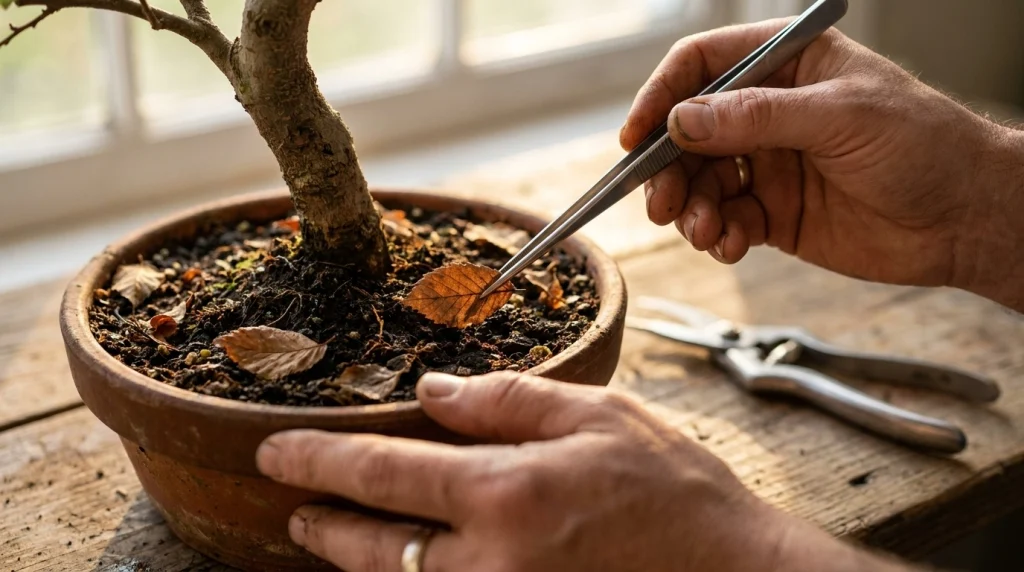
Prevention depends on providing conditions that support healthy roots, strong foliage, and regular growth. It also requires looking closely at the tree before symptoms become severe.
Get Watering and Drainage Right
Chinese elm bonsai should not remain waterlogged or experience prolonged drought. The correct watering interval changes with season, temperature, pot size, and soil composition.
Check the top layer of soil daily during active growth. Water thoroughly when the upper substrate begins drying, allowing excess water to leave the drainage holes.
Don’t rely on a fixed every-two-days rule. A small pot on a hot balcony may dry much faster than one in a cool room.
Provide Enough Light and Airflow
Chinese elm generally prefers full sun to partial shade outdoors, with adjustments for local heat. Indoor trees need a bright position and appropriate seasonal care.
Weak light can lead to soft, elongated growth and reduced vigor. Crowded foliage may also make pest inspection more difficult.
Avoid sudden shifts from a shaded indoor window to intense afternoon sun. Gradually acclimate foliage when changing environments.
Keep Bonsai Tools and Growing Areas Clean
Cleanliness reduces the opportunities for some pests and pathogens to persist.
- Remove fallen leaves from pot surfaces.
- Clean pruning tools between trees, especially when disease is suspected.
- Keep benches free of decaying plant debris.
- Inspect new plants before placing them beside established bonsai.
- Examine the undersides of leaves during routine watering checks.
Sanitize tools with a suitable disinfectant according to its instructions. Dry metal tools afterward to prevent corrosion.
Adjust Care by Season
Pest and disease pressure changes through the year. Your inspection routine should respond to those changes.
| Season | Main Concern | Preventive Action |
|---|---|---|
| Spring | Aphids on fresh shoots | Inspect new growth frequently |
| Summer | Spider mites, heat, drought | Monitor moisture and leaf undersides |
| Autumn | Leaf debris, changing water needs | Clear fallen leaves and adjust watering |
| Winter | Indoor scale, dry heated air, excess watering | Inspect sheltered plants and water according to demand |
These are monitoring priorities, not fixed seasonal rules. In tropical or consistently warm climates, some pests remain active throughout the year.
Section Takeaway: Consistent watering checks, suitable light, clean growing areas, and early inspection prevent many avoidable problems. Healthy roots make pest recovery easier.
Can a Damaged Chinese Elm Bonsai Recover?
Yes, many Chinese elm bonsai recover after moderate pest infestations or temporary care problems. Recovery depends on remaining root health, living buds, and how severe the damage has become.
What Should You Do After Treatment?
Once the primary problem is controlled, focus on stable care instead of forcing new growth.
- Keep the tree in suitable light without sudden environmental changes.
- Check soil moisture before each watering.
- Monitor leaves and twigs for returning pests.
- Avoid aggressive styling while growth remains weak.
- Resume normal fertilizer use when healthy active growth returns.
Existing spotted or damaged leaves may never look normal again. Judge progress by new foliage and whether further injury stops.
How Long Does Recovery Take?
A mild aphid problem may improve visibly once feeding stops. Leaf replacement depends on the growing season and the tree’s overall condition.
More serious root damage or branch dieback can require a much longer recovery period. Some damaged tissues will not regenerate.
Record changes with weekly photographs. They make it easier to judge new buds and canopy improvement without relying on memory.
When Should You Ask an Expert?
Seek specialist help when symptoms spread despite correcting care, or when extensive root or branch damage appears.
Urgent diagnostic attention is appropriate for:
- Rapid branch-by-branch wilting.
- Suspected vascular disease.
- Extensive blackened or decaying roots.
- Persistent cankers affecting major branches or the trunk.
- Repeated pest outbreaks despite correctly applied treatments.
As of 2026, accurate pest identification and integrated pest management remain better starting points than routine preventive pesticide spraying. A local extension service, plant clinic, or bonsai club can help with uncertain cases.
Frequently Asked Questions
What is the most common pest on Chinese elm bonsai?
Spider mites and scale insects are especially important to watch for, particularly on indoor or sheltered Chinese elms. Spider mites cause pale leaf stippling, while scale appears as attached bumps on branches and leaves. Actual pest pressure depends on the growing environment.
Can I use neem oil on a Chinese elm bonsai?
Some neem-based horticultural products may help control certain pests when the label permits their use. However, oil sprays can damage foliage during hot weather or when a tree is stressed. Follow the label and test cautiously before broader application.
Why does my Chinese elm bonsai have sticky leaves?
Sticky leaves often indicate honeydew from sap-feeding insects such as aphids, scale, or mealybugs. Inspect the undersides of leaves and young twigs. Black sooty mold may grow on the honeydew, although the mold itself isn’t the source of the sticky residue.
Is Chinese elm susceptible to Dutch elm disease?
Chinese elm is highly resistant to Dutch elm disease compared with many other elm species, but occasional infections can occur. Unexplained rapid wilting should be professionally evaluated because drought damage and other vascular disorders can resemble the disease.
Can overwatering cause Chinese elm bonsai leaves to turn yellow?
Yes. Constantly saturated soil can deprive roots of oxygen and encourage root disorders, leading to yellowing or wilting foliage. Check drainage and actual moisture levels before assuming the problem is an infection or adding more water.
Should I remove every spotted leaf from my Chinese elm bonsai?
No. A few damaged leaves don’t always justify heavy removal, especially on a weak tree. Remove fallen or clearly diseased debris, monitor whether spots spread, and identify the cause before removing substantial foliage.
Can a Chinese elm bonsai grow back after losing all its leaves?
It can, provided enough roots, buds, and branches remain alive. Some trees lose leaves naturally during dormancy or after environmental changes. Maintain appropriate conditions and watch for new buds rather than immediately applying fertilizer or performing major pruning.
Final Thoughts: Keep Your Chinese Elm Healthy Through Early Detection
Most Chinese elm bonsai problems become easier to manage when you recognize the first warning signs. A few pale spots, sticky leaves, or unusual changes in watering demand can reveal an issue before serious damage develops.
My preferred approach is simple: identify the cause, correct the growing conditions, and use the least disruptive effective treatment. Check new growth regularly, protect the roots, and give the tree time to respond.
Start by inspecting your Chinese elm’s leaf undersides and soil today. Those two checks can tell you a surprising amount about its health.
