Azalea Bonsai Yellow Leaves: 7 Causes and How to Fix Them

This post contains affiliate links. As an Amazon Associate, OurBonsai earns from qualifying purchases at no extra cost to you. Read our disclosure.
In this guide
Seeing azalea bonsai yellow leaves is worrying, but it is one of the most common problems with this tree and it is usually fixable. In most cases the cause is the soil or the water, not a disease. Azaleas are acid-loving plants, and when the soil becomes too alkaline, too wet or too poor, the leaves turn yellow first. The pattern of the yellowing tells you a lot: which leaves are affected, whether the veins stay green, and how fast it is happening.
This guide walks through the seven most common causes, how to tell them apart, and what to do about each one. Work through them in order, because the first three explain the vast majority of yellow azalea leaves.
Why azalea bonsai get yellow leaves so easily
Satsuki and Kurume azaleas, the most popular azaleas for bonsai, have very fine, shallow roots and prefer soil with a pH of about 5.0 to 6.0. That is more acidic than most bonsai trees like. When the pH rises, the roots can no longer take up iron and manganese properly, even if those nutrients are present in the soil. The leaves cannot make enough chlorophyll and turn pale.
This is called chlorosis, and you can read more about the science behind it in the Wikipedia article on chlorosis. For azaleas, the practical lesson is simple: keep the soil acidic, keep it airy and keep the water soft.
7 causes of azalea bonsai yellow leaves
1. Hard tap water and high soil pH
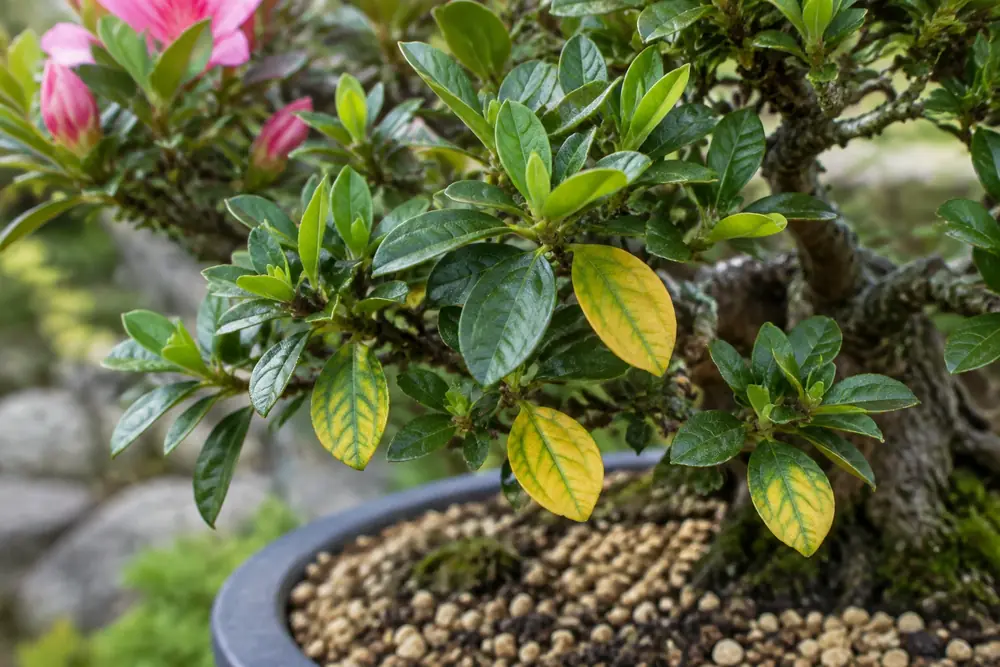
This is the number one cause. Hard water contains lime (calcium carbonate). Every time you water, a little more lime ends up in the pot, and over months the soil pH creeps up. The classic sign is yellow leaves with green veins on the newest growth at the tips of branches.
Fix: use rain water whenever you can, or filtered water if your tap water is hard. Repot into fresh kanuma at the right time of year if the soil is old. Kanuma is naturally acidic and is the standard soil for azaleas. Our kanuma bonsai soil review explains how to use it, and our list of the best soil for azalea bonsai compares mixes.
2. Overwatering and poor drainage
When the soil stays wet all the time, the roots run short of oxygen. They stop working properly, and the whole tree slowly turns pale yellow. If it goes on, root rot sets in. Signs include soil that is still dark and wet a day after watering, a sour smell, and yellow leaves that drop easily.
Fix: water only when the top of the soil is just starting to dry. Make sure the drainage holes are open and that the pot is not standing in water. If the roots are black and mushy, read our guide to root rot in bonsai before you repot.
3. Lack of nutrients
Azaleas growing in pure kanuma have very little food in the soil. Without regular feeding, the leaves fade to a light, washed-out green and then yellow, usually starting with older leaves. Nitrogen shortage shows as even yellowing across the leaf. Magnesium shortage shows as yellowing between the veins of older leaves.
Fix: feed with an acid-friendly bonsai fertilizer from spring until late summer, but pause while the tree is in full flower. Our picks for the best fertilizer for azalea bonsai include both organic pellets and liquid feeds. A chelated iron supplement can green up chlorotic leaves faster while you correct the pH.
4. Underwatering
A single dry afternoon can kill the fine root tips of an azalea. A few days later, leaves turn yellow, then brown and crispy, often on one side of the tree. This is common in summer with small, shallow pots.
Fix: check the soil every day in the growing season. Water thoroughly until water runs out of the drainage holes, wait a minute, and water again. Our guide to watering bonsai in summer has tricks for hot weather.
5. Pests: spider mites and lace bugs
Spider mites and azalea lace bugs suck sap from the underside of the leaves. The top of the leaf shows fine yellow or silvery speckles, and in bad cases the whole leaf turns pale. Spider mites leave tiny webs. Lace bugs leave black, tar-like spots on the underside.
Fix: check the underside of a few leaves with a magnifier. Rinse the foliage with a strong spray of water and treat with insecticidal soap or neem oil. See our guide to spider mites on bonsai trees for a full treatment plan.
6. Repotting or root stress
Yellow leaves a few weeks after repotting usually mean the tree lost too many roots or the roots dried out during the work. The tree drops some leaves to balance what it can support.
Fix: keep the tree in light shade, protected from wind, and keep the soil evenly moist. Do not fertilize for about four weeks. Most azaleas recover once new roots grow.
7. Natural leaf shedding
Satsuki azaleas are semi-evergreen. They keep their small summer leaves through winter but shed some older leaves, mostly in autumn. A few yellow leaves on the inside of the tree in autumn are normal and nothing to worry about.
How to diagnose azalea bonsai yellow leaves step by step
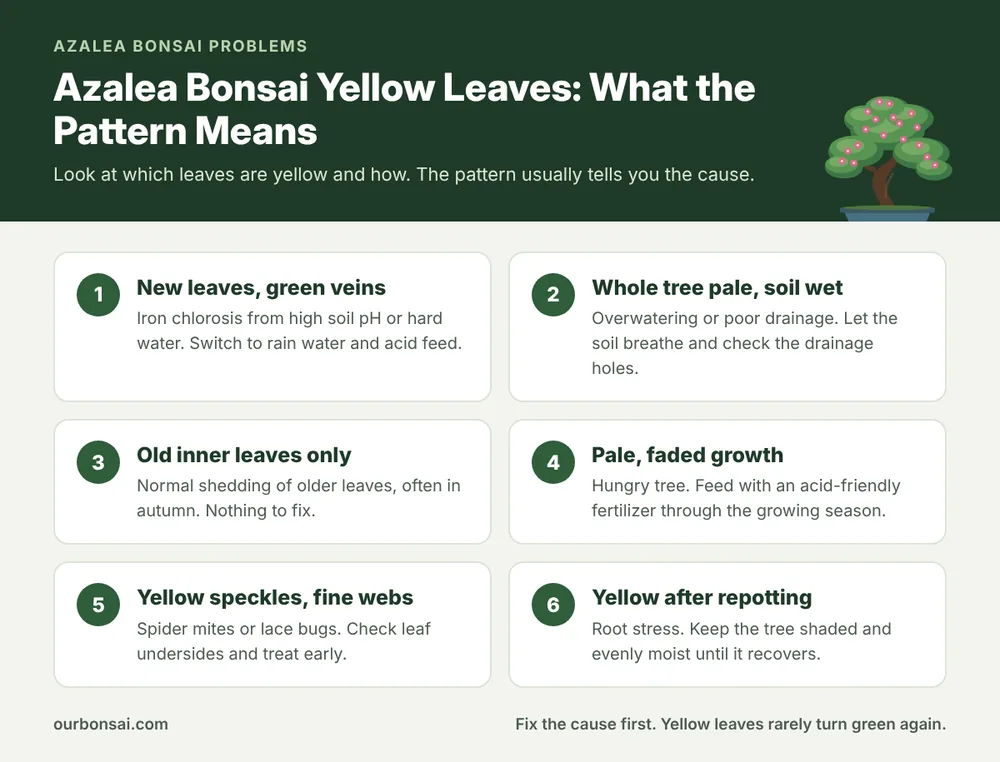
- Look at where the yellow leaves are. New growth at the tips points to pH and iron. Old inner leaves point to natural shedding or nitrogen shortage.
- Check the veins. Green veins on a yellow leaf almost always mean chlorosis from high pH or hard water.
- Feel the soil. Wet and heavy points to overwatering. Bone dry points to underwatering.
- Check the underside of the leaves. Speckles, webs or black spots mean pests.
- Think about recent changes. Repotting, a move indoors, a heat wave or a new water source can all trigger yellowing.
If several leaves are falling at once rather than just turning yellow, our article on why a bonsai loses leaves suddenly covers that side of the problem.
Can yellow azalea leaves turn green again?
Sometimes. Leaves that are only slightly pale from chlorosis can green up again within a few weeks once you fix the pH and give chelated iron. Leaves that are fully yellow usually stay yellow and drop. That is fine. What matters is that the new leaves come in healthy and dark green.
Do not remove yellow leaves in a panic. If they are still partly green, they are still making food for the tree. Remove them only when they come away with a gentle touch.
Preventing yellow leaves on azalea bonsai
| Habit | Why it helps |
|---|---|
| Use kanuma or a kanuma-based mix | Keeps the soil acidic and airy |
| Water with rain water when possible | Avoids lime building up in the pot |
| Feed with an acid fertilizer in spring and summer | Supplies nitrogen, iron and magnesium |
| Repot every 2 to 3 years after flowering | Refreshes acidic soil and roots |
| Check leaf undersides weekly | Catches mites and lace bugs early |
| Keep it outdoors in bright, filtered light | Strong trees resist problems better |
Light matters too. An azalea kept in a dark spot or indoors for too long grows weak, pale leaves. Read our guide on how much light a bonsai tree needs, and if you keep yours inside for a short time, follow our Satsuki azalea indoor care tips.
FAQ: azalea bonsai yellow leaves
Why are the new leaves on my azalea bonsai yellow with green veins?
That is iron chlorosis. The soil pH is too high, usually from hard tap water or old soil, so the roots cannot take up iron. Switch to rain water, feed with an acid fertilizer and add chelated iron.
Is Epsom salt good for yellow azalea leaves?
Only if the problem is magnesium shortage, which shows as yellowing between the veins of older leaves. A weak dose (about a teaspoon per 4 liters of water) once or twice in the growing season is enough. It will not fix high pH.
Should I cut off yellow leaves on my azalea bonsai?
No need. Let them fall on their own or pull them off when they come away easily. Partly green leaves still feed the tree.
Can too much sun turn azalea leaves yellow?
Strong afternoon sun in hot climates can bleach and scorch leaves, especially right after repotting. Give azaleas morning sun and light afternoon shade in summer.
Final thoughts
Most cases of azalea bonsai yellow leaves come down to three things: water that is too hard, soil that is too wet, or a tree that is underfed. Use soft water, keep the soil acidic and airy with kanuma, and feed through the growing season. Fix the cause, be patient for a few weeks, and the new growth will show you that the tree is back on track. For a wider look at leaf color problems on any tree, see our guide to bonsai leaves turning yellow or brown.