Schefflera Bonsai Dropping Leaves: Why It Happens and What to Do

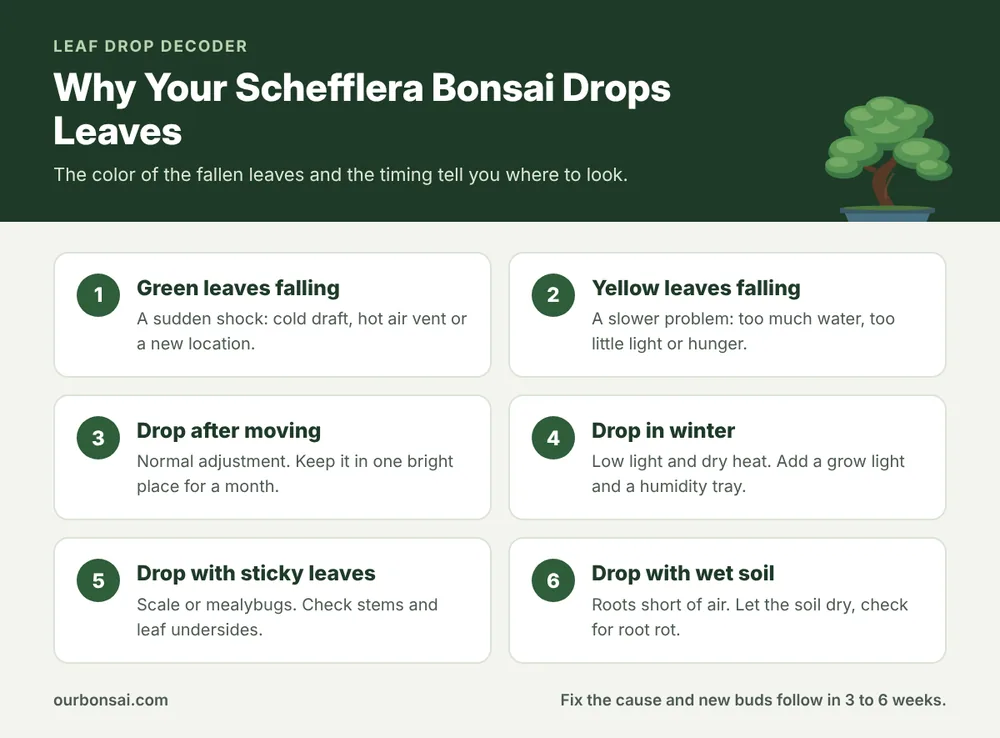
A schefflera bonsai dropping leaves is one of the most common questions from new indoor bonsai owners. The dwarf schefflera is tough, but it reacts quickly to change by shedding leaves. The color of the leaves on the floor is your best clue: green leaves dropping usually means a sudden shock like a cold draft, heat or a move, while yellow leaves dropping points to slower problems such as overwatering, low light or a lack of nutrients. Find the trigger, fix it, and the tree will usually re-bud within a few weeks.
In this guide
- Why schefflera drops leaves so easily
- Green leaves vs yellow leaves dropping
- The main causes of schefflera leaf drop
- How to stop a schefflera bonsai dropping leaves
- Regrowing leaves on a bare schefflera
- Leaf drop on newly bought scheffleras
- Seasonal leaf drop in winter
- Common mistakes
- FAQ: schefflera bonsai dropping leaves
- Final thoughts
Below you will find what each pattern means, how to stop the leaf drop, and how to turn a thin tree into a dense one again.
Why schefflera drops leaves so easily
The dwarf umbrella tree (Schefflera arboricola) is a fast-growing tropical shrub. Dropping leaves is its way to save energy when conditions get worse. Shedding leaves (botanists call this abscission) is quick and reversible for a vigorous plant like this. That is why a schefflera can look bare one month and full the next. The key is to make sure the cause is gone, so the new leaves stay.
Green leaves vs yellow leaves dropping
| What falls | How fast | Most likely cause |
|---|---|---|
| Healthy green leaves | Suddenly, many in a few days | Cold draft, heat source, sudden light change, a move |
| Yellow leaves, mostly old and low | Slowly, over weeks | Normal aging, low light, mild underfeeding |
| Yellow leaves all over | Over one to two weeks | Overwatering, root rot, cold soil |
| Brown, crispy leaves | Over days | Underwatering or very dry air near a heater |
| Leaves with spots or sticky film | Gradually | Pests or a fungal leaf spot |
If the leaves are mostly yellow before they fall, start with watering and light, covered below. If they are green, think about what changed around the tree in the last week. For general leaf loss on any species, see our guide on why a bonsai loses leaves suddenly.
The main causes of schefflera leaf drop
Temperature shock
Schefflera does best between 15 and 27 °C (60 to 80 °F). A cold window at night, an outside door opening in winter or an AC vent blowing on it can trigger green leaf drop within days. A radiator or heater close by does the same in a different way, by drying the leaves out.
A new location
Moving the tree home from a shop, from one room to another, or outside for summer changes light, temperature and humidity at once. Some leaf drop in the first two to four weeks is normal. Keep the tree in one place and resist moving it again.
Low light
Indoors, light drops off quickly as you move away from a window. In a dim spot, schefflera sheds inner and lower leaves first and grows long, bare stems. Our guide on how much light a bonsai tree needs helps you check your spot, and a grow light for bonsai fixes dark corners.
Overwatering
Wet soil for days on end starves roots of air. The tree responds with yellowing and dropping leaves. If the soil smells sour, check for root rot in bonsai.
Underwatering and dry air
Schefflera tolerates a short dry spell, but a bone-dry pot next to a heater leads to crispy, falling leaves. A humidity tray helps a lot in winter.
Pests
Scale and mealybugs both cause leaf drop over time and leave sticky honeydew behind. Check stems and leaf undersides. Our guide to mealybugs on bonsai trees shows what to look for.
How to stop a schefflera bonsai dropping leaves
- Look at the fallen leaves. Green or yellow? That points you to shock or a slower care problem.
- Check the soil. Push a finger 2 cm into it. Water only if it is dry at that depth.
- Check the spot. Feel for cold air near windows and doors, and warm air from heaters or vents. Move the tree if needed, then leave it there.
- Give it light. A bright window with some gentle morning sun or a grow light on for 12 hours a day.
- Look for pests. Treat early before they spread.
- Do not repot or prune hard now. Unless the roots are rotting, wait until the tree is stable and it is spring.
- Hold off on fertilizer until new leaves appear, then feed lightly every two weeks.
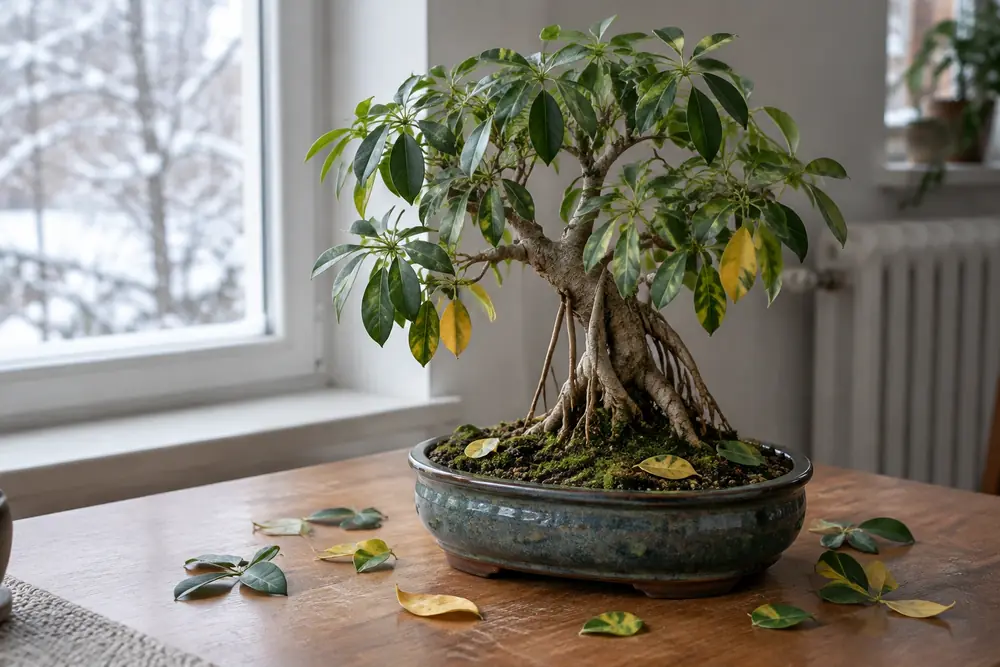
Regrowing leaves on a bare schefflera
The good news: schefflera buds readily from bare stems, even from older wood. Once you have fixed the cause:
- Keep the tree warm and bright. New buds usually appear in 3 to 6 weeks.
- When new shoots have 5 or 6 leaves, cut them back to 2 or 3 leaves to make the tree branch and become denser.
- If the tree has become leggy, spring is a good time to cut long stems back hard. Schefflera re-sprouts below the cut. Our guide on when to start pruning bonsai explains the timing.
Many experienced growers actually remove all the leaves on purpose in early summer to get smaller leaves and denser growth. A healthy schefflera handles this well, which shows just how easily it recovers from leaf loss.
Leaf drop on newly bought scheffleras
Garden center scheffleras often grow in warm, humid greenhouses with perfect light. Your living room is a big change, so a new tree dropping a handful of leaves in its first month is very common. Help it settle with these steps:
- Put it in its final spot on day one: bright, warm and away from drafts.
- Check the soil. Many shop trees sit in dense, wet soil. Water only when the top dries, and plan to repot into bonsai soil next spring.
- Look for pests before placing it near other plants. Our guide on how long you should quarantine a new bonsai explains why.
- Skip fertilizer for the first month.
Seasonal leaf drop in winter
Even healthy indoor scheffleras often drop some leaves between November and February. Days are short, light is weak and heating dries the air. To reduce winter leaf drop, move the tree to your brightest window, water a little less often, add a humidity tray and keep it away from heaters. Our guide to watering indoor bonsai in winter has more detail.
Common mistakes
- Moving the tree around trying to find a better spot. Each move causes more leaf drop.
- Watering more when leaves fall. Check the soil first. Overwatering is the more common cause.
- Fertilizing a stressed tree. It cannot use the fertilizer and the salts can harm roots.
- Giving up too early. Bare scheffleras with green stems almost always come back.
For a complete care routine, see our dwarf schefflera bonsai care guide.
FAQ: schefflera bonsai dropping leaves
Is it normal for a schefflera bonsai to drop leaves?
A few old leaves now and then is normal. Many leaves dropping at once means something has changed, often temperature, light or watering.
Why is my schefflera dropping green leaves?
Green leaf drop is usually a shock response to a cold draft, a heat source or a sudden move.
Will my schefflera grow its leaves back?
Yes, if the stems are still green under the bark. Schefflera re-buds readily, usually within a month or two.
Should I mist my schefflera to stop leaf drop?
Misting helps a little in dry air, but a humidity tray and keeping the tree away from heaters work better.
Final thoughts
A schefflera bonsai dropping leaves is reacting to change. Look at the color of the fallen leaves, fix the shock or care problem behind it, and then let the tree settle in one warm, bright spot. Within a few weeks you should see new buds, and with a little pruning the tree will often end up fuller than before.