
How Long Should You Quarantine a New Bonsai?

Bringing home a new bonsai is exciting, but placing it immediately beside your existing trees can create an avoidable pest problem. A bonsai may look perfectly healthy while carrying scale insects, spider mites, mealybugs, aphids, thrips, fungus gnats, or disease-causing organisms.
So, how long should you quarantine a new bonsai? For most home collections, keeping a new bonsai isolated for at least 2–4 weeks is a practical starting point. Extend that period if you find pests, disease symptoms, or a suspicious decline in health.
Quarantine is not about assuming your new tree is unhealthy. It is about giving hidden problems time to become visible before they can spread to your collection. This guide explains where to quarantine a bonsai, what to inspect, how often to check it, when treatment is necessary, and when it is safe to introduce the tree to your other bonsai.
Quick Answer
How long should you quarantine a new bonsai? Keep a new bonsai isolated for 2–4 weeks before placing it near other trees. Inspect the leaves, stems, trunk, soil, pot, and undersides of leaves regularly. If you discover pests or disease, continue quarantine until the problem is identified, treated, and no longer showing signs of activity.
Why Should You Quarantine a New Bonsai?
New bonsai can carry pests that are difficult to see during a quick inspection. Eggs may be hidden on leaves or in crevices, while very small mites and insects can escape notice until their numbers increase.
The risk is particularly important if you already have a valuable bonsai collection. One infested tree can potentially introduce pests to several other trees.
The USDA’s guidance on preventing the spread of plant pests notes that even healthy-looking plants can carry hidden insects or pathogens and recommends keeping transported plants separate from existing plants for a couple of weeks while monitoring them.
For bonsai growers, quarantine provides three major benefits:
- It protects established trees from new pests and diseases.
- It gives you time to inspect the newcomer carefully.
- It makes treatment easier because you can work on one tree without exposing the rest of your collection.
Quarantine is especially worthwhile when buying from an unfamiliar source, receiving a shipped tree, bringing a tree home from a show, or adding a tree that has previously been kept outdoors with many other plants.
How Long Should a New Bonsai Stay in Quarantine?
For most hobby collections, 2–4 weeks is a sensible minimum range.
There is no universal number that guarantees a tree is pest-free. Different insects and diseases have different life cycles, and environmental conditions affect how quickly symptoms become visible.
A simple guideline is:
| Situation | Suggested quarantine period |
|---|---|
| Healthy tree from a trusted source | 2–3 weeks |
| New tree from an unknown or crowded growing environment | 3–4 weeks |
| Tree with suspicious symptoms | Until correctly identified and resolved |
| Tree with an active pest infestation | Until treatment is successful and monitoring shows no continuing activity |
| Tree with suspected disease | Isolate while diagnosis and treatment are underway |
| Imported or legally regulated plant | Follow applicable plant-health and quarantine requirements |
University of Minnesota Extension recommends isolating newly acquired plants for one to two weeks so possible pest problems have time to become visible. For bonsai collections, extending that observation period to 2–4 weeks gives a cautious hobbyist more time to inspect a woody plant thoroughly.
The important point is not simply counting days. It is monitoring the tree during those days.
Where Should You Quarantine a New Bonsai?
Choose a location that is physically separated from your established bonsai.
Ideally, the new tree should be:
- Several feet away from other plants
- In a separate room when practical
- On a different shelf or bench
- Away from shared watering trays
- Away from strong air movement toward other plants
- Easy to inspect from all sides
For indoor bonsai, a separate room is ideal if you have one available.
For outdoor bonsai, place the newcomer at a reasonable distance from your collection. Avoid putting it directly underneath or immediately beside established trees.
Remember that quarantine should not sacrifice the tree’s basic care requirements. An outdoor species still needs appropriate outdoor light, temperature, airflow, and watering. A quarantine area is not an excuse to keep an outdoor bonsai in a dark room.
What Should You Inspect on a New Bonsai?
A quick glance at the foliage is not enough. Pests can hide in several places.
Inspect the entire tree systematically.
1. Check the Leaves
Look at both the upper and lower surfaces.
Search for:
- Tiny insects
- Eggs
- Webbing
- Sticky residue
- White cotton-like material
- Speckled or stippled leaves
- Distorted new growth
- Holes or chewing damage
- Unusual yellowing or browning
Spider mites, for example, can be difficult to notice until feeding damage and webbing become obvious. Regular scouting is one of the best ways to catch problems early.
2. Inspect the Stems and Branches
Carefully examine branch junctions and young shoots.
Look for:
- Scale insects
- Mealybugs
- Aphids
- Small crawling insects
- Egg masses
- Sticky honeydew
- Black sooty growth
Use a magnifying glass if necessary. A 10× hand lens can make very small pests much easier to detect.
3. Examine the Trunk
Inspect bark cracks, branch collars, and areas around old pruning cuts.
Some pests hide in protected locations rather than sitting openly on leaves.
4. Check the Soil and Pot
Look around:
- The soil surface
- Drainage holes
- The underside of the pot
- The pot rim
- The drainage tray
- Cracks and crevices
Fungus gnats are particularly associated with persistently moist growing media. Their presence can also be a warning that watering practices need attention.
5. Inspect the General Health of the Tree
Not every yellow leaf means pests.
Stress from shipping, a sudden change in light, temperature changes, underwatering, overwatering, or root problems can also cause symptoms.
Look at the whole picture rather than treating every discoloration as an insect infestation.
How to Quarantine a New Bonsai Step by Step
A consistent routine makes quarantine much easier.
Step 1: Inspect the Tree Before Bringing It Near Your Collection
Before placing the bonsai in its quarantine location, examine the foliage, branches, trunk, pot, and soil.
If you see obvious pests, keep the tree isolated and identify the problem before doing anything else.
Step 2: Give the Tree Its Normal Basic Care
Do not neglect watering simply because the tree is in quarantine.
Check the soil according to the species and growing medium. Avoid watering automatically on a fixed schedule.
Overwatering a newly acquired bonsai can create a second problem while you are trying to prevent the first.
Step 3: Monitor Every Few Days
Look closely whenever you water or otherwise work with the tree.
Check for new insects, damaged leaves, sticky residue, webbing, or changes in growth.
A simple inspection log can be useful:
- Date checked
- Pest symptoms observed
- Leaf condition
- Soil moisture
- Treatment applied, if any
- Changes since the previous inspection
Step 4: Use Traps When Appropriate
Yellow sticky traps can help detect flying pests such as fungus gnats, whiteflies, thrips, and winged aphids.
They are primarily a monitoring tool, not a complete solution for every infestation.
Step 5: Reinspect Before Ending Quarantine
At the end of the quarantine period, perform another careful inspection.
Do not move the tree simply because 14 or 28 days have passed.
If you see active pests, continue isolation.
Common Bonsai Pests to Watch For
Different pests leave different clues.
| Pest | Common warning signs | What to check |
|---|---|---|
| Spider mites | Fine webbing, speckled leaves, leaf discoloration | Leaf undersides and new growth |
| Scale | Small bumps attached to stems or leaves, sticky residue | Branches, stems, leaf veins |
| Mealybugs | White cotton-like clusters | Leaf joints, branches, roots |
| Aphids | Small insects, curled or distorted growth, honeydew | Tender shoots and leaf undersides |
| Thrips | Silvery or scarred foliage, distorted growth | Young leaves and flowers |
| Fungus gnats | Small flying insects around soil | Soil surface and drainage area |
| Whiteflies | Small white insects flying when foliage is disturbed | Leaf undersides |
Correct identification matters. Different pests require different management approaches, and using a pesticide without knowing what you are treating can waste money or damage the plant.
What If You Find Pests During Quarantine?
Do not move the bonsai into your collection.
Keep it isolated and identify the pest first.
For a small infestation, physical removal may be enough. Depending on the pest and species, you may also use water sprays, insecticidal soap, horticultural oil, or another properly labeled treatment.
The UC Statewide IPM guidance for houseplant problems recommends correctly identifying insects or mites before selecting a control method and emphasizes isolation when pests or diseases are detected.
Always read the product label before applying a pesticide. Check that the product is appropriate for the plant, pest, application site, and intended use.
Never assume that a treatment safe for one bonsai species is automatically safe for another.
Some trees are more sensitive to oils, soaps, or other treatments, particularly under hot, bright, or stressful conditions.
Should You Repot a New Bonsai During Quarantine?
Usually, do not rush to repot a newly purchased bonsai simply because you brought it home.
Repotting is another source of stress. If the tree is healthy and the existing soil is functioning properly, it may be better to allow the bonsai to acclimate first.
There are exceptions.
Repotting may be justified when:
- The tree is severely root-bound.
- The growing medium is staying dangerously wet.
- The roots are rotting.
- The container is damaged.
- The soil contains a serious pest problem.
- There is an urgent root-health issue.
If a new tree is already stressed, avoid combining unnecessary repotting, heavy pruning, wiring, and pest treatment all at once.
One major intervention at a time is often easier on the tree and easier for the grower to monitor.
Should You Prune or Wire a New Bonsai During Quarantine?
Quarantine is primarily an observation period, not a styling project.
Unless there is a clear health reason, avoid immediately performing major structural pruning or aggressive wiring.
A newly purchased bonsai may already be adjusting to:
- Transportation
- A new light level
- Different humidity
- A different watering routine
- Temperature changes
- A new growing medium
- Handling during shipping
Give the tree time to show you how it is responding.
Light maintenance, such as removing clearly dead material, can sometimes be appropriate, but major structural work should generally wait until the tree is established and vigorous.
How to Know When Quarantine Is Over
A bonsai can usually be considered ready to join the rest of your collection when:
- No active pests are visible.
- No new pest damage is appearing.
- There are no unexplained disease symptoms spreading.
- The tree is receiving appropriate light and water.
- Its overall condition is stable.
- You have completed repeated inspections.
- Any discovered pest problem has been successfully addressed.
If you are uncertain, extending quarantine is usually the safer choice.
There is little benefit in saving three days of isolation if doing so puts an entire collection at risk.
Expert Tip: Treat quarantine as an observation period, not a countdown. A healthy-looking bonsai that remains symptom-free after several careful inspections is a much safer addition than one released simply because a calendar date has arrived.
What About Bonsai That Come From Another Country?
Internationally sourced plants require more than ordinary home quarantine.
Plant movement across borders can be subject to strict phytosanitary rules because plants and growing media can carry regulated pests and pathogens. USDA APHIS, for example, has specific requirements for imported bonsai and other artificially dwarfed plants, including rules concerning growing media and certain post-entry quarantine situations.
Do not confuse home quarantine with government-required plant quarantine.
If you are importing a bonsai, check the plant-health requirements of your destination country before buying or shipping it.
Quarantine Is Especially Important for Valuable Bonsai
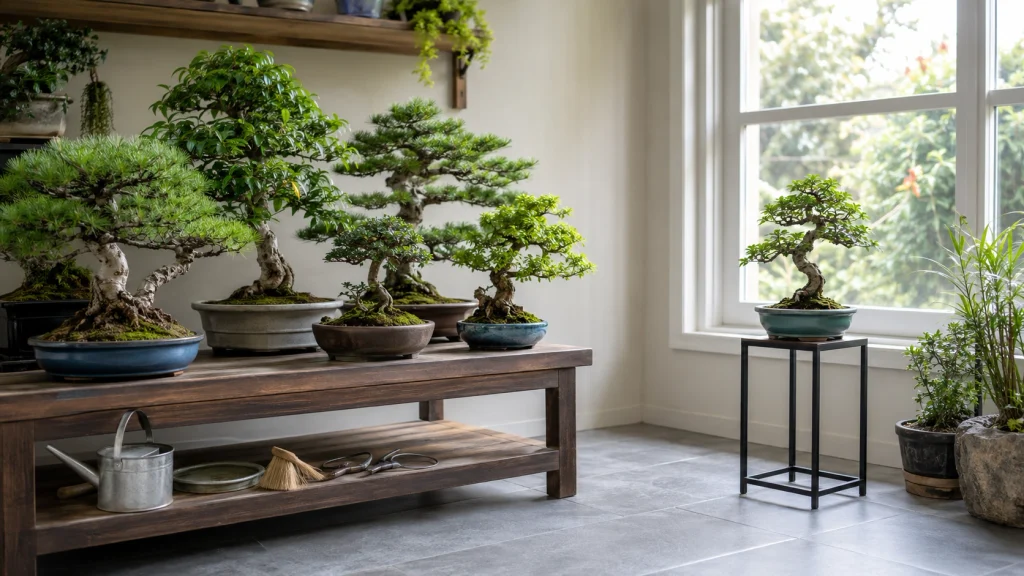
The more established your collection becomes, the more valuable quarantine can be.
A mature bonsai may have taken years or decades to develop. Losing it to an infestation introduced by a new purchase can be frustrating and expensive.
Quarantine costs very little compared with replacing a mature tree.
The biggest cost is usually your time.
You may need:
- A separate stand
- A magnifying glass
- Sticky traps
- Clean pruning tools
- Appropriate pest-control products
- Extra monitoring time
These are relatively small investments compared with the potential cost of treating an entire collection.
Common Mistakes Bonsai Owners Should Avoid
- Putting a new bonsai directly beside established trees.
- Assuming a reputable seller means quarantine is unnecessary.
- Checking only the top of the leaves.
- Ignoring the soil and drainage holes.
- Using pesticides before identifying the pest.
- Applying several treatments at once.
- Overwatering a stressed new tree.
- Repotting immediately without a clear reason.
- Performing heavy pruning immediately after purchase.
- Ending quarantine simply because two weeks have passed.
- Sharing contaminated tools between an infested tree and healthy trees.
- Ignoring a small pest population because the tree still looks healthy.
UC IPM guidance for ornamental plants similarly emphasizes careful inspection of incoming plants, quarantine, sanitation, and repeated monitoring to reduce pest spread.
When to Ask an Experienced Bonsai Grower or Arborist
Most minor pest issues can be managed by attentive hobbyists, but some situations deserve professional advice.
Consider getting help when:
- The pest cannot be identified.
- The tree is rapidly declining.
- Leaves are dying throughout the canopy.
- You suspect serious root rot.
- The trunk or major branches show disease symptoms.
- A pest infestation continues despite reasonable treatment.
- You are considering major root work on a stressed tree.
- You need to perform major structural pruning on an old or valuable bonsai.
- The tree is rare, expensive, or especially important to you.
A knowledgeable bonsai grower can often identify species-specific problems that are difficult to diagnose from photographs alone.
An arborist or plant-health professional may be more appropriate when a larger woody plant has serious structural, disease, or pest problems.
FAQs

How long should I quarantine a new bonsai?
For most home collections, 2–4 weeks is a practical quarantine period. Extend it if you find pests, disease symptoms, or unexplained decline.
Is two weeks enough to quarantine a bonsai?
Two weeks may be enough for a healthy-looking tree from a reliable source, but it is not a guarantee. A 3–4 week observation period provides a more cautious approach, especially for expensive collections.
Can I quarantine a bonsai outdoors?
Yes. Outdoor bonsai should generally remain in conditions appropriate for their species. Place the new tree away from your established collection and inspect it regularly.
Should I treat a new bonsai for pests even if I cannot see any?
Not necessarily. Preventive treatment is not automatically safer than careful inspection. Some products can stress or injure sensitive bonsai. Identify a problem before choosing a treatment whenever possible.
Should I repot a new bonsai immediately after buying it?
Usually not unless there is an urgent problem with the roots, soil, drainage, or container. Letting the tree acclimate before unnecessary major work can reduce stress.
Can pests spread from one bonsai to another?
Yes. Some insects and mites can move between nearby plants, while pests can also spread through contaminated tools, containers, hands, or plant material. Isolation and sanitation help reduce this risk.
When can I put my new bonsai with my other trees?
Move it into the main collection after the quarantine period only when repeated inspections show no active pests or developing disease symptoms. If you are unsure, continue quarantine.
Conclusion
Quarantining a new bonsai is one of the simplest ways to protect an established collection. For most hobbyists, 2–4 weeks of isolation is a sensible starting point, but the condition of the tree matters more than an exact number of days.
Inspect the leaves, stems, trunk, soil, pot, and drainage area regularly. Watch for spider mites, scale, mealybugs, aphids, thrips, fungus gnats, and signs of disease. Keep watering appropriate for the species, avoid unnecessary major styling work, and do not use pesticides blindly.
Most importantly, do not end quarantine just because the calendar says it is time. If the tree looks healthy after repeated inspections, it can gradually join your collection. If you find a problem, keep it isolated until you understand and manage the issue.
Taking a few weeks to quarantine a new bonsai is a small investment that can protect years of work. Make quarantine part of your normal bonsai-buying routine, and you will make safer, smarter decisions for every tree you bring home.
