How to Prevent Serious Diseases in Bonsai
Quick Answer
The best way to prevent serious diseases in bonsai is to keep roots healthy, avoid constantly wet soil, provide appropriate light and airflow, sanitize tools, remove diseased material quickly, and inspect the tree often. Healthy trees are less vulnerable, while early detection gives you the best chance to stop a localized problem before it spreads; this bonsai pest and disease guide provides useful examples of warning signs.
Disease-Prevention Priorities
- Protect the roots: Use a free-draining substrate and never leave the pot sitting in stagnant water.
- Water by need: Check the substrate instead of following a rigid calendar.
- Improve airflow: Give foliage and branches enough space to dry after rain or watering.
- Keep tools clean: Clean and disinfect pruning tools when disease is suspected.
- Inspect frequently: Look at leaves, needles, bark, branch tips, soil, and drainage holes for changes.
- Isolate problems: Separate a suspicious tree from the rest of your collection until you know what is wrong.
One Rule I Would Not Ignore
- Don’t spray a fungicide, insecticide, or other treatment until you have a reasonable diagnosis and have read the product label.
Serious bonsai diseases rarely begin with a dramatic collapse. They usually start with small changes in roots, foliage, bark, drainage, or growing conditions that are easy to miss.
I prefer to treat disease prevention as part of normal bonsai care rather than something I think about only when a tree looks sick. This guide explains the routine I recommend for protecting a collection in 2026 and beyond.
In This Guide
- What Causes Serious Diseases in Bonsai?
- How Do Watering and Soil Prevent Bonsai Disease?
- How Do Light, Airflow, and Humidity Affect Disease?
- How Do You Stop Disease From Spreading Between Bonsai?
- What Early Signs of Bonsai Disease Should You Watch For?
- Bonsai Disease Prevention FAQ
- Final Takeaway: Prevention Is Easier Than Recovery
What Causes Serious Diseases in Bonsai?
Serious bonsai disease develops when a susceptible tree, a damaging pathogen, and favorable environmental conditions come together. Stress from poor drainage, incorrect watering, weak light, root damage, or unsuitable seasonal care can make the situation worse.
A miniature tree isn’t naturally more disease-prone simply because it’s a bonsai. The challenge is that its root system lives inside a small container, so growing mistakes can affect it quickly.
What does “bonsai disease” mean?
A bonsai disease is a harmful condition caused by a biological pathogen such as a fungus, bacterium, or virus. Disease should be distinguished from environmental stress and insect damage, even though the symptoms can look similar.
Yellow leaves, for example, don’t automatically mean fungus. Poor watering, low light, damaged roots, natural leaf aging, insects, and nutrient problems can produce similar symptoms.
- Fungal and fungus-like diseases: May affect roots, foliage, bark, shoots, or vascular tissue.
- Bacterial diseases: Can enter through wounds or natural openings and may spread through contaminated water or tools.
- Viral diseases: May produce unusual discoloration, distorted growth, or decline and generally require careful isolation.
- Root diseases: Often become severe when drainage and root-zone conditions favor pathogens.
- Environmental disorders: Overwatering, drought, heat, frost, poor light, or fertilizer damage can imitate infectious disease.
Why stressed bonsai are more vulnerable
A vigorous tree can devote resources to new roots, foliage, wound response, and normal defensive processes. A chronically stressed tree has fewer reserves.
This is why prevention starts with correct culture. Bonsai Empire likewise emphasizes suitable soil, appropriate watering, correct fertilization, and proper placement as foundations of healthy trees.
| Problem Type | Possible Warning Signs | Main Prevention Focus |
|---|---|---|
| Root rot | Weak growth, yellowing, wilting, dark or soft roots | Drainage, correct watering, clean substrate |
| Leaf spot and fungal foliage problems | Expanding spots, lesions, discolored foliage | Airflow, sanitation, appropriate watering |
| Cankers or shoot dieback | Localized dead bark, dying twigs, progressive branch decline | Avoid wounds and stress; sanitize cutting tools |
| Bacterial problems | Water-soaked lesions, shoot damage, unusual tissue decline | Clean tools, reduced splashing, isolation |
| Virus-like symptoms | Unusual mottling, distorted growth, unexplained decline | Quarantine and professional diagnosis |
Section Takeaway: Most serious bonsai diseases are easier to prevent when the tree’s basic growing conditions are correct. Don’t diagnose a disease from one symptom alone.
How Do Watering and Soil Prevent Bonsai Disease?
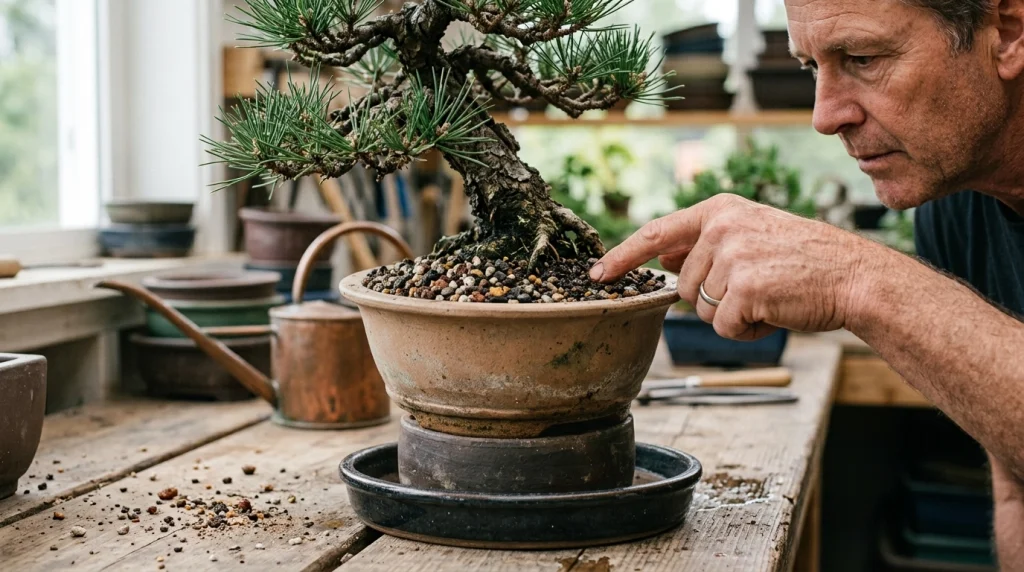
Watering and root-zone conditions are among the most important parts of bonsai disease prevention. Roots need both moisture and oxygen, so permanently saturated substrate can create serious problems.
The goal isn’t to keep a bonsai constantly wet. It is to provide water when the tree needs it while allowing excess water to leave the pot.
Don’t water bonsai on a fixed calendar
I recommend checking the substrate itself before watering. Temperature, sunlight, wind, season, species, pot size, root density, and substrate all change how quickly a bonsai dries.
A tree that needs daily attention during hot summer weather may use water much more slowly during a cool, cloudy period. A rigid “water every two days” rule ignores those changes.
- Check the substrate frequently during active growth.
- Water thoroughly when the tree needs water.
- Make sure excess water exits through the drainage holes.
- Never assume a wet surface means the entire root ball is evenly moist.
- Don’t leave ordinary bonsai pots standing continuously in stagnant water.
Why drainage matters so much
Good bonsai substrate needs a balance of water retention and air space. When pores remain filled with water for too long, root oxygen levels fall and root health can deteriorate.
Penn State Extension notes that root diseases can be associated with dark, weakened roots and reduced growth. It also emphasizes well-drained growing media as an important preventive measure.
You can review broader horticultural information on Phytophthora root rot management from Penn State Extension.
Watch what the drainage holes tell you
Drainage holes provide useful clues without disturbing the root system. Water should move through a healthy, appropriately structured substrate rather than sitting on the surface for an unusually long time.
Sudden changes deserve attention. A pot that used to drain freely but now stays wet may have compacted substrate, dense roots, blocked drainage, or another root-zone problem.
Don’t automatically repot a sick tree
A struggling bonsai isn’t always helped by immediate repotting. Root work adds stress, and the right response depends on the species, season, severity, and suspected problem.
If you do need to inspect or remove damaged roots, use clean, sharp tools and avoid unnecessary cutting. Preserve healthy tissue whenever possible.
Pro tip: Root pruning is irreversible. If significant root rot or major root removal is involved, get advice from an experienced grower, bonsai club, or qualified horticultural professional before making aggressive cuts.
Section Takeaway: Healthy roots need water, oxygen, drainage, and appropriate timing. Correct the growing conditions before reaching automatically for a chemical treatment.
How Do Light, Airflow, and Humidity Affect Disease?
Appropriate light and airflow help a bonsai remain vigorous and reduce long periods of surface moisture around foliage. The exact conditions should always match the species.
An outdoor juniper, for example, has different placement requirements from a tropical ficus grown with indoor protection during cold weather. “Bright” or “humid” is not a universal prescription.
Give the species enough light
Low light can weaken growth and can also produce symptoms that growers mistake for disease. Bonsai Empire identifies insufficient light as one possible cause of weak growth and leaf problems, particularly indoors.
Start with the species’ actual requirements. Don’t move a shade-acclimated tree suddenly into intense sun merely because its leaves are yellow.
Use airflow without dehydrating the tree
Branches packed tightly against other plants can stay damp longer after watering or rain. Crowding can also make inspection harder.
Space trees so air can move around their foliage. You don’t need constant strong wind; you need normal ventilation and enough room for foliage to dry appropriately.
- Avoid packing foliage from several bonsai tightly together.
- Remove dead leaves caught inside dense branch structures.
- Keep benches and growing areas reasonably clean.
- Check dense inner foliage where moisture can persist.
- Adjust placement for the species and season.
Be careful with foliage that stays wet
Water on leaves isn’t automatically dangerous. Rain is a normal part of outdoor tree life.
The concern is repeated or prolonged wetness combined with susceptible tissue, limited airflow, and a pathogen. University extension disease guidance commonly recommends reducing unnecessary leaf wetness when disease pressure is high.
Penn State’s guidance on pest and disease problems of indoor plants also stresses sanitation, air circulation, avoiding overwatering, and removing diseased material.
Adjust care seasonally
Disease prevention changes through the year. Water use, growth speed, sunlight, rainfall, and temperature can shift substantially between seasons.
During cool or rainy stretches, a tree may dry more slowly. During hot, windy weather, the same pot may lose moisture quickly.
Section Takeaway: Match light, airflow, watering, and seasonal protection to the species rather than following one universal bonsai routine.
How Do You Stop Disease From Spreading Between Bonsai?
Separate suspicious trees, clean tools, remove infected debris, and avoid carrying contaminated soil or water from one pot to another. These simple habits can protect an entire collection.
Sanitation becomes especially important once you have more than one bonsai. One contaminated tool can contact several trees in minutes.
Quarantine new and suspicious trees
Don’t immediately place a newly acquired tree in the middle of an established collection. Keep it separate long enough to watch for suspicious foliage, insects, drainage problems, or progressive decline.
The same principle applies when one existing bonsai suddenly develops unexplained symptoms. Separation gives you time to investigate while reducing exposure to neighboring trees.
Clean before you disinfect
Disinfectant works best on tools that are already free of soil, sap, and plant debris. Physical cleaning therefore comes first.
The University of Minnesota Extension explains that pathogens can travel on soil and plant debris left on tools and containers. Its tool and container sanitation guidance recommends both cleaning and disinfecting to reduce disease spread.
- Remove debris: Brush or wash away soil, sap, bark, and plant material.
- Clean the surface: Make sure the blade or container is visibly clean.
- Use an appropriate disinfectant: Follow extension guidance and product instructions.
- Allow proper contact time: A quick wipe may not equal effective disinfection.
- Dry and maintain tools: Prevent corrosion and keep cutting edges sharp.
Be especially careful when pruning diseased tissue
If you cut a suspicious branch and immediately use the same blade on another tree, contaminated plant material may travel with the tool. Sanitation matters most when disease is already present.
Remove infected material from the growing area rather than leaving it beneath the tree. Don’t add obviously diseased material to a pile that could later contact healthy plants unless your disposal system safely handles plant pathogens.
Pro tip: Removing live branches can permanently alter a bonsai’s design and health. When significant dieback or an important structural branch is involved, confirm the diagnosis before cutting aggressively.
Don’t share dirty water between pots
Soilborne pathogens can move in contaminated water. Avoid arrangements that allow drainage from a sick tree to collect around neighboring bonsai.
This becomes particularly important when root disease is suspected. Keep affected containers separate and clean the work area afterward.
Section Takeaway: Think of disease control as containment. Separate the tree, clean tools and surfaces, remove diseased debris, and prevent contaminated water or soil from reaching healthy bonsai.
What Early Signs of Bonsai Disease Should You Watch For?
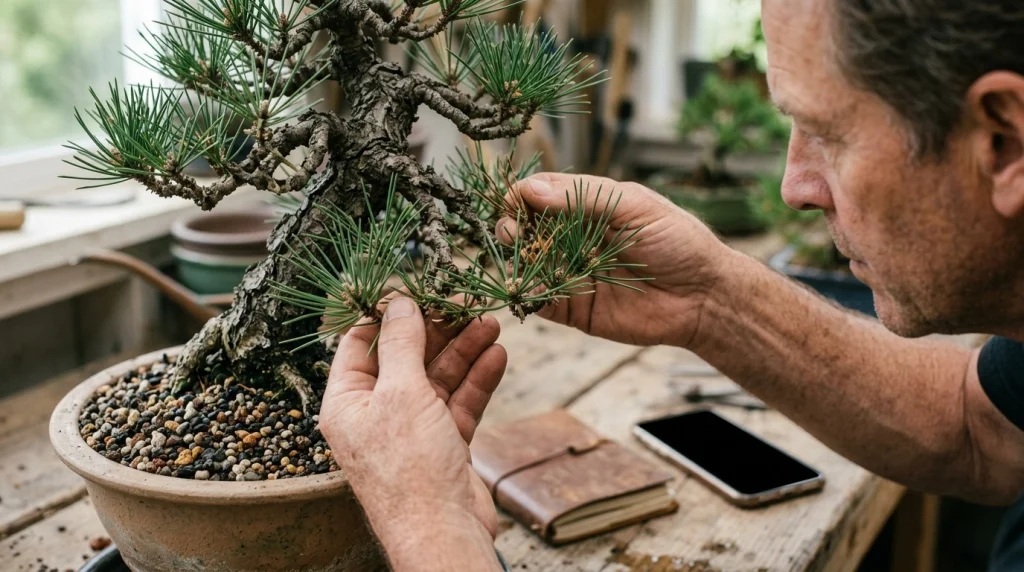
Watch for change rather than waiting for a textbook symptom. Progressive leaf spots, unexplained dieback, soft roots, unusual bark lesions, distorted growth, or rapid loss of vigor deserve investigation.
The pattern matters as much as the symptom itself. Ask when it began, where it started, how quickly it is spreading, and what changed before it appeared.
Use a consistent inspection routine
I recommend giving every tree a quick visual check whenever you water and doing a closer inspection regularly during active growth. That turns disease detection into a habit.
- Leaves: Look for expanding spots, unusual mottling, powdery coatings, curling, distortion, or premature drop.
- Needles: Check for abnormal browning patterns rather than assuming every brown needle signals disease.
- Twigs: Watch for sudden tip death or dieback moving down a branch.
- Bark: Look for sunken areas, cracking, discoloration, or suspicious lesions.
- Roots: During appropriate repotting or inspection, note soft, blackened, foul-smelling, or collapsing roots.
- Substrate: Watch for unusual drainage changes or a root zone that stays wet much longer than expected.
- Pot area: Remove accumulated dead foliage and organic debris.
Distinguish disease from ordinary stress
A single yellow leaf isn’t enough for a diagnosis. Deciduous trees naturally shed foliage, older leaves age, recently moved trees can react to environmental change, and watering mistakes can cause broad symptoms.
Bonsai Empire’s bonsai troubleshooting guidance notes that yellowing and leaf loss can have several non-disease causes, including watering and light problems.
Look for progression
A serious problem often changes over time. Photographing the same area every few days can help you determine whether a lesion is expanding or a branch is continuing to decline.
Keep basic notes when the diagnosis isn’t obvious. Record watering, recent repotting, fertilizer use, temperature extremes, pruning, newly introduced trees, and any treatments already applied.
Don’t treat every symptom with fungicide
A fungicide won’t correct drought, poor light, fertilizer injury, or badly compacted soil. It also won’t solve every infectious disease.
Diagnosis should come first. When symptoms are severe or unusual, contact a local university extension service, experienced bonsai professional, or plant diagnostic laboratory if one is available in your region.
Use pesticides only as directed
If treatment becomes necessary, identify the problem and choose a product labeled for the plant and target disease where you live. Follow the entire label, including concentration, timing, protective equipment, temperature restrictions, and repeat applications.
More product isn’t better. Incorrect applications can damage already stressed foliage and roots.
Section Takeaway: Early detection depends on noticing patterns and changes. Observe first, diagnose carefully, then choose the least disruptive appropriate response.
Bonsai Disease Prevention FAQ
What is the most important way to prevent bonsai disease?
Keep the tree vigorous through species-appropriate light, watering, drainage, seasonal care, and nutrition. Then combine good culture with sanitation and regular inspection so developing problems are caught before they become severe.
Can overwatering cause disease in bonsai?
Excessively wet root conditions can damage roots and create conditions favorable to some root diseases. Don’t water by a rigid schedule; monitor the substrate and make sure the container drains freely.
Should I spray fungicide regularly to prevent disease?
Routine spraying isn’t a substitute for proper care and diagnosis. Fungicide choices depend on the pathogen, plant, local regulations, and product label, so preventive chemical treatment should only be used when it is justified and correctly targeted.
Should a sick bonsai be separated from other trees?
Yes, separation is sensible when an infectious disease or pest is reasonably suspected. It reduces opportunities for contaminated water, insects, tools, or direct plant contact to carry a problem into the rest of the collection.
How often should I check my bonsai for disease?
Give the tree a quick inspection during routine watering and look more closely during active growth. Frequent observation is more useful than waiting for a monthly inspection because many changes become obvious when you know the tree’s normal appearance.
Can dirty bonsai tools spread disease?
Yes. Plant pathogens can move on contaminated sap, soil, plant debris, tools, and containers. Clean equipment thoroughly and disinfect it when working with diseased material or moving between susceptible plants.
Are yellow bonsai leaves always a sign of disease?
No. Yellow leaves can result from normal aging, watering problems, inadequate light, root stress, seasonal changes, pests, nutrient issues, or disease. Look at the pattern, timing, and other symptoms before deciding on a cause.
Final Takeaway: Prevention Is Easier Than Recovery
The most effective way to prevent serious diseases in bonsai isn’t a bottle of fungicide. It is a routine built around healthy roots, appropriate watering, enough light, good airflow, clean tools, sensible spacing, and frequent observation.
Pay attention to small changes. A spot that appears today, a pot that suddenly drains slowly, or a branch tip that begins dying can provide an early warning while the problem is still manageable.
- Know the normal appearance and growth pattern of each tree.
- Check moisture instead of watering automatically.
- Maintain a free-draining, species-appropriate substrate.
- Keep pots, benches, and tools clean.
- Separate new or suspicious plants.
- Remove diseased debris promptly.
- Diagnose before treating.
- Get expert help when symptoms keep spreading or the diagnosis remains uncertain.
A bonsai that receives consistent, species-appropriate care has a much better foundation for resisting stress and recovering from minor problems. Make disease prevention part of your normal routine, and you will have fewer emergencies to solve later.
