How to Remove Diseased Bonsai Branches Safely
Quick Answer
To remove diseased bonsai branches, first confirm that the branch is genuinely dead or infected. Use a sharp, clean cutting tool, remove the affected wood without unnecessarily cutting healthy growth, disinfect the tool before moving to another branch or tree, and monitor the bonsai for continuing dieback. Review basic bonsai pruning principles before making irreversible structural cuts.
Quick removal steps
- Confirm the problem: Look for dead tips, sunken bark, discoloration, lesions, or progressive dieback rather than relying on one damaged leaf.
- Isolate the tree: Keep a suspicious bonsai away from healthy trees while you investigate possible infectious disease.
- Choose the cut: Remove affected wood while preserving as much healthy branch tissue and structure as practical.
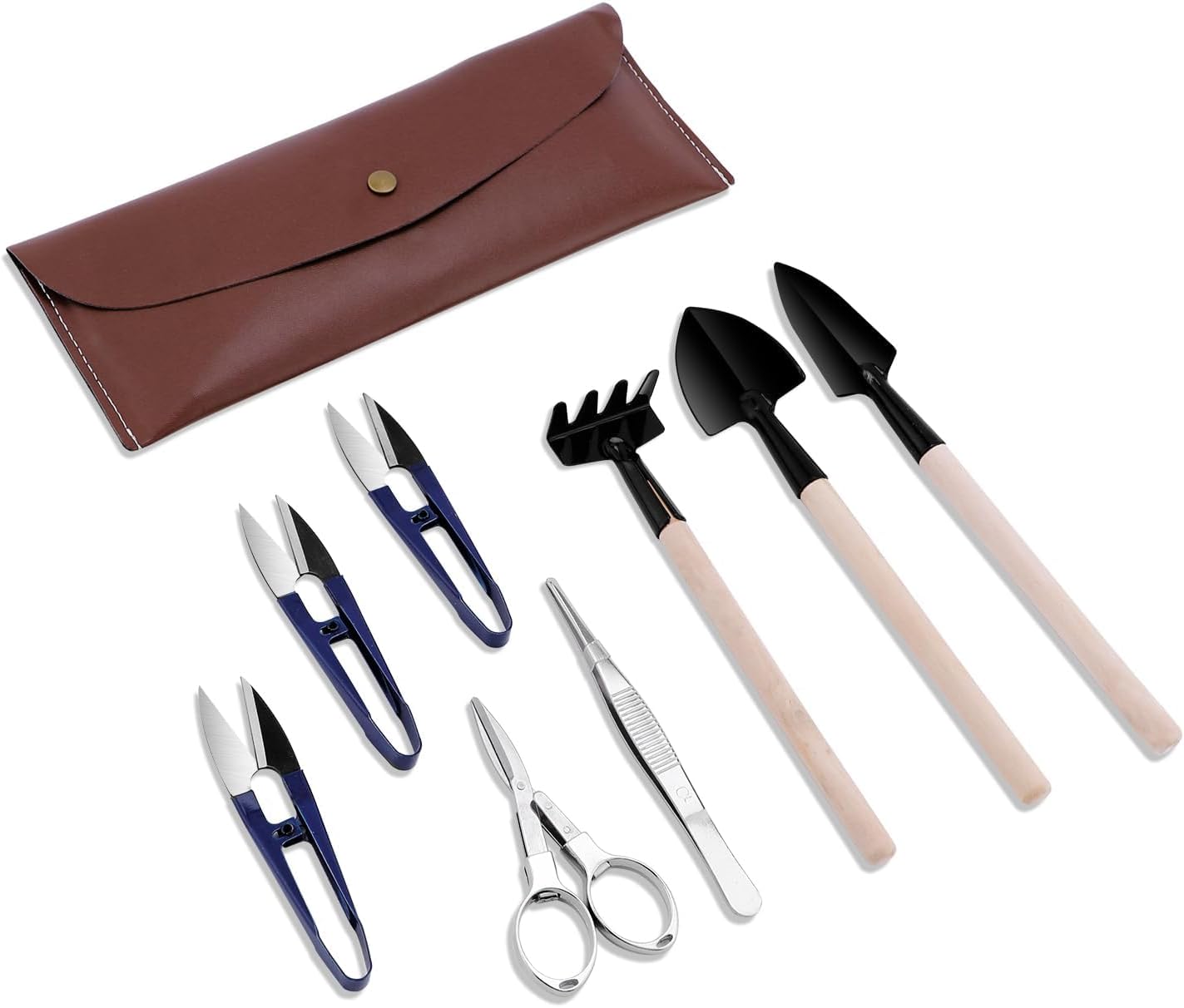
- Use sharp tools: Bonsai scissors, concave cutters, or a fine pruning saw should make a clean cut rather than crush the wood.
- Disinfect tools: Clean visible sap and debris, then disinfect cutting surfaces before using them on healthy tissue or another tree.
- Watch recovery: Healthy new growth and no further dieback matter more than the appearance of the old wound.
Before you cut
- If the branch is important to the design or the disease is moving toward the trunk, get experienced help before making a major cut.
Learning how to remove diseased bonsai branches is partly about pruning and partly about diagnosis. I try not to cut until I know what problem I am trying to solve.
I have seen stressed branches look nearly dead after heat, root trouble, or watering mistakes, then recover once conditions improved. Cutting first and diagnosing later can permanently remove a branch that was still viable.
In This Guide
- When should you remove a diseased bonsai branch?
- How can you tell whether a bonsai branch is diseased or just stressed?
- How do you remove a diseased bonsai branch step by step?
- How should you disinfect bonsai tools after cutting diseased wood?
- What should you do after removing a diseased branch?
- What mistakes should you avoid when pruning a sick bonsai?
- Frequently asked questions
When Should You Remove a Diseased Bonsai Branch?
Remove a branch when you have good evidence that its wood is dead, badly infected, or serving as a continuing source of disease. Avoid cutting simply because foliage looks yellow, scorched, or weak.
A diseased branch is living woody tissue affected by a pathogen or associated decay that is damaging the branch. Disease may appear as a localized canker, progressive dieback, discolored bark, abnormal lesions, or dead tissue spreading along a shoot.
Definition: Diseased branch removal is sanitation pruning used to remove confirmed or strongly suspected infected woody tissue while protecting healthy parts of the tree.
Some symptoms justify a closer inspection before you reach for scissors.
- Progressive tip dieback: A shoot continues dying backward rather than stabilizing.
- Sunken bark: A localized depressed area may indicate a canker or damaged cambium.
- Distinct discoloration: Bark or wood changes color along a defined section.
- Cracking or oozing: Abnormal bark splitting or discharge can accompany some diseases.
- Dead foliage on one branch: Leaves or needles die while nearby branches remain healthy.
- Repeated lesions: Similar symptoms appear on connected shoots or stems.
Branch death does not automatically prove infection. Root failure, drought, excessive water, freeze damage, heat, chemical injury, or major pruning can create similar dieback.
That difference matters on bonsai. One unnecessary cut can remove years of branch development.
When I am uncertain, I compare the suspect branch with healthy growth on the same tree. I also check whether the decline follows a clear pattern from the branch tip toward the trunk.
Pro tip: Cutting live bonsai wood is irreversible. If a valuable branch, trunk feature, or major design element is involved, ask an experienced grower or local bonsai club before making an aggressive cut.
Section Takeaway: Remove wood because the evidence supports removal, not because the tree looks untidy. Diagnosis should come before major pruning.
How Can You Tell Whether a Bonsai Branch Is Diseased or Just Stressed?
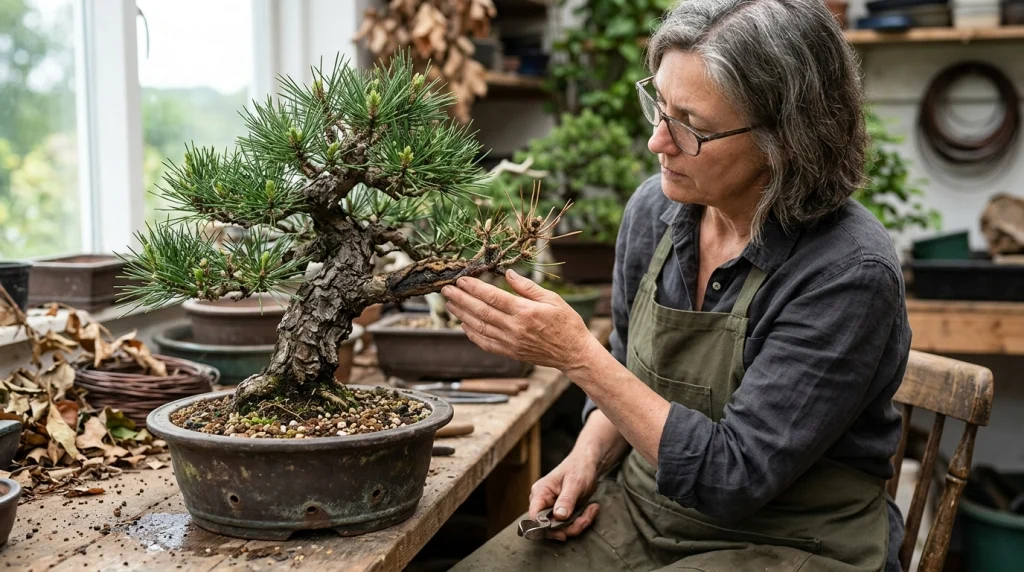
Look at the whole tree before judging one branch. Disease becomes more suspicious when symptoms progress predictably, form lesions, or appear in connected tissue.
Environmental stress often affects broader areas. It may also follow a recent change in watering, temperature, light, repotting, fertilizer, or root condition.
| What you see | What it may suggest | First response |
|---|---|---|
| One broken or dried twig | Mechanical or environmental damage | Inspect before assuming disease |
| Sunken or discolored bark with dieback beyond it | Possible canker or localized disease | Isolate and examine the branch closely |
| Many branches weakening at once | Root or environmental stress may be involved | Check soil, roots, water, light, and temperature |
| Soft or collapsing woody tissue | Advanced decay or tissue death | Remove affected material when appropriate |
| Healthy buds beyond questionable bark | Branch may still contain living tissue | Avoid unnecessary cutting |
Check for living tissue carefully
On some woody bonsai, a tiny scratch in an inconspicuous area can help reveal whether cambium beneath the bark is still alive. Living tissue often appears moist and greenish rather than dry and brown.
Do not repeatedly scrape a branch. Extra wounds make diagnosis harder and damage tissue that may still be healthy.
Inspect the roots and environment too
Branch dieback sometimes begins below the soil. A tree with damaged roots cannot reliably supply water to its canopy.
- Check whether the substrate remains wet for unusually long periods.
- Check whether drainage holes are blocked.
- Review any recent repotting or root pruning.
- Consider sudden heat, frost, or indoor-outdoor moves.
- Inspect foliage and bark for insects.
- Look for similar symptoms elsewhere on the tree.
As of 2026, I still find symptom patterns more useful than single visual clues. One brown twig tells me little, while advancing dieback behind a bark lesion deserves attention.
Section Takeaway: Disease usually creates a pattern. Check branches, roots, foliage, and recent care changes before deciding that pruning is necessary.
How Do You Remove a Diseased Bonsai Branch Step by Step?
Once removal is justified, make the smallest effective intervention. Your goal is to eliminate compromised tissue without turning sanitation pruning into unnecessary structural pruning.
- Separate the bonsai. Move a potentially infectious tree away from nearby healthy plants while you work.
- Inspect the branch again. Identify where abnormal tissue ends and apparently healthy tissue begins.
- Select the right tool. Use bonsai scissors for fine twigs, branch cutters for suitable branches, or a fine pruning saw when required.
- Clean the blade. Remove visible dirt, resin, sap, and plant debris before disinfecting.
- Make a clean cut. Avoid crushing, twisting, or tearing the branch from the tree.
- Remove diseased debris. Keep suspect clippings away from healthy bonsai and the growing area.
- Clean the tool again. Disinfect it before cutting healthy tissue or working on another tree.
- Record what you removed. A quick photo helps you judge whether dieback continues during the following weeks.
Where should you make the cut?
There is no universal distance that works for every bonsai disease. Different pathogens, tree species, and branch structures require different pruning decisions.
Some extension recommendations for specific canker diseases advise cutting below visible symptoms into healthy tissue. That principle is useful, but disease-specific instructions should not be blindly transferred to every bonsai.
Penn State Extension, for example, recommends removing affected branches for certain canker diseases and disinfecting pruning tools between cuts. Exact management still depends on the pathogen and host plant.
If suspected infection is close to the trunk, the decision becomes more serious. Aggressive cutting may change both tree health and the entire design.
Pro tip: If you cannot identify a safe boundary between damaged and healthy wood, stop before making a major trunk-side cut and get experienced help.
What should you do with the removed branch?
Do not leave suspect diseased material underneath your bonsai bench. Remove it from the growing area so infected debris cannot remain beside healthy trees.
Avoid composting material when you do not know whether the causal organism survives normal home composting conditions. Local horticultural guidance can help with disposal rules for serious plant diseases.
Section Takeaway: Make deliberate, clean cuts and remove only what needs to go. Sanitation pruning should protect the tree, not become an excuse for redesigning a weak bonsai.
How Should You Disinfect Bonsai Tools After Cutting Diseased Wood?
Clean tools first, then disinfect them. Soil, sap, and plant debris can interfere with effective surface disinfection.
The University of Minnesota Extension recommends cleaning and disinfecting garden tools after working with infected plants and before moving to another plant.
A practical bonsai sanitation routine
- Wipe away loose plant material.
- Remove sticky sap or soil from the cutting surfaces.
- Apply an appropriate tool disinfectant according to its directions.
- Keep the surface wet for the required contact period.
- Allow the tool to dry as directed.
- Protect metal from corrosion after the work is finished.
Seventy percent isopropyl alcohol is commonly used for small pruning tools. University extension guidance also discusses properly diluted household bleach and commercial disinfectants for certain situations.
Bleach can corrode metal if tools are not handled correctly afterward. Follow product and extension instructions instead of making stronger mixtures in the hope that they work better.
Do you need to disinfect between every cut?
When you are removing known or strongly suspected infectious tissue, frequent sanitation is the cautious approach. This matters most when moving from diseased material toward apparently healthy tissue or another tree.
Penn State Extension also advises disinfecting pruning tools after cutting diseased plant material to reduce the chance of spreading disease.
I keep tool cleaning supplies beside the work area when dealing with a questionable tree. That small preparation prevents me from absentmindedly using the same blade on the next bonsai.
Section Takeaway: Visible cleanliness is not the same as disinfection. Remove debris first, disinfect correctly, and avoid carrying a possible pathogen from one fresh wound to another.
What Should You Do After Removing a Diseased Branch?
After pruning, focus on stability rather than forcing fast growth. A sick bonsai usually needs good basic care more than extra interventions.
- Maintain appropriate light: Keep the species in its normal healthy light range.
- Water by need: Do not keep the soil constantly wet because the tree lost foliage.
- Maintain airflow: Avoid crowded, stagnant conditions around the canopy.
- Inspect regularly: Watch nearby shoots for new discoloration or dieback.
- Keep debris away: Remove dead leaves and cuttings from the pot and bench.
- Avoid unnecessary stress: Delay optional wiring, heavy styling, or repotting when the tree is already weak.
Should you seal the pruning wound?
Do not assume every disease-related cut requires wound paste. Bonsai wound treatment varies with species, cut size, growing conditions, and the grower’s goals.
Styling advice and disease-management advice are not always the same. When infection is involved, diagnosis and species-specific guidance should decide the next step.
How do you know whether the bonsai is recovering?
Watch what happens after the cut. Old damage will not become healthy again, so new growth gives you better information.
Positive signs include stable bark, no additional branch dieback, normal bud development, and healthy new shoots. Continued decline means the original problem may still be active or may not have been branch-localized.
If dieback continues toward the trunk, inspect roots and the rest of the tree again. A local pruning cut cannot solve a root disease, systemic problem, or major environmental stress.
What Mistakes Should You Avoid When Pruning a Sick Bonsai?
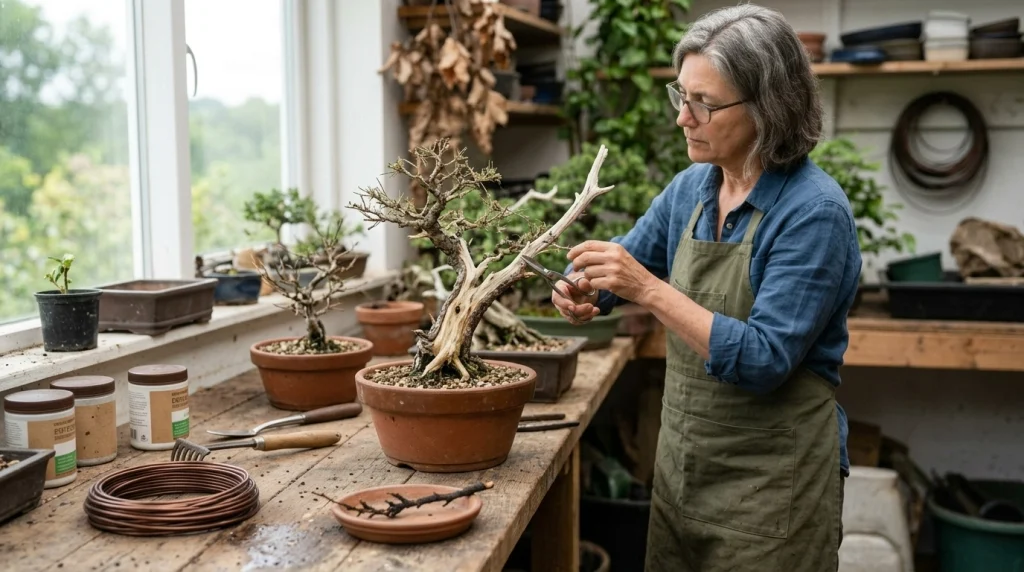
The biggest mistake is doing too much at once. A stressed tree may struggle when disease pruning is combined with heavy styling, defoliation, wiring, root pruning, and repotting.
- Don’t diagnose from one leaf. Isolated damage rarely tells the whole story.
- Don’t tear branches off. Use a sharp tool that fits the size of the cut.
- Don’t use dirty blades. Clean and disinfect tools when infectious disease is suspected.
- Don’t chase discoloration blindly. Repeatedly cutting farther into a branch can remove healthy structure.
- Don’t spray automatically. A fungicide will not solve every cause of branch dieback.
- Don’t overfertilize a weak tree. More fertilizer cannot replace healthy roots or correct disease.
- Don’t sacrifice health for design. A beautiful branch is not worth protecting if confirmed disease is progressing through it.
Standard bonsai pruning principles also emphasize clean, intentional cuts rather than random branch removal. Bonsai Empire’s pruning guidance separates routine maintenance pruning from heavier structural pruning, an important distinction when a tree is already under stress.
My own rule is simple: solve the health problem first. Styling can wait until the tree is growing reliably again.
Pro tip: Major branch removal, trunk cutting, and root work are permanent. For an old, valuable, recently repotted, or severely weakened bonsai, consult an experienced grower or bonsai club before combining procedures.
Section Takeaway: The safest disease pruning is targeted and conservative. Avoid stacking several major stresses onto a bonsai that is already struggling.
Frequently Asked Questions About Removing Diseased Bonsai Branches
Should I cut off every branch with brown leaves?
No. Brown leaves can result from disease, drought, root problems, sun scorch, cold damage, fertilizer injury, or normal aging. Inspect the branch itself and the rest of the tree before deciding that woody tissue must be removed.
How far below diseased wood should I cut?
There is no single distance that applies to every bonsai disease. Some diseases require cuts into healthy tissue below visible symptoms, while others need different management, so identify the problem before choosing a cut location.
Can dirty bonsai scissors spread disease?
Yes. Plant pathogens can be transferred on contaminated tools, sap, soil, or plant debris. Clean visible material from the tool and disinfect cutting surfaces after working with infected tissue and before moving to healthy plants.
Can I prune a diseased bonsai at any time of year?
Emergency removal of dangerous or badly diseased tissue may sometimes be justified outside normal pruning periods. However, species, disease, season, tree vigor, and the amount of wood being removed should guide the decision.
Should I repot after removing diseased branches?
Not automatically. Repot only when the root zone or growing medium also needs attention. Combining unnecessary root disturbance with branch removal can add stress to an already weakened bonsai.
Should I apply fungicide after pruning a diseased branch?
Only when you have a reasonable diagnosis and a product is labeled for the target plant and disease. Pruning alone will not cure every infection, but spraying an unidentified problem is not a reliable substitute for diagnosis.
When should I ask an experienced bonsai grower for help?
Get help when dieback approaches the trunk, major structural branches are involved, the tree is valuable or old, symptoms keep spreading after pruning, or you cannot distinguish disease from root or environmental stress.
Final Takeaway
Removing diseased bonsai branches works best when you treat pruning as part of diagnosis rather than as the first reaction. Confirm the pattern, make a clean and conservative cut, sanitize your tools, and then watch the tree closely.
Protecting the tree’s health matters more than preserving a temporary design. Once vigorous growth returns, you can rebuild ramification and refine the bonsai again.