Serissa Bonsai Pests and Diseases: Identification, Treatment, and Prevention

Quick Answer
Serissa bonsai pests and diseases commonly include spider mites, aphids, scale insects, powdery mildew, and root rot. Yellow leaves and sudden leaf drop can also result from changes in temperature, light, watering, or humidity rather than infection. Inspect the foliage and soil first, then match treatment to the confirmed problem using reliable Serissa bonsai care guidance.
Common problems and warning signs
- Spider mites: Tiny pale speckles, dull leaves, and fine webbing beneath foliage.
- Aphids: Clusters of small insects on tender shoots, curled leaves, and sticky residue.
- Scale insects: Fixed brown or pale bumps on stems and leaves, sometimes accompanied by honeydew.
- Powdery mildew: White, powder-like patches on leaves or young growth.
- Root rot: Persistently wet soil, declining vigor, wilting, and brown or mushy roots.
- Environmental stress: Widespread leaf drop after moving the tree, changing its light, or disturbing its roots.
What to do first
- Isolate the affected tree, inspect both sides of the leaves, and examine young stems with a magnifying glass.
- Check soil moisture and drainage before watering again or applying a treatment.
- Use a plant-safe, correctly labeled treatment only after identifying the likely pest or disease.
Serissa bonsai, also called snow rose or tree of a thousand stars, can develop several pest and disease problems when growing conditions become unfavorable. I recommend diagnosing the symptoms carefully before reaching for a pesticide or changing the watering routine.
This guide explains how to recognize common Serissa bonsai pests and diseases, distinguish infections from environmental stress, choose appropriate treatments, and prevent recurring problems throughout the year.
In This Guide
- How do you identify Serissa bonsai pests and diseases?
- Which pests attack Serissa bonsai most often?
- What diseases affect Serissa bonsai?
- Why is your Serissa bonsai losing leaves or turning yellow?
- How do you treat Serissa bonsai pests and diseases?
- How can you prevent future infestations and diseases?
- Frequently asked questions
How do you identify Serissa bonsai pests and diseases?
Identify a Serissa bonsai problem by examining the leaves, stems, soil, and growing conditions together. Similar symptoms can have different causes, so look for physical evidence of pests or disease before treating the tree.
Serissa japonica is a small-leaved flowering shrub grown as bonsai for its compact foliage, textured trunk, and star-shaped flowers. It responds poorly to abrupt environmental changes, making accurate diagnosis particularly important.
What should you inspect first?
Start with a close inspection under bright, indirect light. A handheld magnifying glass helps reveal tiny mites, immature insects, and early feeding damage that ordinary viewing can miss.
- Leaf surfaces: Look for pale stippling, yellow patches, curling, powdery coatings, and irregular brown spots.
- Leaf undersides: Check for mites, eggs, fine webbing, and soft-bodied insects.
- Stems and branch junctions: Look for scale insects, cottony deposits, sticky residue, and dead shoot tips.
- Soil and drainage holes: Check for persistent saturation, poor drainage, unusual odors, and visible root deterioration.
- Growing environment: Review recent changes in temperature, sunlight, airflow, watering, and plant placement.
How can you distinguish pests from environmental stress?
Pest damage often produces recognizable signs, such as webbing, insects, honeydew, or repeated feeding marks. Environmental stress more often follows a noticeable change in conditions, although both problems can occur together.
| Observed symptom | Possible cause | What to verify |
|---|---|---|
| Fine webbing and pale leaf speckles | Spider mites | Tiny moving mites beneath leaves |
| Sticky leaves and curled shoots | Aphids or scale insects | Live insects and honeydew |
| White powder-like patches | Powdery mildew | A spreading fungal-looking coating |
| Yellow leaves and wet soil | Overwatering or root disease | Drainage, moisture persistence, and root condition |
| Sudden widespread leaf drop | Environmental shock or root stress | Recent changes and overall branch health |
For a broader diagnostic reference, the North Carolina State Extension plant profile for Serissa japonica identifies spider mites, scale, woolly aphids, and mildew as potential problems.
Section takeaway: Confirm the cause before treating symptoms. A stressed Serissa may lose leaves without having an infestation, and unnecessary treatments can add further stress.
Which pests attack Serissa bonsai most often?
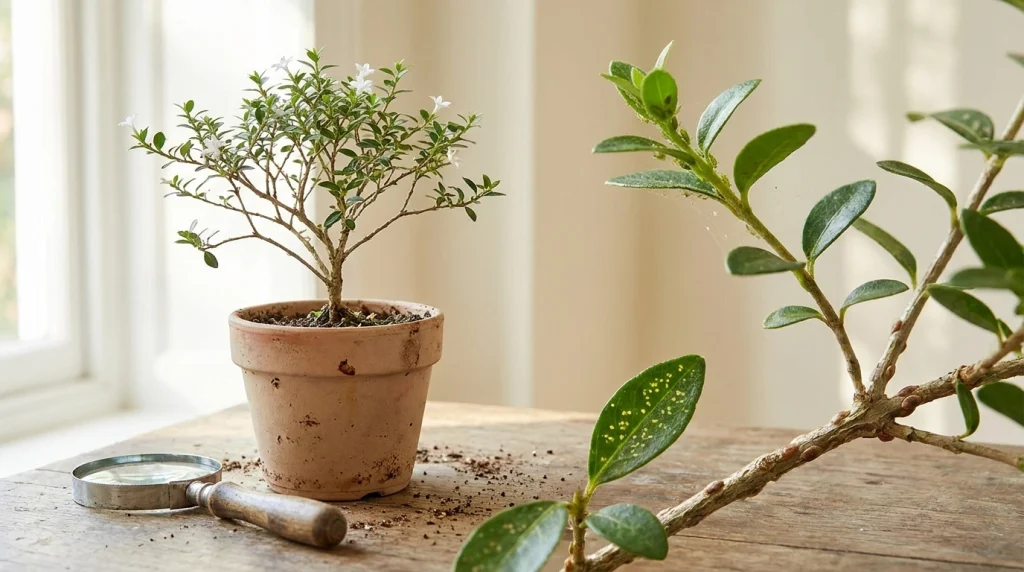
Spider mites, aphids, scale insects, and root aphids are among the pests associated with Serissa bonsai. Each leaves different clues, and identifying the pest helps you select an effective treatment without exposing the tree to unnecessary chemicals.
Spider mites: What are the warning signs?
Spider mites are tiny arachnids that feed on plant cells, leaving fine pale speckles across the foliage. As populations grow, leaves may look dusty or bronze, develop fine webbing, and eventually drop.
They often become troublesome in warm, dry indoor environments, particularly when air circulation is poor. You may not see the mites without magnification.
To check for spider mites:
- Examine the undersides of several affected leaves with a magnifying glass.
- Look for tiny moving dots, eggs, or delicate silk strands around leaf joints.
- Inspect nearby plants because mites can spread between susceptible hosts.
Rinse the foliage thoroughly with a gentle stream of water, concentrating on the leaf undersides. If mites persist, use an insecticidal soap or horticultural oil specifically labeled for the plant and target pest.
Aphids: Why are new shoots curling?
Aphids are small, soft-bodied insects that gather on tender shoots, new leaves, and flower buds. Their feeding can distort fresh growth, weaken shoots, and leave sticky honeydew on nearby foliage.
Some aphids appear green, while others may be yellow, brown, or dark-colored. Ants visiting the tree and black sooty growth on sticky surfaces can provide additional clues.
For a small infestation, remove the insects with a gentle water rinse or carefully wipe them away. For larger populations, apply a labeled insecticidal soap according to its instructions and check new growth regularly.
Scale insects: What do the bumps on branches mean?
Scale insects often resemble fixed brown, gray, or pale bumps attached to stems and leaf surfaces. Some species produce honeydew, while others cause gradual yellowing, weak growth, and branch decline.
Don’t assume every bump is a scale insect. Inspect a suspected insect closely and look for evidence of live insects beneath its protective covering.
Remove a few accessible insects manually when the infestation is small. A soft brush or cotton swab may help, but avoid scraping tender bark or damaging small branches.
For persistent infestations, choose a product labeled for the identified scale and ornamental woody plants. Some scale stages resist contact treatments, so follow the product’s timing and repeat-treatment instructions.
Root aphids: How do you recognize an infestation?
Root aphids feed on roots and may be difficult to identify without examining the root zone. Affected Serissa bonsai can show weak growth, yellowing, or decline despite apparently adequate watering.
White, waxy material around roots may indicate root aphids, but it can resemble fungal growth or other soil organisms. Don’t disturb healthy roots simply because the tree has dropped a few leaves.
If root aphids seem likely, confirm the diagnosis before choosing a treatment. A severe infestation may require targeted advice from an experienced bonsai grower or horticultural specialist.
Section takeaway: Spider mites leave stippling and webbing, aphids distort fresh shoots, and scale creates fixed bumps. Root aphids require more careful inspection and should not be diagnosed from leaf symptoms alone.
What diseases affect Serissa bonsai?
Serissa bonsai can develop root rot and fungal foliage problems, particularly when drainage, airflow, or growing conditions are unsuitable. However, yellow leaves and declining branches do not automatically indicate an infectious disease.
A disease is a condition caused by a harmful organism, such as a fungus or bacterium, while a physiological disorder results from the plant’s environment or internal functioning. This distinction matters because fungicides cannot correct waterlogged soil or temperature stress.
Root rot: Why are the roots deteriorating?
Root rot describes the decay of root tissue, often associated with prolonged saturation and organisms that attack damaged or susceptible roots. Poor drainage and insufficient oxygen around the roots can start the decline or make it worse.
Serissa prefers consistently available moisture in a well-drained growing medium. Keeping the root ball saturated for extended periods can undermine that balance.
Look for these warning signs:
- Soil remains wet much longer than expected.
- Leaves yellow or wilt despite moist soil.
- Growth slows or the canopy gradually thins.
- Roots become dark, soft, or mushy rather than firm.
- The root zone develops an unpleasant smell as tissue decays.
Begin by checking the drainage holes, soil structure, and watering habits. If severe root damage appears likely, inspect the roots carefully and seek experienced help before removing substantial living tissue.
Pro tip: Root pruning is irreversible. If your Serissa is already weak, consult an experienced bonsai grower or local bonsai club before undertaking extensive root removal.
Powdery mildew: What does a white coating mean?
Powdery mildew is a fungal disease that produces white or gray, powder-like growth on susceptible plant surfaces. Affected foliage may yellow, distort, or fall when the problem becomes severe.
Check whether the coating appears on multiple leaves and whether it expands over time. Mineral deposits, dried spray residue, and other surface materials can resemble mildew.
To reduce the risk of fungal foliage problems:
- Provide good airflow around the canopy.
- Avoid overcrowding the tree among other plants.
- Remove fallen leaves and visibly diseased debris.
- Avoid repeatedly wetting the foliage late in the day.
- Keep the tree in suitable light without exposing it suddenly to harsh conditions.
If the coating spreads, identify the likely disease before using a fungicide. Follow the label’s species, application, and safety instructions.
Leaf spots and branch dieback: Could they be infectious?
Brown or black spots may result from fungal or bacterial infections, but sun scorch, chemical injury, drought, and other stresses can produce similar marks. Localized lesions that continue spreading deserve closer attention than a few isolated damaged leaves.
Branch dieback is more concerning when it progresses toward larger branches or the trunk. Check for damaged roots, insects beneath bark, pruning injuries, and areas of dead or discolored tissue.
Remove fallen diseased-looking foliage and disinfect cutting tools between affected plants. Avoid cutting into living branches without a clear reason.
For more detailed background, the University of Wisconsin’s bonsai disease guidance discusses root and crown rots, powdery mildew, drainage, and sanitation.
Section takeaway: Correct moisture and airflow problems early. Persistent root decay, spreading leaf lesions, and progressive dieback warrant closer diagnosis rather than indiscriminate spraying.
Why is your Serissa bonsai losing leaves or turning yellow?
Serissa bonsai can lose leaves after sudden changes in temperature, light, location, watering, or humidity. Yellowing can also indicate root damage, pest feeding, nutritional problems, or disease, so look at the full pattern before changing your care routine.
Environmental changes and transplant stress
Serissa is sensitive to abrupt changes in its surroundings. Moving a tree from a bright outdoor position to a dim room, exposing it suddenly to intense sun, or placing it near a heating or cooling vent can trigger leaf drop.
Recent repotting, root disturbance, or heavy pruning may also contribute to decline. The timing of the symptoms can help narrow the possibilities.
Review the last few days and ask:
- Did the tree move to a new location?
- Did daytime or nighttime temperatures change sharply?
- Did the soil dry out completely or remain saturated?
- Was the tree recently repotted or heavily pruned?
- Did you apply fertilizer, pesticide, or another chemical?
Restore stable conditions and avoid repeatedly moving the tree while it recovers. Do not compensate for leaf loss by watering more frequently without checking the soil.
Yellow leaves from overwatering or underwatering
Both excessive and insufficient water can damage roots and produce yellowing or leaf drop. The soil’s condition provides a more useful clue than the color of a single leaf.
Use this comparison to guide your inspection.
| Condition | Possible signs | Appropriate response |
|---|---|---|
| Overwatering | Persistently wet soil, yellowing, weak roots | Check drainage and adjust watering to actual moisture needs. |
| Underwatering | Dry substrate, wilting, crisp or dry foliage | Water thoroughly when the tree needs it, allowing excess water to drain. |
| Pest damage | Webbing, insects, sticky residue, stippling | Identify the pest and select a targeted treatment. |
| Environmental shock | Leaf drop after a move or temperature change | Stabilize light, temperature, and watering conditions. |
Water the tree thoroughly when needed, ensuring excess water escapes through the drainage holes. Avoid both prolonged saturation and complete, repeated drying of the root ball.
Can low humidity or insufficient light cause leaf drop?
Yes, unsuitable indoor conditions can contribute to declining foliage, especially when light levels fall or warm, dry air increases water stress. Serissa generally grows best with bright light and relatively stable conditions.
Choose a bright position appropriate to your climate, with protection from sudden extremes. Increase ventilation without exposing the tree to damaging drafts or abrupt temperature swings.
In warm climates, gradual acclimation to outdoor light can help prevent scorch. A shaded indoor position may be inadequate for long-term growth, even if the tree initially retains its leaves.
Section takeaway: Diagnose yellowing by checking soil moisture, recent environmental changes, and visible pest evidence together. Stable care is usually a better first response than adding fertilizer or applying several treatments.
How do you treat Serissa bonsai pests and diseases?
The safest treatment plan begins with isolation, accurate identification, and correction of the conditions contributing to the problem. Use the least disruptive effective method first, then monitor the tree for improvement or continuing damage.
Step 1: Isolate and inspect the tree
Move the affected bonsai away from healthy plants when practical, while maintaining suitable light and temperature. Inspect neighboring plants because some pests spread readily between hosts.
Photograph the damage and record where it appears. These observations help you assess whether the problem is spreading after treatment.
Step 2: Remove accessible pests and debris
For small infestations, physical removal can reduce pest numbers without exposing the entire tree to pesticides. Use a gentle water rinse for suitable foliage and remove accessible insects carefully.
- Rinse leaf undersides to dislodge mites and soft-bodied insects.
- Wipe accessible scale insects away without damaging bark.
- Remove badly affected fallen leaves and dead debris.
- Clean tools after working on an affected tree.
Avoid strong water pressure on fragile branches and delicate flowers. Allow the foliage to dry in a suitable, well-ventilated location when moisture-related disease is a concern.
Step 3: Choose a targeted treatment
Use insecticidal soap or horticultural oil only when the product is labeled for the intended pest and appropriate for your plant. These contact treatments require suitable coverage, and some pests or life stages may be less susceptible than others.
Before application:
- Read the complete product label, including dilution and repeat-treatment directions.
- Test a small area if the label permits and advises it.
- Avoid spraying a dehydrated or heat-stressed tree.
- Protect yourself, children, pets, and beneficial insects as directed.
- Never combine products or increase concentrations without explicit label instructions.
Serissa can react poorly to unsuitable treatments or stressful conditions. Do not assume that a homemade soap mixture, rubbing alcohol, or a general-purpose pesticide is safe for its delicate foliage.
Step 4: Correct soil and root problems
If the tree is declining in saturated soil, inspect drainage and watering practices first. Check that drainage holes remain open and that the pot is not sitting in collected water.
If substantial root decay is suspected, the tree may need careful root inspection and repotting into an appropriate, well-draining bonsai substrate. The timing and amount of root removal depend on the severity of the damage and the tree’s condition.
Pro tip: Major root pruning can be difficult to reverse. Consult an experienced grower before cutting healthy roots from a severely weakened Serissa.
Step 5: Monitor recovery
Check the tree every few days for new feeding damage, fresh webbing, additional yellowing, or expanding lesions. Continue any pesticide treatment only as directed on its label.
Old leaf damage will not disappear simply because treatment works. Look for reduced pest activity, healthier new growth, and stabilization of the overall canopy instead.
Section takeaway: Isolate the tree, remove accessible pests, apply only an appropriate labeled treatment, and correct the underlying care problem. Escalate to specialist advice if decline continues despite these measures.
How can you prevent future infestations and diseases?
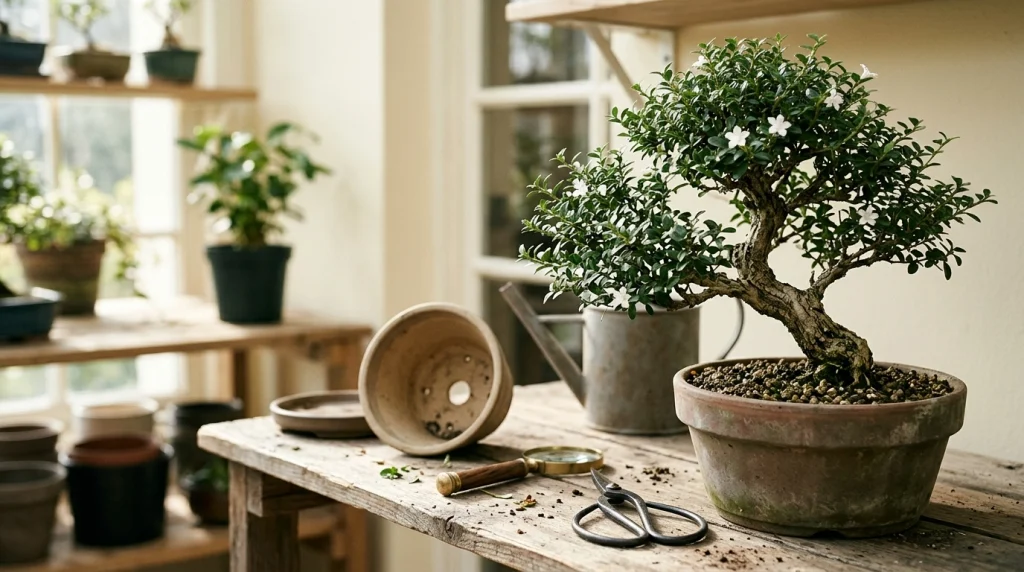
Preventing Serissa bonsai pests and diseases depends on consistent care, regular inspections, clean tools, and a growing environment suited to the species. Healthy growing conditions reduce avoidable stress, although they cannot guarantee that pests will never appear.
Maintain suitable light, temperature, and watering
Serissa prefers bright light, consistent moisture, and good drainage. It is sensitive to sudden temperature changes, so protect it from cold exposure and avoid abrupt changes between indoor and outdoor conditions.
Adjust watering to the soil, pot, weather, and growth rate rather than following a rigid daily schedule. Small pots may dry quickly in warm weather, while cooler or dimmer conditions can slow water use.
For general species-specific care, consult the Bonsai Empire Serissa care guide and the NC State Extension plant profile.
Inspect new trees before introducing them
Newly purchased bonsai can carry pests that spread to an established collection. Keep new arrivals separate while you inspect their leaves, stems, and soil.
Look for scale, cottony deposits, sticky residue, webbing, and unexplained leaf damage. Continue monitoring during the initial period of separation rather than assuming one clean inspection rules out every pest.
Keep the growing area and tools clean
Sanitation reduces the chance of carrying pests or disease-causing organisms between plants. Clean cutting tools after working on diseased or infested material and remove fallen foliage from benches and containers.
Also make sure trees have enough space for airflow. Crowded canopies can make pest inspection harder and may keep foliage wet for longer.
Follow a simple inspection routine
A short, regular inspection is easier to maintain than trying to diagnose a severe infestation later. Build these checks into your usual watering routine.
- At watering: Check soil moisture, drainage, and visible leaf damage.
- Weekly: Inspect leaf undersides, shoot tips, and branch junctions.
- After moving the tree: Watch for leaf drop and changes in growth.
- After treatment: Check whether live pests and new damage decrease.
- When symptoms worsen: Reassess the diagnosis instead of repeatedly applying the same treatment.
As of 2026, the core prevention principles remain straightforward: stable growing conditions, appropriate watering, clean tools, and early detection. These practices are useful whether your Serissa grows indoors in a bright protected space or outdoors in a suitable climate.
Section takeaway: Regular inspection and stable care are your best everyday defenses. Catching a few mites or scale insects early is much easier than managing a widespread infestation on a declining tree.
Frequently asked questions about Serissa bonsai pests and diseases
What are the most common pests on Serissa bonsai?
Spider mites, aphids, scale insects, and root aphids are among the pests reported on Serissa. Spider mites can cause fine speckling and webbing, aphids gather on tender shoots, and scale insects appear as fixed bumps on stems or leaves.
Why is my Serissa bonsai dropping leaves even though I cannot see pests?
Serissa can drop leaves after changes in temperature, light, location, watering, or humidity. Root stress and disease are other possibilities. Check soil moisture, drainage, and recent changes before assuming the tree has an insect infestation.
Can I use neem oil on a Serissa bonsai?
Use neem oil only if the specific product is labeled for the target pest and suitable for your plant. Test compatibility as directed, avoid treating heat-stressed foliage, and follow all application and safety instructions. Do not assume every oil-based product is safe for every Serissa cultivar or growing condition.
How can I tell whether my Serissa bonsai has root rot?
Possible warning signs include persistently wet soil, yellowing, wilting despite moisture, weak growth, and dark, soft roots. These symptoms are not conclusive on their own. Check drainage and root condition carefully, and seek expert help if the tree is declining rapidly.
Should I remove yellow leaves from my Serissa bonsai?
Remove leaves that are fully dead or clearly diseased when doing so will not damage healthy growth. A few yellow leaves do not justify stripping the canopy. First identify whether watering, environmental changes, pests, or root problems are responsible.
Does Serissa bonsai need fungicide every month?
No. Routine fungicide applications are not necessary for every Serissa bonsai. Use a fungicide only when a relevant disease has been identified or there is a justified preventive need covered by the product label. Good drainage, sanitation, and suitable airflow help prevent many problems.
When should I ask a bonsai expert for help?
Seek experienced help if the tree continues declining despite correcting obvious care problems, root decay appears severe, branch dieback progresses, or the suspected disease cannot be identified. Early advice can prevent unnecessary root pruning, unsuitable chemicals, and additional stress.
Final thoughts: Keep your Serissa bonsai healthy
Serissa bonsai pests and diseases are easier to manage when you recognize the warning signs early and avoid treating every symptom as an infection. Spider mites, aphids, scale insects, mildew, and root rot each require a different response.
Start with a close inspection, check soil moisture and drainage, and review any recent changes in the growing environment. Use targeted treatments only when appropriate, and protect a struggling tree from unnecessary pruning or repotting.
With steady care and regular monitoring, you can catch many problems before they threaten the tree’s long-term health. When symptoms remain unclear or the decline becomes severe, an experienced bonsai grower or horticultural specialist can help you choose the safest next step.