Azalea Bonsai Pests and Diseases: How to Identify and Treat Them

Quick Answer
Azalea bonsai pests and diseases commonly include spider mites, lace bugs, scale insects, fungal leaf gall, leaf spot, powdery mildew, and root rot. Identify the problem by examining leaf surfaces, shoots, branches, and soil moisture before choosing a treatment. The tree’s growing conditions matter, too; follow the species-specific guidance in this azalea bonsai care guide when correcting environmental stress.
Common warning signs and likely causes
- Fine pale speckles: Spider mites or lace bugs may be feeding on the leaves.
- Sticky leaves: Look for aphids, scale insects, or other sap-feeding pests.
- Swollen leaves: Thick, fleshy, distorted growth may indicate fungal leaf gall.
- Brown leaf spots: Fungal leaf spot, leaf scorch, or environmental stress may be responsible.
- Wilting in wet soil: Poor drainage or root rot may be affecting water uptake.
- Notched leaf edges: Vine weevils or other chewing insects may be present.
What to do first
- Isolate the affected bonsai, inspect both sides of its leaves, and photograph suspicious growth.
- Check soil moisture, drainage, light exposure, and recent changes in watering.
- Remove clearly diseased material when appropriate, then use a treatment labeled for the identified pest or disease and the intended plant.
Azalea bonsai can develop leaf damage, distorted growth, sticky foliage, or sudden wilting even when you’re following a regular care routine. The trick is to distinguish an actual pest or disease from problems caused by watering, soil conditions, or excessive heat.
In this guide, I’ll explain how to recognize the most common azalea bonsai pests and diseases, choose sensible treatments, and prevent recurring problems without putting the tree under unnecessary stress.
In This Guide
How do you identify azalea bonsai pests and diseases?
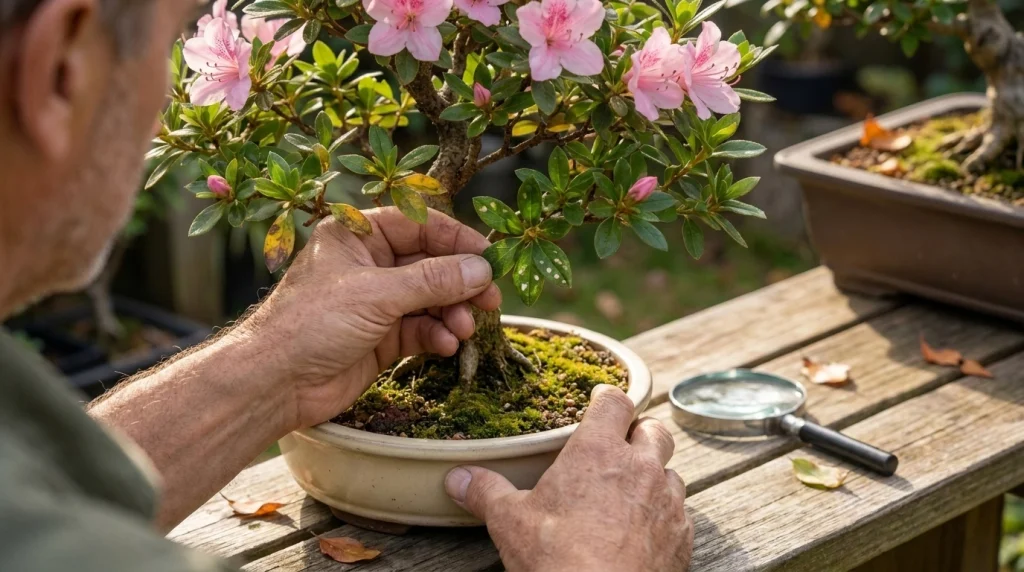
The most reliable way to diagnose an azalea bonsai problem is to match visible symptoms with physical evidence and growing conditions. Yellow leaves alone don’t identify a disease, and a wilted tree doesn’t automatically need more water.
Inspect the whole tree before treating it
Azalea bonsai, including Satsuki azaleas, have delicate foliage and relatively fine, densely packed roots. Small containers leave little room for prolonged watering mistakes, so environmental stress can resemble pest damage.
Start with these checks:
- Leaf tops and undersides: Look for stippling, black specks, webbing, sticky residue, and white or brown insects.
- New growth: Check for curled leaves, swollen tissue, distorted shoots, and dying tips.
- Branches and trunk: Look for attached scale insects, cottony deposits, unusual lesions, or localized dieback.
- Soil and drainage holes: Check whether the root ball is excessively dry, persistently wet, or draining poorly.
- Recent weather and care: Consider hot afternoons, prolonged rain, a recent repot, or a change in watering.
What do the symptoms tell you?
Use this comparison as a starting point, not a substitute for confirming the cause. Several pests and diseases can produce similar symptoms, particularly when the tree is already stressed.
| Visible symptom | Likely cause | What to check |
|---|---|---|
| Fine yellow or white speckles | Spider mites or lace bugs | Leaf undersides, moving mites, black fecal spots, webbing |
| Sticky leaves or black coating | Scale insects or aphids | Stems, leaf joints, honeydew, attached insects |
| Swollen, fleshy leaves | Azalea leaf gall | Thickened tissue and pale, pink, or whitish growth |
| Dark spots and premature leaf drop | Leaf spot or environmental damage | Spot shape, spreading lesions, wet foliage, recent heat exposure |
| Wilting while soil stays wet | Root stress or root rot | Drainage, persistent saturation, root condition |
| Notched leaf margins | Vine weevils or other chewing pests | Leaf edges, nighttime activity, root-zone symptoms |
Section takeaway: Confirm the likely cause before applying pesticides or fungicides. Treating the wrong problem wastes time and can further stress a small bonsai.
Which pests attack azalea bonsai trees?
Azalea bonsai can attract sap-feeding insects, mites, and root-feeding pests. The most useful clues are the location of the damage, the appearance of the leaves, and whether you can find the pest itself.
Spider mites
Spider mites are tiny arachnids that feed on leaf cells, leaving fine yellow or pale speckles. Heavy infestations can cause bronzing, webbing, and premature leaf drop, especially during hot, dry weather.
To check for mites, hold a sheet of white paper beneath a branch and tap the foliage gently. Moving pin-sized specks may indicate mites, although a magnifying lens helps distinguish pests from harmless debris.
Rinse affected foliage gently when appropriate and improve growing conditions without leaving the root ball waterlogged. If the infestation persists, use a labeled miticide or another suitable product that specifically controls mites.
Lace bugs
Azalea lace bugs feed mainly on leaf undersides. Their feeding produces pale stippling on upper leaf surfaces, while black, varnish-like fecal spots often appear underneath.
Inspect the lower surfaces closely for insects, eggs, or dark deposits. Where practical, remove heavily infested leaves and use a labeled insecticidal soap or horticultural oil if the infestation warrants treatment.
Thorough coverage of leaf undersides is important for contact treatments. Avoid spraying in harsh sunlight or high heat, and follow the product label to prevent foliage injury.
Scale insects and aphids
Scale insects may appear as small, fixed bumps on stems and leaves. Some species produce honeydew, a sticky substance that can encourage black sooty mold to grow on affected surfaces.
Aphids usually gather on tender shoots and young leaves. They can cause curled growth, sticky residue, and distorted new foliage.
For a small infestation, remove visible insects carefully or rinse the affected growth if the tree can tolerate it. For persistent problems, select a product labeled for the identified pest and azalea use.
Vine weevils and chewing insects
Vine weevils can leave characteristic notches along leaf margins, while their larvae may feed on roots. Root damage can become serious before the foliage shows obvious decline.
Check for adult insects around the pot and growing area, particularly after dark. If the tree wilts despite suitable moisture, investigate root health instead of assuming that leaf damage is the only issue.
Other caterpillars and leaf-feeding larvae may also chew azalea foliage. Remove identifiable pests by hand when practical, and seek a more specific diagnosis if damage continues.
For further identification help, the University of Florida’s azalea pest guide covers several important azalea pests and related disorders.
Section takeaway: Inspect leaf undersides first when you see speckling or sticky residue. Check both the foliage and the root zone when chewing damage accompanies unexplained decline.
What diseases affect azalea bonsai?
Azalea bonsai diseases can affect leaves, flowers, stems, and roots. Fungal problems often become more likely when foliage remains wet for long periods or the growing medium drains poorly, although the conditions favoring each disease differ.
Azalea leaf gall
Leaf gall is a fungal disease associated with Exobasidium species. Infected leaves become thick, fleshy, and distorted, sometimes developing pale green, pink, or whitish tissue before turning brown.
Unlike ordinary yellowing, gall produces visibly swollen plant tissue. Some infections also affect flowers and young shoots.
Remove affected leaves or flowers as soon as you identify the disease, using clean tools where cutting is necessary. Dispose of infected material away from the bonsai growing area and avoid prolonged wetness on the foliage.
Leaf spot and powdery mildew
Fungal leaf spot diseases produce dark or reddish-brown marks that may expand or cause premature leaf drop. Powdery mildew appears as white, powder-like growth on leaves or young shoots, sometimes accompanied by curling or distorted foliage.
Don’t confuse powdery mildew with dried mineral deposits or pesticide residue. If you’re uncertain, examine the affected tissue closely and compare the symptoms with a reliable plant-disease reference.
Improve air circulation, remove badly affected fallen leaves, and avoid unnecessary overhead watering. A fungicide may help in some cases, but only when its label covers the diagnosed disease and intended use.
The UC Statewide Integrated Pest Management Program’s azalea guidance describes leaf gall, leaf spot, and other diseases affecting azaleas.
Root rot and water-related decline
Root rot can develop when roots remain in excessively wet, poorly aerated growing medium. Affected trees may wilt, lose leaves, or develop branch dieback even though the soil feels damp.
Azaleas need consistent moisture, but their roots also need oxygen. Repeatedly adding water to an already saturated root ball can make the problem worse.
Check drainage holes and assess how quickly the medium releases excess water. If the tree continues to decline, inspect the roots carefully when necessary and look for discolored, soft, deteriorating tissue.
Root damage can have several causes, so don’t assume every unhealthy root indicates a specific fungal pathogen. Severe cases may require an experienced bonsai grower or plant-disease specialist to distinguish root rot from other root disorders.
Yellow leaves that aren’t caused by disease
Yellowing may also result from poor light, drought, excessive watering, or unsuitable soil chemistry. Azaleas prefer acidic growing conditions, and high substrate pH can contribute to iron chlorosis, which often produces yellow leaves with greener veins.
Older leaves can also yellow naturally during seasonal changes, depending on the cultivar. Compare affected leaves with healthy growth and check the root-zone conditions before choosing a treatment.
Section takeaway: Remove confirmed diseased tissue, improve growing conditions, and avoid keeping foliage wet unnecessarily. For persistent wilting in wet soil, investigate root health and drainage before adding more water.
How do you treat an affected azalea bonsai?
The safest treatment begins with an accurate diagnosis and a check of the tree’s immediate environment. On a small bonsai, unnecessary chemical applications and aggressive pruning can cause additional damage.
Follow a practical treatment sequence
- Separate the tree. Move an affected bonsai away from other plants while you investigate a potentially spreading pest or disease.
- Document the symptoms. Photograph damaged leaves, the undersides of foliage, suspicious insects, and affected shoots.
- Correct obvious stress. Restore appropriate moisture, protect the tree from excessive heat, and ensure excess water can drain freely.
- Remove affected material selectively. Pick off visible pests or clearly diseased leaves when practical, and clean your tools after use.
- Choose a targeted treatment. Match the product to the identified pest or disease rather than using a broad treatment without a clear reason.
- Recheck the tree. Inspect the same areas regularly and repeat treatment only as directed by the product label.
When should you use soap, horticultural oil, or fungicide?
Insecticidal soap and horticultural oil can control certain exposed insects and mites when the product is appropriate and coverage is thorough. They won’t solve every pest problem, and they don’t correct root disease or poor growing conditions.
Fungicides target particular fungal diseases, but they cannot reverse tissue that’s already damaged. Root diseases may require a different approach from foliar infections.
Before spraying, check the label for the intended pest, disease, plant, application method, and safety precautions. Test a small area when the label permits, and avoid applications during excessive heat or other conditions that increase the risk of leaf injury.
Azalea foliage can be sensitive to some products, especially under stressful growing conditions. Never assume that a treatment safe for one ornamental plant is automatically safe for your bonsai.
What should you avoid during recovery?
- Overwatering: Don’t keep the root ball saturated in an attempt to help a wilted tree.
- Heavy pruning: Avoid removing large amounts of healthy foliage while the tree is already weakened.
- Unnecessary repotting: Don’t disturb delicate roots unless the root condition or growing medium makes intervention necessary.
- Excess fertilizer: Fertilizer won’t cure an infestation or a root disease and can worsen stress when misused.
- Repeated pesticide mixtures: Don’t combine products unless their labels explicitly allow it.
Pro tip: If diagnosis requires substantial root work, major branch removal, or an aggressive recovery plan, consult an experienced bonsai grower or local bonsai club before making irreversible cuts.
Section takeaway: Target the confirmed cause, make only necessary interventions, and give the tree time to recover. New, healthy growth is a more useful recovery signal than the appearance of already damaged leaves.
How can you prevent pests and diseases on azalea bonsai?
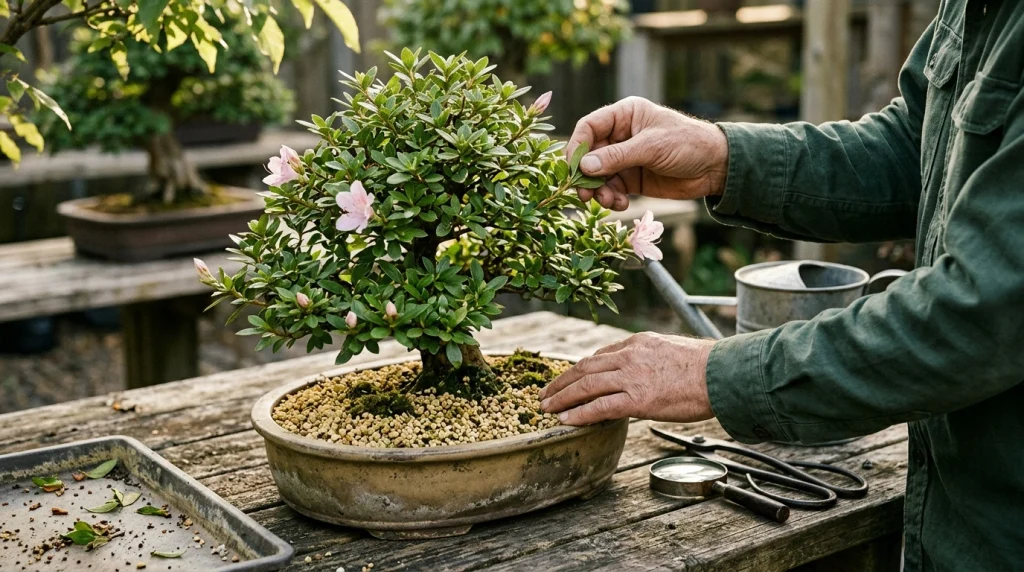
Prevention depends on stable growing conditions, regular inspection, and quick action when symptoms first appear. A healthy azalea can still develop pests or disease, but reducing stress makes problems easier to manage.
Maintain suitable light and airflow
Most azalea bonsai grow best outdoors, with bright light and protection from harsh afternoon sun in hot weather. Dense foliage, crowded plant placement, and persistently damp leaves can encourage some disease problems.
Space plants so air can move around their canopies, and avoid leaving the tree exposed to damaging heat. Adjust placement gradually when possible, particularly if the bonsai has been growing in shade.
Water consistently without waterlogging
Azaleas dislike drying out completely, but constantly saturated roots are also vulnerable. Check the soil regularly and water thoroughly when needed rather than following a rigid calendar.
During hot weather, a shallow bonsai pot may dry quickly. During rainy or cool periods, it may remain moist much longer.
Protect the root environment
Azaleas prefer acidic, well-draining growing media. Kanuma, a naturally acidic Japanese soil material, is commonly used for azalea bonsai because it supports their soil requirements.
Use water suited to the tree’s needs, and consider rainwater where it is clean and safe to collect. If persistent yellowing suggests a pH or nutrient issue, assess the growing medium and water quality before adding supplements.
Build a simple inspection routine
Check your azalea bonsai at least weekly during active growth, increasing inspections when conditions favor pests or disease. A consistent routine helps you spot early symptoms before they spread.
- Examine both leaf surfaces for mites, lace bugs, and unusual deposits.
- Look along stems and branch joints for scale insects and dying shoots.
- Remove fallen leaves and visibly diseased plant material.
- Inspect newly acquired plants before placing them beside established bonsai.
- Clean tools between plants when disease transmission is a concern.
- Record recurring symptoms and changes in weather, watering, and treatment.
For broader diagnostic support, the University of Maryland Extension’s azalea problem guide compares common insect damage, leaf diseases, and environmental disorders.
As of 2026, the same basic principle remains useful: identify the cause first, use targeted control, and maintain conditions suited to the plant. Product registrations and pesticide recommendations can change, so check current local guidance before applying a treatment.
Section takeaway: Regular inspections, suitable acidic soil, consistent moisture, and good airflow help prevent recurring problems. Early diagnosis is usually easier than recovering a tree after extensive leaf or root damage.
Frequently asked questions
Why are my azalea bonsai leaves turning yellow?
Yellow leaves can indicate spider mites, lace bugs, root stress, unsuitable soil pH, or natural seasonal changes. Inspect both leaf surfaces, check soil moisture and drainage, and look for green veins against yellow tissue. The pattern and accompanying symptoms help narrow the cause.
Can azalea bonsai recover from root rot?
An azalea bonsai may recover if the root damage is limited and the underlying conditions are corrected. Improve drainage and avoid keeping the medium saturated. Severe root damage can be fatal, so seek experienced help if the tree continues wilting despite appropriate care.
How do I get rid of spider mites on an azalea bonsai?
Confirm the mites by examining foliage closely or tapping a branch over white paper. Rinse affected foliage when appropriate, correct stressful conditions, and use a labeled miticide or suitable contact product if needed. Follow application directions and reinspect regularly for surviving mites.
Should I remove leaves affected by azalea leaf gall?
Yes, removing clearly infected leaves and flowers can reduce diseased material around the tree. Use clean tools when necessary, dispose of the material away from your growing area, and reduce prolonged leaf wetness. Already distorted tissue generally won’t return to normal.
Can I use neem oil on azalea bonsai?
Neem-based products may help with certain pests when their labels permit the intended use, but they aren’t a universal treatment. Azalea foliage can be sensitive to sprays, particularly in hot weather. Follow the label, avoid stressful application conditions, and never assume a product treats fungal root disease.
How often should I inspect my azalea bonsai for pests?
Inspect the tree at least weekly during active growth and more frequently when pest pressure is high or the weather is favorable for disease. Check leaf undersides, young shoots, branches, and the soil surface. Continue monitoring after treatment because one application may not eliminate every pest stage.
Can I keep an azalea bonsai indoors to prevent pests?
No. Moving an azalea bonsai indoors isn’t a reliable pest-control method and can create light and airflow problems. Most azalea bonsai are best grown outdoors in suitable conditions. Isolate affected trees temporarily while treating them, but maintain the light and seasonal conditions the species needs.
Final Takeaway: Keep Your Azalea Bonsai Healthy
Azalea bonsai pests and diseases are easier to manage when you recognize the symptoms early and confirm the likely cause before acting. Spider mites, lace bugs, scale insects, leaf gall, leaf spot, and root rot each require a different response.
Start with a close inspection, check the root environment, and make targeted changes rather than treating every symptom with chemicals. Consistent moisture, suitable acidic soil, appropriate light, and good airflow support long-term health.
If the problem continues to spread or the roots and branches show serious damage, seek help from an experienced bonsai grower or plant-disease specialist. Careful diagnosis gives your azalea bonsai the best chance of recovering and producing healthy foliage and flowers in the seasons ahead.