
Boxwood Bonsai Pests and Diseases: Identification, Treatment, and Prevention

Quick Answer
Boxwood bonsai (Buxus species) commonly develop problems from spider mites, scale insects, leafminers, root rot, Volutella blight, and boxwood blight. Yellow leaves, brown spots, distorted new growth, sticky residue, and dying branches can indicate an infestation or disease, but poor watering, inadequate drainage, and environmental stress can produce similar symptoms. Identify the cause before treating the tree, and consult the UC Integrated Pest Management guide to boxwood problems for additional diagnostic guidance.
Common warning signs and likely causes
- Fine pale speckles: Spider mites may be feeding on the leaves, especially during hot, dry weather.
- White or brown bumps: Scale insects may be attached to twigs, stems, or leaf surfaces.
- Blistered leaves: Boxwood leafminers can feed inside the leaf tissue and cause swollen, discolored foliage.
- Brown spots and leaf drop: Fungal diseases, including boxwood blight, may be responsible.
- Yellowing and widespread dieback: Root rot, prolonged drought, waterlogged soil, or advanced disease may be involved.
- Curled new leaves: Boxwood psyllids or other causes of distorted growth should be investigated.
What to do first
- Inspect leaf undersides, branch junctions, bark, and the soil surface with a magnifier.
- Separate an affected bonsai from healthy trees while investigating a possible contagious disease.
- Check soil moisture and drainage before changing the watering routine.
- Remove clearly dead or infected material with clean tools, and use targeted treatment only after identifying the likely cause.
Boxwood bonsai pests and diseases can be difficult to diagnose because several unrelated problems produce similar symptoms. A yellowing leaf might indicate root stress, a feeding insect, or a fungal infection.
In this guide, I’ll explain how to distinguish the most common problems affecting boxwood bonsai, choose appropriate treatments, and prevent repeat outbreaks without putting additional stress on the tree.
In This Guide
- How can you identify boxwood bonsai pests and diseases?
- Which pests attack boxwood bonsai?
- What diseases affect boxwood bonsai?
- How do you treat an infested or diseased boxwood bonsai?
- How can you prevent pests and diseases?
- How do you help a damaged boxwood bonsai recover?
- Frequently asked questions
How can you identify boxwood bonsai pests and diseases?
The most reliable way to diagnose a boxwood bonsai problem is to match visible symptoms with evidence on the leaves, stems, roots, and growing medium. Don’t assume every yellow leaf or brown branch indicates an insect or fungal infection.
Inspect the entire tree before choosing a treatment
Start with a close inspection under bright, indirect light. A small magnifying glass helps reveal mites, scale insects, eggs, and other pests that are difficult to see unaided.
- Leaf surfaces: Look for stippling, blotches, mines, distorted edges, and premature leaf drop.
- Leaf undersides: Search for insects, webbing, eggs, discoloration, and unusual growth.
- Twigs and branches: Check for attached scale insects, black lesions, cankers, and dead tips.
- Trunk base: Look for damaged bark, soft tissue, unusual discoloration, and signs of prolonged moisture.
- Roots and substrate: Assess drainage and soil condition; inspect roots only when there is a good reason to disturb the root ball.
Match symptoms to likely causes
Symptoms provide useful clues, but they rarely confirm a diagnosis on their own. Look for the physical evidence that supports each possibility.
| Symptom | Possible cause | What to check |
|---|---|---|
| Fine yellow or white speckles | Spider mites | Tiny moving mites and fine webbing in severe infestations |
| Hard bumps on twigs | Scale insects | Fixed shell-like or waxy coverings |
| Blistered or swollen leaves | Leafminers | Blotch-shaped mines within the leaf |
| Curled young leaves | Psyllids | Distorted growth and white waxy secretions |
| Brown spots and rapid defoliation | Boxwood blight or another leaf disease | Spreading spots, stem lesions, and affected lower foliage |
| Yellowing with branch dieback | Root rot, Volutella blight, or environmental stress | Root condition, drainage, cankers, and dead tissue |
Boxwood is an evergreen genus that includes species such as Buxus sempervirens and Buxus microphylla. Their compact foliage makes them attractive bonsai subjects, but dense branching can conceal early symptoms.
As of 2026, established horticultural guidance continues to emphasize correct identification, sanitation, drainage, and targeted pest management rather than treating every damaged tree with the same product.
Section takeaway: Inspect the whole tree and confirm the likely cause before treating it. The pattern of damage and the presence of the pest or disease are more useful than leaf color alone.
Which pests attack boxwood bonsai?
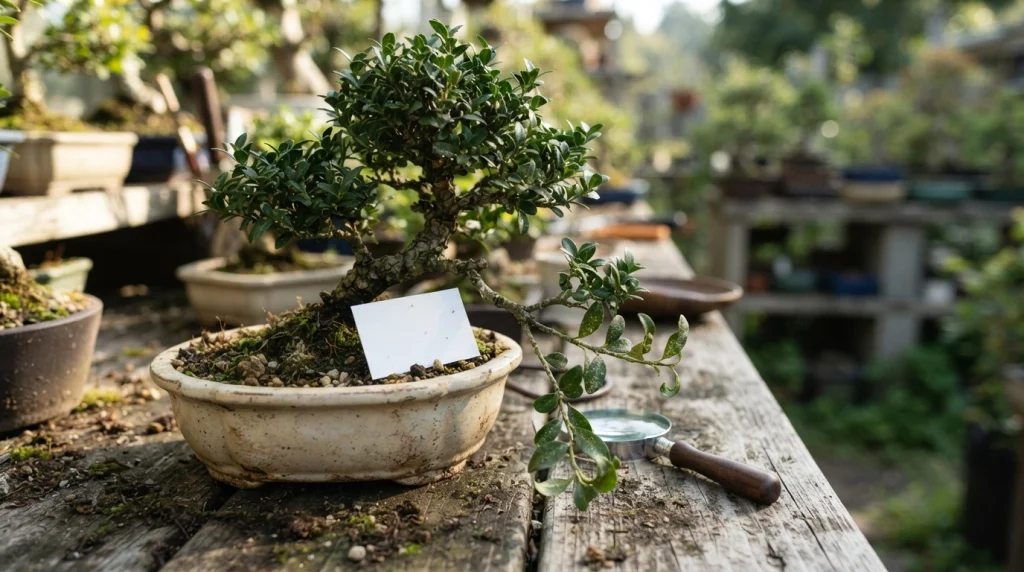
Common boxwood pests include spider mites, scale insects, leafminers, and psyllids. Some mainly affect appearance, while heavy infestations can weaken foliage, reduce growth, and contribute to branch decline.
Spider mites: Why are boxwood leaves covered in tiny pale spots?
Spider mites feed on plant cells, leaving fine pale speckles across the leaf surface. As damage increases, the foliage may look dull, grayish, or bronze.
These tiny relatives of spiders often become troublesome during hot, dry conditions. Fine webbing may appear when populations become heavy, although the absence of webbing doesn’t rule them out.
- Examine leaf undersides with a magnifier.
- Tap an affected branch over white paper and watch for tiny moving specks.
- For a light infestation, consider a gentle water rinse if the species, weather, and growing conditions make it appropriate.
- For persistent infestations, use a labeled horticultural soap or oil product only if it is suitable for boxwood and bonsai use.
A bonsai’s small foliage mass can be damaged by repeated spraying or unsuitable concentrations. Test a small area first when the product label permits, and avoid applications during excessive heat or other conditions that increase leaf-burn risk.
Scale insects: What are the bumps on boxwood branches?
Scale insects attach themselves to plant tissue and may resemble tiny brown shells, pale waxy bumps, or fixed growths. Heavy infestations can cause yellowing, reduced vigor, and twig dieback.
Inspect the undersides of leaves and the bark around branch junctions. Some scales produce honeydew, a sticky substance that can encourage black sooty mold, although not all scale species produce it.
For small infestations, carefully remove accessible insects with a suitable soft brush or cotton swab without damaging the bark. Prune badly infested twigs only when necessary and when removing them won’t compromise the bonsai’s structure.
Horticultural oil may help control susceptible scale stages, but timing matters. Follow the product label and avoid applying oil to drought-stressed foliage or during unsuitable temperatures.
Boxwood leafminers: Why do leaves look blistered?
Boxwood leafminer larvae feed inside leaf tissue, producing swollen or blistered leaves and discolored patches. The damage may become more obvious from late summer through winter or early spring.
Turn suspicious leaves over and look for mines within the tissue rather than surface-feeding holes. Opening one damaged leaf may reveal the feeding area, but don’t strip healthy foliage while investigating.
Because larvae are protected inside leaves, a surface spray may not reach them effectively. Remove heavily affected foliage only if the tree can tolerate the loss, and seek locally appropriate guidance if the infestation is severe.
Boxwood psyllids: What causes cupped new leaves?
Boxwood psyllids feed on young growth, often causing terminal leaves to curl or cup inward. Small pale insects and fluffy white wax may appear around the affected shoots.
Damage is often most noticeable in spring when new growth develops. Light infestations may not justify aggressive intervention, especially when the tree continues to grow normally.
Monitor the new foliage and remove only badly affected growth when appropriate. Avoid broad-spectrum insecticides without a confirmed need because they can harm beneficial insects and sometimes worsen mite problems by disrupting natural predators.
Other pests to watch for
- Mealybugs: Look for white, cotton-like clusters around sheltered stems and branch junctions.
- Box tree moth caterpillars: Chewed leaves, silk webbing, and dark droppings can indicate feeding activity where this invasive pest occurs.
- Nematodes: These microscopic organisms may damage roots, particularly under conducive soil conditions, and can be difficult to identify without specialist testing.
Box tree moth distribution varies by country and region. If you find extensive chewing damage or unfamiliar caterpillars, consult your local plant-health authority before moving the tree or disposing of potentially infested material.
Section takeaway: Identify the pest by its feeding pattern and physical evidence. Begin with targeted, low-impact control whenever possible, and escalate only when the infestation threatens the tree’s health.
What diseases affect boxwood bonsai?
Important boxwood diseases include boxwood blight, Volutella blight, leaf spot diseases, and Phytophthora root rot. Each affects the tree differently, so correct diagnosis is essential before choosing a treatment.
Boxwood blight: How can you recognize it?
Boxwood blight is a serious fungal disease associated with Calonectria pseudonaviculata and related taxonomy. Typical signs include brown leaf spots, rapid leaf drop, and dark, narrow lesions on young green stems.
Defoliation may begin on lower branches and progress upward. Warm, humid conditions and prolonged leaf wetness can favor disease development, although symptoms alone cannot reliably confirm the pathogen.
If you suspect boxwood blight, isolate the bonsai from other plants and avoid handling healthy trees immediately afterward. Keep potentially contaminated tools, benches, and fallen foliage away from other boxwoods.
Contact a plant diagnostic laboratory or local extension service for confirmation when the diagnosis is uncertain. Fungicides may have a role in preventive management under appropriate guidance, but they cannot restore tissue already killed by infection.
Volutella blight: Why are branch tips turning yellow or brown?
Volutella blight, associated with Pseudonectria species, can cause foliage discoloration, branch dieback, and damaged bark. Pinkish or salmon-colored spore masses may appear on infected material during moist weather.
Examine the boundary between healthy and dead tissue. Branches may show loose bark or cankers, and dead leaves can remain trapped inside dense growth.
Improve airflow by managing overcrowded growth when the tree is healthy enough to tolerate pruning. Remove confirmed infected material with clean tools, then dispose of it safely rather than leaving it beneath the bonsai.
Leaf spot and dieback: Are black spots always a serious disease?
No. Black spots, brown patches, and leaf drop can arise from different fungal problems, aging foliage, physical injury, or environmental stress.
Macrophoma leaf spot, for example, can produce straw-colored dead leaves with tiny black fruiting bodies. Volutella may produce orange-pink structures, while boxwood blight can cause distinctive stem lesions and rapidly spreading defoliation.
Remove clearly dead leaves and improve airflow, but don’t strip the canopy to eliminate every spotted leaf. A boxwood bonsai depends on healthy foliage to restore energy reserves and support new growth.
Root rot: Why is the tree declining despite watering?
Phytophthora root rot is associated with waterlogged conditions and damaged roots. Affected trees may show poor growth, yellowing, dull or bronze foliage, and progressive dieback.
Inspect how quickly water drains through the bonsai substrate. Persistently saturated soil, blocked drainage holes, and a pot that remains wet for too long can contribute to root problems.
Healthy boxwood roots are generally firm, while severely damaged roots may become dark, soft, or decayed. However, root color varies with substrate and growing conditions, so don’t diagnose root rot from color alone.
There is no simple cure that reverses advanced root decay. Correct drainage and watering practices, and obtain specialist advice before disturbing a weakened root system or applying a disease-control product.
Environmental stress that resembles disease
Not every struggling boxwood has a pathogen. Drought, waterlogged soil, sudden exposure to intense sun, cold injury, root damage, and heavy pruning can produce similar symptoms.
Before treating a suspected infection, check whether the decline began after a change in location, watering, temperature, or maintenance. A recent care change may explain the pattern more clearly than an assumed disease.
For further diagnostic detail, consult the Penn State Extension guide to boxwood diseases and compare the described symptoms with those on your tree.
Section takeaway: Treat suspected blight or root rot seriously, but don’t confuse environmental stress with confirmed infection. Isolate suspicious trees and obtain a reliable diagnosis when symptoms spread rapidly.
How do you treat an infested or diseased boxwood bonsai?
Successful treatment begins with identifying the cause, reducing further damage, and correcting the conditions that allowed the problem to develop. A small bonsai can be stressed by excessive pruning, repeated chemical applications, or unnecessary repotting.
Follow a measured treatment sequence
- Isolate the tree: Move it away from healthy bonsai if a contagious disease or spreading pest is suspected, while maintaining suitable light and temperature.
- Document the symptoms: Photograph affected leaves, stems, and the whole canopy so you can track changes over several days.
- Confirm the likely cause: Inspect for insects, webbing, mines, cankers, and drainage problems before selecting a treatment.
- Remove the immediate source: Collect fallen infected leaves and carefully remove severely affected material when doing so won’t cause excessive canopy loss.
- Choose a targeted treatment: Use physical removal, a suitable labeled product, or professional advice according to the diagnosis.
- Monitor the response: Reinspect the tree regularly and follow the product label for repeat applications, if required.
Which treatment is appropriate for each problem?
| Problem | First response | Important caution |
|---|---|---|
| Spider mites | Confirm mites and consider a gentle rinse or labeled miticidal treatment. | Some insecticides kill beneficial mite predators and can worsen outbreaks. |
| Scale insects | Remove accessible insects and consider a suitable horticultural oil. | Check product suitability, temperature limits, and plant stress. |
| Leafminers | Assess mining damage and use locally recommended controls if needed. | Larvae inside leaves may escape contact sprays. |
| Volutella blight | Remove infected material and improve airflow. | Avoid excessive pruning of a weakened tree. |
| Suspected boxwood blight | Isolate the tree, maintain sanitation, and seek confirmation. | Avoid spreading contaminated foliage, tools, or growing medium. |
| Root rot | Assess drainage and moisture; obtain advice if root damage is suspected. | Unnecessary root pruning or repotting may worsen decline. |
Should you use insecticides or fungicides?
Use pesticides only when the product is legally available for your location and labeled for the intended plant, pest, or disease. A product that is safe for a landscape shrub may not be suitable for a small bonsai under indoor or sheltered growing conditions.
Read all directions concerning concentration, application method, temperature, protective equipment, and environmental precautions. Never increase a concentration to compensate for a severe infestation.
Insecticides don’t cure fungal diseases, and fungicides don’t eliminate insects. Broad-spectrum treatment without a diagnosis can waste time, damage foliage, and disrupt beneficial organisms.
Where boxwood blight or another regulated pest is suspected, follow local plant-health guidance before moving or disposing of the tree. Appropriate sanitation and containment may matter as much as the treatment itself.
When should you prune or repot?
Prune only as much as necessary to remove confirmed dead or infected material, unless a qualified diagnosis calls for a different approach. Keep cuts clean and avoid combining major styling work with treatment of a severely weakened tree.
Repotting may be necessary when drainage has failed or root disease requires intervention, but it is not an automatic response to yellow leaves. Timing depends on the species, local climate, root condition, and the severity of the problem.
Pro tip: Before cutting major roots or removing substantial live branches, consult an experienced bonsai grower or local bonsai club, especially when the diagnosis is uncertain.
Section takeaway: Use the least disruptive effective treatment, follow label directions, and monitor the results. Avoid combining pesticides, heavy pruning, and root work unless there is a clear, justified reason.
How can you prevent pests and diseases on boxwood bonsai?

Prevention depends on balanced watering, suitable light, good drainage, regular inspection, and clean tools. These practices reduce many common problems and help a boxwood bonsai tolerate occasional pest pressure.
Water correctly and protect root health
Water when the substrate’s moisture condition indicates that the tree needs it, rather than following a fixed daily schedule. Weather, pot size, substrate particle size, root mass, and seasonal growth all affect how quickly a bonsai dries.
- Check moisture below the surface instead of relying on the appearance of the top layer alone.
- Water thoroughly so the root ball receives moisture and excess water can drain freely.
- Empty standing water from trays or containers when it prevents normal drainage.
- Avoid allowing the root ball to dry completely for extended periods.
Boxwood bonsai are often grown outdoors, although the suitable exposure depends on the species, climate, and local growing conditions. Protect the tree from abrupt environmental changes and provide adequate airflow without exposing stressed foliage to damaging extremes.
Keep foliage and tools clean
Dense foliage can trap dead leaves and slow drying after rain or overhead watering. Carefully remove fallen material and inspect crowded areas, especially when humidity remains high.
- Clean and disinfect tools between trees, particularly after cutting suspicious diseased tissue.
- Keep benches and growing areas free of accumulated dead leaves.
- Use clean substrate and pots when repotting.
- Avoid moving potentially infected plant material between growing areas.
Sanitation is particularly important when dealing with suspected boxwood blight. Use a disinfectant suitable for the tool and pathogen, following its label directions and allowing the required contact time.
Inspect new plants before adding them to your collection
New bonsai and nursery plants can carry pests or disease symptoms that aren’t obvious at first glance. Examine both sides of the leaves, the stems, and the growing medium before placing a new tree near established specimens.
Keep new arrivals separate for an observation period appropriate to the plants and local risks. Reinspect them regularly, because some pests and diseases take time to become visible.
Match care to the season and growing environment
Seasonal changes influence pest activity and disease risk. Spider mites often thrive in hot, dry conditions, while prolonged leaf wetness can encourage certain fungal diseases.
- Spring: Check new growth for psyllids and inspect for emerging pest activity.
- Summer: Monitor moisture closely and watch for mite damage during hot, dry spells.
- Autumn: Remove fallen leaves and check for persistent leaf spots or branch dieback.
- Winter: Protect the tree according to its species and local climate, and avoid keeping the root ball continuously saturated.
These are monitoring priorities, not rigid treatment dates. Pest life cycles and disease pressure vary by region, so local horticultural advice should guide specific control timing.
For a broader pest-management reference, the North Carolina State Extension guide to boxwood pests explains several important insect pests and their characteristic symptoms.
Section takeaway: Good bonsai care cannot prevent every infection, but it reduces avoidable stress and makes early detection easier. Consistent inspection and sanitation are more useful than routine, unnecessary pesticide applications.
How do you help a damaged boxwood bonsai recover?
A damaged boxwood bonsai may recover if enough healthy roots, stems, and foliage remain. Recovery depends on the cause, the extent of tissue damage, and whether the conditions that triggered the decline have been corrected.
Adjust care without creating more stress
Once you’ve addressed the underlying problem, concentrate on stable growing conditions rather than forcing rapid new growth. Avoid aggressive styling, heavy fertilization, and unnecessary root disturbance while the tree is weakened.
Keep watering responsive to actual substrate moisture. A tree with fewer leaves may use less water, so continuing its previous watering routine without checking the soil can lead to further root problems.
Provide appropriate light and protection from extreme heat, cold, or sudden exposure changes. Boxwood needs enough light to support healthy growth, but a stressed tree may not tolerate an abrupt move into intense direct sun.
How can you tell whether the tree is improving?
Look for stable symptoms and healthy new growth rather than expecting damaged leaves to return to normal. Existing brown, mined, or heavily spotted foliage usually remains damaged even after the cause has been controlled.
- New leaves develop with normal color and shape.
- Branch dieback stops spreading.
- The substrate drains normally and the tree responds appropriately to watering.
- No new pests, webbing, or suspicious lesions appear during repeated inspections.
Keep dated photographs of the canopy and affected branches. Comparing images over one to several weeks can help distinguish a stable problem from continuing decline, although recovery time varies with the damage and growing conditions.
When is professional diagnosis worthwhile?
Seek expert help if the tree continues declining despite appropriate care, develops rapidly spreading lesions, loses substantial foliage, or shows signs of severe root damage. A diagnostic laboratory may identify pathogens that cannot be distinguished reliably by visual inspection.
Bring clear photographs, details of recent watering and environmental changes, and information about any products already applied. These details help an extension specialist, plant-health professional, or experienced bonsai grower narrow the possibilities without unnecessary intervention.
Section takeaway: Recovery comes from correcting the cause and maintaining steady care. Watch new growth and the progression of symptoms instead of trying to repair already damaged leaves.
Frequently asked questions about boxwood bonsai pests and diseases
Why is my boxwood bonsai turning yellow?
Yellow leaves can result from overwatering, underwatering, root rot, pest feeding, fungal disease, or normal aging of older foliage. Check the substrate moisture, inspect leaf undersides and stems, and look for spreading spots or dieback before choosing a treatment.
Can a boxwood bonsai recover from root rot?
Recovery is possible when enough healthy roots remain and the cause of excessive moisture is corrected. Severe root loss can be fatal, so avoid unnecessary root pruning and seek specialist advice if the tree continues to decline despite improved drainage.
How do I get rid of spider mites on boxwood bonsai?
Confirm their presence by examining leaf undersides with a magnifier or tapping a branch over white paper. A gentle rinse may help with light infestations, while persistent problems may require a labeled miticidal product suitable for boxwood and bonsai conditions.
What causes white spots or white material on boxwood leaves?
White material may be waxy secretions from psyllids, mealybugs, or other insects, while pale speckling can indicate mite feeding. Examine the material closely to determine whether it is attached insects, loose residue, or discoloration within the leaf tissue.
Should I remove brown leaves from my boxwood bonsai?
Remove loose dead leaves and clearly infected material when practical, using clean tools where cutting is necessary. Don’t strip large amounts of foliage simply because it looks imperfect, since healthy leaves help support recovery and new growth.
Can I use neem oil on a boxwood bonsai?
Only use a neem-based product if its label permits the intended use and application method. Check temperature restrictions, avoid treating a severely stressed tree, and test a small area when directed. Oil-based treatments can injure foliage under unsuitable conditions.
How often should I inspect a boxwood bonsai for pests?
Inspect the tree at least weekly during active growth and more frequently when conditions favor pests or when the tree is already affected. Check leaf undersides, new shoots, and branch junctions, and quarantine new plants while assessing possible problems.
Final takeaway: Keep your boxwood bonsai healthy with early diagnosis
Boxwood bonsai pests and diseases are easier to manage when you recognize the warning signs early. Spider mites, scale insects, leafminers, and psyllids require different responses, while blight and root rot demand particular attention to sanitation and growing conditions.
Start with a careful inspection, confirm the likely cause, and make targeted changes instead of applying multiple treatments at once. Good drainage, appropriate watering, clean tools, and regular monitoring give your boxwood the best chance of staying healthy.
If symptoms spread quickly or the diagnosis remains uncertain, seek help from a qualified plant-health specialist or experienced bonsai grower. Protecting the tree’s remaining healthy foliage and roots is more important than rushing to restore its appearance.