Bonsai Bark Splitting: Normal Growth or Damage?

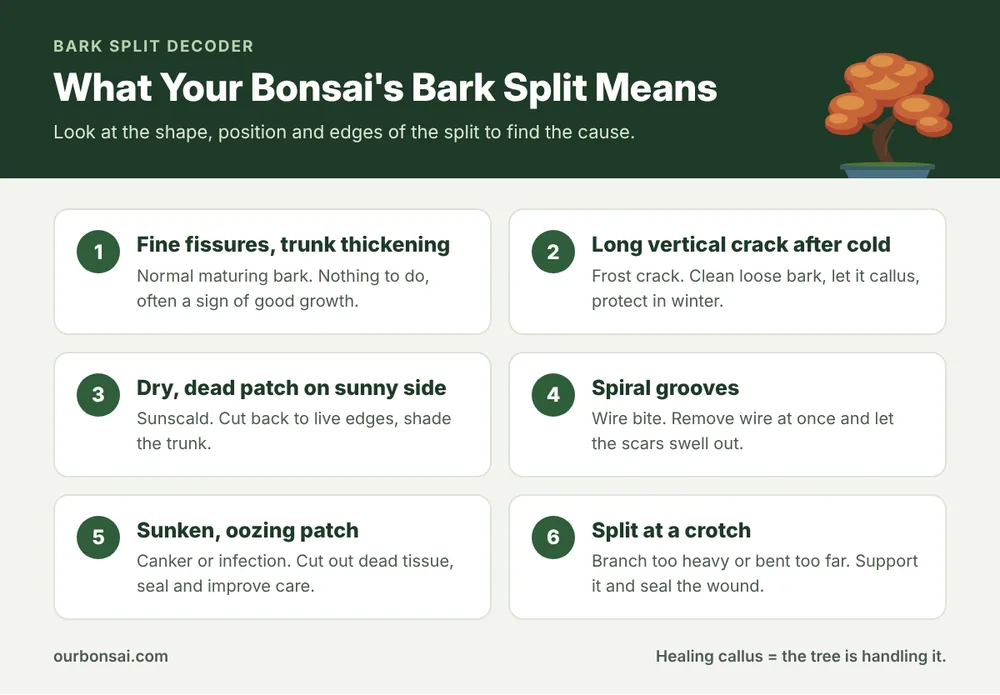
Bonsai bark splitting can mean two very different things. On a healthy, fast-growing tree, fine cracks and fissures in the bark are often a sign of good growth: the trunk is thickening and the outer bark stretches and splits, exactly what you want for an aged look. But a long, deep crack after a cold snap, a dry dead patch on the sunny side of the trunk, grooves from wire or a sunken, oozing area are signs of damage. Those need attention so the wound can heal and infection stays out.
In this guide
This guide helps you read the split, decide whether it is a problem and treat it if needed.
Why bark splits at all
Under the bark is a thin, living layer called the cambium, which makes new wood on the inside and new bark on the outside. As the trunk grows thicker, the outer bark has to stretch. On species with rough or plated bark, it cracks into fissures and plates. On smooth-barked species, it stays smooth longer but may still split along a line under stress. The Wikipedia article on bark explains how different trees build their bark.
So some splitting is a natural part of a tree maturing. The question is whether the split exposes living tissue that is healing, or dead and damaged tissue.
Normal splitting vs damage
| What you see | Likely cause | Problem? |
|---|---|---|
| Fine, shallow fissures all over the trunk | Natural maturing bark | No |
| Corky ridges on cork bark elm, cork oak or Chinese elm | Species trait | No |
| Bark plates forming on pines and junipers | Age and thickening | No |
| One long vertical crack after a freeze | Frost crack | Mild to moderate |
| Dry, dead, sunken patch on the south or west side | Sunscald | Moderate |
| Spiral grooves or swollen ridges along a branch | Wire bite | Moderate |
| Dark, sunken, wet or oozing patch | Canker or infection | Serious |
| Split where a branch meets the trunk | Too much weight or bending | Moderate |
If your tree is a cork bark variety, rough, splitting bark is the whole point. Our cork bark elm bonsai care guide explains how to encourage it.
Common causes of damaging bark splits
Frost cracks
On cold, sunny winter days, the sunny side of the trunk warms up, then cools sharply at sunset. The outer wood contracts faster than the inside and the bark cracks, sometimes with a loud snap. These frost cracks are usually long and vertical. Bonsai in exposed spots and on benches are more at risk than trees protected near the ground.
Sunscald
Thin-barked trees, such as Japanese maples and beech, can be scorched on the trunk by strong afternoon sun, especially after being moved suddenly from shade into sun or after heavy pruning exposes the trunk. The bark dies, dries out and splits or peels off.
Wire bite
Wire left on too long cuts into the bark as the branch thickens. You see spiral grooves, swollen ridges and sometimes split bark. Remove the wire at once by cutting it off in short pieces. Our guide to bonsai repotting wire covers wire types, and checking wired trees every few weeks during growth prevents this.
Physical damage and over-bending
A dropped pot, a branch bent too far while wiring or a heavy branch tearing at the crotch can split bark. Fresh splits should be closed and sealed quickly.
Cankers and infection
Bacteria and fungi can enter through wounds and kill a patch of bark and cambium. The area sinks, darkens and may ooze. Our guide to bacterial diseases in bonsai trees covers these in more detail, and if branches are also dying back, see why bonsai branches die.
How to treat a bark split
- Check whether the tissue is alive. Gently look at the edges of the split. Light green, cream or moist tissue is alive. Brown, dry or black tissue is dead.
- Clean the wound. Remove loose, dead bark with a sharp, clean knife. Cut back to living tissue with a clean edge. Do not enlarge the wound more than necessary.
- Seal it. Apply bonsai cut paste over the edges. It keeps the cambium moist and helps callus roll over the wound. Our guide to the best bonsai cut paste alternative has options.
- Close fresh splits. If a branch split at a crotch only recently, gently close it and hold it together with raffia, grafting tape or a small screw on large trees, then seal.
- Fix the cause. Shade the trunk, protect from frost, remove wire or improve watering as needed.
- Keep the tree healthy. Good light, steady watering and regular feeding in the growing season help the wound heal faster.
How long does a bark wound take to heal?
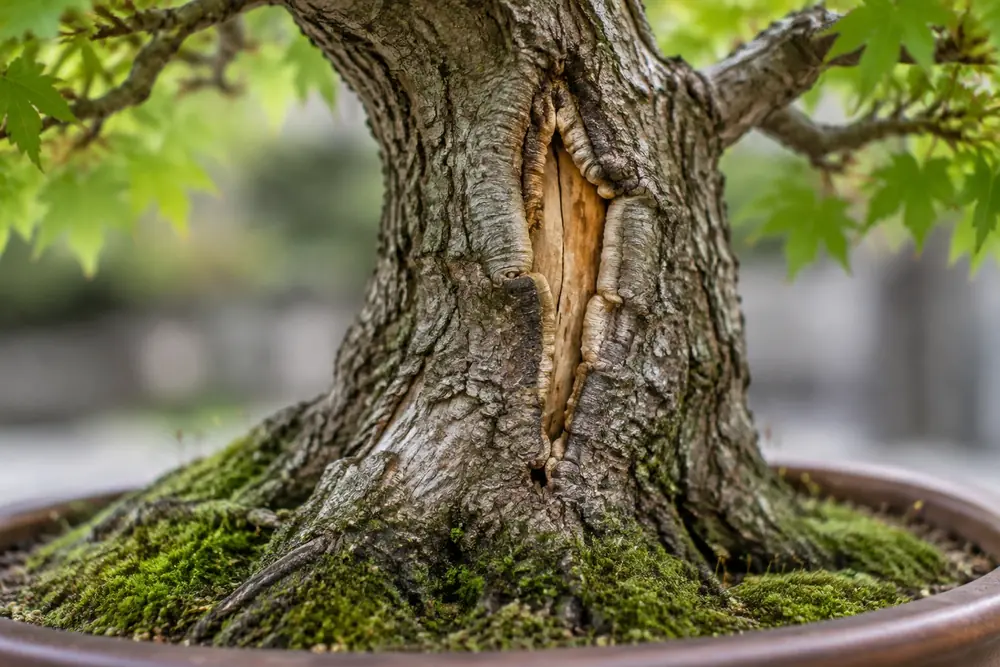
A small crack on a vigorous tree can close in a single growing season. Larger wounds may take years to roll over completely. You will see rounded ridges of new tissue, called callus, forming along the edges. That callus is the tree healing itself. As long as it keeps growing inward, the wound is on track.
How to prevent bark splitting damage
- Protect from winter sun and frost. Keep trees low and sheltered in winter. Our guide to repotting bonsai in autumn also touches on preparing trees for cold.
- Shade thin-barked trunks. Move maples and other thin-barked trees gradually into sun, and shade the trunk in heat waves.
- Check wire often. Every two to three weeks during growth.
- Bend gradually. Make big bends over several sessions, or use protective raffia on the branch.
- Clean tools. Disinfect blades between trees so you do not spread infection into cuts.
Common mistakes
- Treating natural fissures as damage. Rough bark on an elm or pine is desirable.
- Peeling off loose bark that is still alive. Only remove clearly dead tissue.
- Leaving wire on “just a little longer”. Wire scars can take years to fade.
- Using house paint or tar. Use proper cut paste designed for trees.
FAQ: bonsai bark splitting
Is bark splitting bad for my bonsai?
Not always. Fine fissures on a thickening trunk are normal. Long cracks, dead patches or oozing areas are damage that needs treatment.
Can a split bonsai trunk heal?
Yes. If the cambium around the split is alive, the tree grows callus over the wound. Clean, sealed wounds heal fastest.
Why is my bonsai bark peeling?
Some species, such as trident maple and crape myrtle, shed bark naturally. Peeling with dead, dry tissue underneath points to sunscald or infection.
Should I seal a bark crack on my bonsai?
Yes, if living tissue is exposed. Cut paste keeps it moist and helps it heal.
Which bonsai species are most prone to bark splitting?
Thin-barked trees such as Japanese maple, beech and hornbeam are the most likely to suffer sunscald and frost cracks. Fast-growing tropicals like ficus can split along a wire line in a single summer. Rough-barked species such as pines, junipers and cork bark elms crack naturally, and that is part of their charm.
Final thoughts
Bonsai bark splitting is either a sign of a maturing trunk or a wound that needs care. Look at the shape and edges of the split, check whether the tissue is alive, and treat damaged areas by cleaning, sealing and fixing the cause. A healthy tree heals well, and in time, a well-healed wound can even add character to the trunk. For general care, see our main bonsai care guide.