Anthracnose on Bonsai: Symptoms and Treatment
Quick Answer
Anthracnose on bonsai is a group of fungal diseases that can cause irregular brown or black leaf lesions, vein-following dead areas, distorted young leaves, premature leaf drop, and sometimes shoot or twig dieback. Cool, wet conditions and long periods of leaf wetness often increase risk, so treatment starts with sanitation, drier foliage, good airflow, and correct diagnosis before using any fungicide; the UC IPM anthracnose guidance provides a useful research-based reference.
Signs to check first
- Irregular lesions: Look for tan, brown, or nearly black dead areas rather than uniform discoloration.
- Vein pattern: Anthracnose lesions often develop along or between leaf veins.
- Distorted leaves: Young leaves may curl or twist as healthy tissue grows around damaged areas.
- Early leaf drop: Heavier infections can cause affected foliage to fall prematurely.
- Shoot damage: Susceptible species may develop dead young shoots or infected twigs.
- Wet-weather pattern: New symptoms appearing after cool, rainy, or persistently damp conditions strengthen the suspicion.
First response
- Separate the affected bonsai, remove diseased debris, keep leaves drier, improve airflow, and confirm the diagnosis before spraying.
Dark spots on a prized bonsai can be alarming, especially when new leaves start curling or dropping. Anthracnose is one possibility, but several watering, pest, and environmental problems can look surprisingly similar.
My rule is simple: one damaged leaf is a clue, not a diagnosis. I inspect the whole tree and its recent growing conditions before changing care or reaching for a fungicide.
In This Guide
- What Is Anthracnose on a Bonsai Tree?
- What Does Anthracnose Look Like on Bonsai?
- Which Bonsai Are Most at Risk of Anthracnose?
- How Can You Confirm Anthracnose Instead of Another Problem?
- How Do You Treat Anthracnose on Bonsai?
- How Do You Prevent Anthracnose From Returning?
- Frequently Asked Questions
What Is Anthracnose on a Bonsai Tree?
Anthracnose is a general name for several fungal diseases that attack leaves, shoots, twigs, or other young plant tissue. Different fungi cause anthracnose on different host plants, so it isn’t one single pathogen that infects every bonsai species.
Definition: Anthracnose is a group of plant diseases, usually fungal, characterized by dead leaf lesions, blighting, distortion, and sometimes twig or shoot injury.
The miniature size of a bonsai doesn’t create anthracnose. A maple, elm, oak, or other woody species trained as bonsai can encounter many of the same pathogens as a full-sized plant of the same species.
- Leaves can develop irregular dead patches.
- Young shoots may become blighted on susceptible hosts.
- Twigs can occasionally develop dieback or cankers.
- Fallen foliage may carry overwintering fungal material on some deciduous hosts.
Moisture is an important part of the disease cycle. Splashing rain or irrigation can move spores onto expanding foliage, while cool and wet weather often allows infection to continue.
Warm, dry weather commonly slows many anthracnose outbreaks. That seasonal pattern is one reason I always ask what the weather and watering method were like before the symptoms appeared.
Research from the University of Maryland Extension also emphasizes vein-associated lesions, distorted young foliage, and wet early-season conditions as important diagnostic clues.
What Does Anthracnose Look Like on Bonsai?
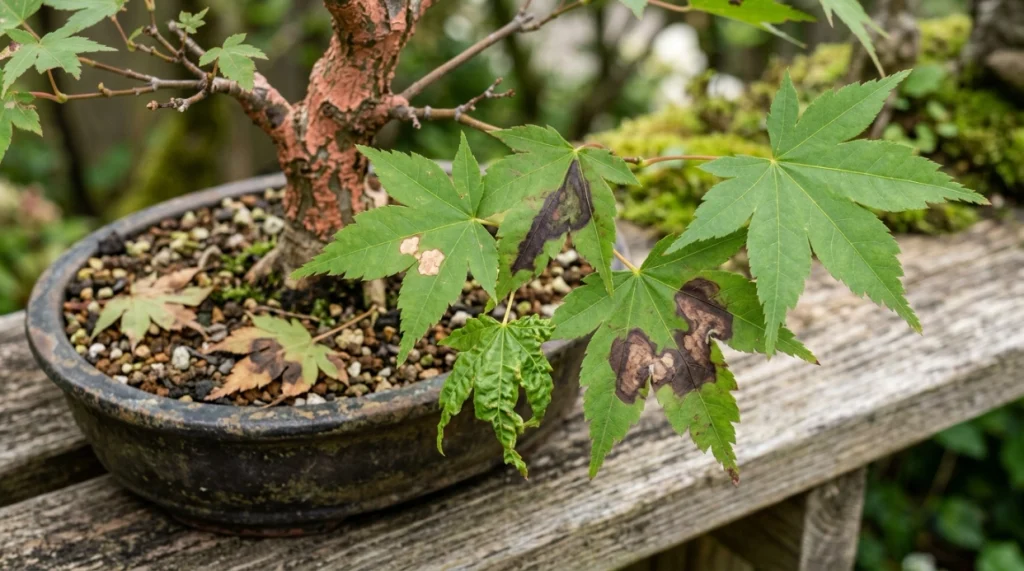
Anthracnose usually creates a pattern of irregular lesions rather than perfectly round, identical spots. Damage may follow leaf veins or develop between veins, especially on susceptible broadleaf trees.
Early symptoms
- Small tan or brown areas appearing on new or recently expanded leaves.
- Darkening lesions that become brown, black, or irregularly shaped.
- Vein-associated damage extending along major or minor leaf veins.
- Leaf distortion when expanding tissue is infected early.
More advanced symptoms
- Larger dead patches as neighboring lesions merge.
- Premature leaf drop during heavier infections.
- Blighted shoots on susceptible trees.
- Dead twig tips where the disease progresses beyond foliage.
One important detail is that old lesions don’t become green again after treatment. Recovery is judged by healthier new foliage and by the disease stopping its spread.
| Problem | Typical Pattern | Useful Clue |
|---|---|---|
| Anthracnose | Irregular brown or black lesions, often associated with veins | Often worsens during cool, wet conditions |
| Other fungal leaf spots | Repeated tan, brown, reddish, or black spots | May have more distinct spot margins or centers |
| Sun scorch | Crispy pale or brown tissue on exposed leaves | Often follows sudden exposure to stronger sun or heat |
| Spider mite damage | Fine yellow or pale stippling | Check leaf undersides with a 10× hand lens |
| Root or watering stress | General yellowing, wilting, brown tips, weak growth | Compare symptoms with substrate moisture and drainage |
Section Takeaway: Anthracnose becomes more likely when irregular, vein-related lesions repeat across several leaves and coincide with prolonged wet conditions. One spot by itself isn’t enough for a confident diagnosis.
Which Bonsai Are Most at Risk of Anthracnose?
Anthracnose can affect many trees and shrubs, but susceptibility varies greatly by species and cultivar. Broadleaf deciduous bonsai deserve particular attention when their full-sized counterparts are known anthracnose hosts.
Examples of relevant host groups include maples, elms, oaks, ashes, sycamores, and plane trees. The exact fungus and symptom pattern can differ between those hosts.
- Maple bonsai: Watch for irregular brown-to-black lesions and distortion on young foliage.
- Elm bonsai: Susceptibility varies by elm species and cultivar.
- Oak bonsai: Wet spring weather may favor leaf blighting and vein-associated dead areas.
- Other broadleaf trees: Always diagnose according to the actual species rather than treating “bonsai” as one plant type.
The University of Minnesota Extension anthracnose guide documents differences in susceptibility even within related tree groups. That matters because two bonsai sitting on the same bench may respond differently to identical weather.
Weather can matter as much as species
Risk increases when susceptible young foliage stays wet for extended periods. Repeated spring rain, overhead irrigation, crowded benches, and restricted airflow can all extend leaf-wetness time.
- Cool, wet spring weather commonly favors infection.
- Splashing water can move fungal spores.
- Dense foliage dries more slowly.
- Infected fallen leaves can contribute to future disease cycles on some hosts.
As of 2026, those basic disease-management principles remain consistent across current extension guidance. Bonsai culture changes the size and presentation of the plant, not the biology of anthracnose.
How Can You Confirm Anthracnose Instead of Another Problem?
Start by comparing the symptom pattern with the tree’s species, recent weather, watering, pests, and care history. Diagnosis becomes stronger when several clues point in the same direction.
Inspect at least several affected leaves
I prefer examining ten leaves from different parts of the canopy rather than making a decision from the worst-looking one. A repeating pattern is far more useful than an isolated blemish.
- Check whether lesions follow veins.
- Compare young leaves with mature foliage.
- Look underneath leaves for mites or insects.
- Inspect shoots for localized dieback.
- Check the pot surface for infected fallen foliage.
Review what happened before symptoms appeared
A disease diagnosis should fit the timeline. Symptoms appearing after several damp days tell a different story from crisp margins that appeared immediately after a severe heat event.
Also check the substrate. Persistent waterlogging can weaken roots and create foliage symptoms without anthracnose being the main problem.
Know when laboratory diagnosis is worth considering
A valuable specimen with repeated defoliation, spreading twig damage, or unclear symptoms may justify professional diagnosis. A local plant-disease clinic, extension service, experienced horticulturist, or bonsai specialist may help narrow the cause.
This matters before chemical treatment. Different fungi and host plants can require different management, while many non-disease problems need no fungicide at all.
How Do You Treat Anthracnose on Bonsai?
Treatment focuses on lowering infection pressure, keeping the bonsai vigorous, and protecting healthy new growth. Existing dead leaf tissue will not be repaired by a fungicide.
- Separate the affected tree. Give it some space from healthy bonsai while you investigate the problem.
- Remove fallen debris. Pick up infected leaves and dead material from the pot surface and bench.
- Remove badly infected foliage carefully. Avoid stripping a weak bonsai of most of its functioning leaves at once.
- Keep foliage drier. Water the substrate rather than routinely soaking the canopy when disease pressure is high.
- Improve airflow. Increase spacing and avoid keeping foliage pressed against walls or neighboring plants.
- Inspect affected twigs. Dead or clearly diseased twigs may need removal at an appropriate time.
- Clean tools. Sanitize pruning equipment before moving to another tree.
- Consider fungicide only when justified. Use a product labeled for the plant and target disease, following the label exactly.
Pro tip: Cutting live branches or diseased twigs is irreversible on a styled bonsai. If an important primary branch may need removal, confirm the diagnosis with an experienced grower, local bonsai club, or plant-health professional first.
Will fungicide cure spotted leaves?
No. Fungicides used for anthracnose are generally protective, meaning their value is in preventing infection of susceptible healthy tissue rather than making existing lesions disappear.
The University of Maryland Extension’s fungal leaf-spot guidance likewise notes that fungicides don’t cure leaves that already have spots. Timing and correct identification matter.
Should you repot a bonsai with anthracnose?
Anthracnose alone doesn’t automatically mean the bonsai needs repotting. Repotting and root pruning add stress, so I wouldn’t combine them with active foliage disease unless a serious substrate or root problem also requires attention.
If roots are waterlogged, decayed, or the substrate has completely lost drainage, that becomes a separate problem to assess. Handle major root work according to the species and appropriate repotting season.
Section Takeaway: Treat the growing environment first, remove sources of reinfection, and protect healthy new growth. Don’t expect a spray to erase existing damage.
How Do You Prevent Anthracnose From Returning?
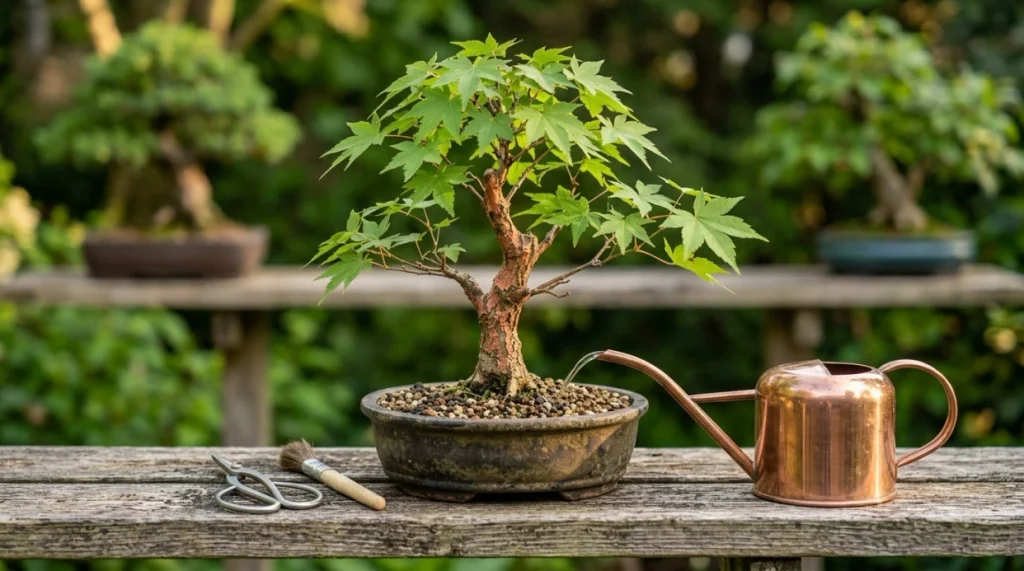
Prevention is usually easier than trying to stop a severe outbreak midway through a wet season. The goal is to reduce the amount of infectious material while helping foliage dry faster.
Keep the growing area clean
- Remove fallen diseased leaves promptly.
- Discard badly infected plant material away from the bonsai bench.
- Clean pots and work surfaces before reuse.
- Sanitize pruning tools between questionable trees.
Reduce unnecessary leaf wetness
Water your bonsai according to its actual substrate moisture, species, season, and weather. During an anthracnose outbreak, avoid turning routine watering into repeated canopy soaking.
Outdoor bonsai will still get wet from rain. Good spacing and airflow help the foliage dry more quickly afterward.
Protect the tree’s overall vigor
- Use an appropriately draining bonsai substrate.
- Provide the light exposure required by the species.
- Avoid chronic overwatering.
- Don’t push a stressed tree with excessive fertilizer.
- Avoid unnecessary heavy pruning during recovery.
UC IPM notes that removing infected debris, reducing foliage wetting, improving airflow, and maintaining plant vigor are central anthracnose-management practices. These cultural controls fit bonsai particularly well because they don’t require sacrificing the tree’s design unnecessarily.
Watch the next flush of growth closely. Clean, normally shaped new leaves are a better recovery signal than the appearance of old damaged foliage.
Section Takeaway: The most useful long-term strategy is simple—clean growing conditions, faster leaf drying, appropriate watering, and regular inspection before symptoms become widespread.
Frequently Asked Questions
Can anthracnose spread from one bonsai to another?
It can, depending on the pathogen and host species. Spores may move through splashing water, infected debris, or contaminated material, so separating a suspicious tree and cleaning tools is a sensible precaution.
Can anthracnose kill a bonsai?
A single mild leaf infection often causes mostly cosmetic damage on otherwise vigorous trees. Repeated severe defoliation, twig infection, or disease combined with significant root and care problems can create a more serious situation.
Should I remove every spotted leaf?
No. Removing a few badly infected leaves may reduce diseased material, but stripping most foliage from a weak bonsai creates another stress.
Balance sanitation with the tree’s need to retain enough healthy foliage for photosynthesis.
Does anthracnose disappear when the weather becomes dry?
Disease activity often slows as conditions become warmer and drier, especially on many deciduous hosts. Existing lesions remain visible, and infected debris or twigs may still contribute to future disease cycles.
What is the best fungicide for anthracnose on bonsai?
There isn’t one universal fungicide for every bonsai species and anthracnose pathogen. Choose only a product whose label covers the host plant and target disease, and follow all application, timing, and safety directions.
Can overwatering cause anthracnose?
Overwatering doesn’t create an anthracnose fungus. However, excessive moisture, poor drainage, frequent foliage wetting, and plant stress can produce conditions that favor disease or make diagnosis more difficult.
Will new leaves grow after anthracnose damage?
A vigorous deciduous bonsai may produce replacement foliage after losing damaged leaves, depending on species, season, and severity. Avoid forcing additional defoliation or heavy pruning while the tree is trying to recover.
Anthracnose on bonsai is easiest to manage when you notice the pattern early and resist treating before you understand the cause. Inspect the whole tree, improve the conditions that favor healthy growth, and judge recovery by the next flush of foliage.
If symptoms keep spreading, twig dieback develops, or the tree is a valuable specimen, seek a species-specific diagnosis before making major cuts or applying repeated chemicals.
