10 Best Bonsai Trees for Easy Care in 2026
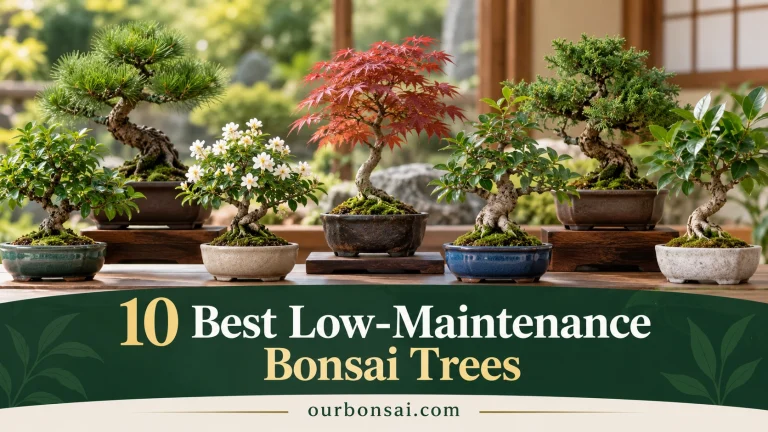
A bonsai tree looks like a serious commitment, but many of the varieties sold today are far more forgiving than their reputation suggests. Some species, like the ginseng ficus, tolerate missed waterings and low light without much drama. Others, like outdoor junipers and maples, need a patio spot and seasonal attention but reward you with the classic gnarled-trunk look people picture when they hear the word “bonsai.”
Bonsai is not a single plant type. It is a growing technique applied to regular tree species, kept small through pruning, wiring, and container restriction. That means care requirements vary enormously by species: a tropical ficus behaves nothing like a cold-hardy juniper. Knowing whether a tree wants to live indoors on a windowsill or outdoors on a porch is the first real decision a new owner has to make.
We looked at ready-grown live trees alongside grow-your-own starter kits, since both show up constantly in bonsai gift searches but serve very different people. A potted, several-years-old tree gives instant visual payoff and a gentler learning curve, while a seed kit is a slower hobby project best suited to someone who wants the growing process itself, not a finished tree next week. The list below sorts through both categories with an eye toward which trees actually forgive beginner mistakes.
Best for beginners overall: Brussel’s Bonsai Ginseng Ficus
Best budget indoor pick: Brussel’s Bonsai Golden Gate Ficus
Best compact desk plant: Arcadia Garden Ginseng Ficus
Best kit for families: AVERGO Deluxe 5-Tree Kit
Best budget starter kit: Planters’ Choice 4-Species Kit
Best low-fuss outdoor tree: Brussel’s Bonsai Chinese Elm
Best classic outdoor look: Brussel’s Bonsai Juniper
Best for fall color: Brussel’s Bonsai Trident Maple
Best decorative gift tree: Dwarf Juniper with Ceramic Fisherman
Best single-species kit: AVERGO Jacaranda Starter Kit
Brussel’s Bonsai Ginseng Ficus

This is the tree we point beginners toward first, thanks to its thick trunk, exposed roots, and genuine tolerance for uneven watering.
Pros
- Handles inconsistent watering better than most bonsai species
- Ships in a ceramic pot with a matching tray
- Comes with a printed care guide
Cons
- Indoor only, needs a warm spot away from drafts
- Some shipments arrive with pest issues
- Expect a leaf drop in the first week as it adjusts
The exposed, braided roots give this ficus a dramatic look straight out of the box, and the 4-year age means it already has real trunk character instead of looking like a seedling in a pot. Ginseng ficus is native to tropical conditions, so it wants a bright indoor window and steady warmth rather than an outdoor porch. A week of leaf shedding after arrival is normal as it acclimates; new growth typically follows.
Brussel’s Bonsai Golden Gate Ficus
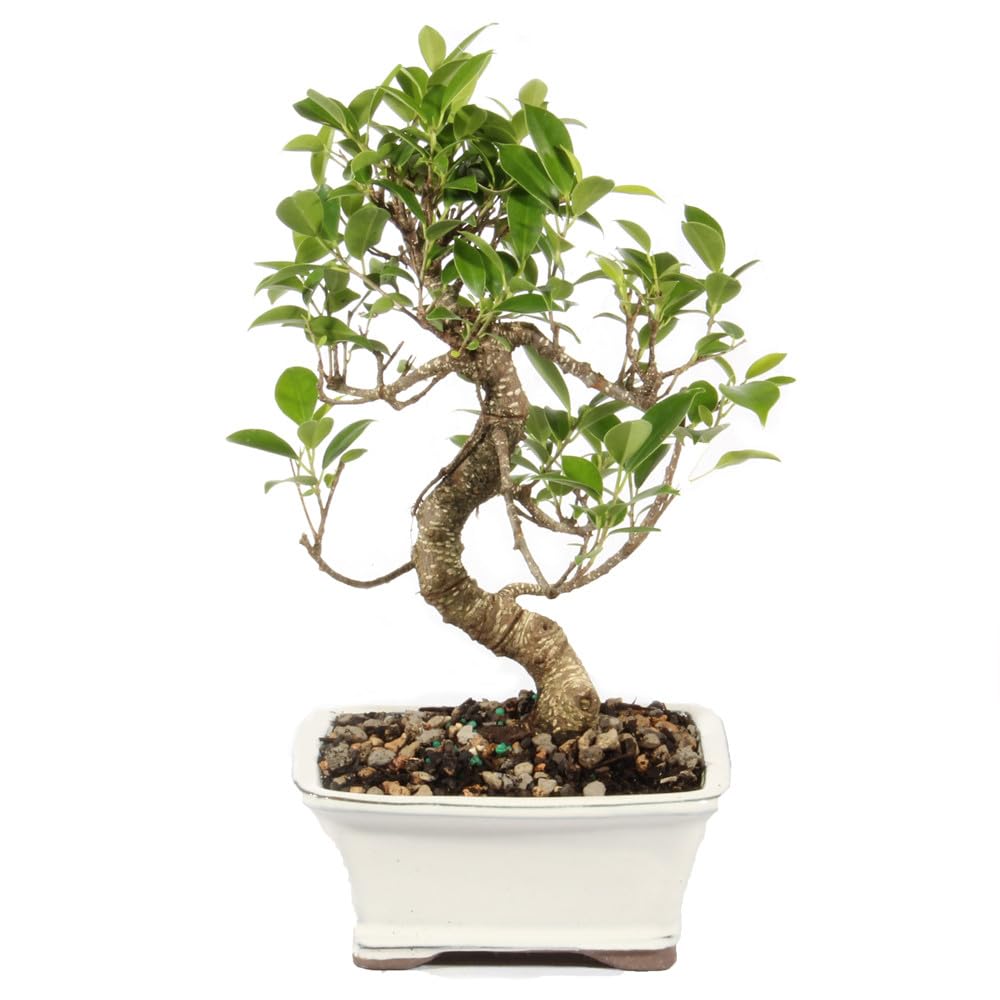
This spiraling-trunk ficus works well as a first bonsai or a gift, provided the recipient has a bright window and no urge to overwater it.
Pros
- Compact size fits desks, shelves, and windowsills
- Arrives already potted and display-ready
- Widely reviewed with a large, established buyer base
Cons
- Watering instructions from different sources can conflict
- Container shape and color vary by shipment
- Needs consistent warmth during winter transit
Golden Gate Ficus (Ficus microcarpa) shares the same forgiving nature as its ginseng cousin, with dark, glossy foliage and a trunk that develops an attractive twist as it matures. It adapts to typical indoor light and does not demand a greenhouse setup. New owners should water only when the topsoil dries out, since consistent overwatering causes more problems than underwatering with this species.
Arcadia Garden Ginseng Ficus

A smaller, budget-friendly ginseng ficus that suits a desk or gift box more than a formal bonsai display.
Pros
- Sold and fulfilled through both Amazon and Arcadia Garden Products
- Compact 12-14 inch size including the pot
- Well-rated for packaging and plant condition on arrival
Cons
- Plastic grower pot rather than a display-ready ceramic one
- Cannot ship to California
- Leaves can drop if watering runs inconsistent
Because Arcadia lists this bonsai through more than one seller channel, checking which listing you are ordering from helps set expectations on shipping speed and packaging. The plant itself needs bright, indirect light, warm humidity, and minimal water, similar to the Brussel’s ginseng ficus options above. It arrives in a plain plastic grower pot, so budget for a decorative pot if the tree is a gift.
AVERGO Deluxe 5-Tree Kit

This kit suits someone who wants the process of growing bonsai from seed, not a finished tree to unbox.
Pros
- Five seed varieties plus backup seed packets
- Includes tools and a wooden planter box
- Clear instruction booklet for first-time growers
Cons
- Germination is inconsistent across seed types
- Results take months, not days
- Not a substitute for an already-grown bonsai
Crape myrtle, flame tree, blue jacaranda, pigeon pea, and more come packed into one wooden planter kit with tools included. It works well as a hands-on gift or family activity, though buyers should expect that not every seed sprouts. Patience matters here more than skill; this is a multi-month project rather than a decorative purchase.
Planters’ Choice 4-Species Kit

A budget-friendly seed kit covering four species, best suited to someone treating bonsai as a slow hobby rather than an instant gift.
Pros
- Includes burlap pots, soil disc, markers, and shears
- Covers four distinct species: pine, poinciana, jacaranda, spruce
- Retail-ready packaging works for gifting the kit itself
Cons
- Germination rates vary by species and by grower
- No live plant included, seeds only
- Slow growth means months before any bonsai shape forms
Rocky Mountain Pine, Royal Poinciana, Blue Jacaranda, and Norway Spruce seeds ship with bamboo markers and a printed guide covering soaking, planting, and early care. The kit rewards a grower willing to follow instructions closely, since seed soaking and soil moisture affect germination directly. It fits well as a gift for someone who already enjoys a slow gardening hobby.
Brussel’s Bonsai Chinese Elm
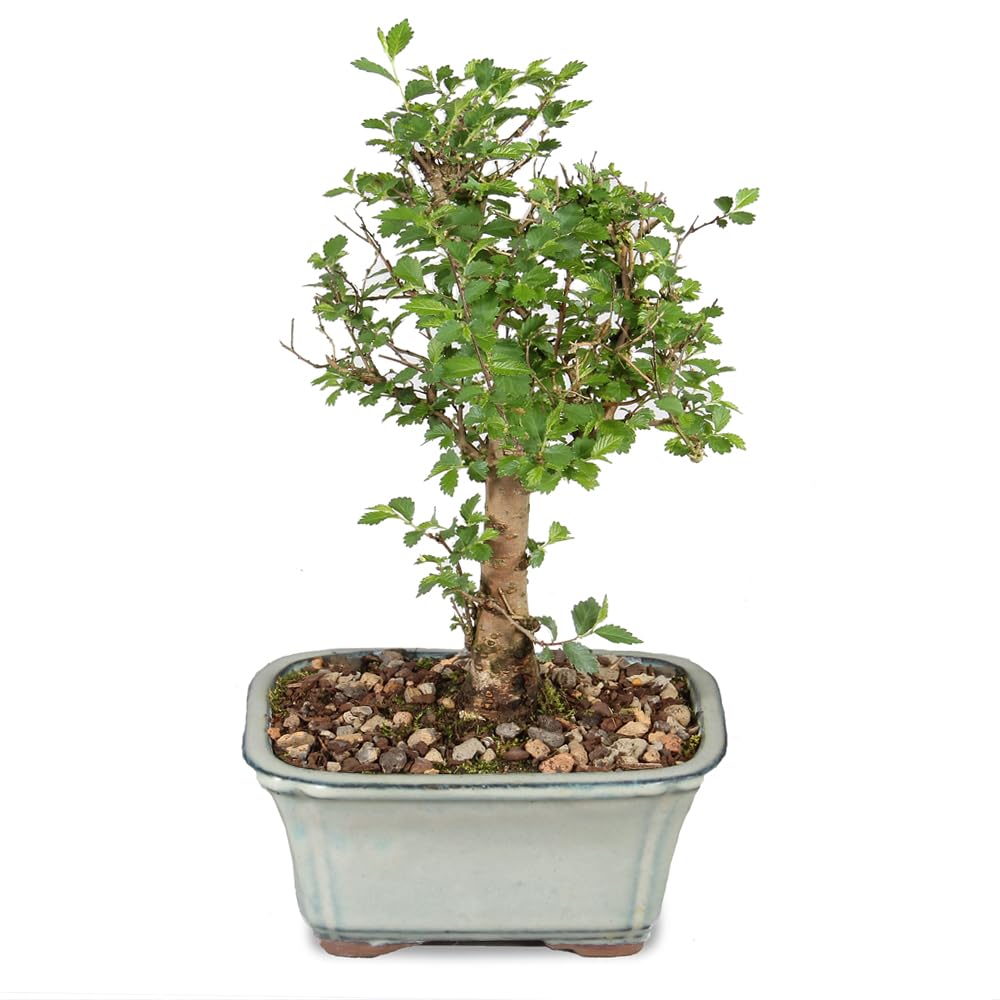
Chinese elm ranks among the most beginner-forgiving outdoor bonsai species, thanks to slow, predictable growth.
Pros
- Slow, predictable growth makes shaping easier to learn
- Distinctive corky bark develops attractive texture with age
- Ships with a USDA phytosanitary certificate
Cons
- Outdoor tree, not suited to permanent indoor life
- Some shipments arrive with minor pest issues
- Hardy in zones 5-9 only, check local winter lows
This elm’s winding trunk and small, toothed leaves give it real presence even at a compact size. Its slow growth rate is an advantage for new owners, since it gives more time to learn pruning without the tree outgrowing its shape. It needs a full-sun outdoor spot and regular watering rather than a windowsill.
Brussel’s Bonsai Juniper
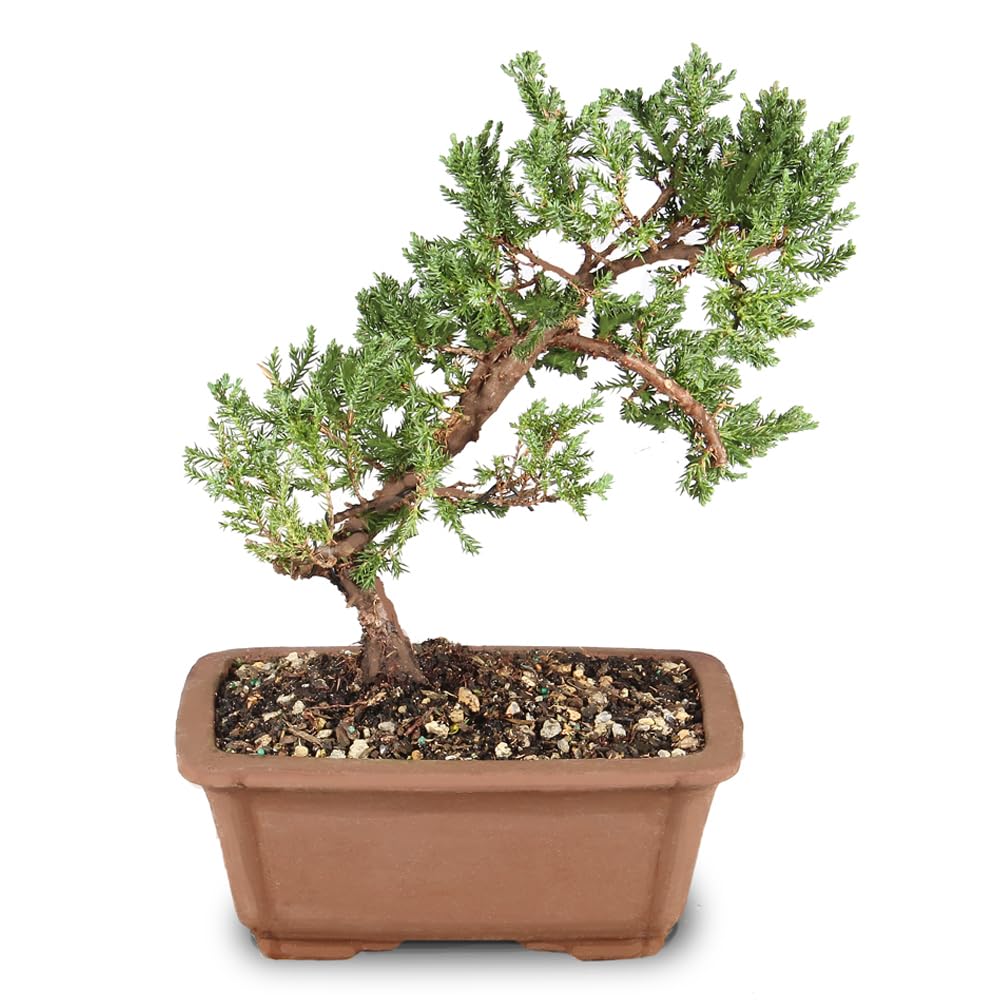
Green Mound Juniper delivers the dense, sculpted look most people associate with bonsai, provided it stays outdoors year-round.
Pros
- Dense evergreen foliage holds classic bonsai shape
- Hardy and low-maintenance once established outside
- Medium size gives a real presence on a patio or porch
Cons
- Cannot be kept as a houseplant despite common assumption
- Some buyers report tree size smaller than expected
- Needs partial shade rather than full sun in hot climates
Junipers are outdoor trees, full stop. Bringing one indoors long-term stresses the plant and shortens its life, something the product tag makes explicit. Once placed on a porch or patio with partial shade, it needs only deep, infrequent watering when the soil starts to dry. This is a tree for someone with real outdoor space to dedicate to it.
Brussel’s Bonsai Trident Maple
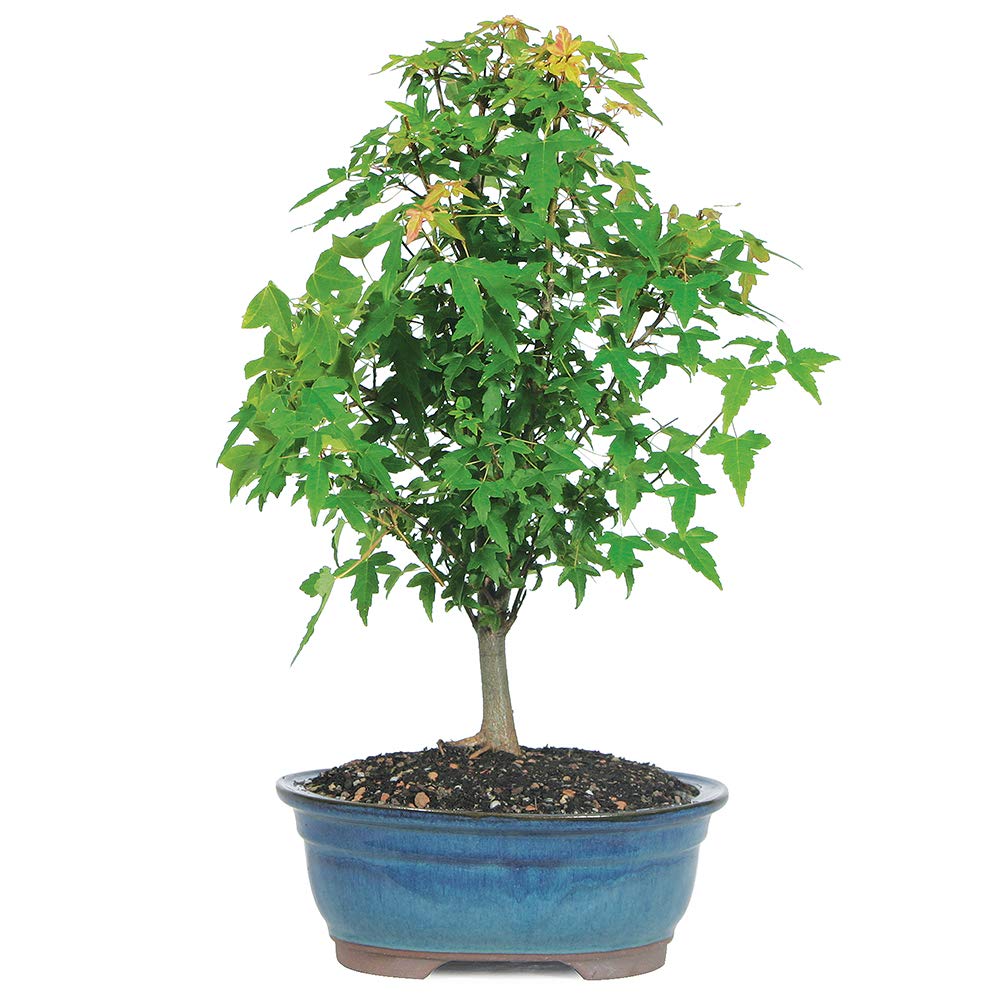
Trident Maple brings seasonal color to an outdoor bonsai collection, with structured branching that takes styling well.
Pros
- Five years old with real branch structure at purchase
- Responds well to pruning and wire shaping
- Fall foliage color adds seasonal visual interest
Cons
- Outdoor tree, needs seasonal weather changes to thrive
- Vulnerable to leaf fungus in humid conditions
- A small share of buyers report dead-on-arrival trees
This maple’s structured branching makes it a good choice once a beginner has some experience with the extremely forgiving species and wants to practice shaping. It needs an outdoor spot with seasonal temperature shifts, since maples rely on dormancy for healthy growth cycles. Watch for leaf fungus in damp climates; defoliating and letting the tree regrow often resolves it.
Dwarf Juniper with Ceramic Fisherman

This decorative dwarf juniper, complete with a ceramic fisherman figurine, makes an appealing holiday or office gift for someone who understands junipers live outdoors.
Pros
- Charming figurine and bamboo mat add display value
- Around six years old with established shape
- Well-packaged on arrival according to most buyers
Cons
- Needs cold dormancy outdoors, not a year-round indoor plant
- Slow growth means size stays modest for a long time
- Pot color and shape vary between orders
The ceramic fisherman accent sets this juniper apart as a gift item rather than a purely functional bonsai. Despite indoor/outdoor listing language, junipers need a genuine outdoor dormancy period through winter to stay healthy long-term. Buyers expecting a permanent desk plant should choose a ficus instead; this one belongs on a porch with seasonal cold exposure.
AVERGO Jacaranda Starter Kit
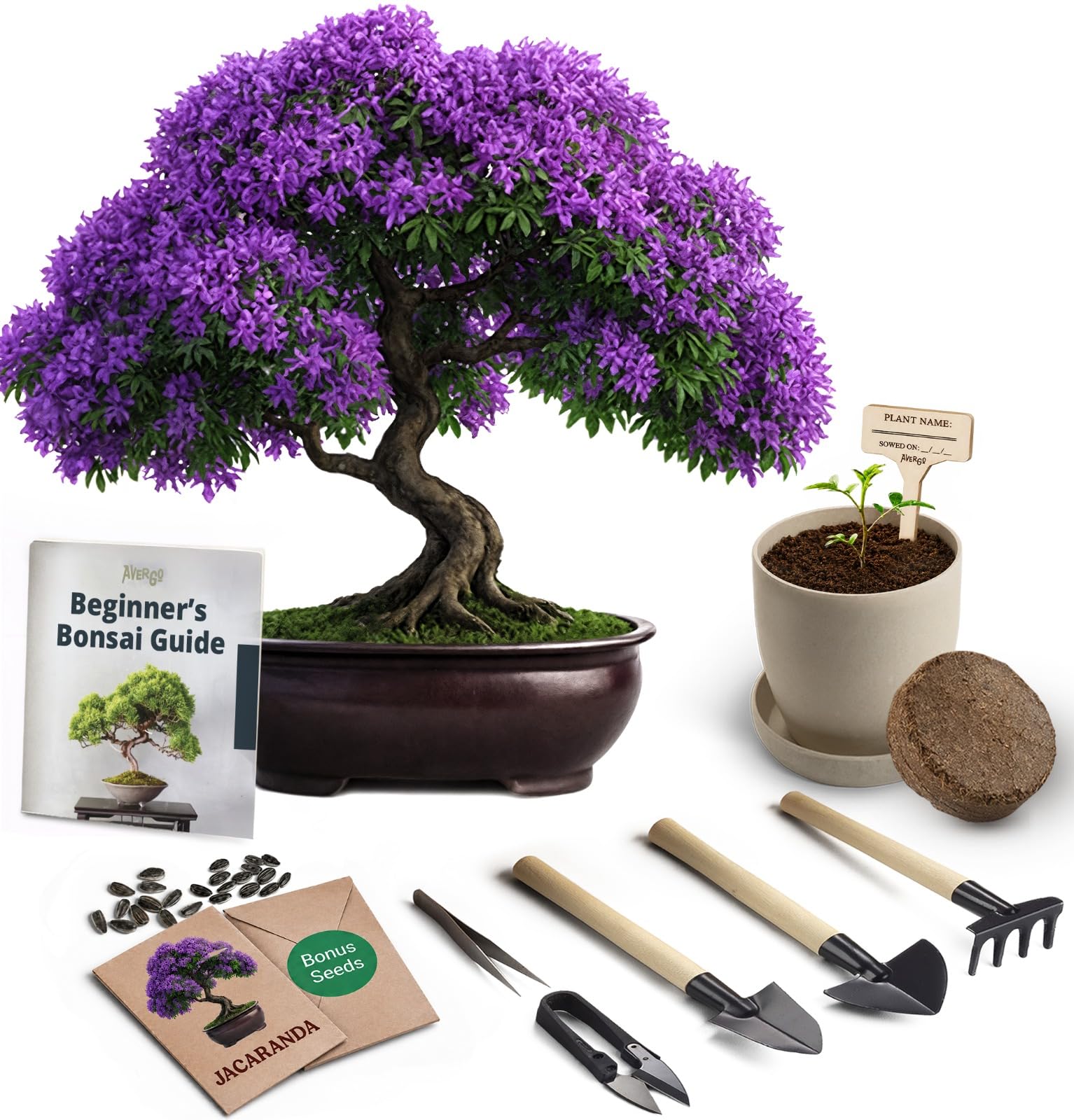
A single-species seed kit focused on purple-flowering jacaranda, well suited to a gift shopper who wants a themed, growable present.
Pros
- Includes planter, soil, tools, and bonus seed packets
- Purple jacaranda blooms add visual appeal once mature
- Compact packaging works well for gifting
Cons
- Ceramic pot has arrived broken for some buyers
- Germination takes patience and doesn’t always succeed
- Growing from seed delays any bonsai shaping by months
Jacaranda’s purple blooms are the draw here, and the kit includes enough extra seed to offset a partial germination rate. Some buyers report a cracked ceramic pot on arrival, so unpacking carefully and checking for damage before planting is worth the extra minute. This suits a grower who wants the seed-to-tree process itself rather than an immediate display piece.
Buying Guide
Decide Between a Grown Tree and a Seed Kit
A ready-grown bonsai gives an immediate, styled tree that only needs maintenance watering and occasional pruning. A seed kit gives seeds, soil, and tools, with the tree itself taking months or years to take shape. Gift shoppers who want a “wow” moment on unboxing should choose a grown tree; hobbyists who want the growing process should choose a kit.
Match the Species to Indoor or Outdoor Space
This is the single most important decision for a beginner. Tropical species like ficus varieties live happily indoors near a bright window. Species like juniper, Chinese elm, and maple are outdoor trees that need real seasonal weather, including a winter dormancy period in most climates.
| Species | Indoor/Outdoor | Watering Sensitivity | Beginner Difficulty |
|---|---|---|---|
| Ficus (ginseng, golden gate) | Indoor | Forgiving | Easy |
| Chinese Elm | Outdoor | Moderate | Easy |
| Juniper | Outdoor | Moderate | Easy to Moderate |
| Maple | Outdoor | Moderate | Moderate |
| Jacaranda (seed) | Indoor to start | Moderate | Moderate (slow growth) |
Check Age, Size, and What’s Included
Bonsai age (often 4 to 6 years for entry-level trees) affects trunk thickness and how “finished” the tree looks. Compare listed height including the pot, since actual tree size is usually smaller than the total. Confirm whether a ceramic pot, drip tray, or tools ship with the plant, since some budget listings use plain plastic grower pots instead.
Consider Gift Readiness and Seller Details
A tree arriving in a display-ready ceramic pot needs no extra prep before gifting. Some listings, including certain ginseng ficus options, ship through more than one seller or fulfillment channel, which can affect delivery speed and packaging consistency. Check shipping restrictions by state, since several bonsai listings cannot ship to California, Alaska, or Hawaii.
Weigh Watering and Light Needs Honestly
“Easy care” does not mean “no care.” Every live bonsai on this list needs regular watering and a specific light environment. Ficus varieties tolerate a missed watering better than most; junipers and maples punish neglect and overwatering alike.
Editor’s Choice
The Brussel’s Bonsai Ginseng Ficus earns our top overall recommendation for beginners. Its exposed-root trunk gives it visual weight beyond its size, and the species itself tolerates the two most common beginner mistakes: forgetting to water and overwatering out of anxiety. It also ships as a complete display piece, ceramic pot and tray included, so there’s no assembly or extra purchase needed before gifting or displaying it.
For someone drawn to outdoor bonsai instead, the Chinese Elm stands out as the most forgiving option in that category. Its slow, predictable growth gives new owners time to learn pruning and shaping without the tree getting away from them.
Conclusion
Choosing a bonsai comes down to two honest questions: indoor or outdoor space, and whether the goal is an instant display piece or a long-term growing project. Ficus varieties suit a bright indoor windowsill and forgive inconsistent watering better than any other species on this list. Juniper, Chinese elm, and maple bring the classic gnarled-trunk aesthetic but need genuine outdoor conditions, including seasonal cold for junipers and maples specifically.
Seed kits serve a different buyer entirely: someone who wants the process of growing a tree from scratch, understanding that germination is inconsistent and results take months. A grown tree from Brussel’s Bonsai or Arcadia Garden Products delivers a finished look right out of the box. Matching the tree (or kit) to the space and patience level available makes the difference between a thriving bonsai and a frustrating one.
FAQS
Is a ginseng ficus really the easiest bonsai for beginners?
Among the trees covered here, yes. It tolerates inconsistent watering and average indoor light better than juniper, elm, or maple, all of which need more specific outdoor conditions.
Can I keep a juniper bonsai indoors?
No. Juniper is an outdoor species that needs seasonal temperature changes, including winter dormancy, to stay healthy long-term.
How long does a bonsai grown from seed take to look like a bonsai?
Expect months before visible sprouting turns into a shapeable young tree, and additional years of pruning and wiring before it resembles a mature bonsai.
Why did my bonsai drop leaves right after arrival?
Leaf drop within the first week or two after shipping is common as the tree adjusts to a new light and humidity environment. New growth typically follows if watering stays consistent.
Do bonsai kits guarantee that seeds will sprout?
No. Germination rates vary by species and growing conditions, which is why most kits include backup seed packets to improve the odds.
What states have shipping restrictions on live bonsai trees?
Several listings cannot ship to California, Alaska, or Hawaii. Check the specific product listing before ordering if you live in one of those states.