
Barbados Cherry Bonsai Tree Review: Worth It?

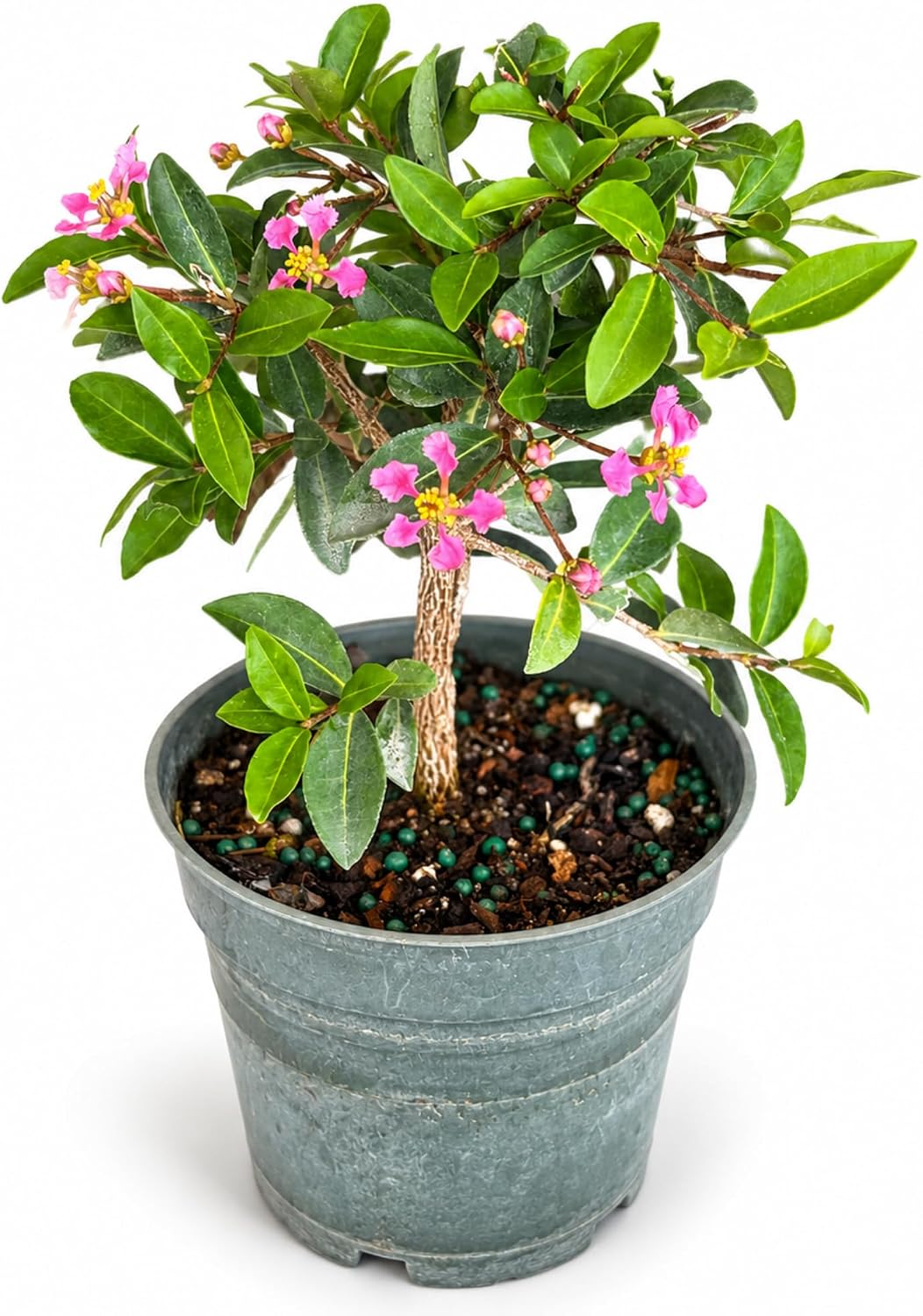
The NY City Succulents Barbados Cherry Bonsai is best understood as a rooted tropical starter, not a finished show bonsai. The appeal is real: Malpighia glabra can produce pink flowers, red edible fruit, glossy foliage, and dense branching that suits bonsai training. The catch is this exact Amazon listing has very little buyer history, limited sizing information, and no ceramic bonsai pot. That makes the plant species more convincing than the listing itself.
Quick Overview and Specs
| Detail | Verified listing information |
|---|---|
| Brand | NY City Succulents |
| Plant | Barbados Cherry, listed as Malpighia glabra |
| Format | Fully rooted live starter plant; 1 count |
| Listed weight | 1.1 lb |
| Light | Amazon lists partial sun; species guidance supports bright light/full sun to part shade when acclimated |
| Soil | Tropical soil mix |
| Pot style | Without ceramic pot |
| Amazon rating | 1.0/5 from 1 rating at time of research |
| Current offer | No featured Amazon offer shown at time of research |
First Impressions
The strongest first impression is that this is young training material. Amazon describes it as fully rooted and repeatedly calls it a “starter” plant, while the product data explicitly says “without ceramic pot.” That matters. You are buying the beginning of a bonsai project, not an aged tree with a developed trunk, styled canopy, and display container.
The listing also uses “largest starter plants” as a marketing claim but gives no plant height or trunk caliper on Amazon. That missing measurement makes it harder to judge what will arrive. The 1.1-pound listed weight confirms a small live-plant shipment, but it is not a substitute for actual tree dimensions.
Performance and Feel
As bonsai material, Barbados cherry has useful traits. It has opposite leaves, responds to pruning, and can build a compact, rounded canopy. Bonsai specialists also warn that branches can be brittle, so clip-and-grow is often safer than forcing older wood with heavy wiring. For a starter like this, the satisfying part should be gradual branch selection and ramification rather than instant display quality.
Indoors, “performance” depends heavily on light. Tropical bonsai can survive protected indoors, but strong light and airflow matter. If this will live inside most of the year, review these indoor bonsai care basics before buying. A dim shelf is a poor match for a flowering tropical tree.
Flowering and Fruiting Potential
This is the category-specific reason to choose Barbados cherry over a plain foliage bonsai. UF/IFAS documents pink flowers and bright red fruit on M. glabra, with flowers appearing periodically through the warm season in suitable climates. In bonsai culture, strong light, warmth, feeding, and allowing some new growth to extend are important if flowers and fruit are the goal.
That potential should not be confused with a guarantee. The Amazon listing does not promise that the exact starter will arrive blooming or fruiting. A young plant may need time to establish after shipping and training. For more context, OurBonsai’s guide to flowering indoor bonsai care is a useful companion.
Durability and Long-Term Health
For a living product, durability means surviving shipping, acclimation, pruning, and seasonal changes. The species itself is tropical: UF/IFAS places M. glabra around USDA zones 9B–11, while bonsai nurseries commonly recommend bringing it into protection well before freezing temperatures. Cold is therefore a bigger long-term risk than ordinary indoor wear and tear.
Root health is the other major issue. The Amazon instruction says to water when “completely dry,” but bonsai-specific guidance generally favors watering after the surface begins to dry without letting the entire root ball become bone-dry. A well-aerated substrate is critical; see bonsai soil versus regular soil and this guide to preventing root rot in bonsai. UF/IFAS also flags nematodes, whiteflies, scale, and plant bugs as possible problems.
Value for Money
Value is difficult to score confidently because Amazon showed no featured offer during research. The exact listing also has only one customer rating, so there is not enough evidence to judge shipping consistency or plant quality across many orders.
Price matters greatly here. If this starter is substantially cheaper than established, potted Barbados cherry bonsai, the simple format may make sense for a grower who already owns pots, soil, and tools. If it approaches the $50–$60 range, competitors with stated age, height, bonsai pots, and stronger review histories become more compelling.
Comparison to Similar Competing Products
| Product | Concrete difference | Best fit |
|---|---|---|
| NY City Succulents Barbados Cherry | Rooted starter; 1.1 lb listed weight; no ceramic pot; very limited Amazon feedback | Growers who want raw training material |
| Brussel’s Bonsai Barbados Cherry DT9122BC | $52, 3 years old, 4–8 inches, bonsai container, 16 posted reviews; currently out of stock | Buyers wanting a more established, documented tree |
| Bonsai Wonderland 7-Year Weeping Barbados Cherry | $56.95 plus shipping, 7 years old, 7 inches, arrives in a bonsai pot, 48-hour live-arrival guarantee | Buyers prioritizing age and display readiness |
| L&J Nursery Barbados Cherry Bonsai Kit | $35, live M. emarginata starter plus DIY bonsai supplies | Beginners wanting tools and a guided project |
Pros and Cons
- Fully rooted live Barbados cherry starter
- Species offers flowers, fruit, and dense foliage
- Useful material for hands-on bonsai training
- Compact tropical species can be protected indoors in cold weather
- Only one Amazon rating, currently 1 star
- No featured Amazon offer during research
- No ceramic bonsai pot included
- Amazon does not state tree height or age
- Listing’s “completely dry” watering advice is too coarse for careful bonsai culture
Who Should Buy This?
Buy it if you specifically want a Barbados cherry starter and enjoy developing a tree yourself. It suits growers with strong light, warm conditions, and enough experience to manage watering and seasonal protection. It also makes sense if you already own bonsai pots and substrate.
Skip it if you want a gift-ready specimen, predictable dimensions, or a product with a deep review history. If you are still choosing a first tree, compare it with these bonsai species for beginners before committing to a tropical flowering bonsai.
Extended FAQ
Is this a finished bonsai?
No. The listing identifies it as a fully rooted starter and says the style is without a ceramic pot. Expect training material rather than a mature display tree.
Can Barbados cherry bonsai live indoors?
Yes, with strong light and warmth, especially as winter protection. It generally performs better with bright conditions and can benefit from outdoor warm-season growth.
Will this plant produce cherries?
The species can produce red edible fruit after pink flowers, but this specific starter is not guaranteed to arrive flowering or fruiting.
How should I water it?
Check the root zone rather than watering by calendar. Let the surface begin to dry, then water thoroughly and allow free drainage; avoid both prolonged saturation and bone-dry roots.
Is it beginner-friendly?
It can be manageable for an attentive beginner, but it is less forgiving than a ficus when light, cold protection, or watering are poor.
Why is the rating only 6.2/10?
The species is attractive for bonsai, but the exact Amazon SKU has one 1-star rating, limited size information, no ceramic pot, and no featured offer at the time checked. That uncertainty lowers the score.
Final Verdict
The NY City Succulents Barbados Cherry Bonsai is an interesting buy only if you want the species more than you want a polished retail package. Malpighia glabra offers genuine bonsai appeal through pink flowers, red fruit, and trainable branching, but this exact Amazon listing leaves important questions unanswered. With only one rating and no current featured offer, I would compare the final price carefully against Brussel’s Bonsai, Bonsai Wonderland, and L&J Nursery before ordering.
If the Amazon price is clearly lower and you are comfortable potting and training a starter yourself, it can still be worthwhile. For a first bonsai gift or a more predictable purchase, an established potted competitor is the safer choice.
As an Amazon Associate, we earn from qualifying purchases…
