Best Bonsai Trees Under $100: 9 Live Trees Worth Buying

As an Amazon Associate we earn from qualifying purchases. See our affiliate disclosure.
In this guide
- Our Top Picks at a Glance
- Indoor or outdoor? Decide this first
- 1. Brussel’s Golden Gate Ficus, Small (Best Overall Indoor)
- 2. Brussel’s Chinese Elm, Small (Best Overall Outdoor)
- 3. Brussel’s Dwarf Jade, Medium (Easiest to Keep Alive)
- 4. Brussel’s Green Mound Juniper, Medium (Classic Bonsai Look)
- 5. Brussel’s Satsuki Azalea, Small (Best Flowering)
- 6. Brussel’s Trident Maple, Medium (Best for Styling Practice)
- 7. Brussel’s Ginseng Ficus, Medium (Thickest Trunk)
- 8. Brussel’s Hawaiian Umbrella, Medium (Best for Low Light)
- 9. 7-Year Dwarf Juniper with Bamboo Stand (Best Gift Presentation)
- Also Worth a Look
- What $100 Buys, and What It Does Not
- How to Choose
- Frequently Asked Questions
- Final Verdict
Quick answer: the best bonsai tree under $100 for most people is the Brussel’s Golden Gate Ficus. It is a 4-year-old indoor tree that tolerates normal room conditions, arrives in a ceramic pot with a humidity tray, and comes from the largest bonsai nursery in the United States. If you have a patio or balcony, the Brussel’s Chinese Elm is the best outdoor choice, and the Brussel’s Dwarf Jade is the hardest tree on this list to kill.
Under $100 buys a real, established bonsai that is 3 to 7 years old, usually 5 to 12 inches tall, and already in a bonsai pot. It does not buy a show tree, and it should not: a beginner’s first tree should be cheap enough to learn on. Every tree below was priced under $100 when we checked Amazon on November 1, 2026. Prices move, so confirm the current price before you order. We compared them on the growers’ own listings: species, age, height, what ships in the box and where the tree needs to live.
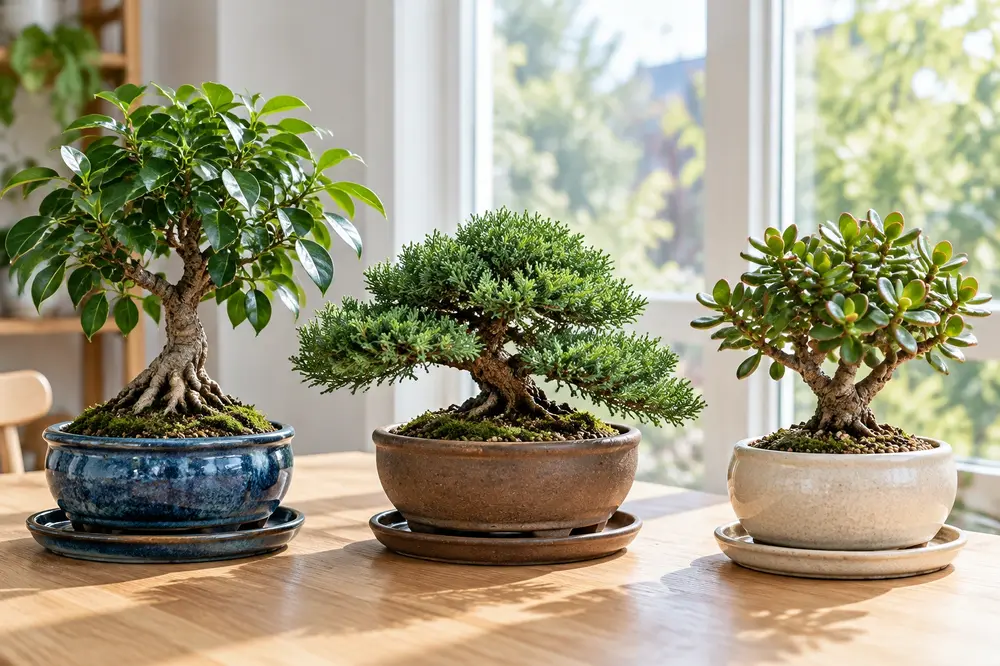
Our Top Picks at a Glance
| Tree | Indoor/Outdoor | Age and size (per listing) | Best for |
|---|---|---|---|
| Brussel’s Golden Gate Ficus (Small) | Indoor | 4 yrs, 5-8 in | Best overall indoor |
| Brussel’s Chinese Elm (Small) | Outdoor | 5 yrs, 6-8 in | Best overall outdoor |
| Brussel’s Dwarf Jade (Medium) | Indoor | 4-5 yrs, 8-12 in | Easiest to keep alive |
| Brussel’s Green Mound Juniper (Medium) | Outdoor | 5 yrs, 6-10 in | Classic bonsai look |
| Brussel’s Satsuki Azalea (Small) | Outdoor | 4-5 yrs, 5-8 in | Best flowering |
| Brussel’s Trident Maple (Medium) | Outdoor | 5 yrs, 8-12 in | Best for styling practice |
| Brussel’s Ginseng Ficus (Medium) | Indoor | 6 yrs, 8-12 in | Thickest trunk |
| Brussel’s Hawaiian Umbrella (Medium) | Indoor | 4 yrs, 8-10 in | Best for low light |
| 7-Year Dwarf Juniper with Bamboo Stand | Outdoor | 6-7 yrs, stand included | Best gift presentation |
Indoor or outdoor? Decide this first
The single biggest reason a new bonsai dies is being kept in the wrong place. Ficus, dwarf jade and Hawaiian umbrella (schefflera) are tropical and live happily indoors near a bright window. Juniper, Chinese elm, trident maple and azalea are temperate trees: they need outdoor sun and a cold winter rest, and they decline slowly on a windowsill. Brussel’s labels each listing “Indoor Plant” or “Outdoor Plant” for this reason. If you want a tree for a desk, stick to the indoor picks. Our guide to the most popular indoor bonsai trees covers the tropical species in more depth.
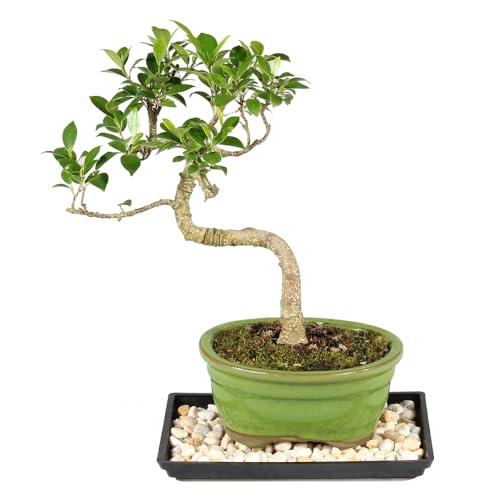
1. Brussel’s Golden Gate Ficus, Small (Best Overall Indoor)
| Species | Ficus microcarpa (Golden Gate) |
|---|---|
| Age / height | 4 years, 5 to 8 in |
| Where it lives | Indoors, bright light |
| In the box | Ceramic pot, humidity tray |
| Grown in | Mississippi, USA |
The Golden Gate ficus is the tree most bonsai nurseries hand to beginners, and for good reason. Ficus microcarpa tolerates dry indoor air, recovers from missed waterings and back-buds readily after pruning, so mistakes are rarely fatal. The spiraling trunk and small dark leaves already look like a bonsai at four years old.
Brussel’s ships it planted in a ceramic bonsai pot with a humidity tray, so there is nothing else to buy. Pot color varies. Give it the brightest window you have and water when the top of the soil feels dry. We looked at this tree in detail in our Golden Gate ficus review.
Pros
- Forgiving of indoor conditions and beginner mistakes
- Ceramic pot and tray included
- Grown by a specialist US nursery
Cons
- Small at 5 to 8 inches
- Drops some leaves after shipping while it adjusts
- Does not ship to Alaska or Hawaii
Best for: anyone who wants an indoor bonsai that survives the learning curve.
2. Brussel’s Chinese Elm, Small (Best Overall Outdoor)

| Species | Ulmus parvifolia |
|---|---|
| Age / height | 5 years, 6 to 8 in |
| Where it lives | Outdoors; tolerates a cool bright room in winter |
| In the box | Ceramic pot, care guide |
| Grown in | Mississippi, USA |
The Chinese elm is the classic first outdoor bonsai. It has tiny leaves, fine twiggy branching and a trunk that thickens quickly, and it responds to pruning better than almost any other species. It is also more flexible about placement than juniper: it prefers to be outside, but it will tolerate a cool, bright room through winter if you have no garden.
At five years old and 6 to 8 inches, this is a tree you can start styling right away. Read our Brussel's Chinese elm review and the Chinese elm care guide before it arrives.
Pros
- Fast growing and very responsive to pruning
- Tolerates a wider range of conditions than juniper
- Established 5-year-old tree
Cons
- Needs to be outdoors most of the year
- Drops leaves in autumn (normal, but alarming to beginners)
Best for: beginners with a balcony, porch or garden who want to learn pruning.
3. Brussel’s Dwarf Jade, Medium (Easiest to Keep Alive)

| Species | Portulacaria afra (dwarf jade) |
|---|---|
| Age / height | 4 to 5 years, 8 to 12 in |
| Where it lives | Indoors, bright light |
| In the box | Pot, humidity tray, deco rocks, care sheet |
Portulacaria afra is a succulent, which means it stores water in its leaves and stems and shrugs off a week or two of neglect. It is the tree we suggest for people who travel, forget to water, or have killed a bonsai before. It also grows fast in good light, so you get to practise pruning.
The medium size arrives at 8 to 12 inches with a thick, woody trunk. Keep it in your sunniest window, water only when the soil is dry right through, and never let it sit in water. More in our dwarf jade bonsai review.
Pros
- Extremely drought tolerant
- Fast growth means quick results from pruning
- Thick trunk for the price
Cons
- Needs strong light to stay compact
- Overwatering is the one way to kill it
- Soft wood does not take wire well
Best for: forgetful waterers and first-time bonsai owners.
4. Brussel’s Green Mound Juniper, Medium (Classic Bonsai Look)

| Species | Juniperus procumbens ‘Nana’ |
|---|---|
| Age / height | 5 years, 6 to 10 in |
| Where it lives | Outdoors only |
| In the box | Pot, care guide |
| Grown in | Mississippi, USA |
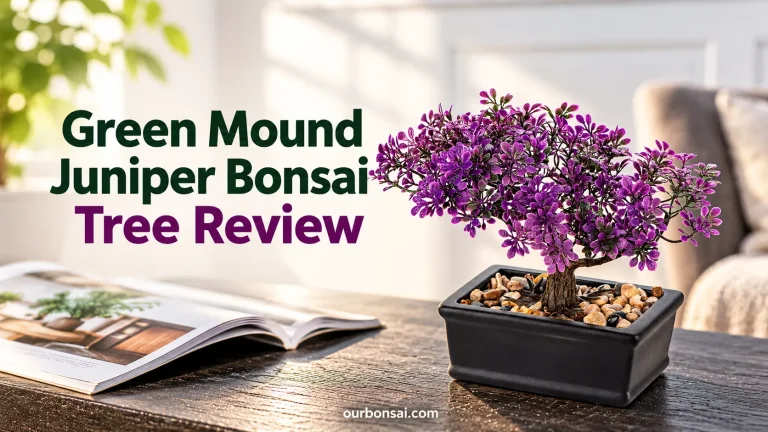
When most people picture a bonsai, they picture a juniper: layered pads of blue-green foliage over a twisting trunk. Green mound juniper is the species used for the great majority of mass-market bonsai because it is hardy, cheap to grow and easy to wire.
The catch is that it must live outdoors, all year. Junipers kept indoors stay green for months after they have died, which is why so many ‘indoor juniper’ gifts fail. Put it on a sunny patio, water when the top inch dries, and it will outlive most houseplants. See our green mound juniper review for care details.
Pros
- The classic bonsai appearance
- Hardy outdoors in most US climates
- Takes wire well for styling practice
Cons
- Dies slowly indoors
- Needs winter protection below about 15°F
- Does not ship to CA, AK or HI
Best for: people with outdoor space who want the traditional look.
5. Brussel’s Satsuki Azalea, Small (Best Flowering)

| Species | Rhododendron indicum (satsuki azalea) |
|---|---|
| Age / height | 4 to 5 years, 5 to 8 in |
| Where it lives | Outdoors, part shade in summer |
| In the box | Pot, humidity tray |
Satsuki azaleas are the flowering bonsai of Japan, and they put on a show in late spring that nothing else under $100 can match. The small Brussel’s tree is 5 to 8 inches tall and already has the dense, fine branching that makes azaleas good bonsai.
They are a little fussier than the trees above: azaleas want acidic, well-draining soil, soft water if your tap water is hard, and shelter from hot afternoon sun. In return you get weeks of bloom each year. Our satsuki azalea review and azalea fertilizer guide cover the specifics.
Pros
- Spectacular flowers for the price
- Fine branching from a young age
Cons
- Needs acidic soil and careful watering
- Outdoor only
- Flowers only once a year
Best for: growers who want colour and do not mind a little extra care.
6. Brussel’s Trident Maple, Medium (Best for Styling Practice)

| Species | Acer buergerianum (trident maple) |
|---|---|
| Age / height | 5 years, 8 to 12 in |
| Where it lives | Outdoors |
| In the box | Pot, care guide |
If you want to learn real bonsai technique, a trident maple is the species serious growers recommend. It thickens fast, heals pruning wounds quickly, back-buds from old wood and develops a wide, flaring root base (nebari) that other species take decades to form. Autumn colour is a bonus.
This is a deciduous tree: it drops its leaves in autumn and needs a cold dormancy, so it is outdoor only. At 8 to 12 inches and five years old it is a genuine starter for styling. See our trident maple bonsai review.
Pros
- Best species on this list for learning styling
- Fast healing and strong back-budding
- Good autumn colour
Cons
- Bare in winter
- Needs outdoor cold period
- Leaves scorch in hot afternoon sun
Best for: hobbyists who plan to prune, wire and develop the tree over years.
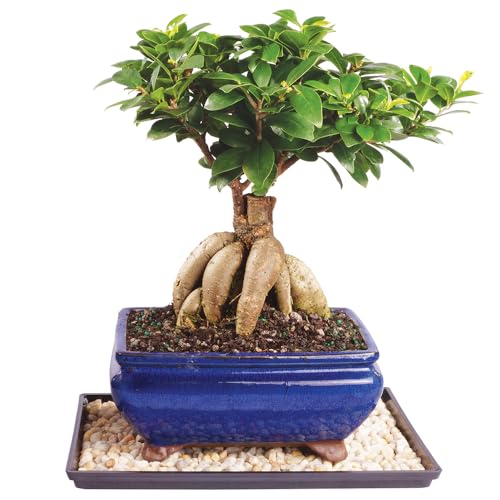
7. Brussel’s Ginseng Ficus, Medium (Thickest Trunk)
| Species | Ficus microcarpa, ginseng form, grafted |
|---|---|
| Age / height | 6 years, 8 to 12 in |
| Where it lives | Indoors, bright light |
| In the box | Ceramic pot, humidity tray |
The ginseng ficus is the bulbous-rooted tree you see in garden centres. Brussel’s version is six years old, 8 to 12 inches tall, and has small-leaf branches grafted onto the thick base, so the canopy looks more refined than the usual big-leaf ginseng.
Care is identical to the Golden Gate ficus: bright light, water when the top soil dries, and keep it away from cold draughts. Choose this one if you want the most trunk for your money; choose the Golden Gate if you prefer a more traditional trunk line.
Pros
- Thick, dramatic exposed roots
- Six years old, the oldest indoor tree here
- Same easy ficus care
Cons
- The grafted look is not to everyone’s taste
- Graft unions can be visible
Best for: people who want a substantial-looking indoor tree straight away.
8. Brussel’s Hawaiian Umbrella, Medium (Best for Low Light)

| Species | Schefflera arboricola (dwarf) |
|---|---|
| Age / height | 4 years, 8 to 10 in |
| Where it lives | Indoors, tolerates lower light |
| In the box | Decorative container, humidity tray, deco rocks |
Hawaiian umbrella is the one bonsai that copes with an ordinary north-facing room or an office with only overhead lighting. It grows aerial roots in humid conditions and forms a dense canopy of miniature umbrella leaves.
It is also almost impossible to overwater compared with a ficus, as long as the pot drains. The trade-off is that it cannot be wired in the usual way: schefflera branches are shaped by pruning. Our Hawaiian umbrella bonsai review has the care routine.
Pros
- Tolerates lower light than any other tree here
- Very forgiving of watering
- Decorative container and tray included
Cons
- Cannot really be wired
- Less tree-like than a ficus or elm
Best for: offices and rooms without a sunny window.
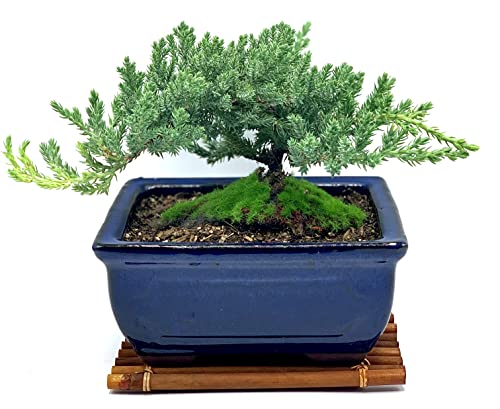
9. 7-Year Dwarf Juniper with Bamboo Stand (Best Gift Presentation)
| Species | Dwarf juniper (Juniperus procumbens ‘Nana’) |
|---|---|
| Age | About 6 to 7 years (per listing) |
| Where it lives | Outdoors, or a very bright windowsill short term |
| In the box | Glazed ceramic pot, bamboo stand, care instructions |
This listing from a smaller grower stands out for presentation: the tree arrives in a glazed ceramic pot on a hand-made bamboo stand, which makes it an easy gift. The seller states the tree is 6 to 7 years old and home grown.
Two honest cautions. The moss is artificial, and the listing describes the tree as indoor/outdoor, but as with every juniper it will only thrive outdoors. If it is a gift, tell the recipient to put it outside once the occasion is over.
Pros
- Gift-ready with stand and glazed pot
- Older than most trees at this price
Cons
- Artificial moss
- Marketed as indoor, but junipers need to be outside
- Smaller seller, less track record than Brussel’s
Best for: a gift that needs to look finished out of the box.
Also Worth a Look
- Brussel’s Large Dwarf Jade, 6 years: the same easy succulent at 10 to 14 inches, still under the limit when we checked.
- Brussel’s Hawaiian Umbrella in a grower pot: the cheapest way to get a 5-year-old schefflera; you supply the pot.
- Brussel’s Jaboticaba, 6 years: an unusual indoor fruiting tree with peeling cinnamon bark, for someone who already has a ficus.
What $100 Buys, and What It Does Not
Every tree here is nursery-grown stock that has been trimmed into bonsai shape and potted. That is a real bonsai, but it is a young one. Trunks will be thin, branch structure will be basic, and the pot will be a generic production pot. What you are paying for is a healthy, correctly potted tree of the right species with a few years’ head start. Styling it into something special is your job, and it is the enjoyable part.
Above $100 you start to see older trees with thicker trunks, better pots and more refined branching. Below $50 you are mostly looking at 3-year-old starters in grower pots, which we cover in our guide to the best bonsai trees under $50. For a wider look at species, see the easiest bonsai trees to care for.
How to Choose
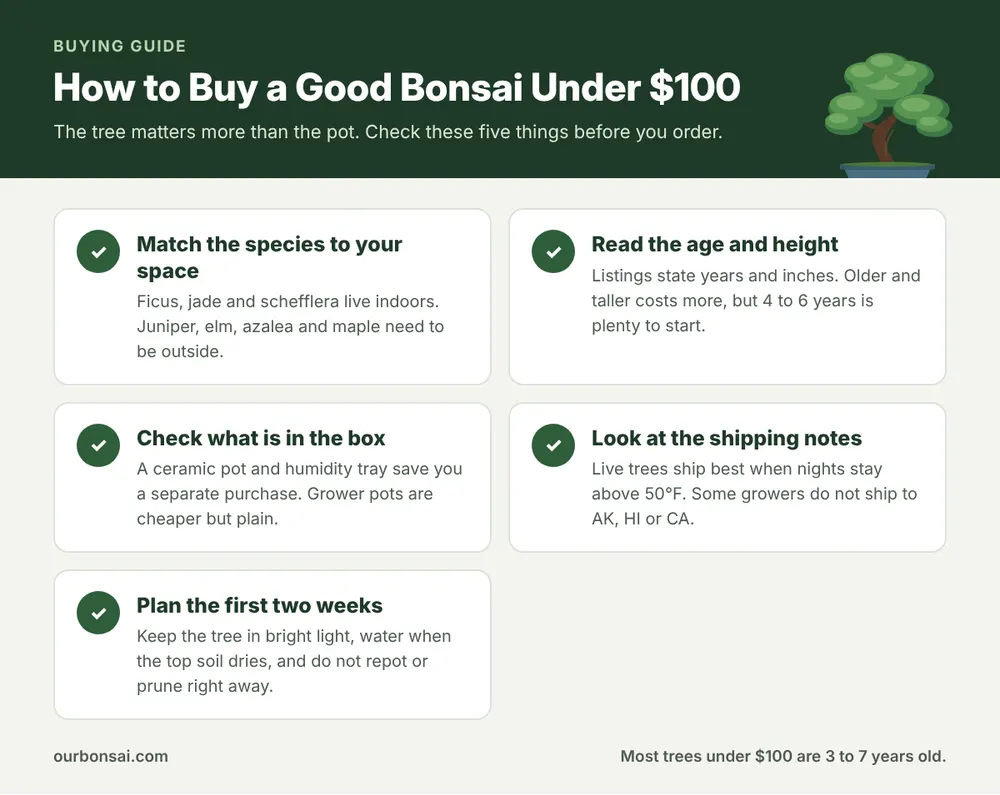
Buy the species for your space, not the prettiest photo
Indoor: ficus, dwarf jade, schefflera. Outdoor: juniper, elm, maple, azalea. This one decision matters more than anything else on the listing.
Read age and height, then ignore the pot
Brussel’s states both on every listing. A 5-year-old tree at 8 inches is a good starting point. Pots are “assorted” on most listings, so do not buy for the pot in the photo.
Mind the shipping season
Live trees are shipped from Mississippi and the grower recommends shipping when night temperatures stay above 50°F along the route. Ordering a tropical ficus in January to a northern state is a risk. If you must, choose expedited shipping and unpack immediately.
Leave it alone for two weeks
A newly shipped tree has been in a dark box for days. Put it in its final spot, water it, and do not prune, repot or fertilise for at least two weeks. Some leaf drop on a ficus or elm is normal. Our list of common beginner mistakes covers what to do next.
Frequently Asked Questions
Can you get a real bonsai tree for under $100?
Yes. Brussel’s Bonsai and other nurseries sell established 3 to 7 year old trees, already in bonsai pots, below that price. They are young trees rather than specimens, but they are real bonsai.
What is the best bonsai tree for a beginner under $100?
Indoors, a Golden Gate ficus or a dwarf jade. Outdoors, a Chinese elm. All three tolerate beginner mistakes better than juniper or azalea.
Are cheap bonsai trees from Amazon any good?
The ones from established nurseries such as Brussel’s are healthy, correctly potted stock. Be more careful with unbranded listings, check that the tree is live rather than artificial, and read whether the moss is real.
Is a juniper bonsai an indoor plant?
No. Junipers need outdoor light and a cold winter rest. They can stay green for months indoors while slowly dying, which is why gift junipers so often fail.
How old is a bonsai tree under $100?
Typically 3 to 7 years from cutting or seed. Age on its own matters less than trunk thickness and health.
Should I repot a new bonsai right away?
No. Let it settle for at least two weeks, and repot only in the right season for the species, usually early spring. Most new trees do not need repotting in the first year.
Do these trees come with a pot?
Most Brussel’s listings include a ceramic bonsai pot and often a humidity tray. Grower-pot listings are cheaper but you will want to buy a bonsai pot later.
Final Verdict
For an indoor tree, buy the Brussel’s Golden Gate Ficus; for a patio or balcony, buy the Brussel’s Chinese Elm. If you are worried about keeping anything alive, the Brussel’s Dwarf Jade is the safest tree under $100 we know of. Whatever you choose, learn the watering routine first: our guide on caring for a bonsai indoors is the place to start.