15 Common Bonsai Beginner Mistakes to Avoid

Most bonsai beginner mistakes come from treating a bonsai like a houseplant or a decoration. A bonsai is a real tree in a tiny pot. It needs much more light than most houseplants, precise watering, special soil and, for many species, a cold winter outdoors. The good news is that the mistakes that kill most beginner trees are predictable, and every one of them is easy to avoid once you know about it.
In this guide
Here are the 15 most common mistakes, why they cause problems and what to do instead.
The 15 most common bonsai beginner mistakes
1. Keeping an outdoor tree indoors
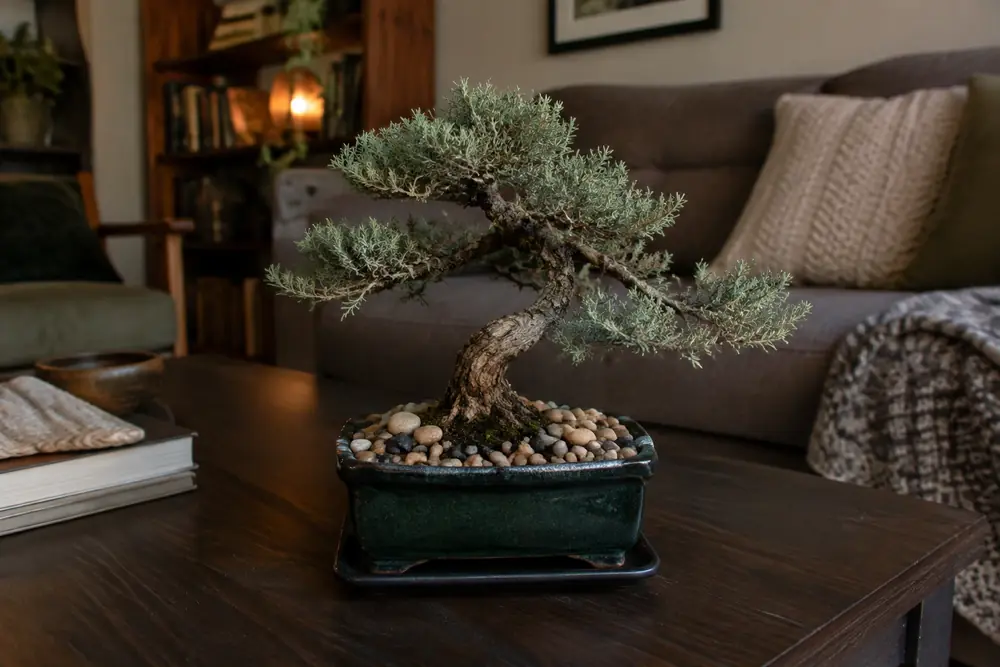
This is the most common and most deadly mistake. Junipers, pines, maples, elms, azaleas and many others are outdoor trees. Indoors, they get too little light and no winter rest, and they slowly decline and die, often within a year. Junipers are especially often sold as “indoor bonsai” by mistake.
Instead: find out what species you have. Keep outdoor species outside year round, with root protection in winter. Our guide to types of outdoor bonsai trees helps you check which group your tree belongs to.
2. Putting it somewhere too dark
A bonsai on a coffee table or bookshelf looks lovely but gets a fraction of the light it needs. Even indoor tropical species need to be right next to a bright window.
Instead: use the brightest spot you have, and add a grow light if needed. See our guide on how much light a bonsai tree needs.
3. Watering on a schedule
“Water every Sunday” or “a few ice cubes a day” does not work. A small pot can dry out in an afternoon in summer and stay damp for days in winter.
Instead: check the soil every day and water thoroughly when the top centimeter is just dry.
4. Giving small sips of water
A splash of water wets the surface but leaves dry pockets around the roots.
Instead: water until water runs from the drainage holes, wait a minute and repeat.
5. Using regular potting soil
Potting soil holds water like a sponge in a small pot. Roots suffocate and rot.
Instead: use a gritty bonsai mix of materials like akadama, pumice and lava. Our comparison of bonsai soil vs regular soil explains why.
6. Leaving glued rocks on the soil
Many mass-market bonsai come with small stones glued to the soil surface. The glue layer blocks water and air.
Instead: gently remove it if possible, or at the latest at the next repotting.
7. Never fertilizing
Bonsai soil holds very few nutrients. Without feeding, the tree gradually starves.
Instead: feed every one to four weeks from spring to autumn. Our guide to bonsai fertilizer pellets or liquid helps you choose.
8. Overfeeding a sick tree
Strong fertilizer on a weak or freshly repotted tree burns damaged roots.
Instead: fix the cause of the problem first. Feed only healthy, growing trees.
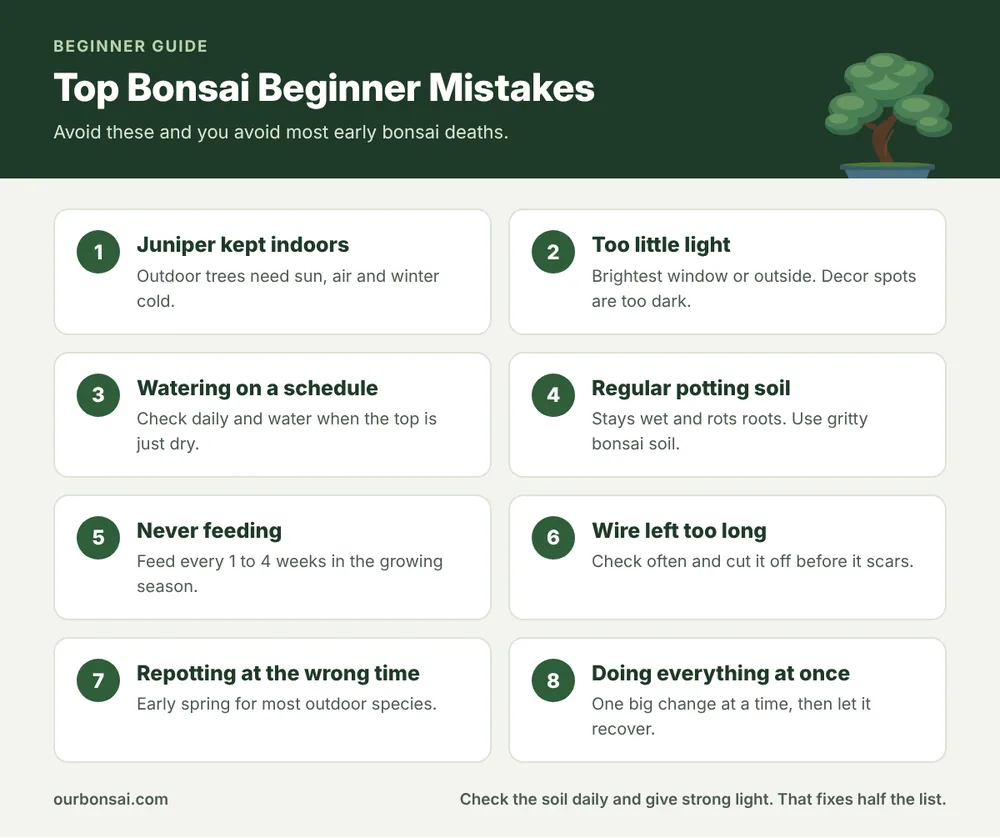
9. Repotting at the wrong time
Repotting in summer heat or in the middle of winter adds stress when the tree cannot recover well.
Instead: repot most outdoor species in early spring as buds swell, and tropicals in late spring or early summer. Our guide on the best time to repot tropical bonsai has details.
10. Repotting into a much bigger pot
A large pot full of soil stays wet for a long time around a small root system.
Instead: choose a pot only slightly larger than the root mass, with good drainage holes.
11. Leaving wire on too long
Wire is meant to hold branches for weeks to months, not years. As branches thicken, the wire cuts in and leaves scars that take years to fade.
Instead: check wired branches every few weeks and cut the wire off as soon as it starts to press into the bark. Our guide to bonsai repotting wire explains wire types.
12. Pruning too much at once
Removing most of the leaves and branches in one go cuts the tree’s energy supply.
Instead: remove no more than about a third of the foliage at a time, and prune at the right time of year. Our guide on when to start pruning bonsai covers timing.
13. Doing everything at once
Repotting, hard pruning, wiring and moving the tree in the same month is a common way to kill a healthy bonsai.
Instead: do one major job at a time, then give the tree weeks or months to recover.
14. Ignoring pests until it is too late
Spider mites, aphids, scale and mealybugs are easy to treat early and hard to stop late.
Instead: look under a few leaves and along the stems every couple of weeks. Our overview of bonsai pests and diseases helps you identify problems.
15. Moving the tree constantly
Each move changes light, temperature and humidity, and the tree has to adjust again. Frequent moves cause leaf drop and stress.
Instead: pick a good spot and leave the tree there, apart from seasonal moves.
Mistakes at a glance
| Mistake | Result | Better approach |
|---|---|---|
| Outdoor tree indoors | Slow decline, death | Keep it outside |
| Too dark | Weak, leggy growth, leaf drop | Brightest spot, grow light |
| Watering on a schedule | Root rot or drought | Check daily |
| Potting soil | Root rot | Gritty bonsai soil |
| No fertilizer | Pale, weak growth | Feed in season |
| Wire left on | Scars | Check every few weeks |
| Wrong-time repotting | Shock, dieback | Repot in the right season |
| Too much at once | Severe stress | One job at a time |
Why these mistakes are so common
Most beginner trees are bought as gifts or impulse purchases, often without any species information. Store labels sometimes say “indoor bonsai” for junipers. And because bonsai look like decorations, it is natural to place them where they look good rather than where they grow well. Knowing these traps puts you ahead of most new owners. The National Bonsai Foundation and local bonsai clubs are also excellent places to learn from experienced growers.
How to recover from a mistake
If you have already made one or more of these mistakes, do not panic. Most bonsai can recover if you act early:
- Move the tree to the right place with the right light.
- Fix the watering and, if needed, the soil.
- Remove any wire that is cutting in.
- Stop fertilizing until the tree is growing again.
- Wait patiently. Recovery often takes a few weeks to a full season.
Our guide to bonsai leaves turning yellow or brown can help you diagnose specific symptoms.
FAQ: bonsai beginner mistakes
What is the biggest mistake beginners make with bonsai?
Keeping an outdoor species, usually a juniper, indoors. It slowly declines from lack of light and winter rest.
How do I know if I am overwatering my bonsai?
The soil stays wet for days, leaves yellow and drop, and the soil may smell sour. Check before you water and use gritty soil.
Is it a mistake to buy a bonsai from a big box store?
Not necessarily. Many are fine trees. Just check the species, remove glued stones, and plan to repot into proper soil in the right season.
How long does it take to learn bonsai basics?
A few weeks to get comfortable with watering and placement. Styling skills develop over years.
Final thoughts
Most bonsai beginner mistakes come down to light, water, soil and timing. Put the right tree in the right place, check the soil daily, use proper bonsai soil, feed in season, and do one big job at a time. Avoid these 15 mistakes and your first bonsai has every chance of thriving for many years. For a simple start, see our low maintenance bonsai trees for beginners.