Mushrooms Bonsai Soil Guide: Are They Harmful?

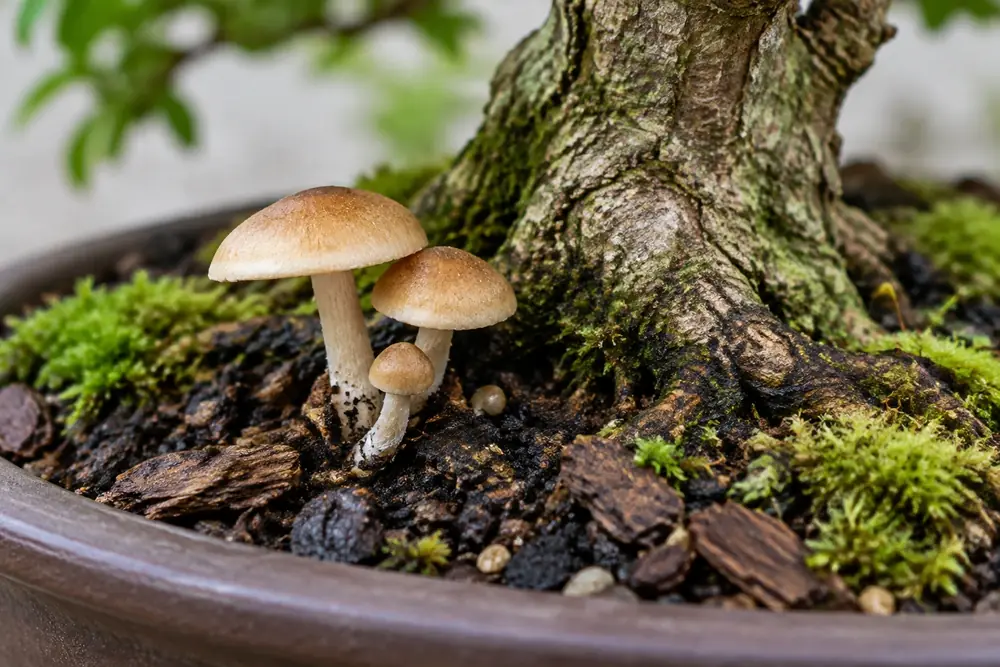
Seeing mushrooms bonsai soil growth in your pot is common after a warm, wet spell, and in most cases it is harmless. A mushroom is only the fruit of a fungus that lives in the soil, feeding on dead organic matter such as bark, peat, compost or old roots. It does not attack a healthy tree. Mushrooms tell you two things: there is organic material in the pot, and the soil has stayed moist and warm. Pick them out, let the top of the soil dry a little and keep an eye on the tree. Only worry if the soil also smells sour, stays soggy for days or the tree shows yellowing or wilting.
In this guide
- What mushrooms in bonsai soil are
- Why mushrooms grow in a bonsai pot
- Are mushrooms in bonsai soil harmful?
- Mushrooms vs white mold and other growths
- How to remove mushrooms from bonsai soil
- Should you use fungicide?
- How to prevent mushrooms in bonsai soil
- Mushrooms on indoor bonsai
- When to repot after mushrooms
- Common mistakes
- FAQ: mushrooms bonsai soil
- Final thoughts
This guide explains why mushrooms appear, when they mean trouble and how to deal with them.
What mushrooms in bonsai soil are
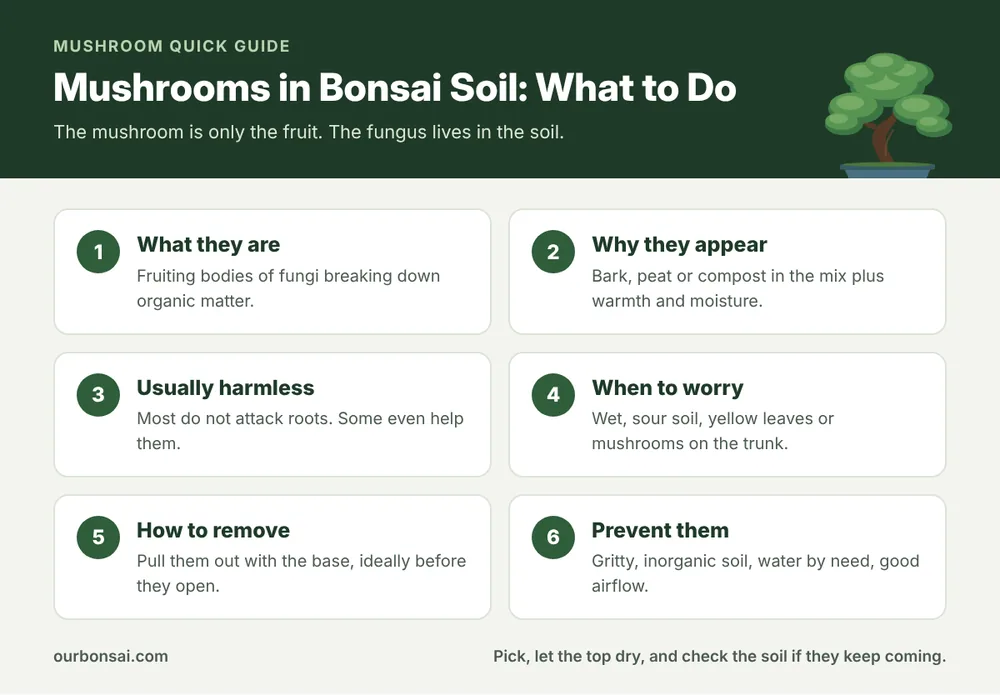
A mushroom is the reproductive part of a fungus, like an apple on an apple tree. The main body of the fungus is a web of fine white threads called mycelium, which spreads through the soil and breaks down dead organic matter. When conditions are right, usually warm and damp, it pushes up mushrooms to release spores.
Most soil fungi are decomposers. Some form a helpful partnership with roots, called mycorrhiza, in which the fungus helps the tree take up water and nutrients in exchange for sugars. Pines, oaks, birches and many other trees benefit from these fungi, and mycorrhizal mushrooms sometimes appear in their pots.
Why mushrooms grow in a bonsai pot
| Cause | Why it helps fungi |
|---|---|
| Bark, peat, coir or compost in the mix | Food for decomposer fungi |
| Soil that stays moist for days | Fungi need water to fruit |
| Warm, humid weather | Ideal fruiting conditions |
| Shade and still air | Surface stays damp longer |
| Organic fertilizer cakes | Extra food on the surface |
| Old, broken-down soil | More fine organic matter, less air |
| New soil or bagged compost | Often already contains spores |
Most mushrooms appear on trees in organic-rich soil, such as bagged bonsai mixes with lots of bark or mall-bought trees in potting compost.
Are mushrooms in bonsai soil harmful?
Usually not. Decomposer fungi feed on dead material, not living roots. Mycorrhizal fungi actively help the tree.
They can be a warning sign in a few cases:
- The soil stays wet. Mushrooms show that the pot holds a lot of moisture. Constantly wet soil can lead to root rot in bonsai, which is caused by different, harmful fungi and water molds.
- The tree looks unwell. Yellow leaves, wilting in moist soil or a sour smell point to rotting roots. The mushrooms may be feeding on dead roots.
- Mushrooms or bracket fungi on the trunk. Fungi growing from the trunk or root base often mean the wood is decaying inside.
- Honey-colored clusters at the trunk base with white sheets under the bark can indicate honey fungus, a serious root disease on outdoor trees.
If the tree looks healthy and the soil drains well, the mushrooms are just a sign of a rich, damp pot.
Mushrooms vs white mold and other growths
| What you see | Likely cause | Action |
|---|---|---|
| Small capped mushrooms | Decomposer or mycorrhizal fungus | Pick out, let the top dry |
| White fluffy or cottony fuzz on the surface | Saprophytic mold | See our guide below |
| White threads among roots during repotting, tree healthy | Mycorrhiza (on pines and some others) | Keep it |
| Green film on the surface | Algae | Scrape off, improve airflow |
| Tiny flies around the soil | Fungus gnats | Let the surface dry |
For fuzzy white growth, see our guide to white mold on bonsai soil. If small flies hover around the pot, our guide to fungus gnats on bonsai trees helps, since gnats breed in the same damp, organic conditions.
How to remove mushrooms from bonsai soil
- Pull them out early. Grip the mushroom at its base and twist it out, ideally before the cap opens and releases spores.
- Remove the base. Use tweezers to lift out the stem and any visible white threads near the surface.
- Bag and bin them. Do not leave them on the bench or the soil.
- Wash your hands. Some mushrooms are toxic. Keep children and pets away from them.
- Let the top dry. Skip a watering if the soil is still moist below the surface.
Picking does not remove the fungus in the soil, so mushrooms may return after the next wet spell. That is normal and not a reason to panic.
Should you use fungicide?
Usually no. The fungus is not harming the tree, and fungicides can also kill helpful mycorrhizal fungi. Save fungicide for real fungal diseases on leaves, stems or roots. Our guide to bonsai pests and diseases explains when treatment is needed.
How to prevent mushrooms in bonsai soil
- Use a gritty, mostly inorganic mix. Akadama, pumice and lava rock leave little food for fungi and drain fast. See our guide to the bonsai soil mix ratio.
- Water by need. Check the soil before watering, rather than following a fixed schedule.
- Improve airflow and light. Avoid crowded, shaded spots where the surface stays damp.
- Replace old fertilizer cakes. Remove crumbling organic cakes before adding new ones.
- Repot on schedule. Old soil breaks down into fine, organic-rich mud.
- Avoid garden soil and potting compost. Our guide to bonsai soil vs regular soil explains why.
Mushrooms on indoor bonsai
Indoor trees often grow mushrooms when they sit in organic soil, in a warm room, with little air movement and too much water. Small yellow mushrooms that appear suddenly in houseplant pots are common and harmless to the plant, though they should not be eaten. Let the soil dry more between waterings, increase light and consider repotting into a gritty bonsai mix in spring or summer. Our guide on watering indoor bonsai in winter helps prevent soggy soil.
When to repot after mushrooms
You do not need to repot just because mushrooms appeared. Repot if:
- the soil stays wet for many days after watering,
- water sits on the surface or drains slowly,
- the soil smells sour,
- the tree shows yellow leaves or wilting despite moist soil.
During repotting, check the roots. Firm, light roots are healthy. Dark, mushy roots should be cut away. White threads clinging to healthy roots, especially on pines, are often helpful mycorrhiza and can stay.
Common mistakes
- Panicking and repotting a healthy tree in the wrong season. Mushrooms alone are not an emergency.
- Drenching with fungicide. It rarely helps and can harm good fungi.
- Leaving mushrooms to drop spores. Pick them early.
- Ignoring constantly wet soil. The mushrooms are a hint to adjust watering.
FAQ: mushrooms bonsai soil
Why are mushrooms growing in my bonsai soil?
The soil contains organic matter, such as bark or compost, and has stayed warm and moist. Fungi feed on that material and fruit as mushrooms.
Will mushrooms kill my bonsai?
Almost never. Most are decomposers or helpful mycorrhizal fungi. Check that the soil drains well and the tree looks healthy.
Should I remove mushrooms from my bonsai pot?
Yes, pick them out before they open, mainly for tidiness and safety around pets and children.
Are mushrooms a sign of overwatering?
Often. They show that the soil has stayed moist for a while. Let the top dry a little and water by need.
Can I prevent mushrooms completely?
Not completely, but a gritty, mostly inorganic soil, good airflow and careful watering make them rare.
Final thoughts
Mushrooms in bonsai soil are usually a harmless sign of organic matter and moisture, not a sick tree. Pick them out early, let the soil surface dry and check that the pot drains well. If the tree looks healthy, there is nothing more to do. If the soil stays soggy or the leaves yellow, check the roots and move to a gritty mix. For year-round care, see our main bonsai care guide.