Bonsai Pruning Guide: Maintenance vs Structural Pruning

This post contains affiliate links. As an Amazon Associate, OurBonsai earns from qualifying purchases at no extra cost to you. Read our disclosure.
In this guide
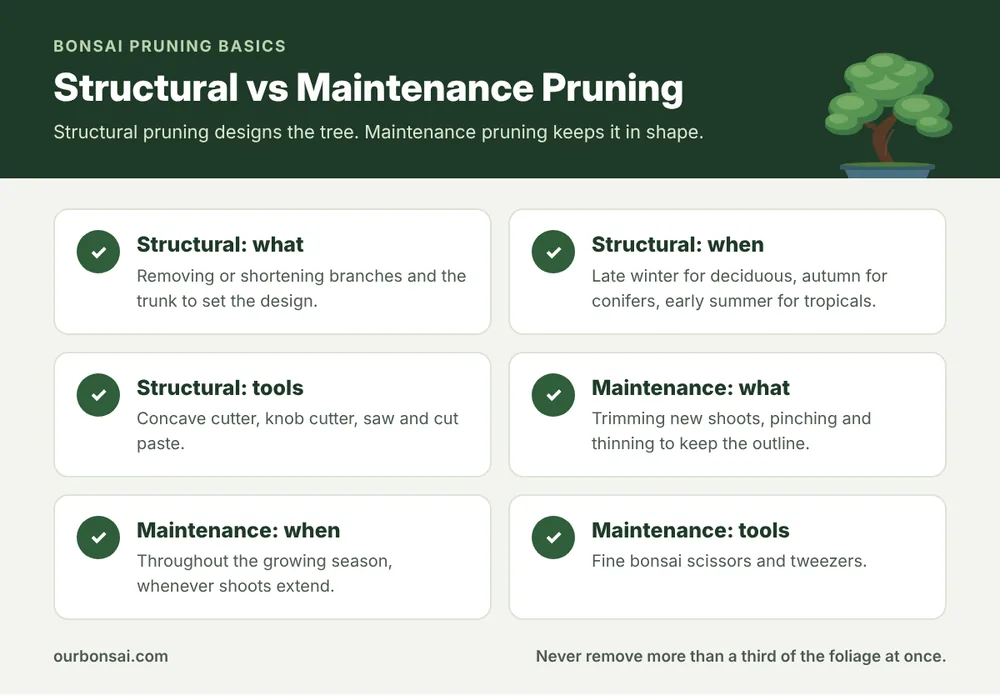
Bonsai pruning is what turns an ordinary tree in a pot into a miniature of an old tree. It comes in two kinds that do very different jobs. Structural pruning sets the design: you remove or shorten branches and sometimes the trunk to create the basic shape, usually once a year at most, in the dormant or resting season. Maintenance pruning keeps that design: you trim, pinch and thin new growth throughout the growing season so the tree stays compact and the branches get finer. Understanding the difference, and the right timing for each, is the foundation of every bonsai style.
This guide explains both types, when to do them, how to make good cuts, which tools you need and the mistakes to avoid.
Why bonsai need pruning
A tree’s natural goal is to grow taller and wider. In a bonsai, you redirect that energy to keep the tree small and in proportion, with a thick trunk, tapering branches and dense foliage. Pruning does three things:
- Controls size. It keeps the tree within the shape you want.
- Builds ramification. Each cut encourages the tree to push buds below it, so one shoot becomes two or three. Over years, this creates the fine twig network that makes a bonsai look old.
- Balances energy. Most trees grow strongest at the top and outer tips. Pruning the strong areas harder lets weaker lower branches catch up.
The Wikipedia article on bonsai cultivation and care describes pruning as the central technique alongside wiring and repotting.
Structural pruning
Structural pruning means removing whole branches, shortening thick branches, or cutting back the trunk to create a new apex. It changes the shape of the tree and takes a lot of energy from it, so timing and planning matter.
When to do structural pruning
| Tree type | Best time |
|---|---|
| Deciduous (maple, elm, hornbeam) | Late winter, just before buds swell |
| Conifers (juniper, pine) | Late autumn to early winter |
| Tropical (ficus, Fukien tea, jade) | Late spring to early summer |
| Flowering (azalea) | Right after flowering |
Our guides to when to prune deciduous bonsai and when to start pruning bonsai go into more detail on timing.
What to remove
- Crossing and rubbing branches.
- Bar branches (two at the same height) and whorls (several from one point).
- Branches growing straight up, straight down or toward the trunk.
- Low branches growing toward the front that hide the trunk.
- Thick branches high up that spoil the taper.
Plan before cutting. Choose the front of the tree first, then decide which branches stay. Our guide to juniper bonsai styles for beginners shows how the style affects which branches you keep.
Maintenance pruning
Maintenance pruning is the small, regular work that keeps a bonsai neat. It happens whenever the tree is growing.
How to do maintenance pruning
- Let new shoots extend. Allow a shoot to grow several leaves (often four to six), so it feeds the tree and thickens the branch.
- Cut back to one or two leaves or buds. Cut just above a leaf or bud that points in the direction you want new growth.
- Follow the outline. Trim anything that grows beyond the canopy shape.
- Thin crowded areas. Remove some shoots where too many grow together, so light reaches the inside.
- Pinch soft tips on fine-leaved species such as elms, boxwood and junipers.
The exact method varies by species. Conifers like junipers are pinched rather than cut, pines use candle pruning, and maples are trimmed back to the first pair of leaves.
Pruning young trees vs finished bonsai
How hard and how often you prune depends on the stage the tree is at:
- Young trees and pre-bonsai. The goal is a thick trunk and good structure, so let the tree grow freely most of the year. Structural cuts are made once a year to set the trunk line and the first branches, while long “sacrifice” shoots are left to thicken the trunk.
- Trees in development. The trunk is about right and you are building the main branches. Let each branch extend, then cut back to build taper, one or two sections at a time.
- Finished or refined bonsai. The shape is set. Most of the work is maintenance pruning to keep the outline and build fine twigs, with very little structural cutting.
A common beginner mistake is to treat a young tree as if it were finished, trimming every shoot and wondering why the trunk never gets thicker. Give young trees room to grow first.
How to make a good cut
- Use sharp, clean tools. Dull blades crush tissue and heal poorly.
- Cut just above a bud or leaf when shortening a shoot. Long stubs die back.
- Use a concave cutter when removing a branch at the trunk, so the wound heals flat and does not leave a bump. Our concave cutter review explains why.
- Seal larger cuts on deciduous trees with cut paste to stop drying and help healing. See our list of bonsai cut paste alternatives.
- Cut big branches in stages on conifers, leaving a stub that can be refined later or turned into deadwood.
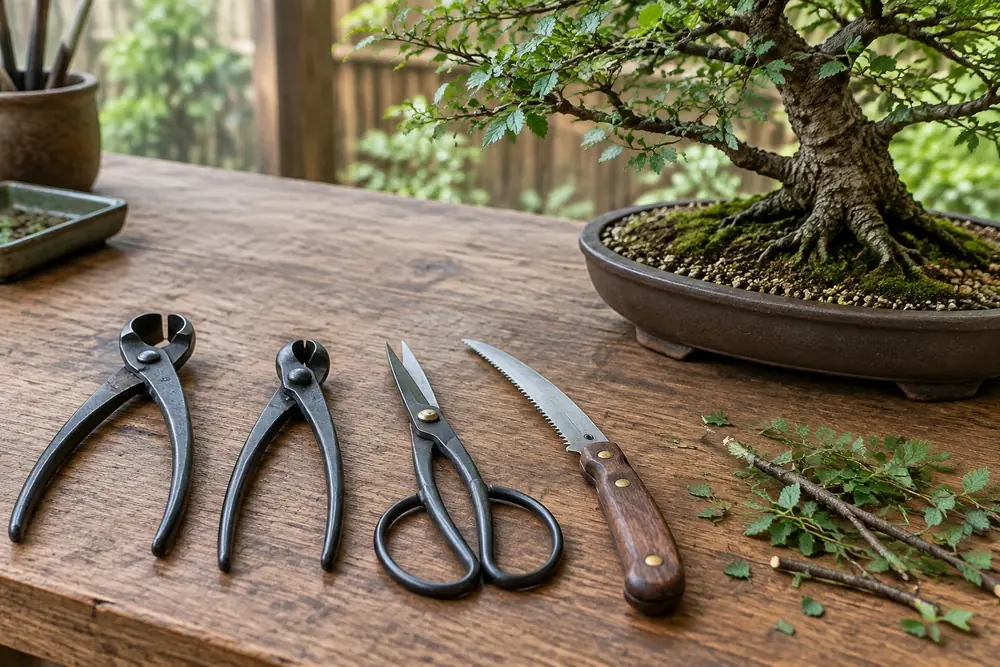
Tools for bonsai pruning
| Tool | Used for |
|---|---|
| Fine bonsai scissors | Shoots, leaves, small twigs |
| Concave cutter | Removing branches flush with the trunk |
| Knob cutter | Removing knobs and stubs, trunk chops |
| Pruning saw | Thick branches and trunks |
| Tweezers | Pinching, removing needles and debris |
You do not need everything at once. A good pair of scissors and a concave cutter cover most jobs. Our guide to the best bonsai pruning shears for beginners covers starter tools, and our pick of the top 5 best bonsai pruning saws helps with thick wood. You can also browse bonsai tool sets.
Aftercare after pruning
- Keep the tree in its normal spot with good light.
- Water as usual, checking the soil; a pruned tree uses slightly less water.
- After heavy structural pruning, hold back fertilizer for a couple of weeks, then feed normally.
- Do not repot and prune heavily in the same season.
Common bonsai pruning mistakes
- Pruning at the wrong time, for example big cuts on deciduous trees in autumn.
- Cutting every shoot immediately, so branches never thicken.
- Removing too much at once. Keep at least two thirds of the foliage.
- Leaving long stubs that die back.
- Ignoring the strong top, so the lower branches weaken.
- Pruning a weak or sick tree.
FAQ: bonsai pruning
How often should I prune my bonsai?
Maintenance pruning whenever new shoots extend during the growing season, often every few weeks. Structural pruning once a year at most.
Can I prune my bonsai in winter?
Deciduous trees, yes, in late winter for structural work. Tropical indoor trees prefer pruning in late spring and summer.
How much can I cut off a bonsai at once?
On a healthy tree, up to about a third of the foliage. Less on weak trees and conifers.
Do all bonsai need pruning?
Yes. Without pruning, a bonsai grows out of shape and loses its fine branching.
Final thoughts
Bonsai pruning is easier once you separate the two jobs: structural pruning sets the design with a few planned cuts in the right season, and maintenance pruning keeps it with regular light trims while the tree grows. Use sharp tools, cut above buds, seal larger wounds and never take too much at once. Combine pruning with the basics in our bonsai care guide, and your tree will get better every year.