10 Best Bonsai Trees for Long-Term Growth in 2026
A bonsai tree is a decades-long relationship, not a one-time purchase. The best specimens improve with age, developing thicker trunks, denser foliage, and more refined branch structure the longer they stay under attentive care. That long horizon is what separates bonsai from typical houseplants: a juniper or maple can outlive the person who first potted it, provided it gets the right light, water, and seasonal treatment from year one.
Choosing a tree for long-term growth means looking past the ceramic pot and decorative moss. Species matters more than almost anything else. Junipers and maples are outdoor trees that need real seasonal changes (cold dormancy included) to stay healthy, while ficus and Hawaiian umbrella trees tolerate indoor conditions and forgive inconsistent watering better than most beginners expect. A tree matched to your actual environment, indoor or outdoor, will outlast one chosen for looks alone. Starter kits and seed collections offer a different kind of long game: slower, less certain, but rewarding for growers who want to shape a tree from its very first true leaves.
Before buying, think about your climate zone, available light, and how much hands-on training you want to do. A tree that needs full sun and winter dormancy will struggle on an indoor windowsill, and a tropical species left outside in a cold snap won’t survive the season. We’ve grown, killed, and successfully trained enough of these species to know which ones give beginners the best shot at a bonsai that’s still thriving in ten years.
Best for outdoor beginners: Brussel’s Medium Juniper Bonsai
Best for low-light indoor spaces: Brussel’s Hawaiian Umbrella Bonsai
Best for training potential: Brussel’s Medium Maple Bonsai
Best forgiving indoor tree: Brussel’s Small Ficus Bonsai
Best budget outdoor starter: Live Dwarf Juniper (Plastic Pot)
Best decorative gift tree: Dwarf Juniper with Ceramic Fisherman
Best small-space juniper: Brussel’s Small Juniper Bonsai
Best single-species grow kit: Avergo Jacaranda Bonsai Starter Kit
Best multi-species grow kit: Bonsai Tree Kit Deluxe (5 Species)
Best for seed-growing hobbyists: 12 Variety Bonsai Seed Kit
Brussel’s Medium Juniper Bonsai
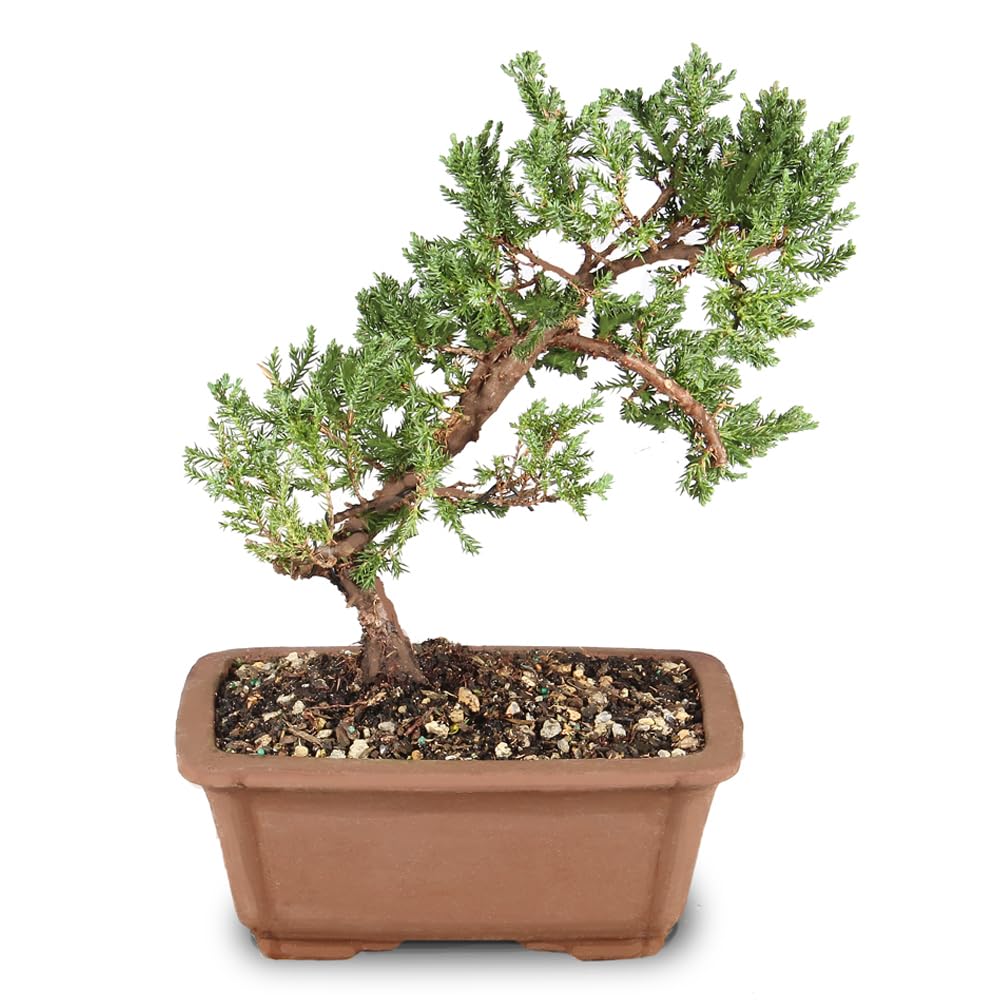
This is a solid pick for anyone starting an outdoor bonsai collection who wants a tree that tolerates beginner mistakes while still building real trunk character over time.
Pros
- Hardy Green Mound Juniper tolerates partial shade and inconsistent watering
- Dense foliage responds well to pruning and wiring as it matures
- Ships with a glazed ceramic pot suited for years of outdoor display
Cons
- Cannot live indoors long-term despite gift-ready presentation
- Container shape and color vary by shipment
- Not available for delivery to Alaska or Hawaii
Green Mound Juniper is one of the most forgiving species for someone learning to read a bonsai’s water needs. Its foliage holds up through USDA zones 4 through 8, so most of the continental US can keep it outside year-round with basic winter protection. Reviewers describe trees arriving larger and thicker-trunked than expected, which is a good sign for long-term training potential. Keep in mind that a tag warning against indoor placement is accurate. This tree needs real seasons, not a windowsill.
Brussel’s Hawaiian Umbrella Bonsai
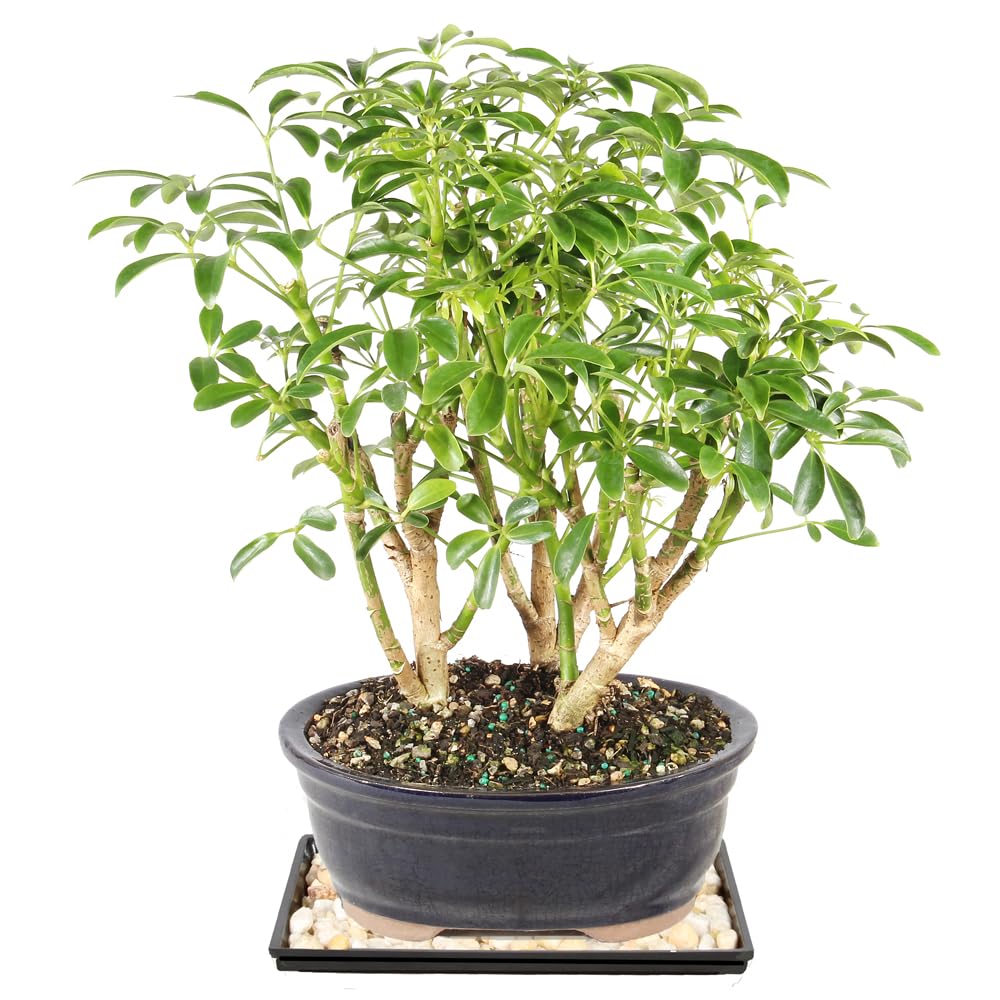
Choose this tree if you want a genuinely indoor-friendly bonsai with an exposed root system that develops striking character as it ages.
Pros
- Thrives in typical indoor temperatures between 65-72°F
- Exposed root system (nebari) adds visual interest as the tree matures
- Comes with humidity tray and decorative rocks for easier care
Cons
- Sensitive to cold shipping conditions, which can damage leaves
- Requires consistent humidity to prevent leaf drop
- Branches can be brittle during unboxing and repotting
The Hawaiian Umbrella is one of the few bonsai species that genuinely accepts a life indoors, making it a strong choice for apartment dwellers or office desks. Its umbrella-shaped canopy fills in well with regular pruning, and the included humidity tray helps offset dry indoor air. A few buyers reported frost damage on arrival, so unpack it right away and give it a few weeks to adjust before doing any training work.
Brussel’s Medium Maple Bonsai
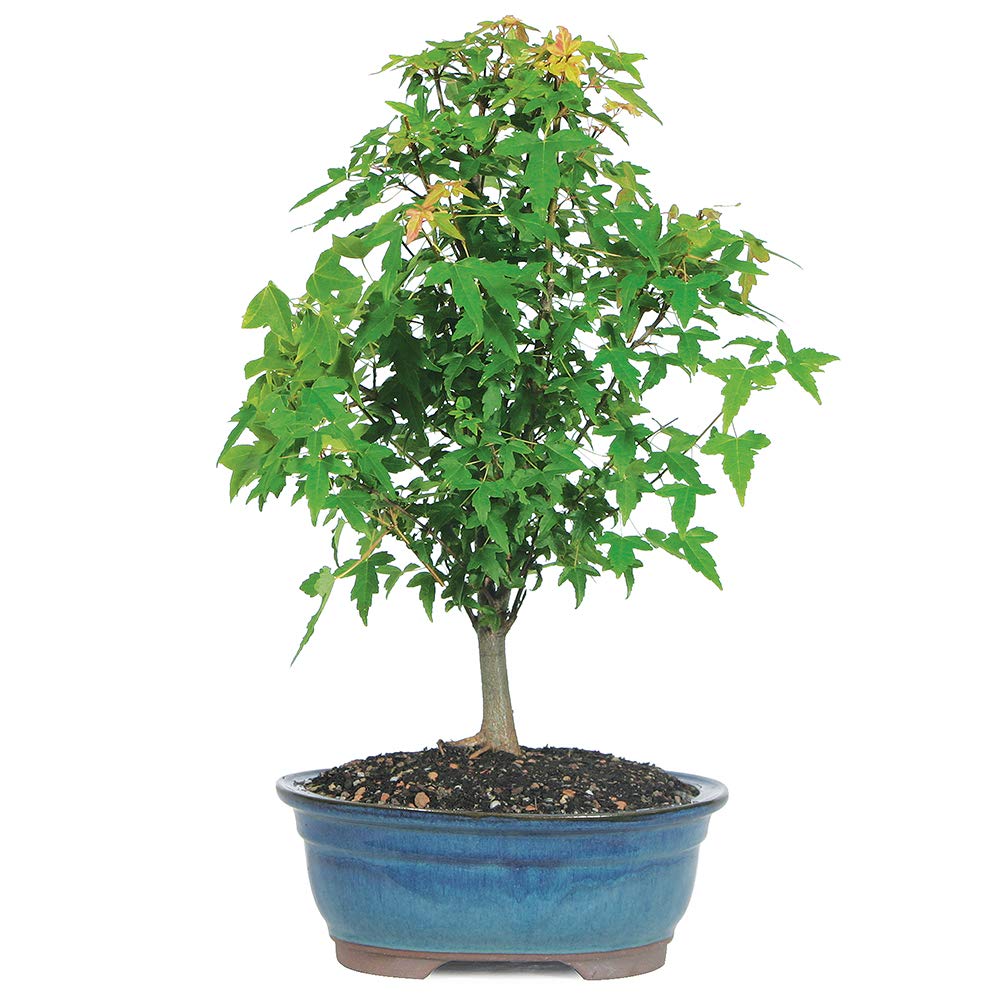
This Trident Maple is the strongest training candidate in this roundup for growers who want a bonsai that rewards years of shaping.
Pros
- Five-year-old stock arrives with established branch structure
- Trident Maple responds exceptionally well to wiring and pruning
- Vibrant seasonal foliage change adds visual interest through autumn
Cons
- Must live outdoors and requires winter dormancy
- Occasional reports of leaf fungus on arrival
- Rare cases of trees arriving already dead
Trident Maple is a classic training species among serious bonsai growers because its branches thicken predictably and its leaves reduce in size with repeated pruning, a technique called defoliation. That makes it one of the better long-term development projects here. One reviewer defoliated a fungus-affected tree and reported full, healthy regrowth, which speaks to the species’ resilience. Give it full sun, protect it from hard freezes, and expect a tree that keeps improving for decades.
Brussel’s Small Ficus Bonsai
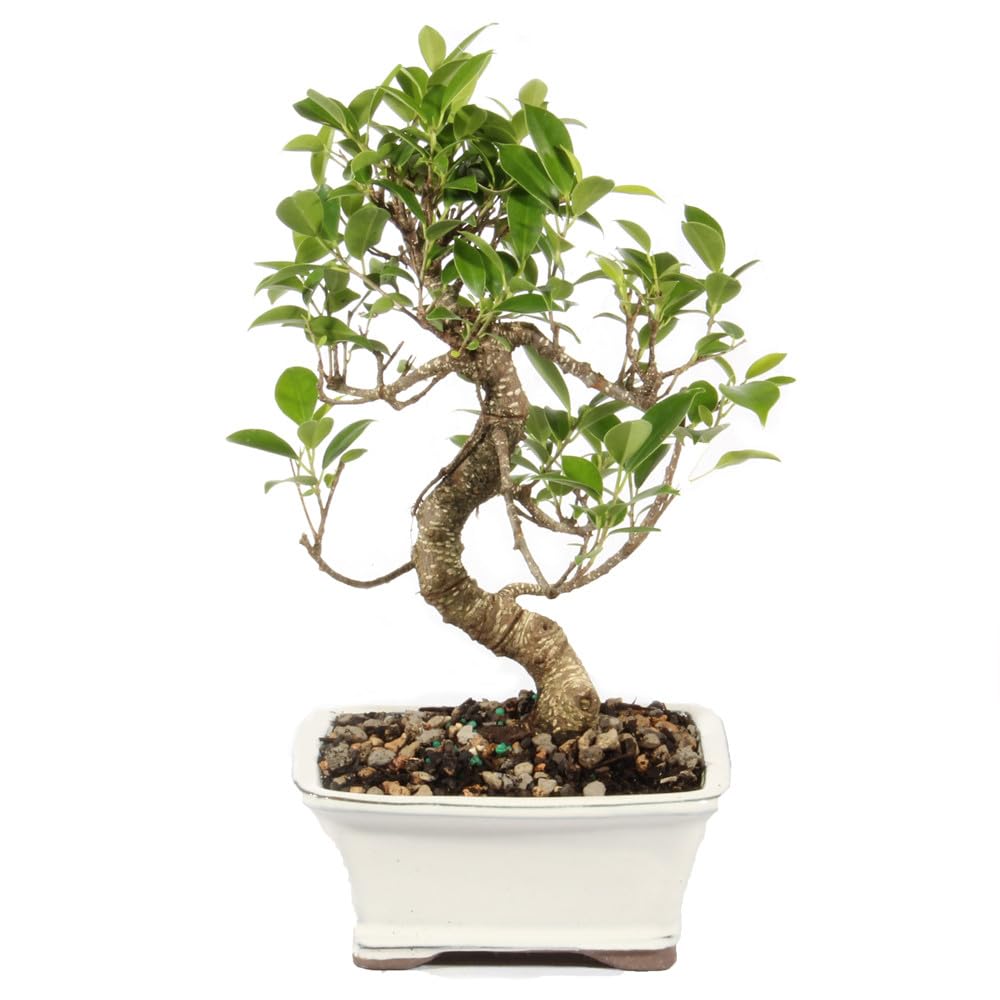
This Golden Gate Ficus is the easiest true bonsai on this list to keep alive indoors, making it the safest first purchase for a nervous beginner.
Pros
- Adapts readily to typical indoor light and humidity
- Spiraling trunk and glossy foliage look mature even in compact sizes
- Tolerant of occasional missed waterings once established
Cons
- Watering guidance from sellers can be inconsistent
- Slow to show dramatic training results compared to maples
- Cold-sensitive during winter shipping
Ficus microcarpa is often the first bonsai recommended to beginners, and this Golden Gate variety backs that reputation up. Its thick, glossy leaves tolerate lower indoor light than most outdoor species could ever handle. Several buyers mention giving it a few weeks near a bright window to acclimate before settling into a regular watering rhythm. It won’t develop the dramatic trunk taper of a maple, but it’s far less likely to die from a beginner’s mistake.
Live Dwarf Juniper (Plastic Pot)
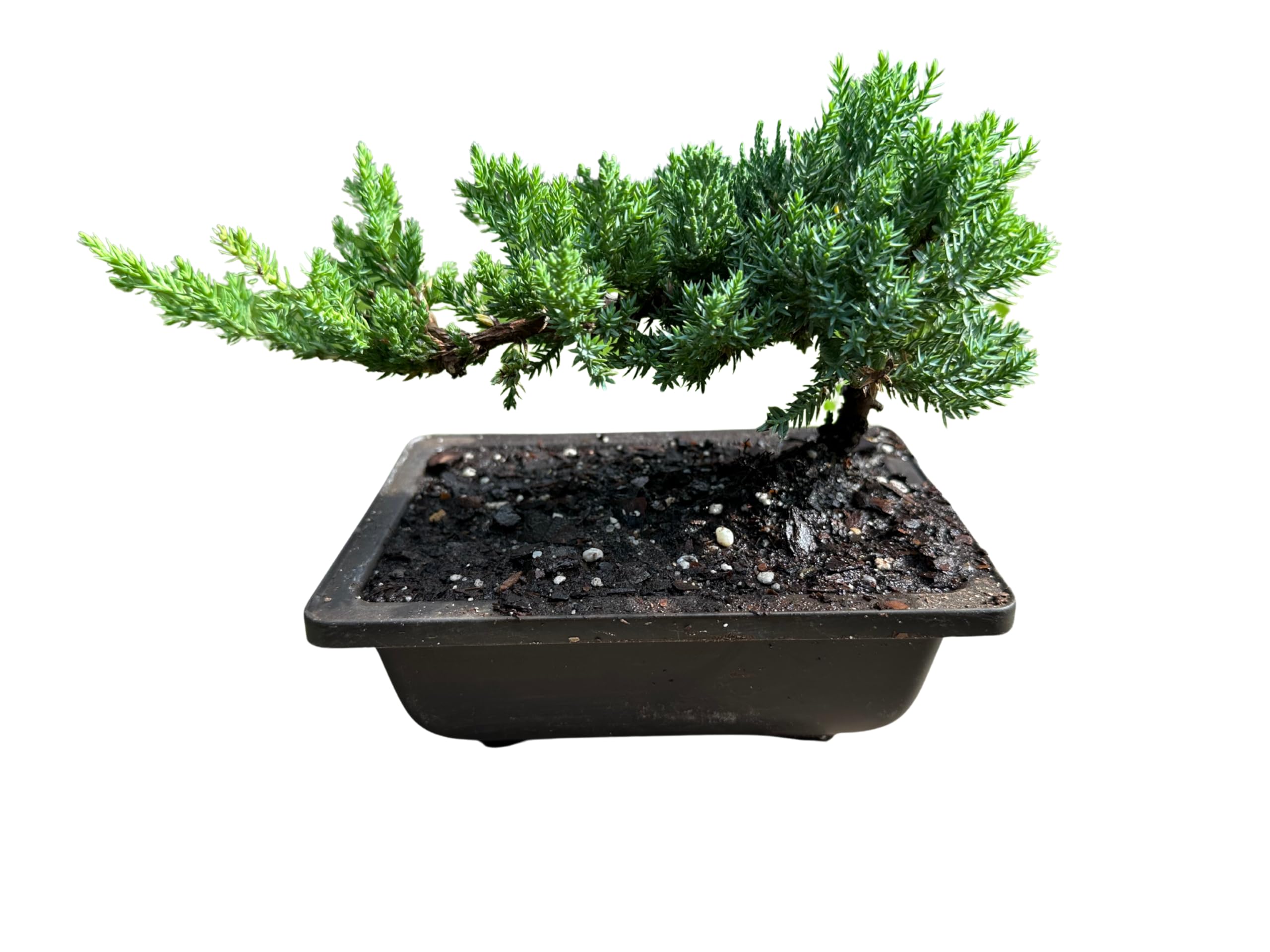
Pick this juniper if you want an affordable outdoor tree young enough to train from scratch and don’t mind repotting it yourself.
Pros
- Nursery pot allows healthy root development before repotting
- Handles seasonal dormancy naturally as a true outdoor species
- Competitively priced entry point into outdoor bonsai training
Cons
- Ships in a basic plastic pot, not display-ready
- Needs twice-daily watering in summer heat
- Smaller stock size than more established trees in this roundup
This dwarf juniper is aimed at growers who want to do their own styling from an early stage rather than buy a tree that’s already been shaped. The plastic nursery pot isn’t decorative, but it gives the roots room to establish before a ceramic repot. Summer watering demands are steep, twice a day during hot months, so this is a better fit for growers who can check on it daily rather than a low-maintenance gift.
Dwarf Juniper with Ceramic Fisherman

This six-year-old juniper works well as a decorative gift, though buyers should understand it’s an outdoor tree despite the “indoor/outdoor” label.
Pros
- Older stock (about six years) means more developed bark and structure
- Glazed ceramic pot and figurine make it display-ready out of the box
- Well suited as a themed gift for holidays or office décor
Cons
- Needs to go dormant outdoors below 50°F, despite indoor/outdoor marketing
- Artificial moss requires occasional cleaning to look fresh
- Pot and color vary by batch, so photos may not match exactly
The ceramic fisherman figurine and glazed pot make this tree look finished right out of the box, which is appealing for gift-giving. Several reviewers point out that the “indoor/outdoor” framing is misleading. Junipers need winter dormancy to survive long-term, so this tree still belongs outside for most of the year. Treat it as an outdoor bonsai with decorative flair rather than a true houseplant.
Brussel’s Small Juniper Bonsai
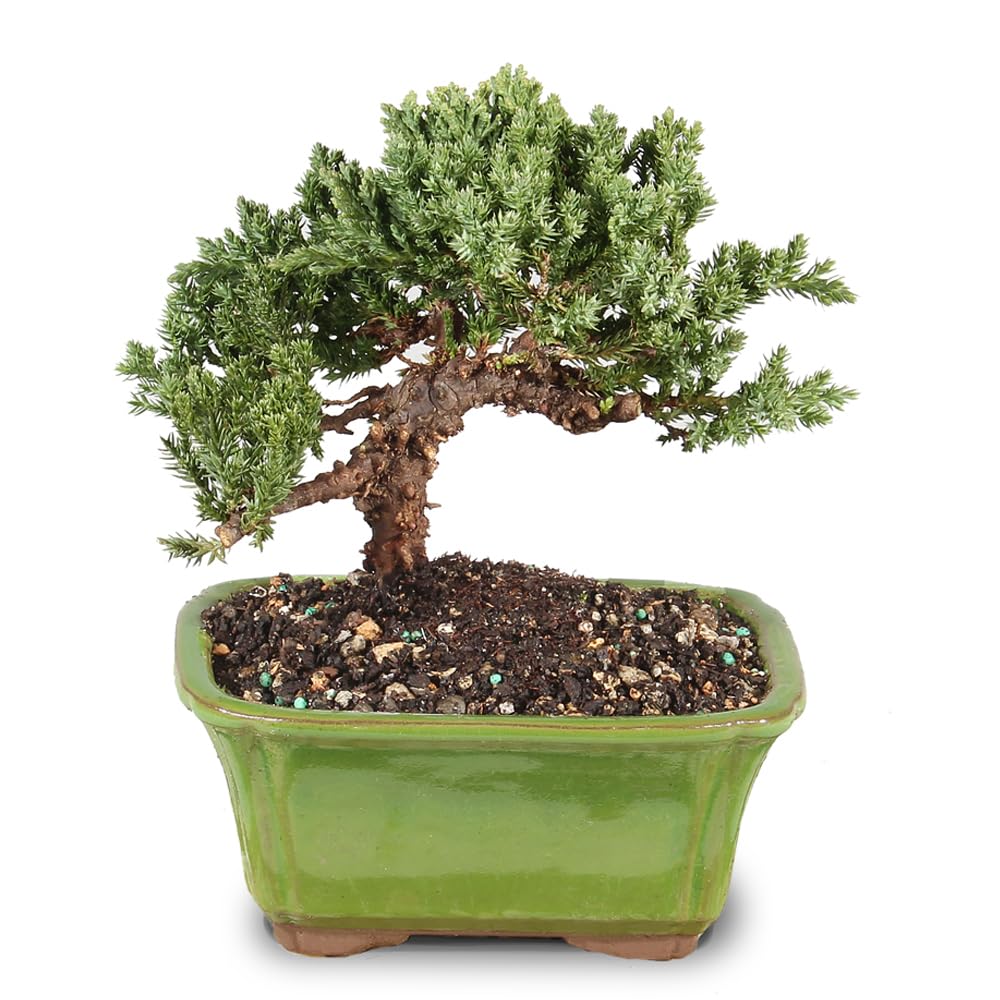
This compact three-year-old juniper suits small patios and desks where an outdoor bonsai needs to stay in a tight footprint.
Pros
- Small footprint fits tabletops, patios, and tight outdoor spaces
- Full sun to partial shade tolerance gives flexible placement options
- Younger stock offers a longer training runway than older trees
Cons
- Some units arrive with misshapen or contorted branch structure
- Dry soil on arrival has caused issues for a few buyers
- Not available for shipment to California, Alaska, or Hawaii
At three years old, this juniper is younger than Brussel’s medium version, which means more time to shape it into your own design rather than working around an already-set structure. That’s a plus for hands-on growers, though it also means the tree looks less finished on arrival. Water immediately upon unboxing and check soil moisture closely for the first few weeks, since a couple of reviewers received trees with dry root balls.
Avergo Jacaranda Bonsai Starter Kit
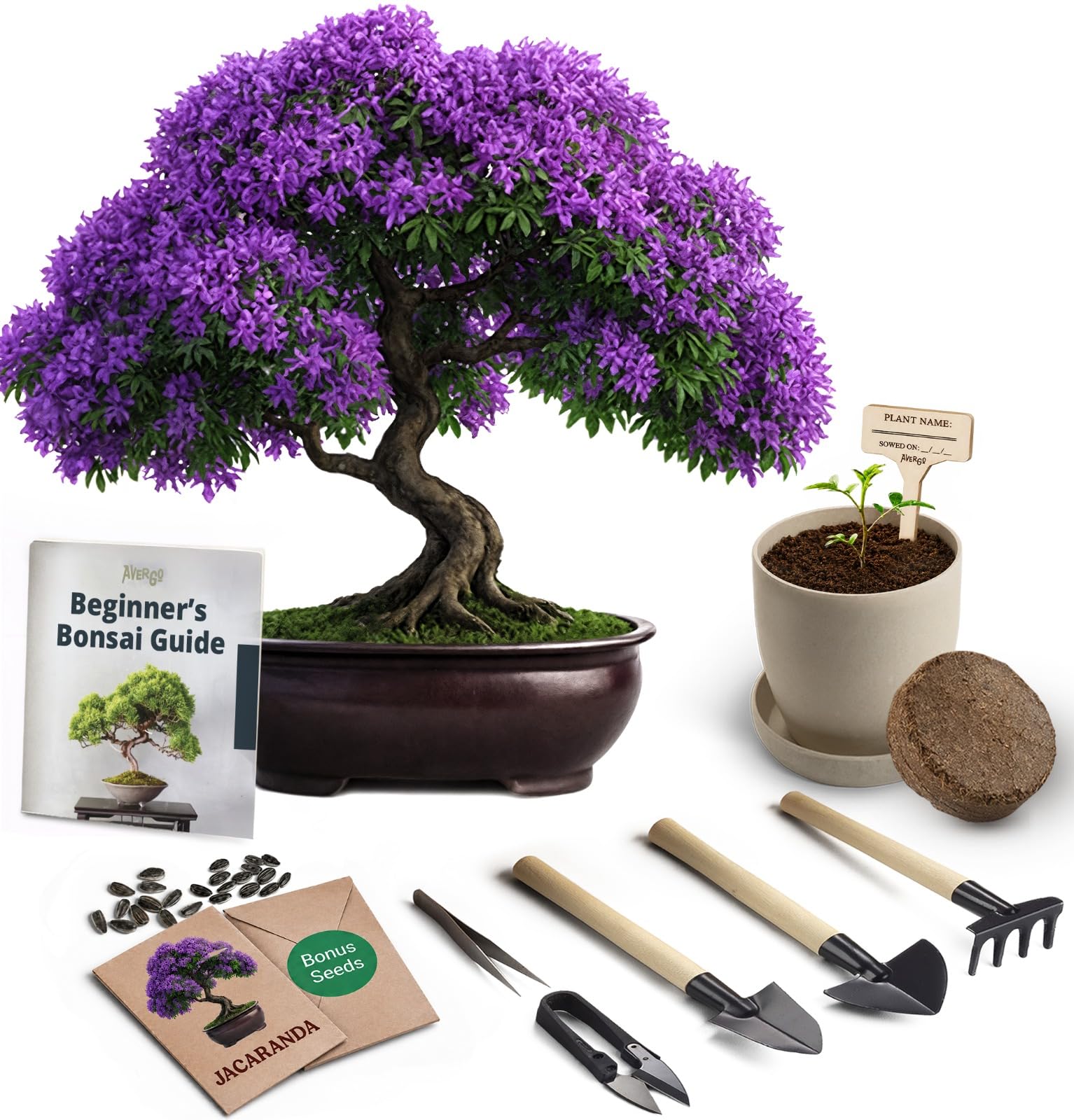
Choose this kit if you want the experience of growing a bonsai from seed and don’t mind a slow, uncertain start.
Pros
- Complete kit includes pot, soil, tools, and extra seed packets
- Jacaranda produces attractive purple blooms as it matures
- Beginner-friendly instructions walk through the germination process
Cons
- Germination can take weeks with no guarantee of success
- Several buyers reported the included ceramic pot cracking or breaking
- Years away from resembling an actual trained bonsai
Growing a Jacaranda from seed is a patience test rather than a quick decorating win. It can take a full year or longer before there’s enough of a trunk to begin any real bonsai styling. The extra seed packets help offset a spotty germination rate, but the pot has been a recurring complaint, with a handful of buyers describing it cracking or, in a couple of cases, breaking apart entirely. Order a backup planter if you go this route.
Bonsai Tree Kit Deluxe (5 Species)

This five-species kit gives seed-growers better odds of long-term success by spreading germination attempts across multiple trees at once.
Pros
- Five different species (including Crape Myrtle and Chinese Elm relatives) increase the odds one thrives
- Wooden planter box and full tool set feel well made for the price
- Clear instruction booklet walks through each species’ needs
Cons
- Germination rates vary widely between the five seed types
- Some buyers reported pest issues in the included soil
- Multi-year wait before any tree is ready for real bonsai training
Spreading seeds across five species is a smart hedge against the germination failures that plague single-variety kits. Reviewers report mixed results, with anywhere from one to four of five varieties sprouting successfully. That variability is normal for seed-grown bonsai and not a flaw specific to this kit. Anyone starting this project should think of it as a multi-year commitment before any tree looks like a bonsai rather than a seedling.
12 Variety Bonsai Seed Kit

This is the choice for growers who want maximum species variety and don’t mind researching individual germination requirements for each one.
Pros
- 300+ seeds across 12 species, including Japanese Black Pine and Trident Maple
- QR code links to instructional video content from the seller
- Low cost per attempt compared to buying established trees
Cons
- No pots, soil, or tools included, unlike the Avergo kits
- Some species require stratification or scarification before planting
- Germination success varies significantly by species and grower experience
This kit is built for the grower who wants raw material rather than hand-holding. There’s no planter or soil included, so budget for those separately. The species list leans toward serious bonsai candidates like Black Pine and Trident Maple, which reward the wait once they germinate. Some varieties need stratification (a cold, moist pretreatment that mimics winter) before they’ll sprout, so read the seller’s instructions for each type before planting.
Buying Guide
Match the Species to Your Environment First
Indoor and outdoor bonsai are not interchangeable, and the single biggest mistake beginners make is buying a tree suited to the wrong environment. Tropical and subtropical species like ficus and umbrella trees tolerate stable indoor temperatures and moderate light. Temperate species like junipers, pines, and maples need real seasonal dormancy, including a cold winter, to survive more than a year or two.
| Environment | Suitable Species | Key Requirement |
|---|---|---|
| Indoor | Ficus, Hawaiian Umbrella | Bright indirect light, stable 65-75°F |
| Outdoor | Juniper, Maple, Pine | Full sun, winter dormancy below 50°F |
Consider the Tree’s Age and Training Stage
Older stock (five to six years or more) arrives with a thicker trunk and more established branch structure, which shortens the path to a refined-looking bonsai. Younger trees cost less and offer more room to shape a design from scratch, but demand more patience and basic wiring skill.
Check Container and Soil Quality
A bonsai’s pot affects drainage and root health as much as looks. Glazed ceramic pots suit finished display trees, while plastic nursery pots suit younger trees still developing roots before a formal repot. Soil type matters too: sandy or loam mixes drain faster and suit species prone to root rot.
Weigh Starter Kits Against Established Trees
Seeds and kits cost far less per attempt but take years longer to produce a tree worth training. Established live trees cost more upfront but arrive with a head start of several years’ growth already built in. Growers with limited patience should lean toward an established tree; those who enjoy the process itself should consider a kit.
Watch for Climate and Shipping Restrictions
Many live bonsai sellers restrict shipping to certain states or seasons to protect the tree in transit. Check hardiness zone compatibility and expected delivery temperatures before ordering an outdoor species, especially in winter or peak summer months.
Editor’s Choice
For most beginners focused on long-term growth, the Brussel’s Medium Juniper Bonsai stands out as the strongest overall pick. Its hardiness across a wide range of climate zones, forgiving care needs, and genuine training potential make it a tree that can realistically still be improving a decade from now.
Growers set on an indoor tree should look to the Brussel’s Hawaiian Umbrella Bonsai, which handles typical home conditions better than any other indoor option here. Those chasing the deepest long-term training project, thicker trunks, seasonal color, real refinement, should choose the Brussel’s Medium Maple Bonsai instead. Patient growers drawn to the seed-starting process will get the best odds from the Bonsai Tree Kit Deluxe, thanks to its five-species spread.
Conclusion
A bonsai tree’s long-term success comes down to matching species to environment and being honest about how much hands-on care you can offer. Junipers and maples reward outdoor growers willing to handle seasonal dormancy, while ficus and Hawaiian umbrella trees give indoor growers a genuine shot at a thriving tree. Starter kits and seed collections suit a different kind of grower entirely, one who values the process of raising a tree from its earliest stage over having a display-ready specimen right away.
Whichever path fits your space and patience level, the trees and kits in this roundup all offer a real foundation for a bonsai that can be trained, shaped, and enjoyed for years. Start with accurate care information for your specific species, and adjust watering and light based on how the tree actually responds rather than a generic schedule.
FAQS
How long does it take for a bonsai tree to reach full maturity? Most bonsai take between 10 and 15 years to develop the thick trunk and refined branch structure associated with a mature specimen, though meaningful shaping can begin within the first two to three years of growth.
Can I keep an outdoor bonsai like a juniper or maple inside my house? No. Junipers and maples need seasonal temperature changes and winter dormancy to stay healthy long-term, and keeping them indoors year-round typically weakens the tree within a year or two.
Which bonsai species is easiest for a first-time owner? Ficus varieties, including the Golden Gate Ficus, tolerate indoor conditions and inconsistent watering better than most other bonsai species, making them a common recommendation for beginners.
Is it worth growing a bonsai from seed instead of buying an established tree? Growing from seed costs less per attempt and appeals to growers who enjoy the full process, but it takes several years longer to reach a trainable size compared to buying a tree that’s already three to six years old.
How often should I water my bonsai tree? Watering frequency depends on species, pot size, and climate, but a reliable method is checking soil moisture daily and watering thoroughly whenever the top layer feels dry, rather than following a fixed schedule.
Do bonsai trees need special soil? Yes. Bonsai soil needs to drain quickly while still retaining some moisture, which is why specialized mixes (often combining components like akadama, pumice, or sand) outperform standard potting soil for long-term root health.