
10 Best Bonsai Trees for Busy People in 2026

A bonsai tree looks like a project for someone with hours to spend trimming and fussing over soil moisture. That reputation keeps a lot of plant lovers away, which is unfortunate, because several bonsai options fit neatly into a schedule that already includes work, travel, and everything else life demands. The right pick depends less on skill and more on how much hands-on time you’re willing to give a living thing each week.
Live bonsai, growing kits, and artificial versions each solve a different problem. A mature live tree gives you the real look right out of the box but still needs a window and a watering routine. A seed kit is a slow, hands-on project for someone who wants to watch something grow. An artificial bonsai skips the biology entirely and just sits there looking good.
Before buying, think about placement (indoor light versus outdoor sun), how forgiving the watering schedule needs to be, and whether you want a finished tree or a growing project. A tree that matches your available light and travel schedule will outlast one chosen for looks alone.
Best for beginners who want instant charm: Brussel’s Bonsai Golden Gate Ficus
Best for outdoor patios and low-fuss owners: Brussel’s Bonsai Medium Juniper
Best statement piece for gifting: Brussel’s Hawaiian Umbrella Bonsai
Best growing project with variety: Avergo Deluxe 5-Tree Bonsai Kit
Best budget-friendly starter kit: Planters’ Choice Bonsai Starter Kit
Best single-species growing kit: Avergo Jacaranda Bonsai Starter Kit
Best hardy outdoor tree for hands-off owners: Handcrafted Dwarf Juniper Bonsai
Best realistic faux bonsai for frequent travelers: Briful Artificial Juniper Bonsai
Best budget artificial option: Yoerm Faux Bonsai Tree
Brussel’s Bonsai Golden Gate Ficus
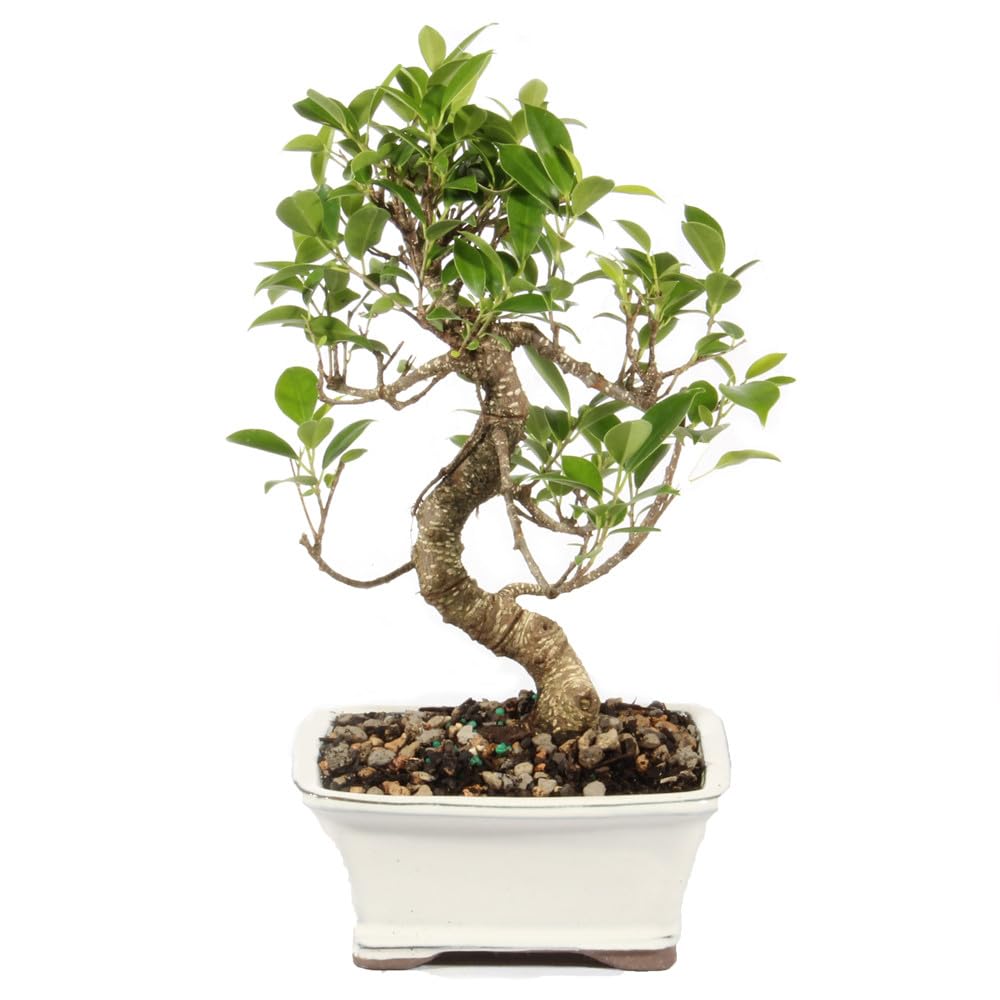
This is the tree to buy if you want a real, established bonsai that tolerates a beginner’s learning curve without dying on you.
Pros
- Ficus tolerates inconsistent watering better than most bonsai species
- Compact size fits desks, shelves, and windowsills
- Arrives potted and display-ready
Cons
- Needs consistently bright light to stay full
- Some buyers found the watering instructions vague
- Not cold-hardy for outdoor use
The Golden Gate Ficus has a well-earned reputation as an entry-level bonsai because it forgives missed watering days better than junipers or pines. It wants bright indoor light, not direct blasting sun, and a regular check of the soil surface. Reviewers repeatedly mention it arrived healthy and well-packaged, though a few wished for clearer care instructions on first setup. For a first bonsai that still looks the part, this is a dependable, low-drama choice.
Brussel’s Bonsai Medium Juniper
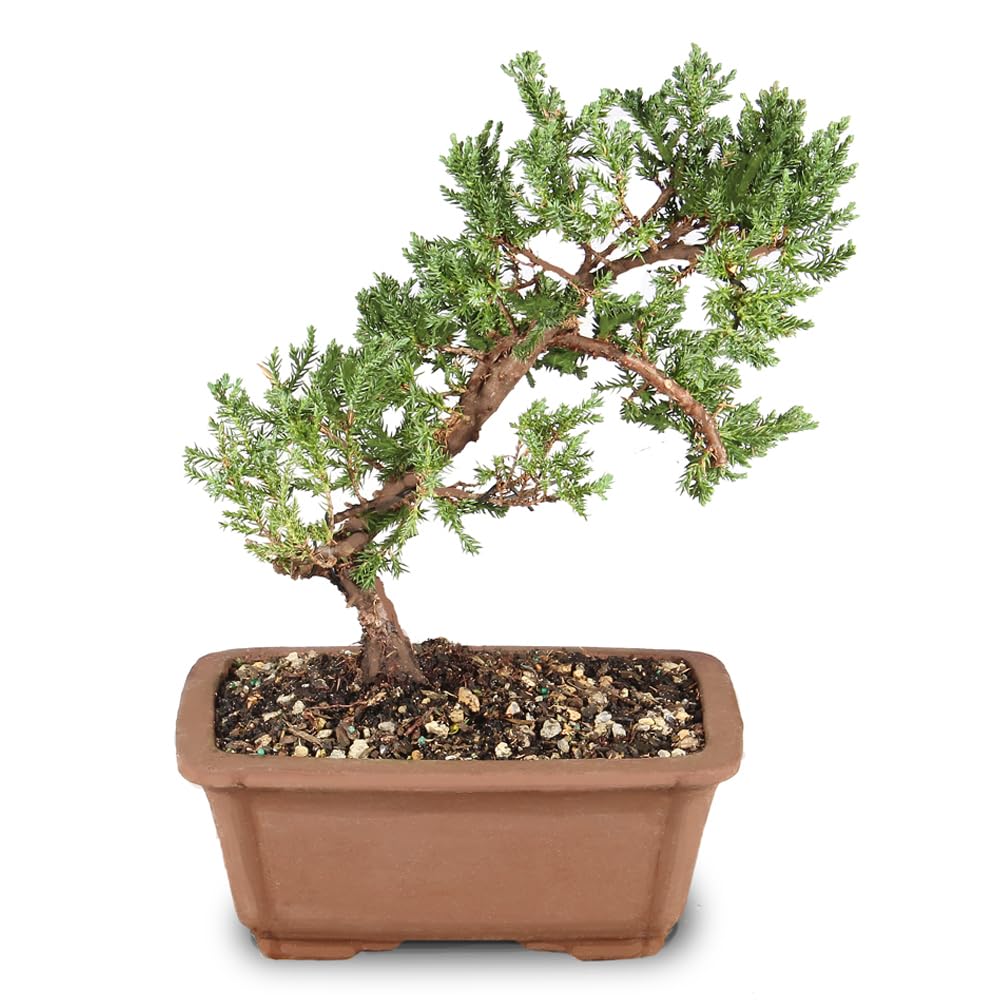
This juniper suits anyone with a patio or balcony who wants a hardy outdoor bonsai that doesn’t demand daily attention.
Pros
- Hardy across USDA zones 4 through 8
- Moderate watering needs, well suited to a weekly outdoor routine
- Dense, classic bonsai shape out of the box
Cons
- Must stay outdoors; it will decline indoors
- Ceramic pot adds weight and fragility during shipping
- Not ideal for renters without outdoor space
Green mound juniper is built for outdoor exposure, and it actually needs seasonal changes in temperature to stay healthy, unlike tropical indoor bonsai. Reviewers describe it arriving larger and sturdier than expected, with one calling it “extremely durable” after months on a patio table. The tradeoff is firm: this tree cannot live indoors long-term, so it only fits readers with a porch, balcony, or yard.
Brussel’s Hawaiian Umbrella Bonsai
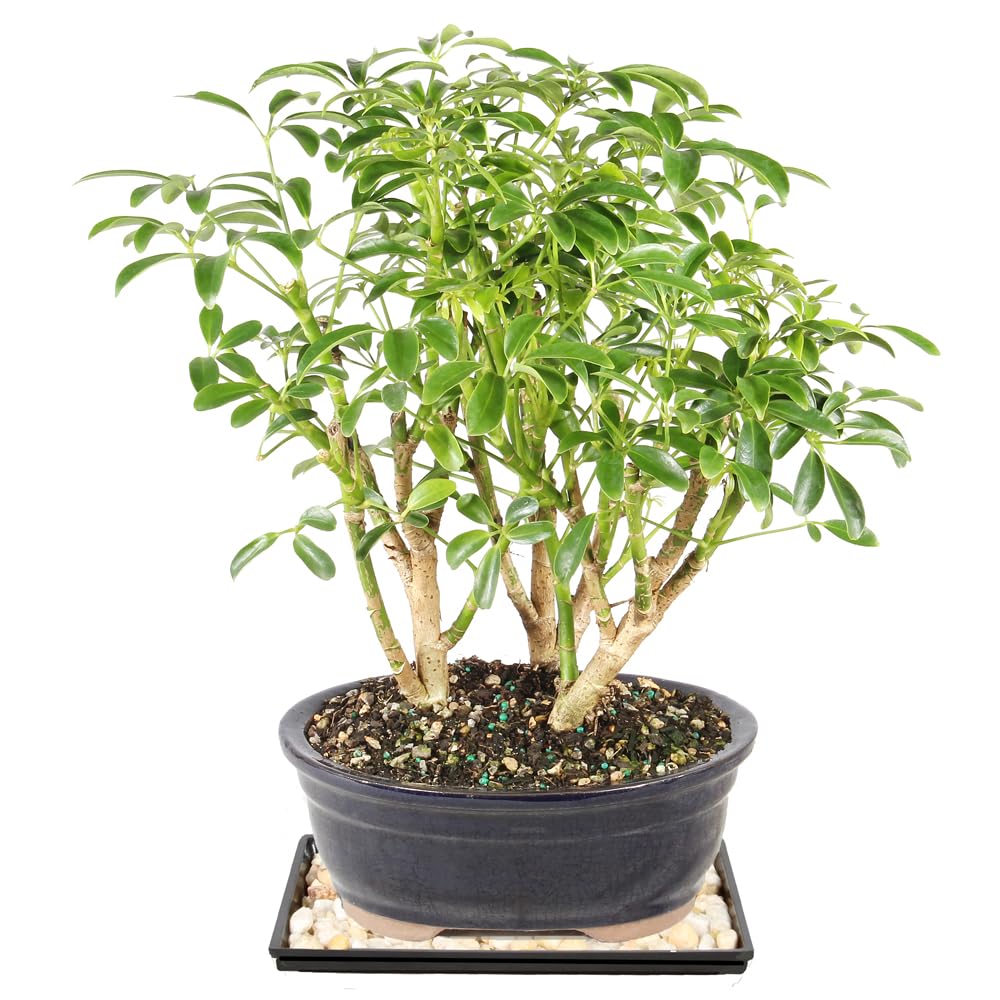
This is the pick for gift shoppers who want a bonsai that looks finished and impressive without any assembly.
Pros
- Ships with humidity tray, decorative rocks, and ceramic pot included
- Exposed root system gives it a dramatic, mature look
- Beginner-friendly with moderate watering needs
Cons
- Sensitive to cold shipping conditions
- Branches can snap in transit
- Needs steady indoor warmth (65-72°F) to thrive
The Hawaiian Umbrella’s glossy, umbrella-shaped canopy makes it feel more like a finished piece than a project. It’s genuinely low-maintenance once settled, tolerating moderate watering and partial shade better than many indoor species. A couple of reviewers reported frost damage or a snapped branch on arrival, so unboxing carefully and checking the soil moisture right away matters here. For a desk centerpiece or a thoughtful gift, it delivers more visual payoff than its size suggests.
Avergo Deluxe 5-Tree Bonsai Kit

This kit fits readers who want a slow-growing hobby rather than an instant tree, with five species to experiment with at once.
Pros
- Includes soil, tools, and five seed varieties in one box
- Extra seed packets improve odds of germination
- Well-organized presentation, good as a gift
Cons
- Germination rates vary, some buyers got only one sprout per five
- Results take weeks to months, not an instant display
- Requires ongoing attention during the sprouting phase
This is a seed kit, not a live tree, so patience is part of the deal. Several reviewers loved the process, calling it “satisfying” and “therapeutic,” while others saw inconsistent sprouting across the five seed types. It’s a rewarding weekend project for someone who wants to grow something from scratch, but it is not the choice for anyone wanting bonsai charm this month.
Planters’ Choice Bonsai Starter Kit

This budget kit works well as a low-cost way to test whether growing bonsai from seed is a hobby worth pursuing.
Pros
- Includes four tree species, pots, soil disc, and pruning shears
- Affordable entry point for a growing project
- Clear instruction booklet included
Cons
- Germination is inconsistent across seed types
- Some buyers received missing or underperforming seed packets
- Slow growth requires weeks of patience before results show
This 15-piece kit covers the basics: burlap pots, a soil disc, bamboo markers, and shears. Reviews are mixed on germination success, with some growers getting strong results and others seeing few seeds sprout at all. Customer service reportedly replaces missing seed packets on request. As a low-stakes way to try growing bonsai from scratch, it’s an inexpensive starting point rather than a guaranteed win.
Avergo Jacaranda Bonsai Starter Kit
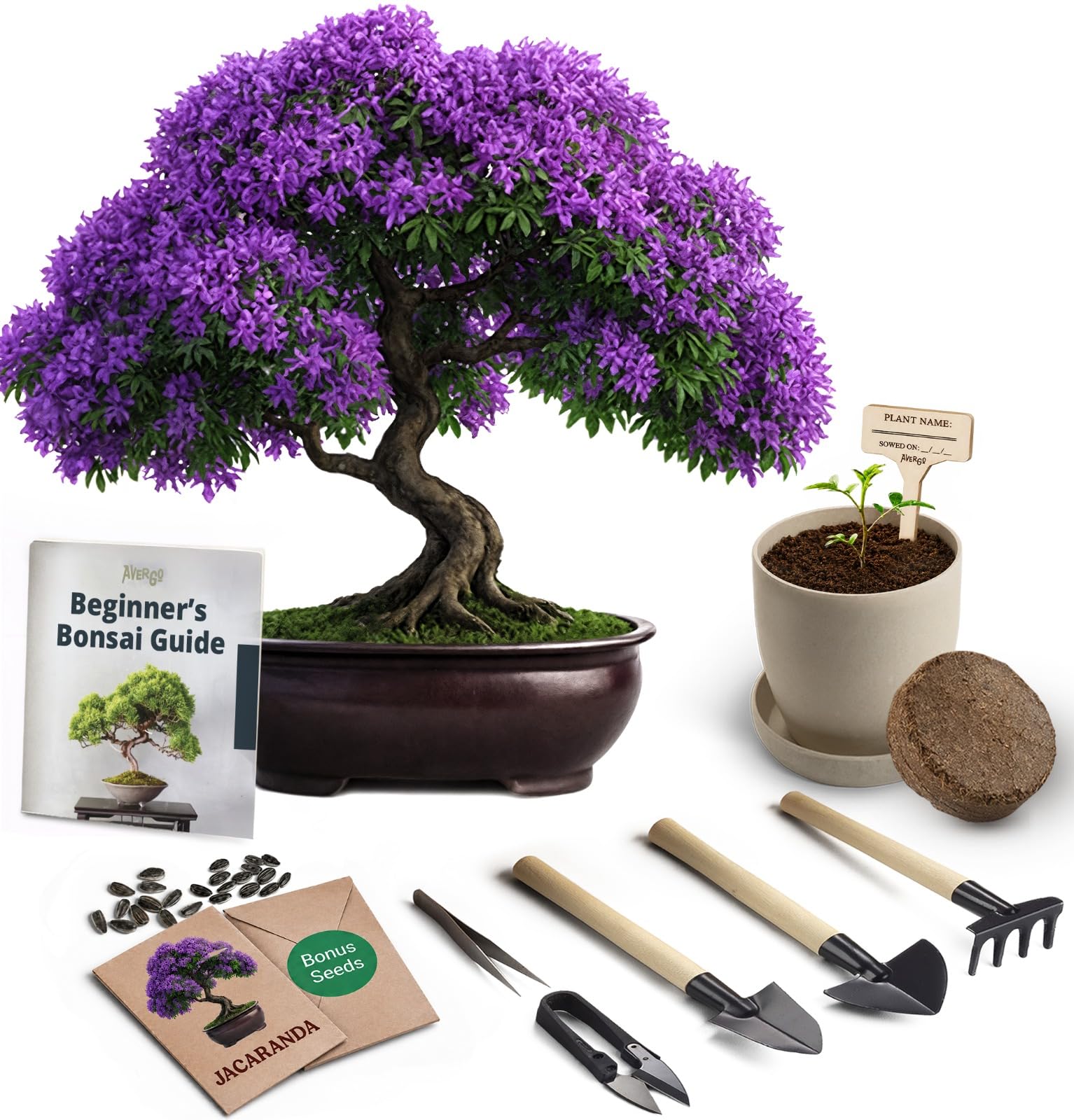
This single-species kit suits someone who wants to focus on growing one striking purple-flowering tree instead of juggling five varieties at once.
Pros
- Focused on one species, simpler than multi-tree kits
- Bonus seed packets included for backup attempts
- Comes with planter, tools, and soil in one box
Cons
- A few buyers reported the included pot cracking or breaking
- Germination still takes patience and isn’t guaranteed
- Not a finished tree; still a from-seed project
The Jacaranda’s purple bloom potential makes this kit appealing as a gift, though it comes with the same seed-based unpredictability as any growing kit. A handful of reviews mention the ceramic pot arriving cracked or breaking after delivery, which is worth noting before gifting it fragile-side-up. For a focused, single-species project with a distinctive payoff, it’s a reasonable pick, just don’t expect a tree overnight.
Handcrafted Dwarf Juniper Bonsai
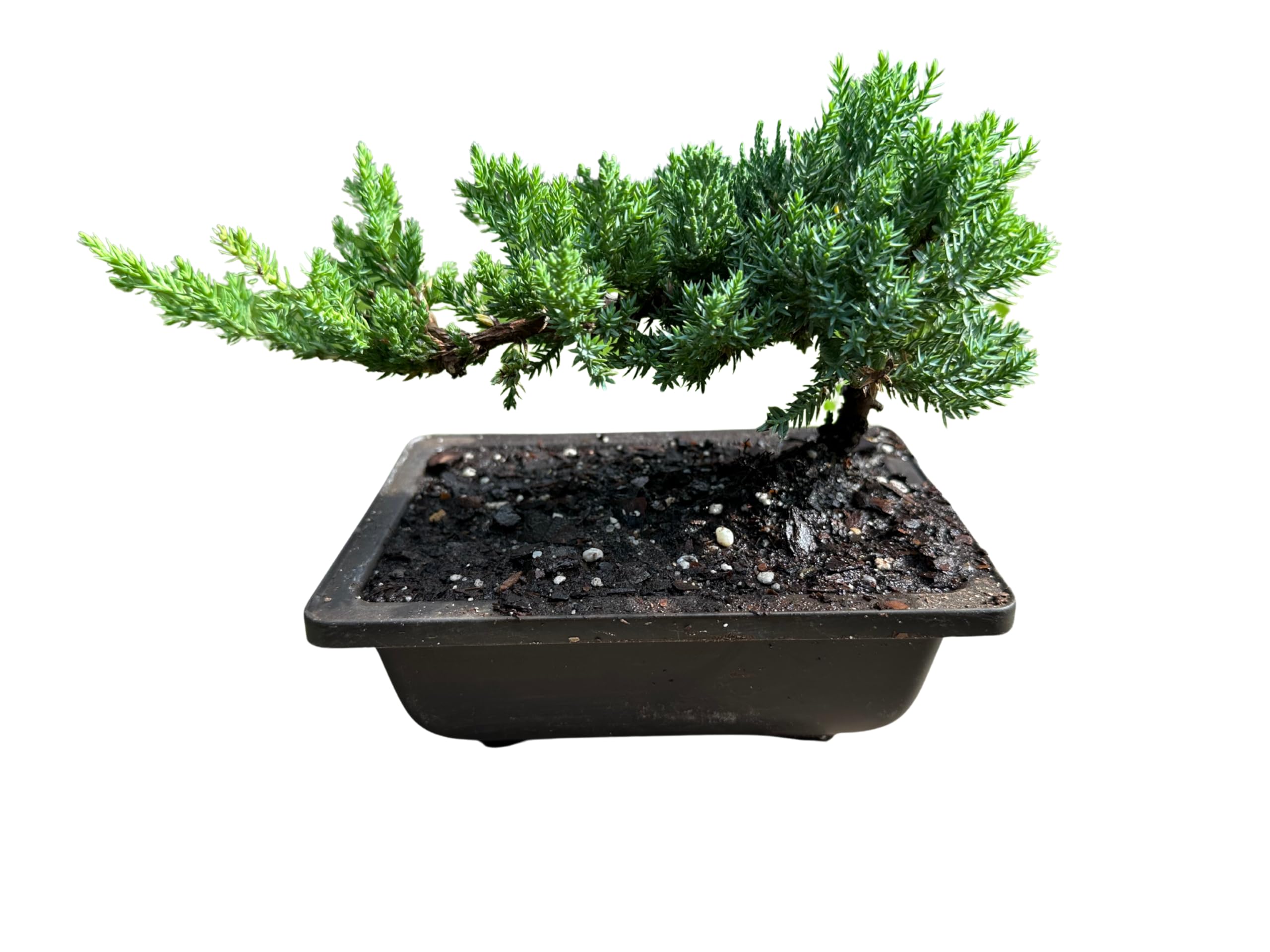
This hand-shaped juniper is a solid outdoor option for owners who want a real bonsai without fussy indoor light requirements.
Pros
- Hand-trimmed shape gives each tree a distinct look
- Hardy outdoor species tolerant of seasonal dormancy
- Ships in a nursery pot ready for repotting later
Cons
- Requires outdoor placement, not suitable indoors long-term
- Needs twice-daily watering in summer
- Small size (7″D x 4″W x 6″H) limits visual impact
This juniper ships in a plain plastic nursery pot rather than a decorative container, which keeps the cost down but means buyers who want a finished look will need to repot it themselves. Reviewers consistently mention it arriving healthy despite long shipping distances. Summer watering twice a day is more hands-on than some other outdoor picks, so it fits owners with a consistent morning-and-evening routine rather than frequent travelers.
Briful Artificial Juniper Bonsai

This faux bonsai delivers the look of a mature tree with zero watering, light, or pruning requirements at all.
Pros
- No watering, sunlight, or maintenance needed
- Realistic foliage detail praised by multiple reviewers
- Includes a ceramic pot, ready to display
Cons
- Higher price than comparable faux plants
- Foliage looks slightly less realistic up close to some buyers
- No option to grow or shape it over time
For anyone who travels often or simply doesn’t want a living plant to manage, this artificial juniper checks the visual boxes without any of the upkeep. Reviewers frequently describe it as more realistic than expected, with sturdy construction and a well-made ceramic pot. It costs more than most faux plants in this size range, so it’s best suited to someone prioritizing appearance over budget.
Yoerm Faux Bonsai Tree

This is a budget-friendly artificial bonsai for anyone who wants greenery on a shelf without spending much or doing any upkeep.
Pros
- No care requirements whatsoever
- Affordable compared to other faux bonsai options
- Bendable branches allow some shape adjustment
Cons
- Looks noticeably artificial up close to some reviewers
- Base can feel lightweight or unstable
- Mixed feedback on overall build quality
Reviews on this one split fairly evenly between buyers happy with the price-to-look ratio and others who found it cheap-looking up close. It works fine as a background accent piece from a few feet away, less so as a close-up centerpiece. For a low-cost way to add a bonsai silhouette to a shelf or desk without any watering commitment, it does the basic job.
Buying Guide
Choosing a bonsai suited to a busy life comes down to matching the tree’s needs to your actual routine, not the fantasy of daily pruning sessions.
Living Tree or Alternative
Decide upfront whether you want a real plant, a growing project, or a decorative substitute. Living trees need light and consistent watering. Seed kits need weeks of patience before anything resembles a tree. Artificial bonsai need nothing beyond occasional dusting.
| Option | Time Commitment | Care Skill Needed | Instant Visual Payoff |
|---|---|---|---|
| Mature live bonsai | Weekly watering, occasional pruning | Low to moderate | Yes |
| Growing kit from seed | Daily attention during germination | Low, but patience-heavy | No, takes weeks to months |
| Artificial bonsai | Occasional dusting | None | Yes |
Indoor vs. Outdoor Species
Tropical species like ficus and Hawaiian umbrella thrive indoors near a bright window. Juniper and pine species are outdoor plants that need seasonal temperature shifts to stay healthy; keeping them indoors long-term causes decline. Check the species before buying based on where you actually plan to place it.
Watering Tolerance
Some species forgive a missed watering day better than others. Ficus tends to tolerate drying out between waterings more than junipers, which prefer consistent moisture. If travel is frequent, prioritize species known for drought tolerance over those needing daily watering.
Light Requirements
Bonsai trees need bright, indirect light at minimum, and many indoor varieties do best near an east- or south-facing window. Low-light rooms will cause thinning foliage over time regardless of watering habits.
Setup and Delivery Condition
Live trees ship as fragile cargo. Look for confirmation of protective packaging and a satisfaction window in case a tree arrives damaged or stressed from transit. Pots, especially ceramic ones, are the most common casualty during shipping.
Editor’s Choice
The Brussel’s Bonsai Golden Gate Ficus stands out as the best overall pick for busy beginners. It arrives as an established, attractive tree rather than a project, tolerates a missed watering day better than most bonsai species, and fits comfortably on a desk or windowsill without demanding outdoor space.
For readers who travel often or know they won’t keep up with watering at all, the Briful Artificial Juniper Bonsai is the more realistic long-term match. It skips every care requirement while still delivering a convincing, detailed look on a shelf or table.
Conclusion
A bonsai tree can fit a packed schedule as long as the species and format match the amount of attention available. Living trees like the Golden Gate Ficus or Hawaiian Umbrella reward light watering and a bright window with minimal fuss, while outdoor junipers ask for a patio and a seasonal rhythm rather than daily indoor care. Seed kits offer a genuine growing hobby for anyone with patience for slow progress, and artificial bonsai remove the guesswork entirely for those who want the look without any living plant to manage. Pick based on how much time you actually have each week, not how much time you wish you had.
FAQS
Can a bonsai tree survive with minimal care? Most bonsai still need regular light exposure and a consistent watering check, even the low-maintenance varieties. Ficus and juniper species tolerate occasional missed waterings better than most, but none survive total neglect.
Do indoor bonsai trees need direct sunlight? They need bright, indirect light rather than harsh direct sun for most of the day. A spot near an east- or south-facing window works well for species like ficus and Hawaiian umbrella.
How long does it take to grow a bonsai from a seed kit? Germination typically starts within one to three weeks, but developing a tree with real bonsai shape takes months to years. Seed kits suit hobbyists who want the process, not an instant tree.
Is an artificial bonsai a good alternative to a live tree? Artificial bonsai work well for anyone who wants the visual appeal without any watering, light, or pruning requirements. Quality varies by product, with pricier options offering more realistic foliage detail.
Which bonsai species is easiest for a first-time owner? Ficus varieties, including the Golden Gate Ficus, are commonly recommended for beginners because they tolerate indoor conditions and inconsistent watering better than many other species.