How to Clean a Bonsai After Pest Infestation

Quick Answer
To clean a bonsai after pest infestation, isolate the tree, remove visible insects and fallen debris, gently rinse foliage when the species tolerates it, and clean the pot and surrounding growing area. Follow up with a pest-specific treatment if needed, then inspect the tree regularly until no active infestation remains. For additional guidance, consult this guide to bonsai pests and diseases.
Cleaning steps that protect your bonsai
- Isolate first: Move the affected tree away from healthy bonsai and other susceptible plants.
- Inspect carefully: Check leaf undersides, branch junctions, bark crevices, shoot tips, and the soil surface.
- Remove pests: Hand-pick visible insects or use a gentle water rinse when appropriate for the species.
- Clear residue: Remove loose leaves, dead insects, sticky honeydew, and accessible debris without scraping healthy bark.
- Clean equipment: Wash the pot exterior, bench, tools, and reusable equipment before using them on other trees.
- Monitor recovery: Recheck the bonsai weekly or more frequently when the pest requires close monitoring, and repeat treatment only as directed by the product label.
One important precaution
- Don’t automatically replace the soil, strip damaged foliage, or apply several pesticides at once. Cleaning should remove contamination without adding unnecessary stress to an already weakened tree.
A pest infestation can leave a bonsai covered in sticky residue, damaged leaves, fine webbing, or tiny insects hidden in the branches. Knowing how to clean a bonsai after pest infestation helps restore a healthier growing environment while reducing the risk of another outbreak.
I’ll walk through the cleaning process, explain which methods suit different pests, and show you how to protect the tree during recovery. The goal is a clean bonsai, healthy roots, and a growing space where pests are less likely to return.
In This Guide
- 1. Identify the pest and prepare the bonsai for cleaning
- 2. How do you clean a bonsai after pest infestation?
- 3. Which cleaning method works for each bonsai pest?
- 4. How do you clean the pot, tools, and growing area?
- 5. How do you help a bonsai recover after cleaning?
- 6. How can you prevent another pest infestation?
- Frequently asked questions
1. Identify the pest and prepare the bonsai for cleaning

Before cleaning a bonsai, identify the likely pest and determine where it lives. Different pests leave different signs, and the correct cleaning method depends on the tree species, the infestation, and the damage already present.
What signs should you look for?
Start with a close inspection in good light. A hand lens with approximately 10× magnification can reveal small insects, mite activity, and details that are difficult to see with the naked eye.
- Aphids: Small clusters of insects on soft shoots, curled leaves, and sticky honeydew.
- Spider mites: Fine webbing, pale speckling, and bronzed or dull foliage.
- Scale insects: Fixed brown, gray, or pale bumps on stems and leaves, sometimes accompanied by sticky residue.
- Mealybugs: White, cotton-like deposits around leaf joints, branch crotches, and sheltered growth.
- Fungus gnats: Small dark flies around moist growing medium, with larvae potentially present in the soil.
These signs are clues rather than absolute proof. Leaf discoloration can also result from poor watering, root damage, unsuitable light, or disease.
How should you prepare the tree?
Move the bonsai away from your collection before disturbing the insects. Keep its foliage from touching neighboring plants, and use a separate work surface when possible.
Gather a few simple supplies before starting:
- A hand lens and a clean, soft brush.
- A small container for removed debris.
- A gentle water source or clean spray bottle.
- Clean cotton swabs for carefully targeted removal where appropriate.
- A clean cloth and suitable tool-cleaning supplies.
Take a photograph of the affected branches before cleaning. This gives you a useful reference when checking whether fresh damage or new insects appear later.
Also consider the species. A tropical ficus bonsai, a delicate Japanese maple, and a juniper don’t necessarily tolerate the same water pressure, handling, or chemical treatment.
Section takeaway: Identify the likely pest, isolate the tree, and prepare clean equipment before removing anything. Accurate identification prevents unnecessary treatments and reduces the risk of spreading pests.
2. How do you clean a bonsai after pest infestation?
Clean a pest-infested bonsai from the foliage outward, then deal with the pot and surrounding area. Remove loose contamination first, rinse only when suitable, and avoid aggressive work that could damage healthy growth.
Step 1: Remove loose leaves and visible insects
Pick up fallen leaves, dead insects, and loose debris from the soil surface. Use your fingers or a soft brush to remove accessible material without disturbing the roots or scraping the bark.
Remove individual insects by hand when practical. For example, aphids on a sturdy shoot can often be dislodged gently, while visible mealybugs may be lifted away with a damp cotton swab.
Don’t pull healthy leaves or break fine twigs just to reach a hidden insect. A weakened bonsai needs careful handling.
Step 2: Rinse the foliage when appropriate
A gentle water rinse can remove exposed aphids, spider mites, honeydew, dust, and other loose residue. Direct the water toward affected areas, especially leaf undersides and sheltered branch junctions.
Use enough pressure to dislodge debris without tearing leaves, stripping needles, or damaging delicate new growth. Protect the soil surface if rinsing would wash out the growing medium or saturate an already wet root ball.
For species that tolerate overhead watering, a thorough rinse may help reduce exposed pests. Avoid soaking sensitive foliage or leaving moisture trapped in dense growth for extended periods.
Step 3: Remove sticky honeydew and surface residue
Honeydew is a sugary substance produced by some sap-feeding insects, including aphids and soft scale. It makes foliage sticky and can encourage dark sooty mold to grow on the surface.
Use clean water and a soft cloth or gentle rinse to remove accessible residue from suitable foliage. Work carefully around buds, fine twigs, and textured bark.
Don’t confuse natural bark texture, lichens, or old scars with pests. Scraping mature bark can cause lasting damage without improving the tree’s health.
Step 4: Remove heavily infested material selectively
Pruning may be justified when a small, heavily infested section cannot be cleaned effectively. However, removing large amounts of foliage can weaken a bonsai that is already under stress.
- Remove only clearly affected material that can be spared.
- Use clean, sharp tools suited to the branch size.
- Collect discarded plant material immediately and dispose of it securely.
- Clean the cutting tools before moving to another tree.
Pro tip: If removing a branch would alter the tree’s structure or involve substantial live wood, consult an experienced bonsai grower or local bonsai club before cutting.
Step 5: Apply a targeted treatment if necessary
Cleaning alone may not eliminate an established infestation. Eggs, protected scale insects, soil-dwelling stages, and pests hidden in tight branch junctions can survive an initial rinse.
If further control is needed, choose a product specifically labeled for the pest and the plant type. Follow its dilution, coverage, temperature, and repeat-application instructions exactly.
Test a small area when the label permits and the species is sensitive. Don’t apply horticultural oil or insecticidal soap to a heat-stressed tree or in conditions prohibited by the label.
Never assume household dish detergent is a safe substitute for formulated insecticidal soap. Ordinary detergents can damage the protective surface of leaves.
Section takeaway: Remove visible pests and residue gently, then use a suitable targeted treatment when necessary. The objective is to reduce the infestation without creating a second problem through excessive washing, pruning, or chemicals.
“`html
3. Which cleaning method works for each bonsai pest?
The best cleaning method depends on where the pest lives and how it feeds. Washing exposed insects works for some infestations, while pests protected by waxy coverings or hidden in the growing medium require a more targeted approach.
Use this comparison to choose a sensible starting point rather than treating every infestation the same way.
| Pest | Cleaning approach | What to monitor |
|---|---|---|
| Aphids | Gently rinse affected shoots and remove accessible colonies. | New colonies, curled leaves, and honeydew. |
| Spider mites | Rinse suitable foliage and use a treatment labeled for mites when necessary. | Fine webbing and fresh leaf speckling. |
| Scale insects | Carefully remove accessible insects and clean honeydew. | Newly settled scales and mobile crawlers. |
| Mealybugs | Lift visible insects with a suitable swab and inspect sheltered joints. | Fresh white deposits around nodes and roots. |
| Fungus gnats | Remove decaying debris and correct persistently excessive soil moisture. | Adult flies, larvae, and prolonged wetness. |
How should you clean a bonsai with scale or mealybugs?
Scale insects and mealybugs can hide in places that water alone won’t clean. Inspect branch unions, leaf joints, the undersides of leaves, and crevices where branches emerge.
Remove accessible insects carefully, then use a suitable labeled treatment if the infestation persists. Some scale insects have protective coverings, so a single application may not control every life stage.
For additional diagnostic guidance, the University of California’s integrated pest management guidance explains common houseplant pest symptoms and management options.
What if pests are living in the soil?
Don’t automatically remove the growing medium after finding insects near the pot. Some pests live on foliage, while others have life stages in the soil or feed on roots.
For fungus gnats, allow the surface of the growing medium to dry appropriately between waterings without letting the bonsai’s root ball become dangerously dry. For suspected root-feeding pests, inspect drainage holes and seek species-specific advice before disturbing the roots.
**Section takeaway:** Match the cleaning method to the pest’s location and life cycle. A clean-looking canopy doesn’t prove that soil-dwelling or concealed pests have disappeared.
4. How do you clean the pot, tools, and growing area?
Cleaning the bonsai itself is only part of sanitation after an infestation. The pot exterior, bench, nearby surfaces, and reusable equipment can retain insects, eggs, or contaminated plant debris.
Clean the pot without disturbing the roots
Remove loose leaves and debris from the soil surface, pot rim, and drainage area. Wipe the exterior with a clean damp cloth, taking care not to scrub decorative finishes or fragile ceramic surfaces.
Keep cleaning water and removed insects away from neighboring pots. Don’t pour dirty rinse water over healthy trees or reuse it for watering.
Avoid flooding the soil simply to wash the pot. Excess moisture can create root problems, particularly in a shallow container with poor drainage.
Disinfect reusable tools safely
Pruning scissors, tweezers, brushes, and other reusable equipment should be cleaned before moving from an infested bonsai to another plant. First remove visible soil, plant sap, and debris.
- Wash tools with an appropriate cleaning method to remove dirt and organic material.
- Use a suitable disinfectant according to its directions when sanitation is needed.
- Allow tools to dry when required, and protect metal blades against corrosion.
- Keep cleaning cloths and pest-removal supplies separate from those used on healthy plants.
Remember that cleaning and disinfection aren’t identical. Removing dirt helps make a surface cleaner, while a suitable disinfectant can reduce certain microorganisms when used correctly.
For ordinary insect infestations, preventing the transfer of insects and plant debris is especially important. Don’t assume that spraying a tool with any household chemical automatically makes it safe for plants.
Clean the surrounding bench or shelf
Remove fallen leaves, dead insects, old plant material, and standing water from the growing area. Wash the surface with an appropriate cleaner, then use a suitable disinfectant when the situation warrants it.
Check neighboring pots individually rather than treating the entire collection blindly. Pay particular attention to trees that shared close foliage contact or were handled with the same equipment.
If the bonsai stood indoors, inspect the windowsill, plant stand, and nearby plants. Outdoors, check the bench, pot supports, and sheltered areas where debris collects.
Section takeaway: Sanitize the immediate growing area and reusable tools, not just the foliage. This reduces opportunities for pests to spread while avoiding unnecessary chemical use.
5. How do you help a bonsai recover after cleaning?
After cleaning, a bonsai needs stable, species-appropriate care rather than a sudden burst of pruning, fertilizer, or watering. Recovery means restoring normal growing conditions while confirming that the infestation is under control.
How should you water a recovering bonsai?
Water according to the tree’s species, growing medium, weather, and root-ball moisture. A bonsai with fewer leaves may use less water than it did before the infestation.
Check the soil before watering and allow excess water to drain freely. Don’t keep the root zone constantly wet because the tree looks weak.
Junipers, pines, Japanese maples, and tropical ficus have different growing requirements. Maintain the conditions appropriate for your particular tree instead of following a universal watering schedule.
Should you fertilize or prune immediately?
A stressed bonsai doesn’t automatically need extra fertilizer. Wait until its condition stabilizes and resume feeding according to its species, growing season, and normal care requirements.
Light sanitation pruning may be appropriate for dead or severely infested material, but avoid major styling work during recovery. Extensive pruning, wiring, and repotting can add stress that the tree doesn’t need.
Pro tip: Before cutting valuable live branches or undertaking major root work, consult an experienced bonsai grower or local bonsai club. Irreversible work deserves careful consideration, especially when a tree is weakened.
How long should you keep the bonsai isolated?
Keep the tree in quarantine until repeated inspections show no active infestation and any necessary treatment cycle is complete. Two to three weeks after the last observed pest activity can serve as a practical starting point, but some infestations require longer.
Check the foliage, branches, and surrounding area at least weekly. Inspect more frequently when the pest’s life cycle or treatment instructions call for it.
Use these signs to judge progress:
- Encouraging: No new insects, webbing, honeydew, or fresh feeding damage.
- Encouraging: Buds and new shoots develop normally for the species and season.
- Concerning: New colonies appear or sticky residue returns.
- Concerning: Branch dieback continues or the tree’s condition deteriorates despite pest control.
Old damaged leaves may never regain their original appearance. Judge recovery by the absence of new damage and the tree’s ongoing growth, not by expecting every affected leaf to look perfect.
Section takeaway: Keep care steady, monitor repeatedly, and avoid unnecessary interventions. The bonsai should return to normal collection conditions only after you have good evidence that the infestation is controlled.
6. How can you prevent another pest infestation?
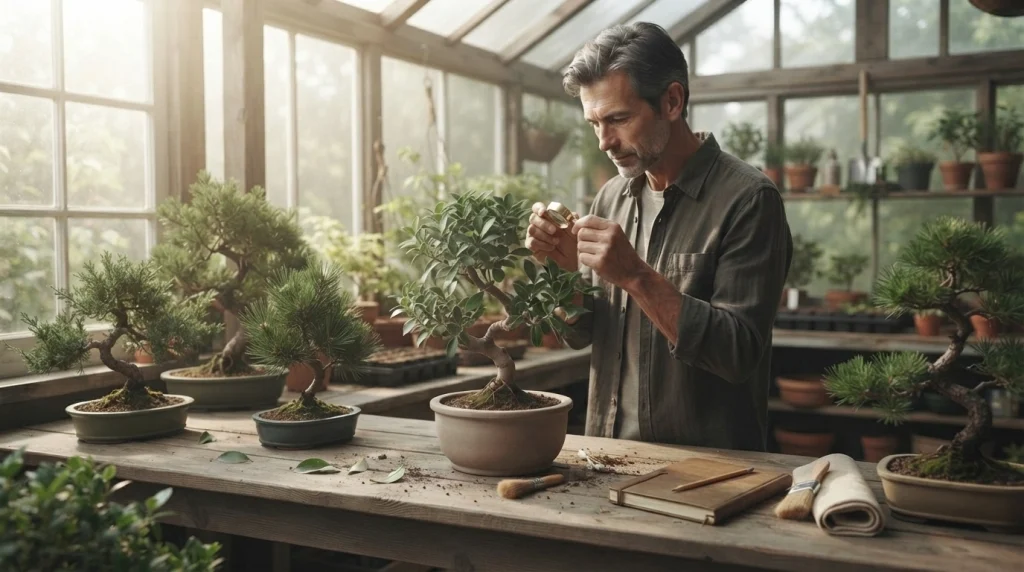
Regular inspection, good growing conditions, and clean handling practices are the foundation of bonsai pest prevention. These habits help you detect new problems early, when physical removal or targeted treatment may be easier.
Build a simple inspection routine
Inspect your bonsai at least weekly during periods of active growth or when pest pressure is high. During each check, examine the areas where pests commonly hide.
- Look underneath leaves and around new shoots.
- Check branch junctions and rough bark for unusual bumps or cotton-like material.
- Look for webbing, sticky residue, and fresh leaf damage.
- Check the soil surface and drainage holes when soil-dwelling pests are suspected.
- Record the date, symptoms, and treatment so you can identify recurring patterns.
Maintain suitable growing conditions
Healthy growing conditions help a bonsai tolerate stress, although even well-maintained trees can develop pests. Match light, watering, airflow, and seasonal care to the species.
Avoid crowding branches from neighboring plants together. Crowding can make inspection harder and may allow some pests to spread more easily.
Don’t rely on frequent pesticide applications as a substitute for monitoring. Use targeted products when justified, and follow the label rather than spraying automatically.
Quarantine newly acquired trees
Keep new bonsai separate from your established collection for several weeks and inspect them before introducing them to the same growing area. A tree can carry inconspicuous pests even when it looks healthy at first glance.
Continue checking recently treated trees after they return to the collection. Early detection is easier than cleaning several pots after an infestation spreads.
Section takeaway: Prevention depends on routine observation, appropriate care, and quarantine. A few careful checks each week can help you catch problems before they become difficult to manage.
Frequently asked questions
Can I wash my bonsai with plain water after a pest infestation?
Yes, a gentle rinse with plain water can remove many exposed insects and surface residues from bonsai species that tolerate it. Direct water toward affected areas without damaging delicate foliage or washing away the growing medium. Water alone may not eliminate protected pests or eggs.
Should I change the soil after finding pests on my bonsai?
No, not automatically. Many common bonsai pests live on leaves and branches, so changing the soil may add unnecessary root stress. Consider soil replacement only when a root-associated pest, serious drainage problem, root disease, or another justified reason calls for it.
Can I use dish soap to clean an infested bonsai?
Avoid using ordinary dishwashing detergent as a homemade pesticide. Detergents can damage leaf surfaces and may injure sensitive species. If chemical control is necessary, choose an insecticidal soap labeled for the target pest and intended plant use, and follow all directions.
How often should I inspect a bonsai after pest treatment?
Inspect the bonsai at least weekly during recovery, and check more frequently when the pest or treatment instructions require it. Look for fresh insects, webbing, honeydew, or new feeding damage. Continue monitoring after visible pests disappear because hidden stages may remain.
Should I keep my bonsai in the shade after cleaning?
Not necessarily. Maintain the light conditions appropriate for the species unless a treatment label requires temporary protection from sunlight. Avoid abrupt environmental changes, and protect sensitive foliage from heat or spray-related injury while the tree recovers.
How do I know whether the infestation is completely gone?
No single inspection can guarantee that every pest has disappeared. Repeatedly check the foliage, stems, branch junctions, soil, and surrounding area for new activity. Return the tree to your collection only after inspections remain clear and any required treatment cycle is complete.
Can a bonsai die after a pest infestation even if I clean it?
Yes, a severe infestation can leave extensive leaf damage, sap loss, or root injury that continues to affect the tree after cleaning. If dieback progresses, foliage deteriorates rapidly, or the roots show signs of serious problems, seek species-specific advice from an experienced grower or horticultural specialist.
Final takeaway: Clean carefully and keep monitoring
Learning how to clean a bonsai after pest infestation means more than rinsing its leaves. You must remove visible pests and residue, sanitize the immediate growing area, use appropriate treatment when necessary, and protect the tree from further stress.
Keep the bonsai isolated while you monitor its recovery. Maintain normal species-specific care, avoid unnecessary pruning or repotting, and return the tree to your collection only when repeated inspections show that the infestation is under control.
Start with a careful inspection today. A clean environment and a consistent monitoring routine give your bonsai a better chance of recovering and staying healthy.