How to Disinfect Bonsai Tools After Disease

Quick Answer
To disinfect bonsai tools after disease, remove all sap, soil, and infected plant debris before treating the cutting surfaces with a suitable disinfectant. For small tools such as bonsai shears and concave cutters, 70% isopropyl alcohol is a convenient option for many routine situations, although some plant pathogens require a different treatment. Follow the product’s contact-time instructions, protect the metal from corrosion, and clean your tools before using them on another tree.
Essential disinfection steps
- Remove debris: Brush away soil, bark fragments, sap, and visible diseased tissue.
- Choose carefully: Use an appropriate disinfectant that is effective against the suspected pathogen.
- Cover every surface: Wet the blades, pivot, and other exposed areas that may have contacted infected material.
- Respect contact time: Keep surfaces wet for the period specified on the product label.
- Protect the metal: Rinse when the product instructions require it, dry thoroughly, and lubricate moving joints as needed.
- Prevent reinfection: Disinfect between infected trees and, when necessary, between cuts on the same tree.
One important precaution
- Disinfecting tools reduces the risk of spreading pathogens, but it doesn’t cure an infected bonsai or guarantee complete disease control. Identify the likely disease and remove contaminated debris safely.
Learning how to disinfect bonsai tools after disease helps protect healthy trees and keeps an infected plant from becoming a source of further problems. I consider tool hygiene an essential part of bonsai care, especially when pruning diseased branches or working with valuable trees.
In this guide, I’ll explain how to clean different bonsai tools, choose an appropriate disinfectant, avoid damaging delicate cutting edges, and establish a practical routine for disease prevention.
In This Guide
- Why should you disinfect bonsai tools after disease?
- How do you disinfect bonsai tools step by step?
- Which disinfectant is best for bonsai tools?
- How should you disinfect different bonsai tools?
- What mistakes should you avoid when disinfecting tools?
- How can you prevent disease from spreading between bonsai trees?
- Frequently asked questions
Why should you disinfect bonsai tools after disease?
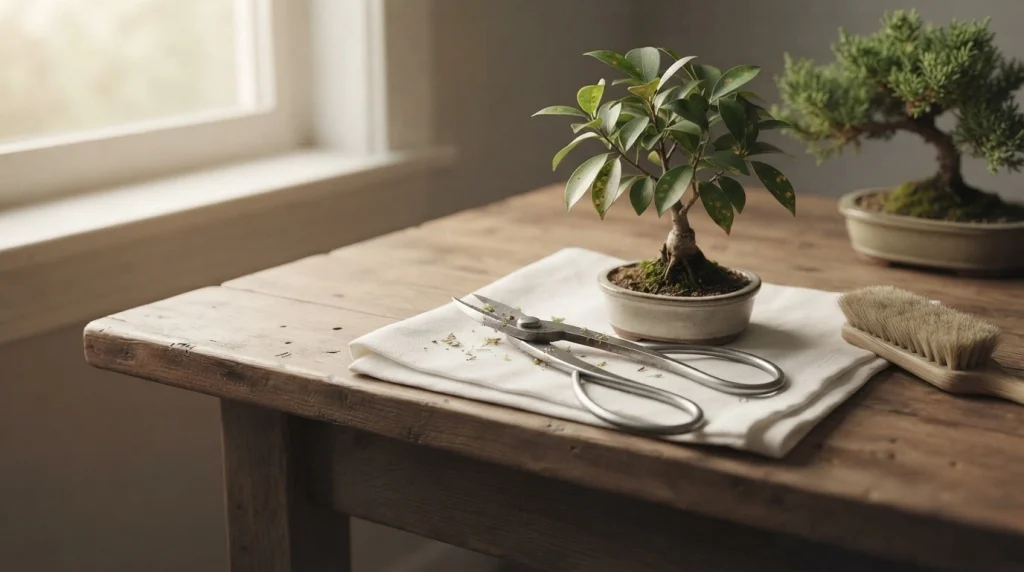
Disinfecting bonsai tools reduces the chance of transferring certain disease-causing organisms from an infected tree to healthy plant tissue. This matters because pruning blades can carry contaminated sap, plant fragments, or other residues from one cut to another.
How can contaminated tools spread plant disease?
Some fungal and bacterial pathogens can move with contaminated plant material, while certain viruses can spread through infected sap or contaminated cutting equipment. The actual risk depends on the pathogen, the tree species, and how the tools are used.
For example, if you prune a branch showing suspicious lesions on a ficus bonsai and immediately cut healthy growth on another ficus, you could transfer contaminated material between the plants. Cleaning and disinfecting the tool between them helps reduce that risk.
Tool sanitation is only one part of disease management. Insects, contaminated soil, splashing water, infected roots, and unsuitable growing conditions can also contribute to disease problems.
Which bonsai problems make disinfection especially important?
Pay particular attention when you suspect a fungal, bacterial, or viral disease, especially when pruning visibly affected tissue. Common warning signs include unusual lesions, spreading branch dieback, cankers, discolored internal wood, and unexplained tissue collapse.
- Suspected bacterial disease: Disinfect tools carefully, particularly when cutting affected branches or tissues.
- Suspected fungal disease: Remove contaminated material and sanitize tools that contacted infected tissue.
- Suspected viral disease: Use a pathogen-appropriate disinfection method because ordinary cleaning may not inactivate every virus.
- Root or soil problems: Clean tools that contacted potentially contaminated roots, soil, or decaying material.
Don’t assume every yellow leaf or dying twig indicates an infectious disease. Watering errors, root damage, poor drainage, inadequate light, and seasonal changes can produce similar symptoms.
When the cause remains uncertain, consult a reliable plant-health resource such as University of Minnesota Extension’s tool sanitation guidance and seek a diagnosis before undertaking extensive pruning.
Section Takeaway: Disinfect tools when disease is suspected, but also investigate the underlying problem. Clean cutting equipment helps limit transmission; it cannot replace proper diagnosis and treatment.
How do you disinfect bonsai tools step by step?
The safest approach is to clean first, disinfect second, and protect the tool afterward. Dirt and plant residue can interfere with disinfectants, so applying a chemical directly to a dirty blade is not a reliable shortcut.
Step 1: Separate the infected tree from healthy trees
Stop pruning healthy bonsai with the tool that contacted infected tissue. If possible, keep the affected tree away from your other plants while you investigate the disease and remove affected material.
Prepare a separate work area for contaminated tools. Keep disinfectants, used wipes, and removed plant debris away from clean equipment and healthy trees.
Step 2: Remove sap, soil, and plant debris
Wear suitable gloves and remove visible debris using a disposable paper towel or a dedicated brush. Pay special attention to the cutting edges, blade joint, and areas where sap can accumulate.
- Wipe away loose plant material before applying any disinfectant.
- Use a brush to clear debris from serrations and crevices.
- For stubborn sap, use a cleaning method compatible with the tool’s metal and handle material.
- If you wash the tool with soap and water, dry it before applying a disinfectant that could be diluted by residual water.
Don’t use the same contaminated cloth on your clean tools. Dispose of single-use cleaning materials appropriately and clean reusable brushes after use.
Step 3: Apply a suitable disinfectant
Choose a product based on the suspected pathogen, the tool material, and the product’s label directions. For many routine situations, 70% isopropyl alcohol is convenient for small cutting tools, but its effectiveness is not universal.
Thoroughly wet the surfaces that contacted infected tissue. If the tool has a joint or a textured blade, make sure the disinfectant reaches those areas without flooding parts that the manufacturer says should remain dry.
Step 4: Allow the correct contact time
Contact time is the period a disinfectant must remain on a surface to work as directed. A quick wipe that dries immediately may not provide the exposure time required for the suspected pathogen.
Follow the product label rather than assuming every disinfectant needs the same treatment. Some products are intended for wiping, others for soaking, and some require a specific dilution or a rinse afterward.
Step 5: Rinse when required and dry completely
Follow the label’s instructions about rinsing. Products that leave corrosive residues may need to be rinsed from metal tools, while other products are designed to dry without rinsing.
Dry the blades and joints thoroughly with a clean cloth or allow them to air-dry as directed. Moisture left around the pivot can encourage corrosion and make a precision tool stiff.
Step 6: Lubricate and inspect the tool
Once the tool is clean and dry, apply a small amount of suitable tool oil to moving joints when needed. Keep oil away from surfaces that could transfer unwanted residue onto fresh cuts.
Inspect the cutting edges for rust, pitting, looseness, or damage. A blade that crushes or tears branches can injure bonsai tissue even when the tool is disinfected correctly.
Section Takeaway: Remove debris before disinfection, obey the product’s contact-time instructions, and finish by drying and maintaining the tool. These steps improve both disease control and tool longevity.
Which disinfectant is best for bonsai tools?
The best disinfectant is one that works against the suspected pathogen, suits your tool’s materials, and can be applied correctly. No single household product is guaranteed to eliminate every plant pathogen.
For everyday bonsai maintenance, 70% isopropyl alcohol is a practical option for many small tools. For a confirmed or particularly persistent disease, choose a method supported by reliable plant-health guidance.
70% isopropyl alcohol
Rubbing alcohol is useful for disinfecting small cutting surfaces between plants. It evaporates readily and generally leaves less corrosive residue than chlorine bleach.
- Use it on clean cutting surfaces, following appropriate safety precautions.
- Keep the surface wet for the contact time recommended for the intended use.
- Keep alcohol away from flames, sparks, and hot surfaces because it is flammable.
Alcohol is not effective against every plant pathogen under every condition. For example, some bacterial diseases require a different treatment, so don’t rely on alcohol alone when a specific pathogen calls for another method.
Household chlorine bleach
A properly diluted bleach solution can disinfect gardening equipment, but chlorine bleach is corrosive to metal. Repeated exposure may damage fine bonsai cutting edges, create pits, and shorten a tool’s useful life.
Some horticultural guidance uses a 1:9 ratio of household bleach to water, provided the starting product concentration matches the recommendation. Other guidance specifies different concentrations or contact times, so check the relevant instructions rather than treating every bleach product as interchangeable.
- Wear appropriate gloves and protect clothing and nearby surfaces.
- Never mix bleach with alcohol, acids, ammonia, or other cleaning products.
- Rinse metal tools when directed and dry them immediately.
- Prepare and dispose of the solution according to applicable safety guidance.
For valuable carbon-steel bonsai shears, I would generally favor a suitable less-corrosive alternative when it is effective against the suspected pathogen.
Commercial horticultural disinfectants
Products formulated for horticultural equipment may be useful when dealing with a known disease or disinfecting multiple tools. Their active ingredients, dilution rates, and required contact times vary considerably.
Read the product label to confirm that it is suitable for the intended tool and pathogen. Never assume a product designed for greenhouse benches is automatically appropriate for every cutting tool or plant surface.
How do the main disinfection options compare?
| Method | Main advantage | Main limitation |
|---|---|---|
| 70% isopropyl alcohol | Convenient for small cutting tools | Not effective against every plant pathogen; flammable |
| Diluted chlorine bleach | Can control a range of pathogens when correctly prepared and applied | Corrosive to metal and potentially damaging to precision edges |
| Horticultural disinfectant | May offer a suitable pathogen-specific treatment | Requires label-specific dilution and contact time |
| Soap and water | Removes dirt, sap, and organic residue | Cleaning alone does not reliably disinfect tools |
For further guidance, consult the University of Florida’s guide to disinfecting gardening tools. It explains why removing debris first matters and discusses the advantages and disadvantages of different disinfectants.
Section Takeaway: Choose the disinfectant for the pathogen, not just convenience. For fine bonsai tools, balance disease-control needs with corrosion risk and always follow the product label.
How should you disinfect different bonsai tools?
Different bonsai tools have different shapes, joints, and materials, but the same principle applies: clean every contaminated surface before disinfecting it. Small precision tools deserve particular care because damage to their edges can affect future pruning.
Bonsai shears and pruning scissors
Bonsai shears often collect sap around the pivot and cutting edges. Wipe away the residue, open the blades where practical, and disinfect all surfaces that contacted infected tissue.
Don’t soak the entire tool unless its construction and the disinfectant instructions permit it. Prolonged exposure can damage handles, finishes, or moving parts.
Concave cutters and knob cutters
Concave cutters and knob cutters have curved cutting edges and recessed areas that can trap small pieces of bark. Remove those fragments carefully before treating the blades and inner surfaces.
Avoid scraping the edges with hard objects that could chip or dull them. Use a soft brush and a compatible cleaning method instead.
Root hooks, root scissors, and chopsticks
Root-care tools can carry contaminated soil and decaying root fragments. Wash away visible soil first, then apply a suitable disinfectant to the surfaces that contacted the suspect material.
Wooden chopsticks and other porous implements are harder to disinfect reliably than smooth metal tools. Replace heavily contaminated, damaged, or difficult-to-clean wooden implements when necessary.
What about pots, benches, and work surfaces?
Disinfecting cutting tools won’t help much if you immediately place them on a contaminated workbench or reuse a dirty pot. Clean these surfaces separately using a product appropriate for their materials.
- Plastic pots: Remove old soil and roots before applying an appropriate disinfectant.
- Workbenches: Clear debris and treat the surface according to the product label.
- Watering equipment: Clean areas that contacted infected plant material or contaminated runoff.
- Tool storage: Keep clean tools in a dry container or on a clean rack.
Section Takeaway: Match your cleaning method to each tool’s design and material. Don’t overlook root tools, porous implements, pots, and benches when managing a suspected disease outbreak.
What mistakes should you avoid when disinfecting tools?
Most disinfection failures happen when growers rush the cleaning stage, choose an unsuitable chemical, or forget to treat tools between cuts. A consistent routine is more dependable than occasional deep cleaning.
Disinfecting a dirty blade
Soil, sap, and plant fragments can shield pathogens from the disinfectant. Always remove visible contamination before applying the treatment.
Moving straight from an infected tree to a healthy one
Even if a blade looks clean, microscopic contamination may remain. Disinfect between infected and healthy trees, and between individual cuts when the disease and recommended management protocol make that necessary.
Ignoring the product’s instructions
Using the wrong dilution, insufficient contact time, or an incompatible product can reduce effectiveness. Follow the label, including any instructions for ventilation, protective equipment, rinsing, and disposal.
Using heat or corrosive chemicals carelessly
Don’t assume boiling water, an open flame, or an improvised chemical mixture is a safe substitute for a validated method. Excessive heat can damage tool handles and temper, while corrosive chemicals can ruin precision blades.
Putting tools away while damp
Moisture can promote rust, especially on carbon-steel tools. Dry the blades and joints thoroughly, apply suitable maintenance oil when needed, and store tools away from damp soil and plant debris.
Section Takeaway: Avoid shortcuts that compromise either pathogen control or tool condition. Proper cleaning, suitable disinfectants, correct contact time, and dry storage work together.
How can you prevent disease from spreading between bonsai trees?
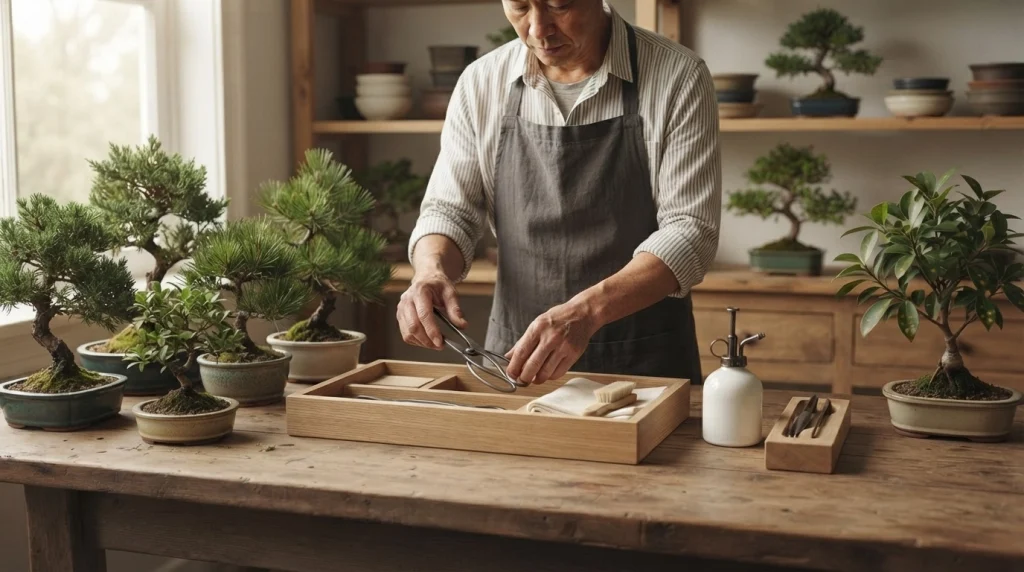
The most effective approach combines tool hygiene with good growing conditions and sensible disease management. Disinfection helps reduce transmission, but prevention also depends on identifying problems early and avoiding unnecessary stress to your trees.
Establish a simple tool-hygiene routine
Before each session, check that your tools are clean, sharp, and in good working condition. During disease-related pruning, use a more careful routine than you would for ordinary maintenance on healthy trees.
- Inspect foliage, shoots, branches, and roots for unusual symptoms.
- Keep suspected infected trees separate while investigating the problem.
- Clean and disinfect tools before moving between affected and healthy plants.
- Remove diseased debris from the work area instead of leaving it beneath the bonsai bench.
- Wash your hands after handling infected material and before handling healthy trees.
- Clean and dry tools before storing them.
Use two tools when disease risk is high
Keeping a second pair of shears available makes it easier to disinfect tools without rushing. One tool can receive the required treatment while you use the other, provided both are cleaned and treated appropriately.
This approach is especially useful when pruning several affected branches or working through a collection of valuable bonsai. It also reduces the temptation to skip the necessary contact time.
Correct the growing conditions that favor disease
Persistent wet foliage, poor airflow, unsuitable watering, and badly draining soil can contribute to some bonsai health problems. Correct the conditions that are relevant to your tree’s species and the actual diagnosis.
Don’t respond to every disease concern by drastically reducing watering or moving an outdoor tree indoors. Junipers, pines, maples, and tropical ficus have different environmental needs.
When a disease spreads despite careful sanitation, seek a reliable diagnosis from a horticulture specialist or local bonsai club. The pathogen may need a targeted management strategy beyond cleaning tools.
Section Takeaway: Build disinfection into your regular workflow, especially when disease is present. Pair clean tools with sound watering, suitable light, good airflow, and prompt removal of contaminated debris.
Frequently asked questions
Can I use rubbing alcohol to disinfect bonsai tools?
Yes, 70% isopropyl alcohol is a convenient option for many small bonsai cutting tools. Clean off sap and debris first, then apply the alcohol appropriately. However, alcohol does not control every plant pathogen, so use a different validated treatment when the suspected disease requires one.
Should I disinfect bonsai shears after every cut?
Not necessarily during routine pruning of healthy trees. When dealing with a suspected transmissible disease, however, disinfecting between cuts may be appropriate, particularly when removing infected tissue. Follow disease-specific recommendations and always disinfect before moving to another healthy tree.
Can bleach damage bonsai tools?
Yes. Chlorine bleach can corrode metal, damage cutting edges, and promote pitting if used improperly. Although an appropriate bleach solution can control certain plant pathogens, use the correct concentration and contact time, rinse when instructed, and dry the tool promptly.
Do I need to disinfect bonsai tools after treating pests?
Cleaning tools after pest treatment is sensible when they contact infested plant material, sticky honeydew, or contaminated debris. Disinfection is particularly important if a disease may also be present. Remember that many pests spread through their own movement rather than through pruning tools alone.
Can I use the same disinfectant for every bonsai species?
Often, the same tool disinfectant can be used across different bonsai species, provided it is suitable for the tool and effective against the suspected pathogen. The species matters when diagnosing disease and planning care, but the disinfectant’s label and pathogen-specific guidance should determine the treatment.
How should I store bonsai tools after disinfecting them?
Allow tools to dry completely and lubricate moving joints as needed. Store them in a clean, dry place away from soil, damp surfaces, and contaminated plant debris. Inspect the blades before the next use, and sharpen or service tools that have become damaged.
Does disinfecting tools cure a diseased bonsai?
No. Disinfection helps reduce the risk of spreading pathogens through contaminated equipment, but it doesn’t cure an infected tree. Accurate diagnosis, appropriate pruning, environmental corrections, and disease-specific treatment may also be necessary to manage the problem.
Keep Your Bonsai Tools Clean and Your Trees Protected
Learning how to disinfect bonsai tools after disease is a small habit that can make a meaningful difference to your collection. Remove visible debris, choose a suitable disinfectant, respect the contact time, and protect your tools against corrosion.
Most importantly, don’t treat tool sanitation as a substitute for understanding the disease itself. When you combine clean equipment with good bonsai care and timely diagnosis, you give healthy trees a better chance of staying healthy.
Before your next pruning session, inspect your shears, concave cutters, and root tools. A few careful steps now can help prevent avoidable problems later.