How to Isolate an Infected Bonsai Safely

Quick Answer
To isolate an infected bonsai, move it away from healthy plants as soon as you notice suspicious pests, leaf spots, mold, or branch dieback. Keep it in a suitable environment, inspect nearby trees, use separate tools, and identify the problem before applying treatment. Follow the guidance in this bonsai pest and disease guide to help distinguish common problems.
Immediate isolation steps
- Separate the tree: Move it away from other bonsai and houseplants, preferably to a dedicated quarantine area.
- Check the symptoms: Inspect leaves, needles, branch joints, bark, soil, and drainage holes for pests or signs of disease.
- Prevent cross-contamination: Use separate tools and avoid sharing water, soil, or plant debris between trees.
- Maintain proper care: Provide the light, temperature, ventilation, and watering conditions appropriate for the species.
- Treat the confirmed problem: Choose an appropriate control method only after identifying the likely pest or disease.
- Monitor recovery: Inspect the affected tree and neighboring plants regularly for new symptoms or recurring pests.
When is it safe to return the tree?
- Keep the bonsai separated until the problem has been identified, treatment is complete, and repeated inspections show no continuing signs of infection or active pests. The necessary period depends on the organism involved.
Learning how to isolate an infected bonsai helps protect an entire collection from preventable pest and disease outbreaks. I recommend treating suspicious symptoms seriously without assuming that every yellow leaf or dead twig signals an infection.
This guide explains where to quarantine a bonsai, how to prevent cross-contamination, what to inspect, and when to seek expert help. It also covers different isolation needs for indoor tropical trees and outdoor bonsai.
In This Guide
When Should You Isolate an Infected Bonsai?
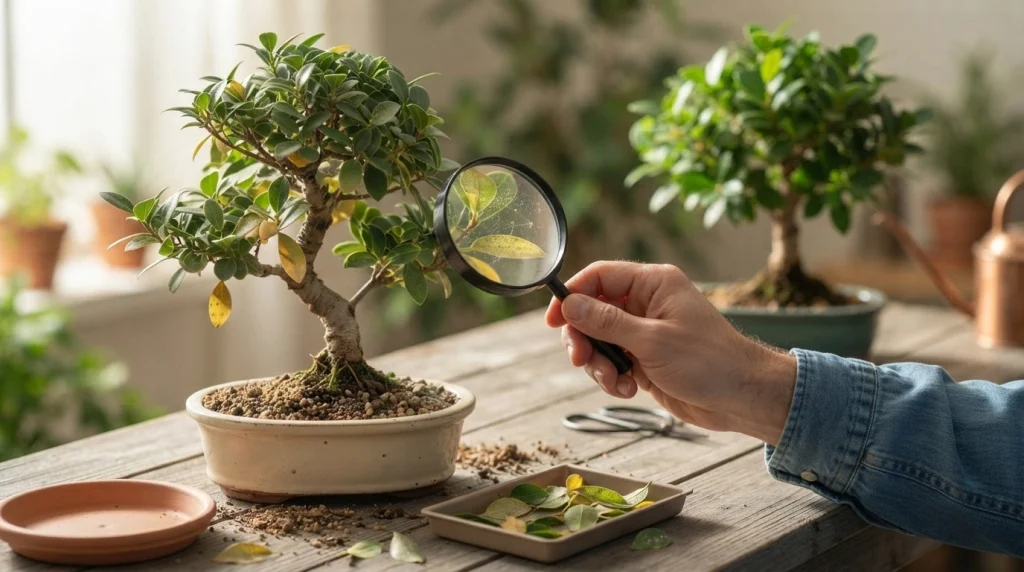
You should isolate a bonsai as soon as you suspect a contagious pest or disease. Separating it early reduces the chance of insects, mites, fungal spores, or contaminated plant material reaching healthy trees.
Isolation, sometimes called quarantine, means keeping a potentially infected plant physically separated while you investigate and manage the problem. It does not mean placing the tree somewhere dark or allowing it to deteriorate.
Which symptoms call for immediate isolation?
Look for symptoms that suggest an active pest infestation or potentially spreading disease. A close inspection can help distinguish these problems from normal seasonal changes or environmental stress.
| Warning sign | Possible cause | First action |
|---|---|---|
| Fine webbing and speckled leaves | Spider mites | Separate the tree and inspect leaf undersides with a magnifier. |
| Sticky leaves or small insects on shoots | Aphids or scale insects | Check new growth, stems, and branch joints. |
| White, cotton-like patches | Mealybugs | Inspect leaf axils and sheltered areas of the branches. |
| Expanding brown or black leaf spots | Possible fungal or bacterial disease | Separate the tree and document the affected areas. |
| Sudden branch dieback or widespread decline | Disease, root damage, pests, or environmental stress | Quarantine while checking the whole tree and its growing conditions. |
| Tiny flies hovering over wet soil | Fungus gnats | Separate the pot and review soil moisture and drainage. |
These symptoms are clues, not definitive diagnoses. If the tree is declining without visible pests, check light exposure, watering, drainage, and recent changes in its environment as well.
Can you wait until you identify the problem?
Don’t wait for a perfect diagnosis before separating a suspicious tree. Move it first, then examine the symptoms carefully and decide what treatment is appropriate.
For a useful overview of common infestations, consult Bonsai Empire’s guide to bonsai pests and diseases. It can help you compare visible symptoms with common bonsai problems.
Section Takeaway: Isolate first when a contagious problem is plausible, but diagnose before treating. Yellow leaves alone do not prove that a bonsai has an infection.
How Do You Isolate a Bonsai Step by Step?
A good bonsai quarantine routine separates the tree, limits contact with other plants, and preserves the conditions it needs to survive. Work methodically rather than moving the tree repeatedly or immediately stripping away its foliage.
Step 1: Move the tree away from healthy plants
Choose a separate area where the infected bonsai cannot touch neighboring foliage. Keep it away from shared plant benches, crowded windowsills, and areas where insects can move easily between pots.
If the tree is heavy or its pot is fragile, prepare the destination before moving it. Avoid shaking loose soil or brushing infected foliage against nearby plants.
Step 2: Inspect the entire bonsai
Examine the tree from the crown down to the drainage holes. Use a magnifying glass to check small insects and take photographs to document the initial condition.
- Leaves and needles: Look for stippling, spots, discoloration, webbing, and distorted growth.
- Branches and trunk: Check for scale insects, cottony deposits, cankers, and unusual areas of bark damage.
- Soil surface: Look for small flying insects, persistent moisture, mold-like growth, and fallen plant debris.
- Drainage holes: Check for blocked openings and visible root damage without pulling the root ball apart.
Record which parts of the tree are affected. This makes it easier to tell whether the problem is spreading during quarantine.
Step 3: Set up a separate care station
A dedicated shelf or bench is useful, provided it offers the right light, temperature, and ventilation for the species. Keep the station easy to clean and free from unnecessary plant material.
Use a separate watering can, pruning tools, gloves, and cleaning supplies when practical. If you must share equipment, clean and disinfect it appropriately between plants.
Step 4: Protect the roots and growing conditions
Quarantine should not become a period of neglect. Continue to water according to the species, soil moisture, weather, and drainage rather than following a rigid schedule.
Do not leave a bonsai standing in contaminated runoff from another plant. Let excess water drain freely, and avoid splashing soil or diseased debris onto neighboring pots.
Outdoor species such as junipers and many temperate maples generally need appropriate outdoor conditions. A warm indoor room may be unsuitable, even when it seems like a convenient quarantine location.
Step 5: Remove obvious hazards carefully
Pick up fallen leaves and visibly infested debris where practical. Place contaminated material in a bag and dispose of it appropriately rather than adding it to a compost pile that may spread the problem.
Don’t automatically prune every discolored leaf or dead-looking twig. First determine whether removal is useful and safe for the species, especially when the tree is already weak.
Pro tip: Before making major cuts or removing roots, consult an experienced grower or local bonsai club if you’re uncertain. Irreversible work can compound the stress of an infected tree.
Section Takeaway: Separate the tree, inspect it thoroughly, and establish clean care practices. Preserve its normal growing requirements while you investigate the cause.
Where Should You Keep a Quarantined Bonsai?
The best quarantine location is physically separated from healthy plants while still matching the bonsai’s normal environmental needs. Distance helps, but suitable light, airflow, temperature, and protection from weather remain essential.
Indoor versus outdoor quarantine
Choose the location according to the species rather than the convenience of the room or garden.
| Bonsai type | Suitable approach | Important caution |
|---|---|---|
| Tropical ficus | A bright, warm, separate indoor area when outdoor conditions are unsuitable. | Avoid cold drafts, abrupt light changes, and unsuitable pesticide fumes. |
| Juniper | A separated outdoor area with appropriate sunlight and airflow. | Do not move it into a warm room for extended periods merely to quarantine it. |
| Deciduous maple or elm | A suitable outdoor location that respects seasonal temperature and light requirements. | Preserve normal seasonal cues and protect the tree according to its species. |
| Bonsai with suspected leaf disease | A separated, well-ventilated location with suitable light. | Avoid unnecessary prolonged leaf wetness and splashing between plants. |
These are general placement principles, not substitutes for species-specific care. Local climate, the severity of infection, and the pest involved may change the best arrangement.
Should you cover an infected bonsai?
Usually, an airtight plastic cover is not a good general quarantine solution. It can trap moisture, reduce airflow, and create conditions that favor certain diseases.
Physical insect barriers may be useful in particular situations, but they must not interfere with ventilation or the tree’s light requirements. A barrier also cannot replace effective treatment of an established infestation.
How far away should the tree be?
There is no universal distance that guarantees protection. Flying insects, windborne spores, direct contact, contaminated tools, and water splashes create different transmission risks.
Use a separate area with as much practical separation as your growing space allows. Avoid placing the infected bonsai directly beside healthy trees and inspect nearby plants for early symptoms.
Section Takeaway: Choose separation without sacrificing proper care. A healthy quarantine environment should limit contact with other plants while maintaining the bonsai’s normal growing requirements.
How Do You Prevent Pests and Diseases From Spreading?
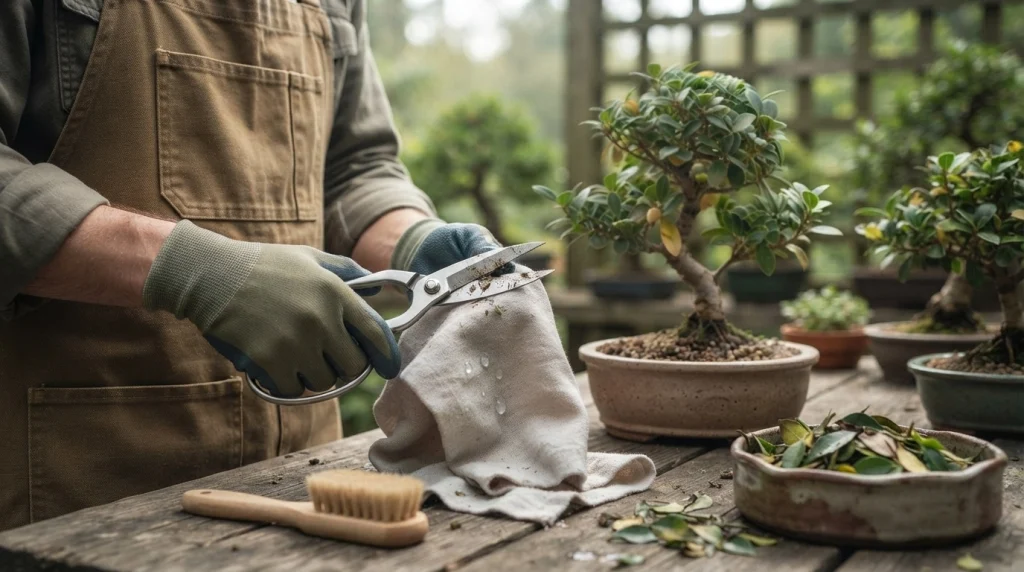
Preventing spread requires consistent hygiene, controlled watering, careful handling, and targeted treatment. Moving a bonsai away from the collection is only the first step.
Keep tools and hands clean
Plant debris and contaminated equipment can carry some pathogens between trees. Clean tools after working on suspicious material and use an appropriate disinfectant according to its instructions.
- Keep pruning scissors and other tools dedicated to the quarantine area when possible.
- Remove visible soil and plant residue before disinfecting tools.
- Wash your hands after handling an infected plant.
- Clean the work surface after removing diseased material.
- Never transfer used soil, fallen leaves, or untreated runoff to healthy plants.
Tool hygiene is especially important when you suspect a transmissible disease. Some pathogens spread through infected tissue, so cleaning only the visible foliage may not be enough.
Water carefully and prevent splashing
Watering should support root health without moving contaminated debris or keeping susceptible foliage wet unnecessarily. Apply water to the growing medium when appropriate and allow it to drain without flowing into neighboring pots.
Don’t respond to every pest problem by reducing water drastically. Spider mites, fungus gnats, and root diseases have different requirements, and an inappropriate watering change can weaken the tree further.
Choose treatment according to the diagnosis
Different pests and diseases require different control methods. Aphids may respond to physical removal or an appropriate insecticidal soap, while fungal diseases and root problems need different management.
For a small, accessible insect infestation, you may be able to remove pests manually or rinse foliage when the species and problem allow it. More established infestations may need a specifically labeled product.
Before using a pesticide or fungicide:
- Confirm the likely target organism.
- Check that the product is labeled for the plant type, pest or disease, and intended application location.
- Follow the full label, including protective equipment, application rate, temperature restrictions, and repeat-treatment instructions.
- Test plant tolerance only as the label permits, and avoid treating heat-stressed or drought-stressed foliage when the instructions warn against it.
- Keep people, pets, and beneficial organisms safe according to the product directions.
Never mix chemicals or increase concentrations to make a treatment stronger. An incorrect treatment can damage delicate foliage without resolving the underlying problem.
For broader guidance on diagnosis and safe pest management, consult the University of California’s Integrated Pest Management guidance for houseplant problems.
Check the rest of your collection
Once a bonsai shows symptoms, inspect plants that shared its bench, watering area, tools, or growing space. Pay particular attention to leaf undersides, new shoots, branch joints, and the soil surface.
Do not automatically spray every neighboring tree. Instead, document suspicious signs and isolate additional plants if you find evidence of a potentially spreading problem.
As of 2026, integrated pest management remains a practical approach for bonsai care: identify the cause, reduce favorable conditions, use physical or cultural controls where effective, and apply targeted products only when necessary.
Section Takeaway: Clean equipment, prevent cross-contamination, and use treatments that match the confirmed problem. Avoid indiscriminate spraying and major horticultural work on a weakened tree.
How Long Should a Bonsai Stay in Isolation?
A bonsai should remain isolated until you have identified the problem, completed the appropriate treatment, and found no continuing evidence of active infestation or disease during repeated inspections. There is no single quarantine period suitable for every pest and pathogen.
Use the organism’s life cycle to guide quarantine
Some pests have hidden eggs or immature stages that survive an initial treatment. Scale insects, mealybugs, and spider mites may therefore require repeated inspections and treatment according to the product label.
Some plant diseases can remain active in infected tissue or contaminated debris even after visible symptoms improve. New growth may look healthier while the original problem has not been completely resolved.
For newly purchased bonsai without visible symptoms, a separation period of two to four weeks is a useful precaution when practical. An already infected tree may need a longer period, depending on the diagnosis and treatment response.
What should you monitor during quarantine?
Check the tree regularly, recording any new symptoms and the results of treatment. During active growth or a suspected pest outbreak, inspect at least weekly, and more frequently if the pest or product instructions warrant it.
- New growth: Look for fresh feeding damage, distortion, or discoloration.
- Leaf undersides: Check for moving insects, mites, eggs, and webbing.
- Stems and bark: Look for new scale insects, cottony deposits, or expanding lesions.
- Soil and roots: Monitor moisture, drainage, and signs of continuing decline.
- Nearby plants: Check for any symptoms that appeared after the initial discovery.
A photograph taken at the beginning of quarantine provides a useful comparison. Repeat the same close-up views so you can recognize changes more easily.
When can you return the bonsai to your collection?
Return the tree only when the risk of spreading the identified problem is acceptably low. That usually means the prescribed treatment has been completed, inspections show no continuing activity, and any disease-specific precautions have been followed.
One pest-free inspection is not enough to rule out every infestation. If you cannot identify the cause or symptoms continue despite treatment, extend isolation and seek advice from a qualified plant-health specialist or experienced bonsai grower.
Section Takeaway: Base the release decision on the organism, treatment, and repeated observations rather than an arbitrary number of days.
What Should You Do After Isolating the Tree?
After isolation, focus on diagnosis, recovery, and preventing another outbreak. A struggling bonsai needs stable care, not a series of aggressive interventions.
Correct the underlying growing problem
Some symptoms that resemble infection are caused by environmental stress. Poor drainage, unsuitable light, drought, excess water, and abrupt temperature changes can all contribute to declining foliage.
Review the conditions that preceded the symptoms and make only the changes needed to correct them. For watering guidance, see the related bonsai pest and disease prevention guide.
Avoid unnecessary pruning and repotting
Removing large amounts of foliage or roots can make recovery harder when the tree is already weak. Prune only when there is a clear horticultural reason, such as removing appropriate amounts of diseased tissue or addressing confirmed damage.
Repotting is not a universal cure for infection. Consider it when root health, soil breakdown, or drainage problems justify the intervention, taking the species and season into account.
Pro tip: If a sick bonsai has extensive root damage or requires major root pruning, ask an experienced bonsai grower or local bonsai club for guidance before cutting live roots.
Keep a simple quarantine record
Written notes help you recognize recurring problems and avoid repeating ineffective treatments. Record the date symptoms appeared, the visible signs, any treatment used, and the tree’s response.
A useful record includes:
- The bonsai species and its usual growing location.
- The date of isolation and the reason for quarantine.
- Photographs of the original symptoms and later changes.
- The suspected or confirmed pest or disease.
- Products used, application dates, and label-directed follow-up.
- The dates when inspections showed no further signs of activity.
These details are particularly useful if you need help from a bonsai club, nursery, extension service, or plant-health diagnostic laboratory.
Section Takeaway: Restore suitable growing conditions, avoid unnecessary stress, and document recovery. Return the tree only when monitoring supports that decision.
Frequently Asked Questions
Can an infected bonsai spread disease to other bonsai trees?
Yes. Some pests and pathogens can spread through direct contact, contaminated tools, water splash, insects, or infected plant material. The transmission route depends on the organism, so separating the affected tree and practicing good sanitation are sensible first steps.
Can I quarantine a bonsai in the same room as healthy plants?
A separate room may help with some indoor infestations, but it does not eliminate every risk. Flying insects can move when doors open, and shared tools or hands can transfer pests. Use the greatest practical separation and inspect neighboring plants regularly.
Should I remove all infected leaves before isolation?
No. Remove affected leaves when doing so is appropriate for the suspected problem, but avoid stripping a weak bonsai unnecessarily. Some discoloration results from watering, light, or root stress rather than infection. Identify the likely cause before extensive pruning.
Can I use neem oil on an infected bonsai?
Neem-based products are not a universal treatment for every pest or disease. Their suitability depends on the formulation, target organism, plant species, and application conditions. Use a product only when its label supports the intended use, and follow all precautions to reduce the risk of foliage injury.
How do I isolate a bonsai if I have limited space?
Place the affected tree at the greatest practical distance from healthy plants, prevent foliage from touching, and use dedicated tools and watering equipment when possible. Clean nearby surfaces and inspect other trees frequently. A separate, well-ventilated shelf can help when an entire room is unavailable.
Should I keep an infected juniper bonsai indoors?
Usually not for extended periods. Junipers generally require outdoor growing conditions, so indoor quarantine may cause additional stress. Instead, use a separated outdoor area that provides suitable light, airflow, and seasonal conditions while limiting contact with healthy plants.
What if my bonsai keeps getting sick after treatment?
Recheck the diagnosis, treatment method, application timing, and growing conditions. Hidden pests, reinfestation, an unsuitable product, or a noninfectious care problem may explain repeated symptoms. If the tree continues to decline, consult an experienced bonsai grower or plant-health professional.
For more detailed troubleshooting, you can also read the site’s complete guide to bonsai pests and diseases.
Final Takeaway: Protect Your Bonsai Collection Through Early Isolation
Isolating an infected bonsai promptly gives you time to identify the problem and reduces the risk of spreading it to healthy trees. Keep the affected plant in a separate, species-appropriate environment, maintain clean tools, monitor symptoms, and choose treatment based on evidence rather than guesswork.
Remember that quarantine is not a substitute for proper bonsai care. Good drainage, appropriate light, careful watering, and regular inspections all support recovery and help prevent future problems.
If the symptoms remain unclear or the tree continues to decline, seek advice before attempting major pruning, root removal, or chemical treatment. A careful diagnosis can protect both the affected bonsai and the rest of your collection.