Biogold Original Bonsai Fertilizer Review

As an Amazon Associate we earn from qualifying purchases. See our affiliate disclosure.
In this guide
- Biogold Original at a Glance
- How Biogold Performs
- How to Use Biogold on Bonsai
- Which Biogold Size Should You Buy?
- Biogold Original 900 g (Best Value for Most Growers)
- Biogold Original 240 g (Best for Trying It)
- Biogold 240 g + 10 Fertilizer Baskets (Best for Indoor Trees)
- Biogold Original 2.4 kg (Best for Mixed Collections)
- Biogold Original 5 kg (Best for Large Collections)
- An Alternative: BioGold Triangle Pellets
- Biogold vs. Other Bonsai Fertilizers
- Frequently Asked Questions
- Final Verdict
Verdict: Biogold Original is one of the best slow-release organic fertilizers for bonsai. The pellets feed gently for about a month, rarely burn roots, and stay where you put them. Its weakness is cost: it is pricier per gram than most pellet feeds, so the bag size you pick matters. For most people with a few trees, the 900 g bag is the best value.
Our rating: 4.5 / 5.
Biogold Original at a Glance
| Type | Organic slow-release pellets, made in Japan |
|---|---|
| N-P-K | 3.5 – 3.7 – 3.3 (listed on every Amazon size) |
| Pellet size | About 1/2 inch |
| Sizes | 240 g, 900 g, 2.4 kg, 5 kg, and a 240 g + 10 baskets bundle |
| How it feeds | Placed on the soil surface, nutrients wash down with each watering |
| Best for | Indoor and outdoor bonsai, especially trees you do not want to overfeed |
The N-P-K ratio is low and balanced. That is the point: bonsai live in small pots of fast-draining soil, so a mild feed applied often is safer than a strong one that can burn fine roots. Product details were checked against Amazon listings on November 1, 2026. Prices change often, so we link to the current price instead of printing it.
How Biogold Performs
Gentle, steady growth
Because the pellets break down slowly, growth stays even instead of coming in a sudden flush of long shoots. That helps keep internodes short, which is what you want on a tree you are refining. It also means Biogold is forgiving for beginners who are not sure how much to feed.
Clean to use
Pellets sit on top of the soil, so there is nothing to mix or measure. Some white fuzz can appear on the pellets when they stay damp. That is a normal part of the organic breakdown and does not harm the tree. If you dislike the look, or have pets or birds that pick at pellets, use fertilizer baskets.
Where it falls short
It costs more than generic pellets, and the release is slow, so it will not quickly fix a hungry or yellowing tree. In that case, a mild liquid feed works faster. See our guide to pellets vs. liquid fertilizer for when to use each.
How to Use Biogold on Bonsai
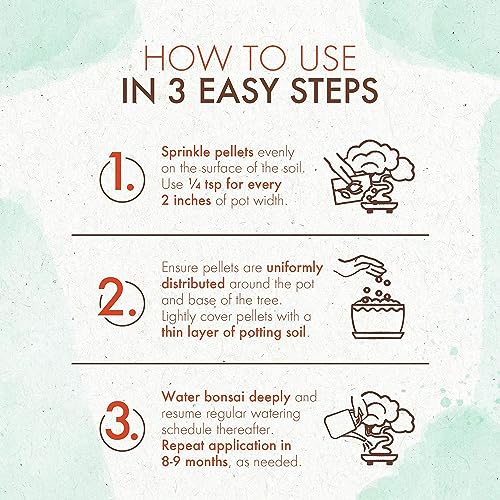
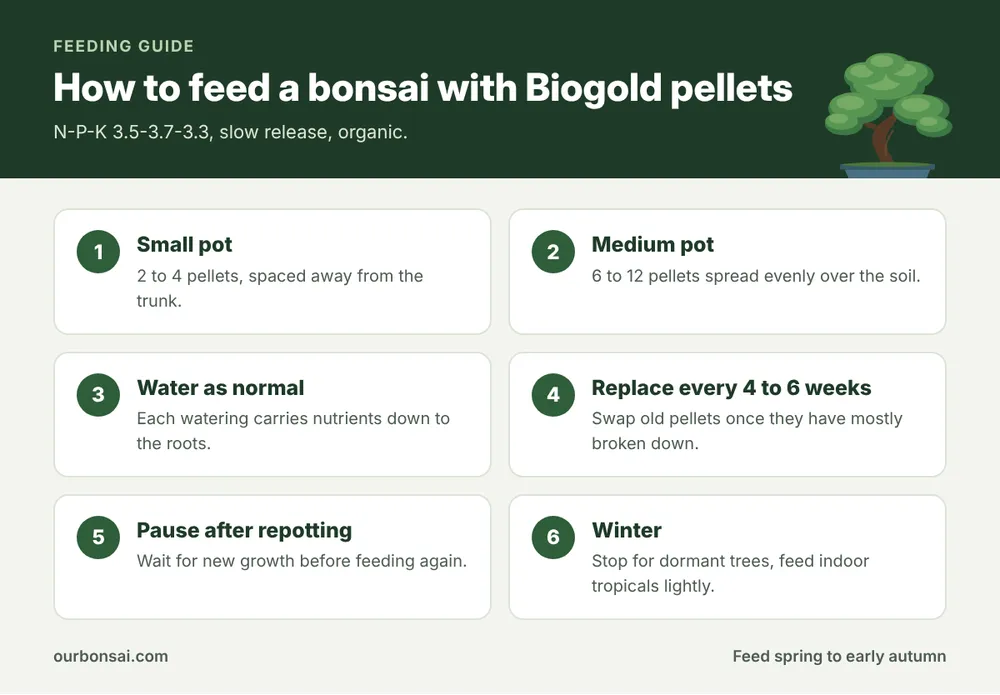
- Feed during active growth, from spring to early autumn. Reduce or stop for dormant deciduous trees in winter. Indoor tropicals can get a lighter feed year round.
- Place pellets evenly on the soil surface, spaced away from the trunk. As a rough guide: 2 to 4 pellets for a small pot, 6 to 12 for a medium pot, more for large trees.
- Water as normal. Each watering carries a little nutrient into the root zone.
- Replace pellets about every 4 to 6 weeks, once the old ones have mostly broken down.
- Skip feeding for a few weeks after repotting, and do not feed a tree that is sick or freshly collected.
The Bonsai Empire fertilizing guide has more detail on seasonal feeding by species.
Which Biogold Size Should You Buy?
| Size | Good for | Notes |
|---|---|---|
| 240 g | 1 to 2 trees, or a first try | Highest cost per gram |
| 240 g + 10 baskets | Indoor trees, pet homes | Baskets keep pellets in place |
| 900 g | 3 to 8 trees | Best balance of value and storage |
| 2.4 kg | Mixed collections of about 6 to 15 trees | Lower cost per gram |
| 5 kg | Large collections and clubs | Lowest cost per gram, needs dry storage |
Biogold Original 900 g (Best Value for Most Growers)

| Weight | 900 g |
|---|---|
| N-P-K | 3.5-3.7-3.3 |
| Pellet size | About 1/2 inch |
Enough for a season on a small collection without leaving a big bag to go stale. If you are not sure which size to get, this is the one.
Pros
- Good price per gram without buying in bulk
- Easy to store
- Enough for several trees
Cons
- More per gram than the 2.4 kg and 5 kg bags
Best for: owners of roughly 3 to 8 trees.
Biogold Original 240 g (Best for Trying It)

| Weight | 240 g |
|---|---|
| N-P-K | 3.5-3.7-3.3 |
A small, cheap way to test Biogold on one or two trees. It is also a useful gift for someone who just got their first bonsai.
Pros
- Low upfront cost
- Takes little space
Cons
- Runs out fast on more than two trees
- Highest cost per gram
Best for: first-time users and single-tree owners.
Biogold 240 g + 10 Fertilizer Baskets (Best for Indoor Trees)

| In the box | 240 g Biogold Original plus 10 baskets |
|---|---|
| N-P-K | 3.5-3.7-3.3 |
Same fertilizer as the 240 g bag, plus small baskets that hold pellets in place. Baskets stop pellets washing off during heavy watering and make it easy to swap old pellets for new ones. They are a good idea for indoor trees and homes with pets.
Pros
- Baskets keep feeding tidy
- Ready to use right away
Cons
- Costs more than the bag alone
- 10 baskets is not enough for large pots
Best for: indoor bonsai and pet owners.
Biogold Original 2.4 kg (Best for Mixed Collections)
| Weight | 2.4 kg |
|---|---|
| N-P-K | 3.5-3.7-3.3 |
The middle ground between the 900 g bag and bulk. It covers a yard of maples, junipers and tropicals through a full growing season, at a lower cost per gram.
Pros
- Lower cost per gram
- Lasts a full season for a mid-size collection
Cons
- Needs a dry, sealed container once opened
Best for: growers with about 6 to 15 trees.
Biogold Original 5 kg (Best for Large Collections)
| Weight | 5 kg |
|---|---|
| N-P-K | 3.5-3.7-3.3 |
The bulk bag gives the best value per gram. It makes sense for big collections, clubs or friends who split a bag. Keep it sealed so the pellets do not absorb moisture.
Pros
- Lowest cost per gram
- Good for sharing
Cons
- High upfront cost
- Needs storage space
Best for: large collections and bonsai clubs.
An Alternative: BioGold Triangle Pellets
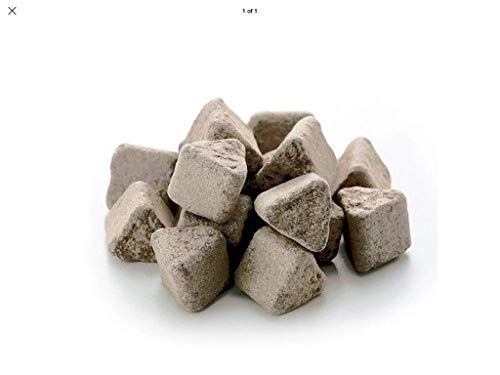
The BioGold time-release triangle pellets sold by Bonsai Outlet use a triangular shape so pellets do not roll off the pot. They are a different listing from the Japanese Biogold Original bags above, so check the label if you want the original formula.
Biogold vs. Other Bonsai Fertilizers
Compared with liquid feeds, Biogold is less work and safer against burn, but slower to act. Compared with synthetic granules, it is gentler and better for soil life, but costs more. If you want to compare more options, see our roundup of the best bonsai plant food and our bonsai fertilizer brands compared guide. For a fast-acting option, see the best liquid fertilizers for bonsai.
Frequently Asked Questions
What is Biogold Original?
A Japanese organic, slow-release fertilizer pellet for bonsai with an N-P-K of 3.5-3.7-3.3. It feeds gently with every watering.
How many Biogold pellets should I use?
Roughly 2 to 4 for a small pot, 6 to 12 for a medium pot, and more for large trees. Space them evenly and away from the trunk.
How often should I replace the pellets?
About every 4 to 6 weeks during the growing season, once the old pellets have mostly broken down.
Is the white fuzz on Biogold pellets a problem?
No. It is a normal part of organic breakdown and does not hurt the tree. Baskets or less frequent watering reduce it.
Is Biogold safe for indoor bonsai?
Yes. It has a mild smell and stays tidy, especially in baskets. Keep pellets out of reach of pets and children.
Can I use Biogold with liquid fertilizer?
Yes, lightly. Many growers use Biogold as the base feed and add a weak liquid feed now and then. Avoid stacking strong fertilizers.
Should I fertilize after repotting?
Wait a few weeks until the tree shows new growth, then start with a light dose.
Final Verdict
Biogold Original earns its reputation: a mild, balanced, clean organic feed that is hard to overdo. Buy the 900 g bag for a few trees, the 240 g with baskets for indoor trees, and the 2.4 kg or 5 kg bag for bigger collections. If you need to green up a hungry tree fast, add a gentle liquid feed alongside it.