Bonsai Leaves Pale or Light Green? Causes and Fixes

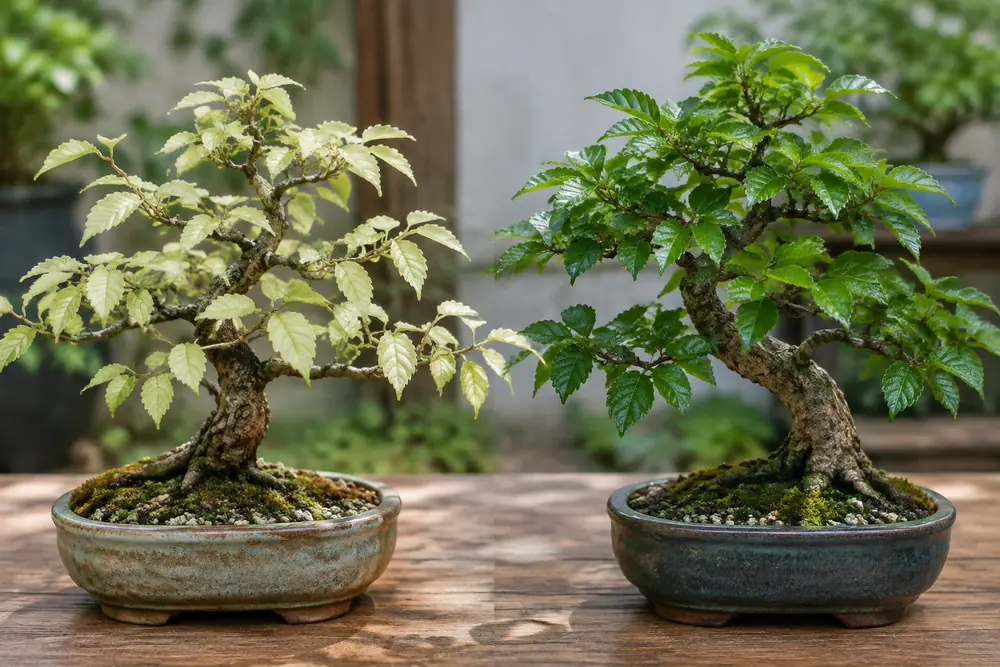
When your bonsai leaves pale and look washed out, light green or slightly yellowish instead of a deep, healthy green, the tree is short of something. The most common causes are a lack of nutrients (especially nitrogen), too little light, and roots that cannot take up food because the soil is waterlogged or the pH is wrong. Too much sudden sun can also bleach leaves. The good news: pale leaves are usually an early warning, and most trees green up again within a few weeks once you fix the cause.
In this guide
This guide explains how to read the pattern of paleness and what to do about each cause.
Is pale new growth normal?
Yes, to a point. On many species, fresh leaves open lighter green and darken over two to three weeks as they mature. Japanese maples, elms, hornbeams and ficus all do this. If only the newest leaves at the tips are lighter and the older leaves are a good, deep green, there is nothing to worry about.
It becomes a problem when the whole tree looks pale, when older leaves are losing color, or when new leaves stay pale for weeks.
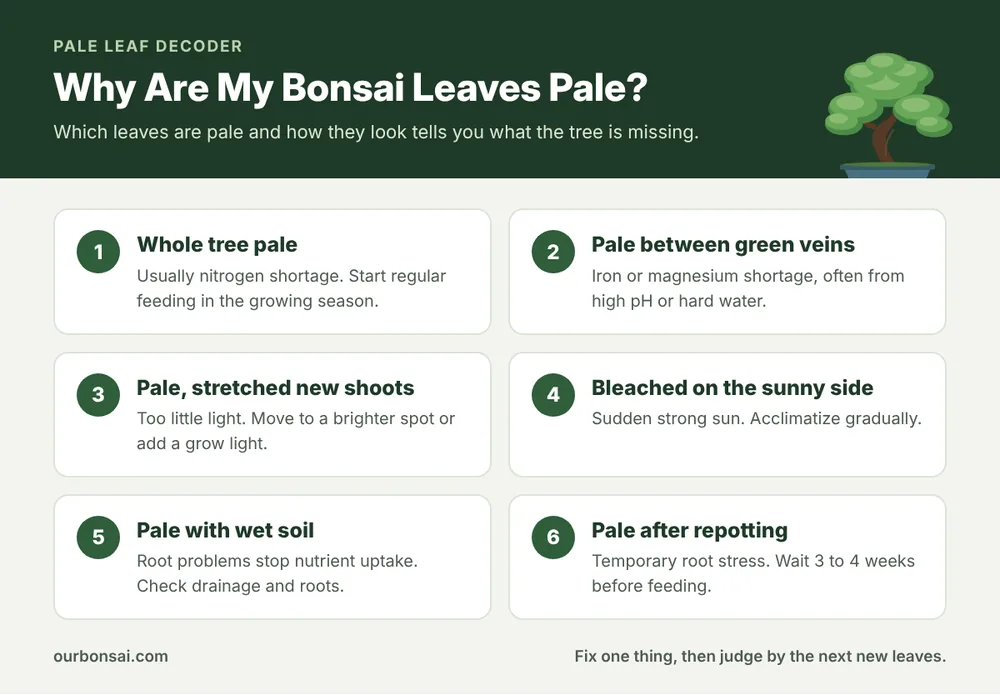
The 6 main causes of pale bonsai leaves
| Pattern | Most likely cause | Fix |
|---|---|---|
| Whole tree pale, older leaves first | Nitrogen deficiency | Regular balanced feeding |
| Pale between green veins on new leaves | Iron deficiency, high pH | Acid-friendly feed, rain water |
| Pale between veins on older leaves | Magnesium deficiency | Fertilizer with magnesium |
| Pale, small leaves on long, thin shoots | Low light | More light, grow light indoors |
| Bleached or white patches on sunny side | Sun scorch after a sudden move | Gradual acclimatization |
| Pale with wet soil and slow growth | Root problems | Fix drainage, check for rot |
1. Nitrogen deficiency
Nitrogen is the nutrient leaves need most to make chlorophyll, the green pigment. Bonsai soil contains very little food, and frequent watering washes nutrients out. A tree that has not been fed for a while turns pale, starting with older leaves. Our guide to best bonsai plant food and best liquid fertilizer for bonsai can help you pick a fertilizer.
2. Iron and magnesium deficiency (chlorosis)
When leaves turn pale or yellow between green veins, it is called chlorosis. Iron shortage shows up on the newest leaves first, magnesium shortage on older ones. Iron problems are common when soil pH is too high, often from hard tap water, because roots cannot absorb iron in alkaline soil. Acid-loving trees like azaleas show this first. Use a fertilizer that includes micronutrients, and use rain water where possible.
3. Too little light
A bonsai in a dim spot cannot make enough chlorophyll. Leaves become pale, smaller and spaced farther apart on long, thin stems. This stretching is called etiolation. It is very common indoors in winter. See our guide on how much light a bonsai tree needs, and consider indoor grow lights for bonsai.
4. Too much sudden sun
The opposite problem. A tree moved straight from indoors or shade into full summer sun can have its leaves bleached pale or even white on the exposed side. Move trees into stronger light gradually over one to two weeks.
5. Root problems
Even with plenty of fertilizer, damaged roots cannot take up nutrients. Waterlogged soil, root rot or a pot packed solid with roots all lead to pale leaves and slow growth. If the soil stays wet for days or smells sour, see our guide to root rot in bonsai. A root-bound tree needs repotting in spring.
6. After repotting
Trees often look a little pale for a few weeks after repotting while they regrow fine roots. Keep them out of strong sun and wind and wait three to four weeks before feeding.
How to fix pale bonsai leaves step by step
- Look at which leaves are pale. New only, old only, or all of them? Between the veins or evenly?
- Check the light. Is the tree in the brightest spot available? Indoors, light drops sharply away from the window.
- Check your feeding. When did you last fertilize? During the growing season, most bonsai need feeding every one to two weeks with liquid feed, or monthly with slow-release pellets.
- Check the soil and roots. Wet for days or packed with roots? Fix drainage or plan a repot.
- Check the water. If your tap water is very hard and the tree is lime-sensitive, switch to rain water.
- Change one thing at a time. Then watch the next flush of new leaves.
How long until the leaves turn green again?
Mildly pale leaves can darken again within two to three weeks once a nutrient shortage is fixed. Leaves that turned yellow or bleached usually do not recover fully. In that case, judge your fix by the color of the new leaves that grow afterwards.
A quick note on fertilizer strength
More is not better. Feeding at double strength to fix pale leaves quickly can burn fine roots, which makes the problem worse. Follow the label, or use half strength more often for indoor trees. Organic pellets release nutrients slowly and are very hard to overdo, which suits beginners.
Pale leaves by season
- Spring: fresh growth is naturally lighter. A hungry tree after winter can be pale overall. Start feeding when leaves open.
- Summer: sun bleaching on trees moved too quickly. Nutrients wash out fast with daily watering, so keep feeding.
- Autumn: some trees naturally fade toward their fall color. Reduce nitrogen feeding.
- Winter: indoor trees get pale from low light. A grow light helps most.
Preventing pale leaves
- Feed regularly through the growing season with a complete fertilizer that includes micronutrients. See bonsai fertilizer: pellets or liquid.
- Give your trees as much appropriate light as possible.
- Use gritty bonsai soil and repot every two to three years.
- Use rain water for lime-sensitive species.
- Move trees between shade and sun gradually.
If your leaves are going past pale into yellow or brown, our guide to bonsai leaves turning yellow or brown covers those causes in more detail.
FAQ: bonsai leaves pale
Why are my bonsai leaves light green?
Usually because the tree needs feeding, needs more light, or has root problems. New leaves on many species are also naturally lighter and darken as they mature.
Can too much fertilizer make leaves pale?
Indirectly, yes. Too much fertilizer can burn roots, and damaged roots cannot take up nutrients, so leaves turn pale or brown at the edges.
Will pale bonsai leaves turn dark green again?
Slightly pale leaves often darken once the cause is fixed. Badly yellowed or bleached leaves usually do not recover. Watch the new growth.
Does hard water cause pale leaves?
It can on lime-sensitive species like azaleas, because it raises soil pH and blocks iron uptake. Most other bonsai cope fine with hard water.
Which bonsai are most likely to get pale leaves?
Fast growers that are watered often, such as Chinese elm, ficus and trident maple, run out of nutrients quickly. Azaleas and other acid lovers turn pale between the veins in hard water. Indoor trees of every kind get pale in winter from low light.
Final thoughts
When your bonsai leaves pale, treat it as an early warning. Look at which leaves are affected, then check feeding, light, roots and water. Fix the most likely cause first, give it a few weeks, and watch the new leaves. Most trees return to a rich, healthy green quickly. For broader care, see our main bonsai care guide.