Olive Bonsai Dropping Leaves: Causes and How to Stop It

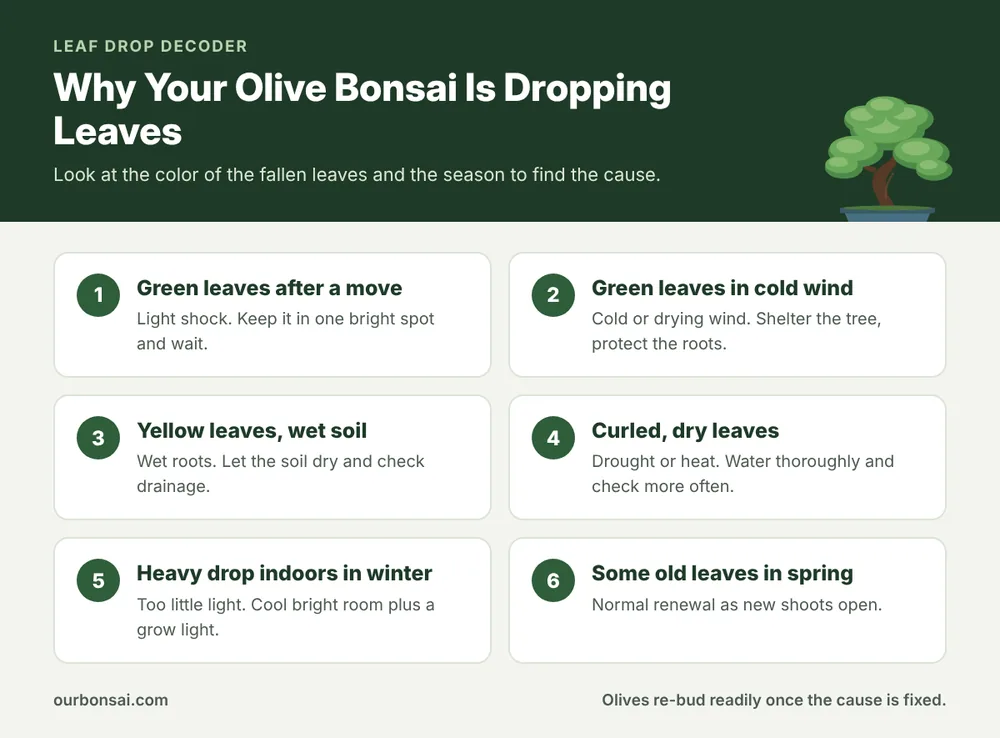
An olive bonsai dropping leaves is telling you something changed. Olives are evergreen and naturally shed some old leaves each spring, but heavy drop usually has a clear trigger: too little light indoors in winter, a sudden move, wet roots, drought, cold wind or a repot. The color of the fallen leaves is a great clue. Green leaves dropping points to a sudden shock like a move, a cold draft or drying wind. Yellow leaves dropping points to slower problems, usually soggy soil or not enough light. Fix the cause and olives re-bud readily, even from bare wood.
In this guide
- How olives shed leaves naturally
- Green leaves vs yellow leaves dropping
- 7 common causes of an olive bonsai dropping leaves
- How to stop olive leaf drop step by step
- Helping your olive regrow its leaves
- A good winter setup for olive bonsai
- Olive leaf drop through the seasons
- Common mistakes
- FAQ: olive bonsai dropping leaves
- Final thoughts
Below you will find what each pattern means, how to stop the drop and how to help your olive regrow a full canopy.
How olives shed leaves naturally
The European olive (Olea europaea) keeps each leaf for about two to three years. As the Wikipedia article on the olive notes, the leaves are tough and long-lived, which helps the tree survive dry summers. When new shoots open in spring, the tree drops a share of its oldest leaves. They usually turn yellow first and fall from the inner and lower parts of the branches.
That kind of drop is healthy and nothing to fix. Anything heavier, out of season, or affecting young leaves deserves a closer look.
Green leaves vs yellow leaves dropping
| What falls | How fast | Most likely cause |
|---|---|---|
| Green leaves, many at once | Days | Move, light change, cold draft, drying wind |
| Yellow leaves, mostly old | Weeks, spring | Normal renewal |
| Yellow leaves all over | One to three weeks | Overwatering, low light, cold soil |
| Dry, curled leaves | Days | Underwatering, heat, radiator nearby |
| Leaves with sticky residue | Gradual | Scale insects |
7 common causes of an olive bonsai dropping leaves
1. Low light indoors in winter
This is the most common reason for heavy leaf drop. Olives are Mediterranean sun-lovers. A windowsill in winter gives them a small fraction of the light they get outdoors in summer. The tree drops leaves it can no longer support. Our guide on how much light a bonsai tree needs explains why. A cool, bright room plus a grow light for bonsai makes a big difference.
2. A sudden move
Bringing an olive inside in autumn, or home from a sunny nursery, changes light, temperature and humidity at once. Some leaf drop in the first few weeks is normal. Keep the tree in one bright place and avoid moving it again.
3. Overwatering
Olives hate wet feet. In dense soil or a pot without good drainage, roots suffocate and the tree drops yellow leaves. A sour smell points to root rot in bonsai. Use a gritty soil and water only when the top 2 cm is dry.
4. Underwatering and heat
Olives handle drought well, but a small pot in full summer sun or next to a radiator can dry out completely. Leaves curl, go dull and drop. Water thoroughly and check daily in hot weather.
5. Cold and wind
Olive leaves can take light frost, but long freezes and cold, drying winds cause leaf drop, especially when roots in a small pot freeze. Shelter the tree and protect the pot in hard winters.
6. Repotting stress
Root pruning reduces the tree’s ability to take up water for a few weeks. Some leaf drop is common. Keep the tree out of strong sun and wind and wait before feeding.
7. Pests
Scale insects weaken olives and cause gradual leaf drop, often with sticky honeydew. Check stems and the undersides of leaves. Our guide on scale on bonsai trees shows how to remove them.
How to stop olive leaf drop step by step
- Look at the fallen leaves. Green or yellow? That points to shock or a slower care problem.
- Check the soil. Push a finger 2 cm into the soil. Wet means hold off on watering. Bone dry means soak it.
- Check light and position. Outdoors in full sun is best from spring to autumn. Indoors in winter, a cool, bright spot with extra light.
- Check for drafts and heat. No radiators, heaters or cold doors near the tree.
- Look for pests.
- Hold off on repotting and hard pruning until the tree is stable and it is spring.
- Feed only when new growth appears.
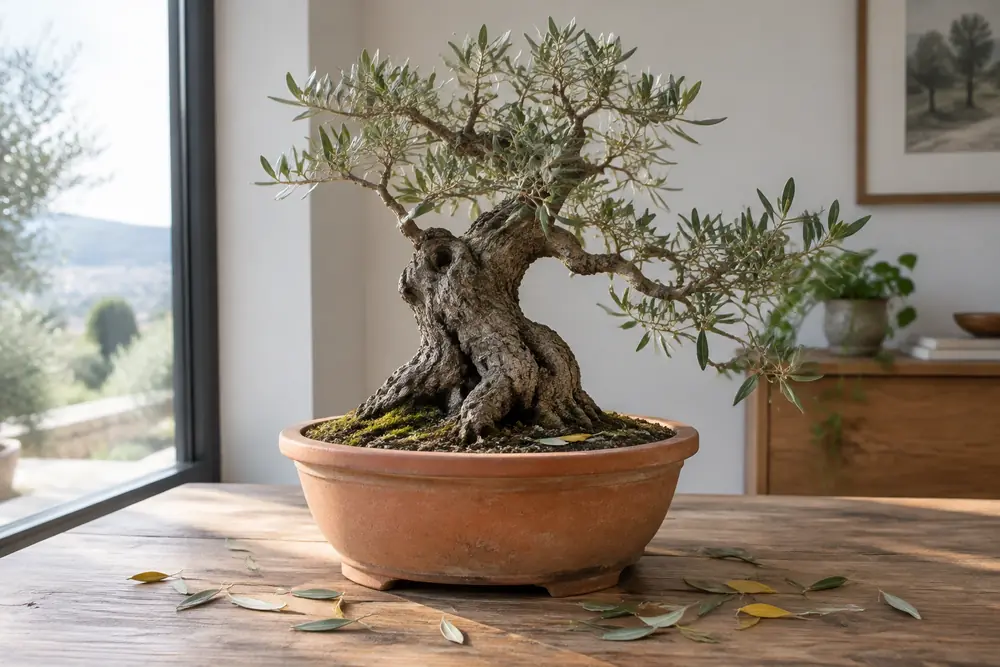
Helping your olive regrow its leaves
Olives bud back from old wood very readily, so a thin or even bare tree can recover well. Once you have fixed the cause:
- Give it as much sun as possible. Strong light is the main driver of new buds.
- Water by need, not by schedule.
- Start feeding with a balanced fertilizer once new shoots appear. Our guide on bonsai fertilizer: pellets or liquid helps you choose.
- Let shoots grow freely for a while to build strength, then trim them back to encourage branching.
Expect new buds within three to six weeks in spring and summer. In winter, recovery is slower and often only really starts when the tree goes back outside.
A good winter setup for olive bonsai
Because winter is when most olive leaf drop happens, it is worth getting the setup right.
- Mild climates (winters rarely below -5 °C / 23 °F): keep the olive outdoors in a sheltered, sunny spot against a wall. Protect the pot from hard frost with mulch or by setting it on the ground.
- Cold climates: move the tree to an unheated but frost-free space with as much light as possible, such as a bright garage window, cold greenhouse, conservatory or enclosed porch. Around 5 to 12 °C (40 to 55 °F) is ideal.
- Only a warm room available: choose the sunniest window, add a grow light for 12 to 14 hours a day and keep the tree away from heaters. Expect some leaf drop and slower growth.
In all cases, water less often in winter, but never let the soil dry out completely.
Olive leaf drop through the seasons
- Spring: some yellow old leaves fall as new shoots open. Normal.
- Summer: drop is unusual outdoors. Check watering in heat waves.
- Autumn: a move indoors may trigger green leaf drop. Move gradually and before nights get very cold.
- Winter: heavy drop indoors means too little light or too much warmth. A cool, bright rest is ideal.
Common mistakes
- Watering more because leaves are falling. Check the soil first. Wet roots are a common cause.
- Moving the tree around to find a better spot. Each move adds stress.
- Keeping it warm and dim all winter. Olives prefer a cool, bright rest.
- Cutting off bare branches immediately. Wait. They often re-bud.
For other trees that need similar care, see our guide to types of outdoor bonsai trees, and for general leaf loss on any species, see why a bonsai loses leaves suddenly.
FAQ: olive bonsai dropping leaves
Is it normal for an olive bonsai to drop leaves?
Some leaf drop in spring is normal, as old leaves are replaced. Heavy drop at other times points to light, water, cold or a recent move.
Why is my olive bonsai dropping green leaves?
Green leaf drop usually means a sudden shock, such as a move, a cold draft or drying wind.
Will my olive bonsai grow its leaves back?
Yes, if the branches are green under the bark. Olives bud back readily, especially in spring with plenty of sun.
Should I bring my olive bonsai inside for winter?
Only if your winters are hard. A cool, bright, frost-free room is better than a warm living room. In mild climates, a sheltered spot outdoors is best.
How do I check if a bare olive branch is still alive?
Scratch a tiny patch of bark with your fingernail. Green and moist underneath means the branch is alive and will likely sprout again.
Final thoughts
An olive bonsai dropping leaves is reacting to its conditions. Read the color of the fallen leaves, fix the light, watering or temperature problem behind it, and give the tree time. Olives are among the most resilient bonsai you can grow, and with strong light and good soil, they quickly rebuild a full, silvery canopy.