Bonsai Leaning to One Side? Causes and How to Fix It


A bonsai leaning to one side usually has one of three explanations: the tree is loose in its pot, it is growing toward the light, or it has lost roots on one side. The quickest check is to hold the base of the trunk and wiggle it gently. If the whole tree rocks in the soil, it was not tied in properly after repotting or the roots have not grown into the soil yet. If the trunk is firm but the top bends one way, the tree is reaching for light. If it is loose and the soil smells bad, the roots may be rotting. Each has a simple fix, from tie-down wire to regular rotation or a careful repot.
In this guide
This guide helps you find the cause and straighten your tree safely.
First, is the lean deliberate?
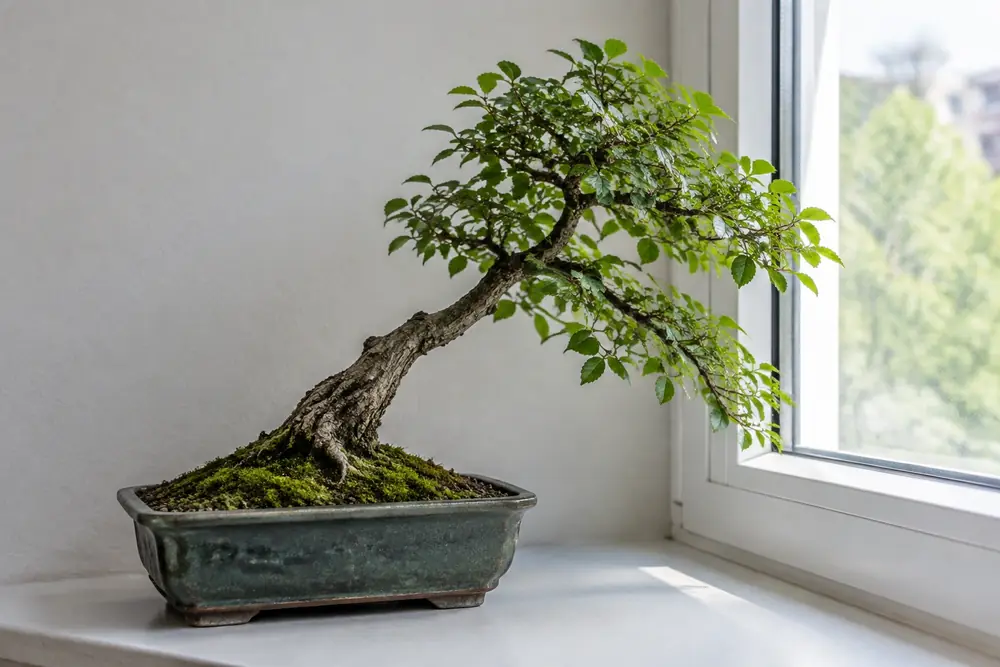
Some bonsai are styled to lean on purpose. The slanting style, called shakan in Japanese, has the trunk growing at a clear angle, usually 60 to 80 degrees from the ground, with the roots on one side looking strong enough to hold it. Windswept and cascade styles also lean dramatically. If you bought a styled tree, check whether the lean is part of the design before changing it. Our guide to juniper bonsai styles for beginners shows how these styles look.
The quick wiggle test
Hold the trunk just above the soil with two fingers and move it gently from side to side.
| What you feel | What it means |
|---|---|
| The whole root ball rocks in the pot | Not tied in, or roots have not grown into the new soil |
| Trunk is firm, but the top bends one way | Growing toward light or shaped by wind |
| Trunk wobbles and soil smells sour | Root rot on one or more sides |
| Trunk is firm but the tree sits at an odd angle | It was planted at that angle |
Common causes of a leaning bonsai
1. The tree is loose in the pot
After repotting, a bonsai’s roots sit in fresh, loose soil and have nothing to grip. Without tie-down wires, wind, watering and even touching the tree can rock it, and it ends up tilted. Rocking also tears the fine new roots that are trying to grow. Most experienced growers secure every repotted tree with wire threaded through the drainage holes and over the root ball. Our guide to bonsai repotting wire explains the materials.
2. Growing toward the light
Plants bend toward their light source, a response called phototropism. An indoor bonsai on a windowsill gets light from one side only, so new shoots grow toward the glass and the tree gradually looks lopsided or leaning. Outdoor trees next to a wall or under taller plants do the same.
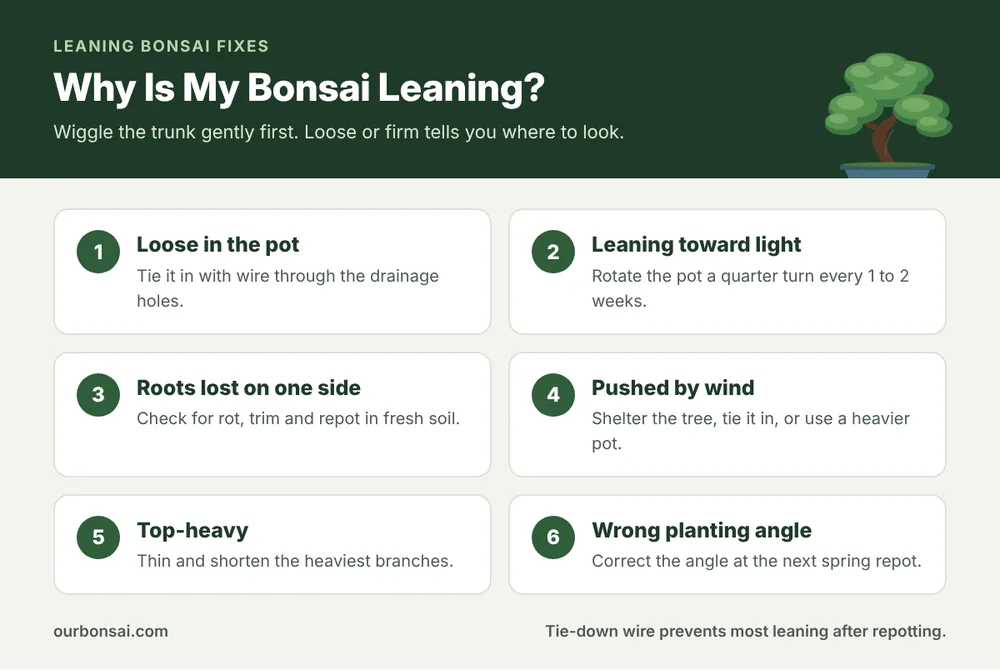
3. Root loss on one side
If roots on one side of the pot rot or dry out, the tree loses its anchor on that side and tips the other way. This often comes with yellowing or dying branches on the same side. Our guide to root rot in bonsai explains how to check.
4. Wind
Outdoor trees on exposed benches are pushed by prevailing wind. Over months, a loose tree tilts, and a firm tree grows with a slight lean away from the wind. Tall trees in shallow pots are most at risk.
5. A top-heavy tree
A large, dense canopy on a small root system, especially in a shallow pot, can pull the tree over. This is common with nursery stock that has not been pruned for a while.
6. Planted at the wrong angle
Sometimes the tree was simply set at a slight angle in the pot when it was last repotted. It is not unhealthy, just not what you want.
How to fix a leaning bonsai
If it is loose in the pot
- Thread a length of aluminum or annealed copper wire up through the drainage holes from below.
- Bring the wire ends over the root ball, crossing above the thickest roots.
- Twist the ends together until the tree sits firmly at the angle you want. Do not cut into the bark or roots.
- Top up any soil that has settled.
- Leave the tie-down in place until the roots have grown into the soil, usually one growing season.
If the pot has no extra holes for tie-down wire, you can tie the tree to a short stake pushed into the soil, or anchor a wire under the pot.
If it is leaning toward the light
- Rotate the pot a quarter turn every one to two weeks so all sides get light.
- Improve the light. A brighter window or a grow light from above reduces leaning. Our guide to how much light a bonsai tree needs explains the basics, and indoor grow lights for bonsai gives options.
- Prune the leaning shoots back and wire branches into position if needed.
If roots are rotting
Remove the tree from the pot, trim away dark and mushy roots, and repot into fresh, gritty soil. Tie the tree in firmly and keep it out of wind and strong sun while it recovers.
If wind is the problem
Move the tree to a sheltered spot, tie it in, or use a heavier, wider pot. Lava rock in the soil mix also adds weight. Many growers tie trees to the bench in windy areas.
If it was planted at the wrong angle
Wait until the next spring repot, then set the tree at the correct angle and tie it in. Do not force a big angle change on an established tree outside the repotting season, because you will tear roots.
How to prevent a bonsai from leaning
- Always tie in after repotting. It is the single most effective habit.
- Rotate indoor trees regularly.
- Repot on time with gritty, well-draining soil so roots stay healthy. Our bonsai soil mix ratio guide helps.
- Keep the canopy in balance with the root system through regular pruning.
- Shelter tall trees from strong winds.
Good repotting tools make tie-in easier. Our guide to the best bonsai repotting tools covers the essentials.
Common mistakes
- Pushing the trunk straight without loosening anything. You can tear roots or crack the trunk.
- Packing soil hard around the roots to hold the tree. It ruins drainage. Use wire instead.
- Leaving tie-down wire so tight it cuts into roots or bark. Snug is enough.
- Never rotating indoor trees. The lean gets worse every month.
FAQ: bonsai leaning
Why is my bonsai leaning to one side?
Usually it is loose in the pot, growing toward the light, or has lost roots on one side. Do the wiggle test to find out which.
How do I straighten a leaning bonsai?
If it is loose, tie it in with wire through the drainage holes at the correct angle. If it leans toward light, rotate it regularly and prune or wire the branches.
Can I repot a bonsai to fix the lean?
Yes, ideally in spring. Set the tree at the right angle and tie it in firmly.
Is a leaning bonsai unhealthy?
Not necessarily. A tree leaning toward light or planted at an angle can be perfectly healthy. A tree that wobbles with a sour-smelling soil may have root rot.
Final thoughts
A bonsai leaning in its pot is usually easy to fix once you know why. Tie loose trees in firmly, rotate indoor trees so they grow evenly, and check the roots if the tree wobbles and declines. Correct the planting angle at the next spring repot, and your tree will stand proudly at exactly the angle you want. For broader care tips, see our main bonsai care guide.