Ginseng Ficus Bonsai Winter Care: Light, Water and Warmth


This post contains affiliate links. As an Amazon Associate, OurBonsai earns from qualifying purchases at no extra cost to you. Read our disclosure.
In this guide
- Why ginseng ficus is different from other ficus
- Ideal winter temperature
- Ginseng ficus bonsai winter care checklist
- Light
- Watering a ginseng ficus in winter
- Humidity
- Why is my ginseng ficus dropping leaves in winter?
- Pests in winter
- Fertilizer, pruning and repotting
- Aerial roots in winter
- Should you mist a ginseng ficus?
- Checking the root trunk through winter
- Common ginseng ficus winter mistakes
- FAQ: ginseng ficus bonsai winter care
- Final thoughts
Ginseng ficus bonsai winter care is easier than for almost any other bonsai. Ginseng ficus (Ficus microcarpa, often sold as Ficus ginseng) is the tree with the thick, swollen “root trunk” that you see in garden centers and supermarkets everywhere. It is tough, tolerant of indoor conditions and grows all year. Winter does bring a few risks, though: low light, dry heated air and, above all, overwatering those thick roots.
This guide covers the temperature, light, watering and humidity your ginseng ficus needs to come through winter healthy.
Why ginseng ficus is different from other ficus
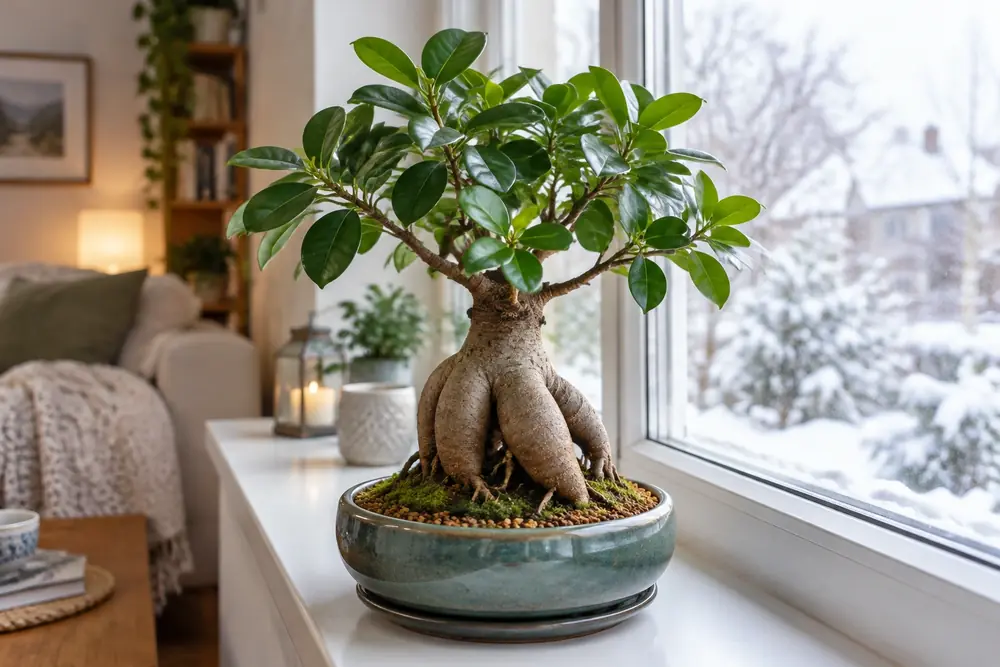
The swollen base of a ginseng ficus is actually a thickened root, often grown from a seedling or grafted. These roots store water and energy. That is great for drought tolerance, but it also means:
- The tree needs less water than its leaf size suggests.
- The thick roots can rot if they sit in wet soil, especially in a cool room.
- Signs of overwatering can appear slowly, as soft spots on the root trunk.
So the golden rule for winter is: water only when the soil has partly dried.
Ideal winter temperature
| Temperature | Effect |
|---|---|
| 18 to 24°C (64 to 75°F) | Ideal, slow growth continues |
| 15 to 18°C (59 to 64°F) | Fine, growth slows |
| 12 to 15°C (54 to 59°F) | Tolerated briefly, leaf drop likely |
| Below 12°C (54°F) | Stress, root rot risk with wet soil |
If your tree spent summer outdoors, bring it in before nights drop below about 12 to 15°C.
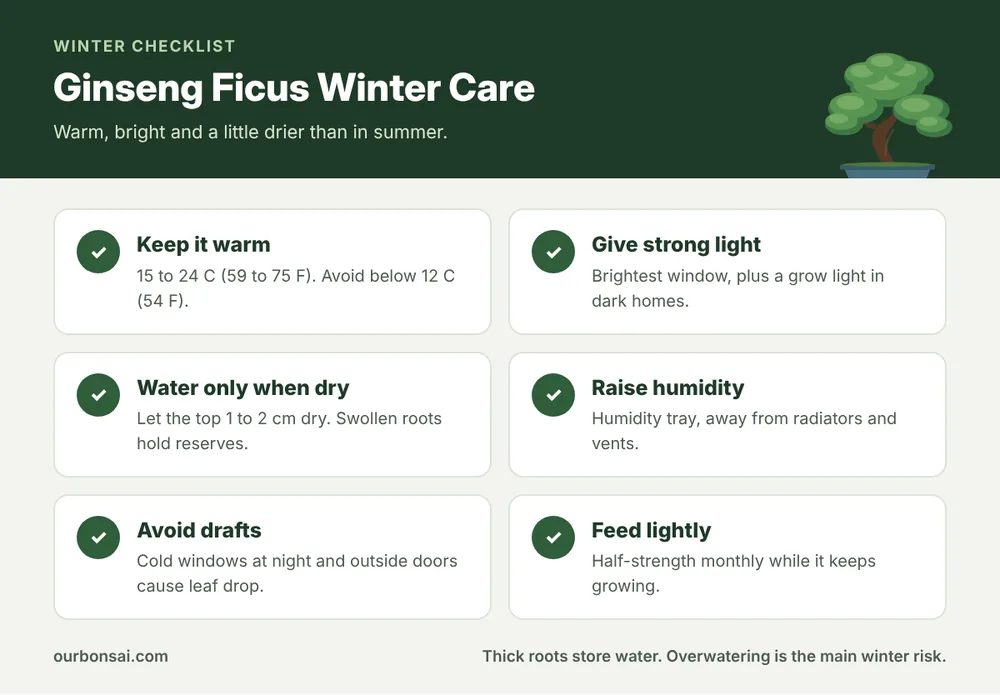
Ginseng ficus bonsai winter care checklist
Light
Ginseng ficus tolerates lower light than most bonsai, which is why it is so popular. But “tolerates” is not the same as “thrives”. In winter:
- Place it close to your brightest window.
- Turn the pot every week or two for even growth.
- Add an LED grow light for 10 to 12 hours a day if the window is dim. See our guide to the best grow lights for bonsai.
With good light, it keeps its leaves and stays compact. In low light, it drops leaves and grows long, weak shoots.
Watering a ginseng ficus in winter
- Check the soil by pushing a finger 1 to 2 cm into it.
- Water only when it feels dry at that depth.
- Water thoroughly until it drains, then empty the saucer.
- Never leave the pot sitting in water.
In a warm room, that may mean every four to seven days. In a cooler room, even less. Check the root trunk now and then. It should feel firm. Soft or wrinkled patches can mean rot (soft) or severe drought (wrinkled).
Many ginseng ficus are sold in dense, peaty soil that holds too much water. If your tree stays wet for a week or more, plan to repot in late spring. Our ficus ginseng soil recipe explains a better mix. Our tips on watering indoor bonsai in winter also apply.
Humidity
Ginseng ficus copes with dry air better than many tropical trees, but heated rooms can still dry the leaves. Use a humidity tray under the pot and keep the tree away from radiators, fireplaces and heat vents. Grouping it with other houseplants helps too.
Why is my ginseng ficus dropping leaves in winter?
- Moved recently. Ficus often sheds leaves after a change of position.
- Low light. The most common winter cause.
- Cold drafts. Windows that get very cold at night, or an outside door.
- Overwatering. Yellow leaves with wet soil.
- Dry heat. A nearby radiator.
As long as the branches stay green under the bark and the root trunk is firm, the tree will recover. For more on diagnosis, see why bonsai lose leaves suddenly.
Pests in winter
Scale insects, spider mites and mealybugs are the common winter pests on ficus. Check under leaves and along stems every week. Sticky leaves are an early sign of scale. Our guide to ficus bonsai pests and diseases covers treatment step by step.
Fertilizer, pruning and repotting
- Fertilizer: If the tree keeps growing, feed at half strength once a month. Stop if growth stops.
- Pruning: Trim long shoots back to two or three leaves to keep the shape. Ficus bleeds white sap when cut; this is normal and stops quickly.
- Repotting: Wait until late spring or early summer.
- Styling: Spring is the best time for bigger changes. Our ginseng ficus bonsai styles guide has ideas.
Aerial roots in winter
Ficus microcarpa can grow fine aerial roots from the trunk and branches when humidity is high. In dry winter rooms they usually stop growing or dry up, which is harmless. If you want to encourage them, raise the humidity in spring and summer. The Wikipedia article on Ficus microcarpa explains how these roots form in the wild.
Should you mist a ginseng ficus?
A light misting in the morning does no harm and can help keep dust off the leaves, but its effect on humidity lasts only minutes. Never mist the soil instead of watering, and do not mist so much that water collects in the crevices of the thick root trunk in a cool room, as constant dampness there can encourage rot. A humidity tray and a weekly wipe of the leaves with a damp cloth do more good. Clean leaves also capture more light, which matters in short winter days.
Checking the root trunk through winter
Because the thick base of a ginseng ficus is a root, it is worth giving it a quick look every couple of weeks in winter:
- Firm and smooth: Healthy. Keep doing what you are doing.
- Slightly wrinkled: The tree is drawing on its water reserves. Water a little more often.
- Soft, dark or sunken spots: Possible rot. Let the soil dry out, improve drainage and, if the area keeps spreading, cut away the soft tissue with a clean knife and let it dry.
- Mold on the soil surface: Usually a sign the soil stays too wet. Scrape it off and water less often.
Common ginseng ficus winter mistakes
- Watering on a fixed schedule regardless of soil moisture.
- Leaving the pot standing in a saucer of water.
- Keeping it in a dark corner as a decoration.
- Placing it on a radiator shelf.
- Moving it from room to room.
Supermarket trees often come with a layer of glued gravel on the soil that stops water and air reaching the roots. Remove it gently when you can. If you need a new pot for spring, look at a round bonsai pot with drainage on Amazon.
FAQ: ginseng ficus bonsai winter care
How often should I water a ginseng ficus in winter?
Usually every four to ten days, depending on your room. Always check that the top 1 to 2 cm of soil is dry first.
Can ginseng ficus survive low light in winter?
It can survive, but it will drop leaves and grow weakly. A bright window or grow light keeps it healthy.
Why is the root trunk of my ginseng ficus soft?
Soft spots usually mean rot from overwatering. Let the soil dry, improve drainage and cut away rotten tissue if needed.
Can I put my ginseng ficus outside in winter?
Only in frost-free climates where nights stay above about 12°C (54°F).
Final thoughts
Ginseng ficus bonsai winter care comes down to warmth, good light and restrained watering. Those thick roots store water, so let the soil dry a little between waterings, keep the tree bright and away from drafts, and it will stay green and healthy until spring. For other easy indoor species, see our list of the most popular indoor bonsai trees.