Misting Bonsai: Does It Help, and When Should You Do It?

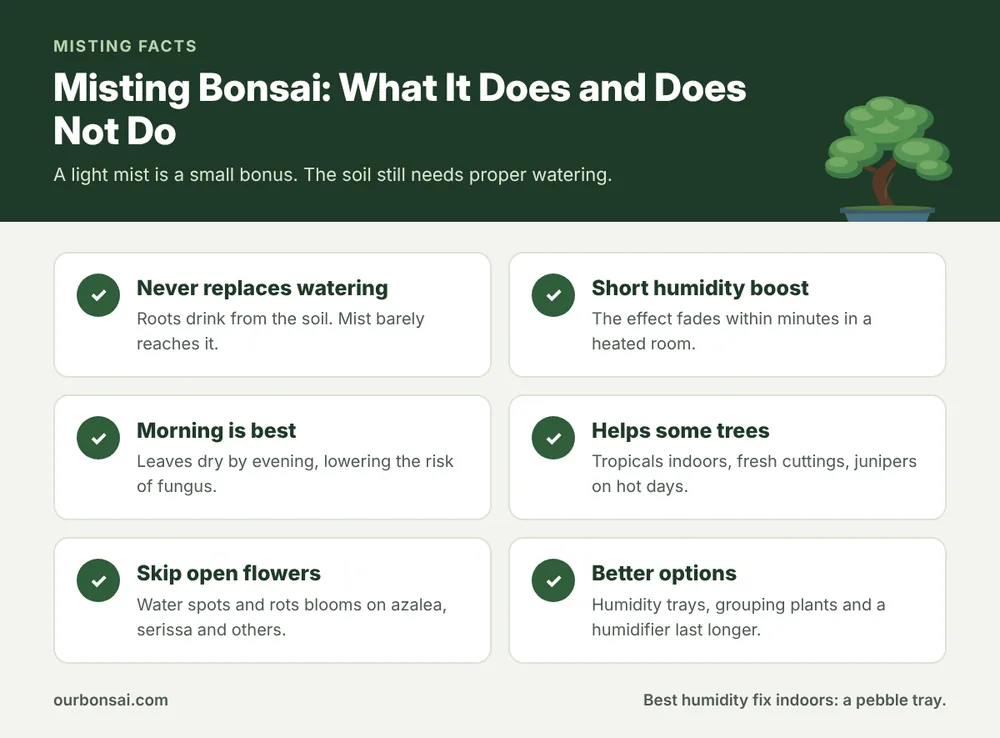
Misting bonsai is one of the most repeated pieces of advice for indoor trees, and one of the most misunderstood. A fine spray of water over the leaves raises humidity around the tree for a few minutes, cleans dust off the leaves and cools the foliage on hot days. That can be useful. But misting does not water the roots, and the humidity boost fades quickly, especially in heated rooms. Mist as a bonus for tropical indoor trees, fresh cuttings and junipers in hot weather, and rely on humidity trays, grouping and proper watering for the real work.
In this guide
- What misting actually does
- Benefits of misting bonsai
- When misting can cause problems
- Which bonsai benefit most from misting
- How to mist a bonsai properly
- Better ways to raise humidity
- Misting outdoor bonsai
- Misting cuttings, seedlings and newly repotted trees
- Misting vs watering: a quick comparison
- Common mistakes
- FAQ: misting bonsai
- Final thoughts
This guide explains what misting really does, which bonsai benefit, when it can cause problems and better ways to raise humidity.
What misting actually does
When you mist a tree, tiny droplets land on the leaves and evaporate. While they evaporate, the air right around the leaves is a little more humid and a little cooler. In a dry, heated room, that effect lasts only a few minutes. In a cooler, still room, it may last a bit longer.
Plants lose water through tiny pores in their leaves, a process called transpiration. Higher humidity slows this water loss slightly. That is why humid air helps tropical trees indoors. But a few sprays a day cannot keep a room humid, and they do almost nothing for the soil.
Benefits of misting bonsai
- Cleans the leaves. Indoor dust blocks light. Misting and a gentle wipe keep leaves clean and shiny.
- Short-term humidity. Helpful for tropical species in dry rooms, especially right after watering or in the morning.
- Cooling on hot days. A mist over juniper or pine foliage on a hot afternoon cools the needles.
- Discourages spider mites. These pests love dry conditions. Regular misting of the undersides of leaves makes life harder for them. See our guide to spider mites on bonsai trees.
- Helps cuttings and newly repotted trees. Fresh cuttings have no roots yet, so moisture on their leaves reduces stress.
When misting can cause problems
- Fungal diseases. Leaves that stay wet for hours, especially overnight or in still air, invite leaf spot and powdery mildew. Our guides to bonsai leaf spot disease and powdery mildew on bonsai trees explain the risks.
- Water spots. Hard tap water leaves white mineral spots on leaves.
- Damaged flowers. Water on open azalea, serissa or bougainvillea flowers causes spotting and rot.
- False confidence. The biggest risk is thinking misting counts as watering. A tree that is misted daily but whose soil is dry will still die of thirst.
Which bonsai benefit most from misting
| Tree | Benefit from misting | Notes |
|---|---|---|
| Ficus | Moderate | Helps in dry heated rooms. Wipe dusty leaves |
| Schefflera | Moderate | Likes humidity. Mist in the morning |
| Serissa | Moderate | Helps against leaf drop in dry air. Avoid flowers |
| Fukien tea | High | Very sensitive to dry air |
| Juniper (outdoors) | Moderate in heat | Cools foliage, deters spider mites |
| Jade and succulents | Low | Prefer dry leaves. Skip misting |
| Azalea in flower | Avoid on flowers | Mist only leaves, outside flowering |
| Cuttings | High | Keeps them from drying while they root |
How to mist a bonsai properly
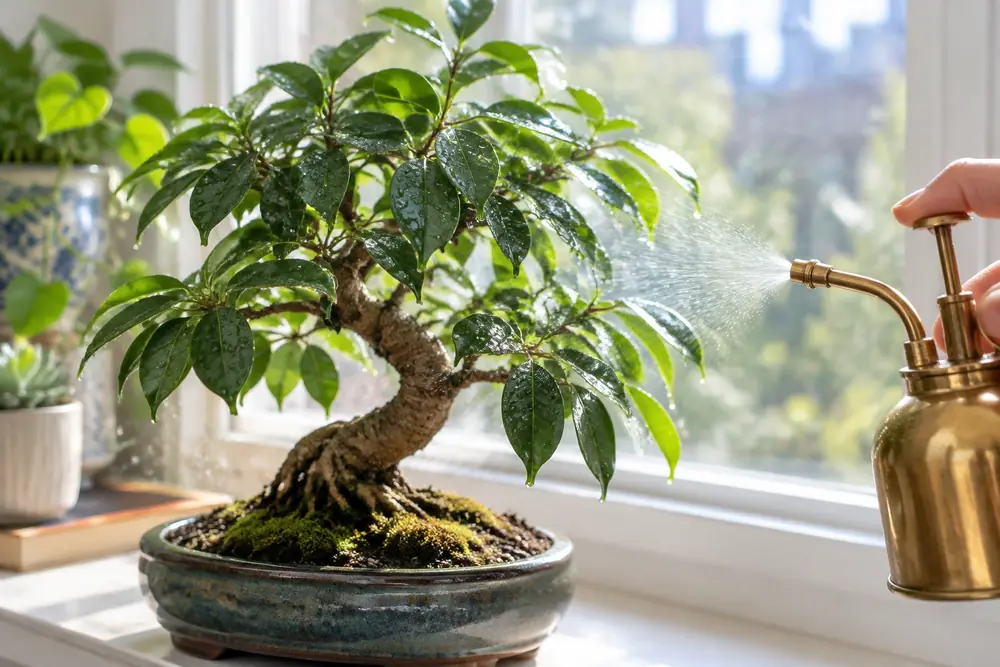
- Use a fine mister. A spray bottle with a very fine nozzle produces a mist rather than drops.
- Use soft water. Rain water or filtered water avoids white spots from hard tap water.
- Mist in the morning. Leaves dry during the day, which lowers the fungal risk.
- Spray the undersides too. That is where spider mites live and where many leaf pores are.
- Do not soak the tree. A light mist is enough. Leaves should be dry again within an hour or two.
- Then check the soil. Misting does not replace watering. Water the soil whenever the top starts to dry.
Better ways to raise humidity
If your indoor bonsai suffers from dry air, these methods work far better than misting alone:
- Humidity tray. A shallow tray filled with pebbles and water, with the pot sitting above the water line. As the water evaporates, it raises humidity around the tree all day. See our guide to the best humidity tray for bonsai.
- Grouping plants. Several plants close together create a more humid microclimate.
- A room humidifier. The most effective option in very dry homes, especially in winter.
- Placement. Keep trees away from radiators, heaters and air vents, which dry the air directly around them.
- Proper watering. Healthy, well-watered roots handle dry air much better. Our guide to watering indoor bonsai in winter explains the winter routine.
Misting outdoor bonsai
Outdoor trees rarely need misting for humidity. However, in a hot, dry summer, misting or gently hosing the foliage in the morning or evening can cool junipers, pines and other conifers and keep spider mites down. Many growers simply water the whole tree, foliage included, with a fine rose when they water the soil. Avoid doing this in the midday sun on very hot days if your water is hard, to prevent spotting. Our guide to watering bonsai in summer covers hot weather care.
Misting cuttings, seedlings and newly repotted trees
These are the situations where misting earns its place.
Cuttings. A cutting has leaves but no roots, so it cannot replace the water its leaves lose. Misting several times a day, or keeping cuttings under a clear cover, keeps the leaves from drying out while roots form. Open the cover daily for a few minutes to let fresh air in and reduce mold.
Seedlings. Tiny seedlings dry out fast. A fine mist keeps the surface moist without washing seeds or small roots out of the soil. Our guide to bonsai seed germination time covers what to expect in the first weeks.
Newly repotted trees. After heavy root pruning, a tree has fewer roots to supply its leaves. A light morning mist for the first two weeks, combined with shade and shelter from wind, reduces stress while new roots grow.
Newly collected or imported trees. Trees that lost roots in transport benefit in the same way.
Misting vs watering: a quick comparison
| Misting | Watering the soil | |
|---|---|---|
| Reaches the roots | Barely | Yes |
| Raises humidity | For minutes | Slightly, as soil dries |
| Cleans leaves | Yes | Only when watering over foliage |
| Needed for survival | No | Yes |
| Risk if overdone | Fungal leaf problems | Root rot |
Common mistakes
- Misting instead of watering. The roots stay dry and the tree declines.
- Misting in the evening. Leaves stay wet overnight and fungi thrive.
- Misting succulents. Jade and similar trees do not need or like it.
- Misting open flowers. It spoils the blooms.
- Expecting misting to fix very dry air. Use a tray or humidifier instead.
FAQ: misting bonsai
Should I mist my bonsai every day?
It is not necessary for most trees. For tropical indoor trees in dry rooms, a morning mist can help, but humidity trays work better. Always water the soil separately.
Can misting replace watering a bonsai?
No. Misting barely reaches the soil. Water the soil until it drains whenever the top starts to dry.
Is misting good for indoor bonsai in winter?
It helps a little in heated rooms, but the effect is short. A humidity tray and keeping the tree away from heaters do much more.
Does misting help against pests?
It discourages spider mites, which prefer dry conditions. It does not control other pests like scale or mealybugs.
Final thoughts
Misting bonsai is a small helper, not a care routine on its own. Use it in the morning to clean leaves, cool foliage and give tropical indoor trees a brief humidity boost. For lasting humidity, use a pebble tray, group your plants or run a humidifier, and always water the soil properly. That combination keeps indoor bonsai healthy through the driest months. For more indoor tips, see our guide on how to take care of a bonsai tree inside.