Is My Bonsai Dead or Dormant? 6 Ways to Tell

Wondering whether your bonsai dead or dormant is a question nearly every owner of a deciduous tree asks in their first winter. A dormant maple, elm, larch or pomegranate drops all its leaves and looks lifeless for months. A dead one looks almost the same. The difference is inside: a dormant tree has firm, plump buds, green tissue under the bark and flexible twigs, while a dead tree has dry, brittle twigs, brown tissue under the bark and shriveled buds. Use a few simple checks rather than relying on how the tree looks, and if in doubt, keep caring for it until late spring.
In this guide
This guide gives you six checks and explains what to do in each case.
What dormancy is
Dormancy is a resting state that trees from cold and temperate climates enter in autumn. Growth stops, deciduous trees shed their leaves, and the tree survives the winter on stored energy. Many hardy species actually need this cold rest to grow well the next year.
- Deciduous trees (maples, elms, larch, beech, hornbeam, pomegranate, wisteria) lose all their leaves.
- Evergreen conifers (junipers, pines, spruce) keep their foliage but stop growing. Some turn bronze or purple.
- Tropical bonsai (ficus, jade, schefflera, serissa) do not truly go dormant. They slow down indoors in winter, but a tropical tree that drops all its leaves is stressed, not dormant.
So the first question is: what kind of tree do you have, and what season is it? Our guides to deciduous bonsai tree types and types of evergreen bonsai trees help you identify your tree’s group.
6 ways to tell if a bonsai is dead or dormant
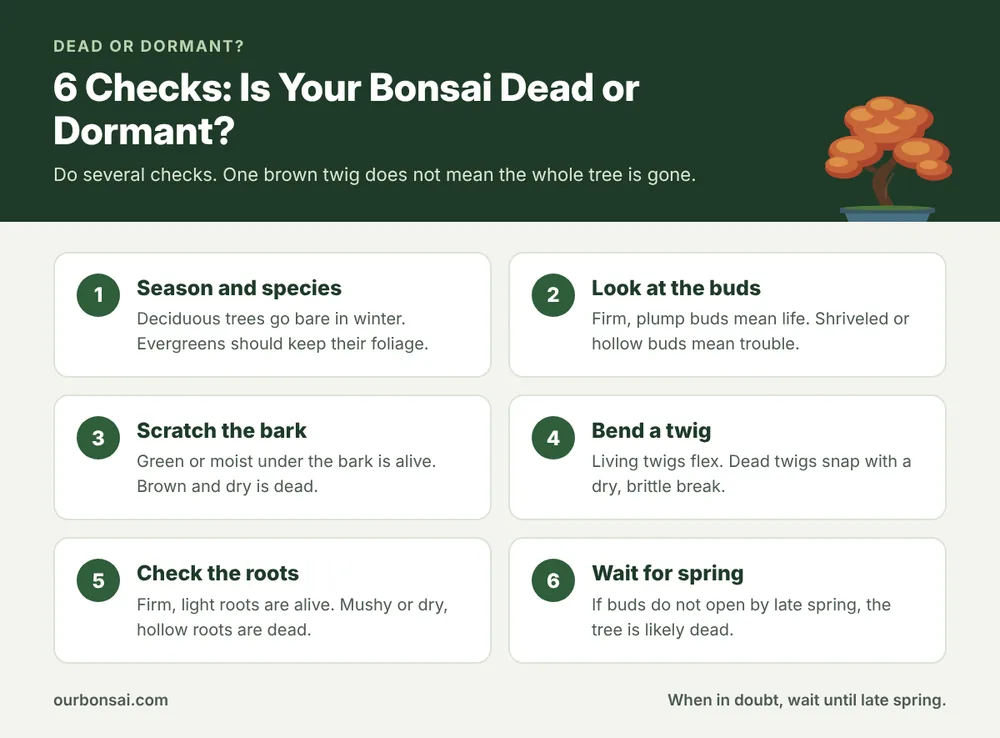
1. Check the season and species
A bare deciduous tree from November to March is almost certainly dormant. A bare evergreen, or a bare tropical tree, is a warning sign. An evergreen juniper or pine with brown, crispy foliage all over is very likely dead.
2. Look at the buds
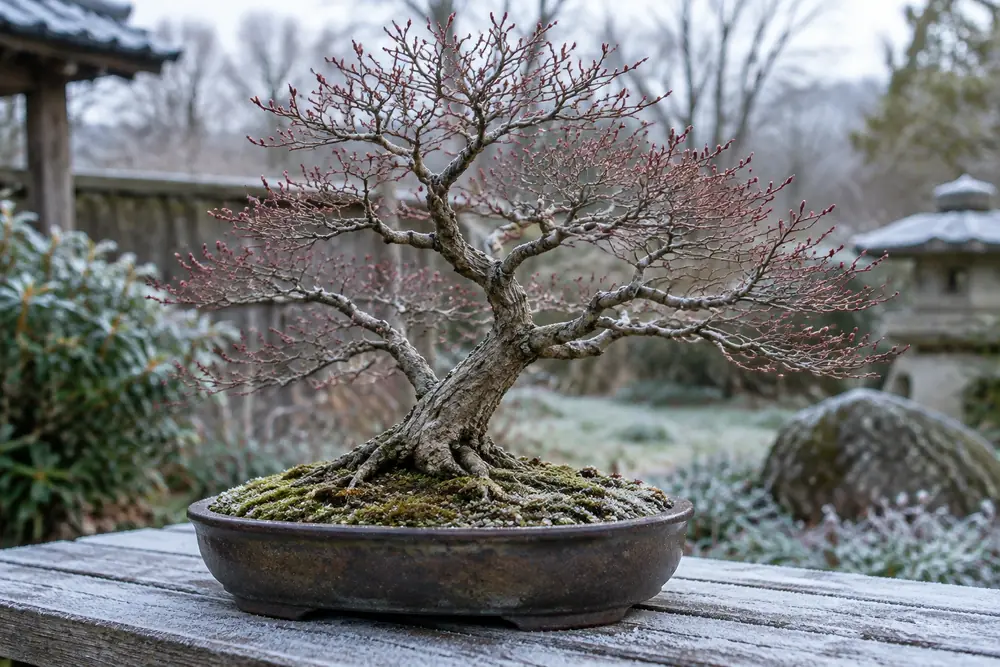
Dormant deciduous trees carry small buds at the tips of the twigs and at each old leaf joint. Healthy buds are firm, plump and often have a slight color. Dead buds are shriveled, dry, hollow or fall off when touched. Gently cut one bud open: green inside is alive, brown and dry is dead.
3. Scratch the bark
With a fingernail or small knife, scrape a tiny patch of bark on a twig. Bright green or moist cream tissue underneath means the cambium is alive. Brown and dry means that part is dead. Start at the tips and work toward the trunk, because twigs can die back while the main branches live.
4. Bend a twig
Living twigs are flexible, even in winter. Dead twigs snap with a dry, brittle break and look brown inside. Test several twigs around the tree, not just one.
5. Check the roots
Slide the tree carefully out of its pot. Living roots are firm and white, cream or light brown inside. Dead roots are dark, mushy and slimy (rot) or dry, hollow and papery (drought or frost). If most of the roots are dead, the tree will not recover even if some branches are still green.
6. Wait for spring
If the checks are unclear, the safest thing is to keep caring for the tree and wait. Most deciduous bonsai push buds between early and late spring, depending on species and climate. If nothing happens by late spring while trees of the same species around you are in full leaf, it is probably dead.
Dead or dormant at a glance
| Check | Dormant | Dead |
|---|---|---|
| Buds | Firm, plump | Shriveled, dry, hollow |
| Under the bark | Green or moist | Brown, dry |
| Twigs | Flexible | Brittle, snap easily |
| Roots | Firm, light inside | Mushy or dry and hollow |
| Spring | Buds swell and open | Nothing happens |
When do bonsai wake up? Typical bud break times
Use this as a rough guide for temperate climates. Mild areas are earlier, cold areas later. Trees protected in a cold frame often wake a week or two before trees outside.
| Species | Typical bud break |
|---|---|
| Trident maple | Early spring |
| Japanese maple | Early to mid spring |
| Larch | Early spring, often one of the first |
| Chinese and Siberian elm | Mid spring |
| Hornbeam and beech | Mid to late spring |
| Zelkova | Mid spring |
| Wisteria | Mid to late spring |
| Pomegranate | Late spring, often one of the last |
| Bald cypress | Late spring |
If your tree is a late riser like pomegranate or bald cypress, do not give up on it in April. Compare it with the same species in local gardens before deciding.
How to care for a dormant bonsai
- Keep it outdoors if it is a hardy species. It needs cold to rest properly.
- Protect the roots from hard frost by setting the pot on the ground, adding mulch or using a cold frame.
- Water sparingly. The tree uses little water, but the soil should never dry out completely.
- Do not fertilize. The tree cannot use it while dormant.
- Prune lightly if needed. Late winter is a good time for structural pruning on many deciduous trees. See our guide on when to prune deciduous bonsai.
For tropical trees indoors, our guide to watering indoor bonsai in winter explains the slower winter routine.
What to do if part of the tree is dead
Often, only some branches have died while the trunk and roots are fine. Once spring growth shows which parts are alive, cut dead branches back to living wood. Dead stubs can be turned into deadwood features, especially on conifers. Our guide on why bonsai branches die helps you understand what went wrong.
Common causes of death during winter
- Frozen roots in an unprotected pot.
- Wet, cold soil leading to root rot.
- Drying out completely, especially in windy spots or indoors near heaters.
- Keeping a hardy tree indoors, where it cannot go dormant properly and weakens.
Common mistakes
- Judging too early in spring. Late species like pomegranate and bald cypress can stay bare into May.
- Throwing out a bare deciduous tree in winter. It is most likely just resting.
- Bringing a dormant hardy tree into a warm house. It may break dormancy too early and weaken.
- Stopping watering completely. Dormant roots still need some moisture.
- Scratching the bark all over. A few small tests are enough.
FAQ: bonsai dead or dormant
How do I know if my bonsai is dormant?
It is a deciduous species, it is winter, the buds are firm and the tissue under the bark is green.
When should my dormant bonsai start growing again?
Usually between early and late spring, depending on species and climate.
Can an evergreen bonsai be dormant without leaves?
No. Evergreens keep their foliage through winter. Brown, crispy foliage all over an evergreen usually means it is dead.
What if only the top of my bonsai is dead?
Cut back to living wood once spring growth begins. The tree can regrow from lower branches and buds.
Should I water a bonsai that might be dead?
Yes, keep watering it lightly as if it were dormant until you are sure. Watering a dead tree does no harm, but letting a dormant tree dry out can kill it.
Final thoughts
To tell if your bonsai is dead or dormant, combine a few checks: species and season, buds, bark, twigs and roots. A dormant tree has firm buds, flexible twigs and green tissue under the bark. When in doubt, keep caring for it through winter and wait for spring. Many “dead” bonsai have surprised their owners with a fresh flush of leaves in April. For year-round care, see our main bonsai care guide.