Immersion Watering Bonsai: When to Soak and How to Do It

This post contains affiliate links. As an Amazon Associate, OurBonsai earns from qualifying purchases at no extra cost to you. Read our disclosure.
In this guide
- What is immersion watering?
- When immersion watering is useful
- When to avoid immersion watering
- How to immersion water a bonsai
- Immersion watering vs top watering
- Tips for successful soaking
- Immersion watering for indoor bonsai
- Signs soaking was needed
- Using soaking to apply treatments
- Common immersion watering mistakes
- FAQ: immersion watering bonsai
- Final thoughts
Immersion watering bonsai simply means soaking the whole pot in a basin of water until the soil is completely saturated. Many bonsai books mention it, and some indoor growers use it every time they water. It is especially useful for rescuing a tree whose soil has dried out so much that water just runs off the top. But it is not always the best everyday method, and it has a few downsides you should know about.
This guide explains when soaking helps, how to do it properly, and how it compares with normal watering from above.
What is immersion watering?
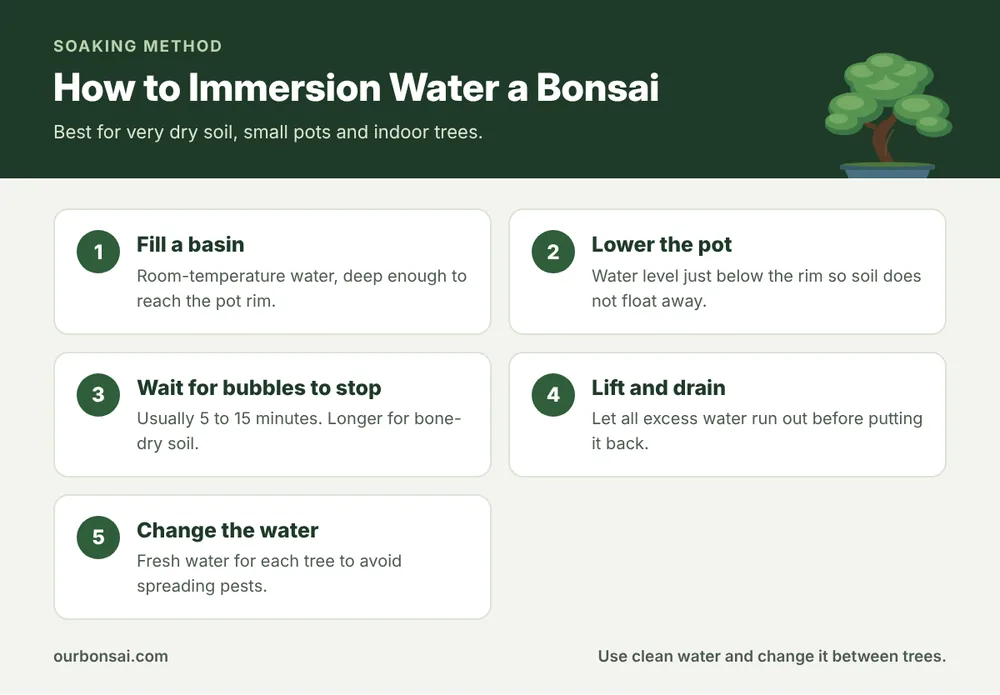
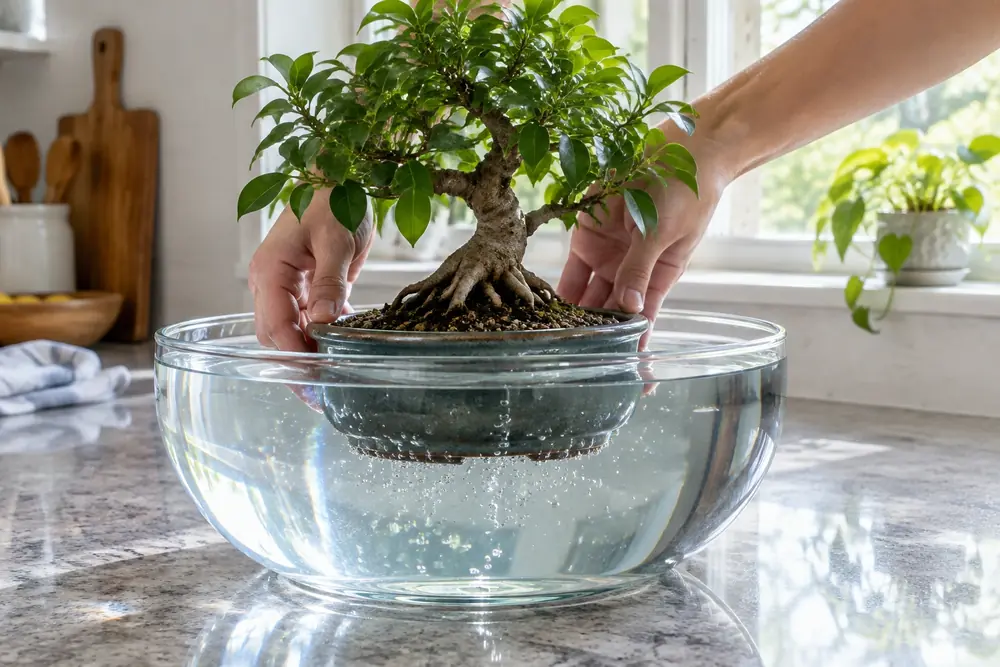
Instead of pouring water over the soil surface, you lower the pot into a container of water so the water level reaches just below the rim. Water soaks up through the drainage holes and in from the top, pushing air out of the soil. You will see bubbles rising. When the bubbles stop, the soil is fully wet. You then lift the pot out and let it drain.
When immersion watering is useful
- Rescuing bone-dry soil. When bonsai soil dries out completely, especially soil with organic material, it can repel water. Top watering just runs down the sides. Soaking rewets the whole root ball.
- Small indoor trees. Mame and shohin trees in tiny pots are easy to dip, and soaking makes sure every bit of soil gets wet.
- Moss-covered soil. A thick moss layer can shed water from the surface. Soaking gets past it.
- After a long absence when you are not sure how dry the tree became.
- Newly bought trees in dense nursery soil that has dried into a hard block.
When to avoid immersion watering
- As the only method for outdoor collections. It is slow, and normal top watering flushes the soil better.
- For trees in very fine soil, which may become waterlogged.
- For trees with pests or disease, since shared water can spread them. Always change the water between trees.
- In freezing weather for outdoor trees.
- For trees that are already wet. Soaking soil that has not dried can lead to root rot. See our guide to bonsai root rot.
How to immersion water a bonsai
How long should you soak?
| Situation | Soak time |
|---|---|
| Normal watering of a small indoor tree | 5 to 10 minutes |
| Soil slightly drier than usual | 10 minutes |
| Bone-dry, hard soil | 15 to 30 minutes |
| Rescue of a badly dried tree | Until bubbles stop completely |
Never leave a bonsai standing in water for hours or overnight. The roots need air as well as water.
Immersion watering vs top watering
| Immersion watering | Top watering | |
|---|---|---|
| Wets the whole root ball | Very reliably | Yes, if done thoroughly |
| Flushes out salts and stale air | Less | Better |
| Time needed | More | Less |
| Good for large collections | No | Yes |
| Good for rescuing dry soil | Excellent | Poor |
| Risk of spreading pests | Higher if water shared | Low |
For most growers, the best approach is to top water normally and keep immersion for special cases. When you top water, use a fine-rose can or wand and water until it runs from the drainage holes, then water again. Our guides to the best Japanese watering can for bonsai and bonsai watering tools explain the gear.
Tips for successful soaking
- Use room-temperature water. Cold water can shock tropical roots.
- Hold the tree steady when lowering it; lightweight pots can tip.
- Keep the water below the rim so the top layer of soil does not float away.
- Use rainwater or tap water left to stand if your tap water is very hard.
- Add liquid fertilizer occasionally to the soaking water during the growing season, at normal strength. This feeds the whole root ball evenly.
- Let it drain on a rack or the edge of the sink before returning it to its tray.
A wide, shallow plastic tub or plant soaking tray works well for small trees.
Immersion watering for indoor bonsai
Indoor trees often benefit most from occasional soaking because:
- Heating dries pots unevenly.
- Small pots on windowsills can dry fast in winter sun.
- Soaking over a sink avoids water damage to furniture.
Even so, many indoor growers top water most of the time and soak once every week or two, or whenever the soil seems to repel water. Our guides on how to take care of a bonsai tree indoors and watering indoor bonsai in winter cover indoor routines. A humidity tray is a different tool: it raises humidity around the leaves but does not water the roots.
Signs soaking was needed
- Bubbles keep rising for many minutes: the soil was very dry.
- The pot feels much heavier afterward.
- The tree looks perkier within a few hours.
If you find yourself needing to soak often to rescue dry soil, your watering routine or soil mix needs adjusting. Check the soil every day and consider a more water-retentive mix for small pots.
Using soaking to apply treatments
Immersion is also a convenient way to apply some treatments evenly through the root ball:
- Liquid fertilizer at normal strength during the growing season.
- Systemic insecticides, where approved for use, so the roots absorb them. Follow the label exactly and never reuse the water.
- A root stimulant after repotting, if you choose to use one.
Use a separate tub for treatments, label it, and wash it out afterward so it is never used for plain watering by mistake. The general principles of watering container trees are also covered in the Wikipedia article on bonsai cultivation and care.
Common immersion watering mistakes
- Leaving the pot in water too long, sometimes for hours, which drives out the air roots need.
- Submerging the whole pot so the soil surface and moss float away.
- Using the same water for many trees, which can spread pests and fungal spores.
- Soaking soil that is already wet out of habit.
- Forgetting to drain, then putting the tree back into a decorative tray full of water.
FAQ: immersion watering bonsai
Is it okay to water bonsai by soaking every time?
For a few small indoor trees, yes, as long as you let them drain fully and the soil dries a little between soakings. For large collections, top watering is more practical and flushes the soil better.
How do I know when to stop soaking?
When no more air bubbles rise from the soil. That means the soil is fully wet.
Can soaking cause root rot?
Only if you soak soil that is still wet, or leave the pot sitting in water. Soak only when the soil is dry, then drain well.
Can I soak a bonsai that has moss on top?
Yes. Soaking is a good way to water through a thick moss layer. Keep the water below the rim to avoid lifting the moss.
Final thoughts
Immersion watering bonsai is a simple, reliable way to rewet dry soil completely, ideal for rescues, tiny pots and indoor trees. Soak until the bubbles stop, drain fully and change the water between trees. For everyday watering of most collections, thorough top watering is faster and flushes the soil better, so use both methods where each works best. For more on daily care, see our bonsai care guide.