Brown Roots on Bonsai: Causes and Solutions

Quick Answer
Brown roots on a bonsai are not automatically a sign of root rot. Some healthy roots are naturally tan or brown, so check firmness, smell, moisture, and root-tip condition before treating the tree; guidance on root color and water stress also shows why color alone is not a reliable diagnosis.
Signs to check first
- Firm brown roots: Often healthy, especially when the tree otherwise grows normally.
- Soft dark roots: Brown or black roots that feel mushy may be dying or rotting.
- Bad smell: Sour or swampy odors suggest the root zone has stayed excessively wet.
- Weak foliage: Yellowing, wilting, leaf drop, or stalled growth makes root damage more concerning.
- Poor drainage: Water that sits in the pot increases the chance of oxygen-starved roots.
What to do
- Correct watering and drainage first, then inspect or repot only when the tree’s condition and season justify disturbing its roots.
Finding brown roots on a bonsai can be alarming, especially when you’re expecting every healthy root to look bright white. In practice, root color tells only part of the story.
As of 2026, I still use the same basic diagnostic rule: judge the whole root system, not one color. This guide walks through the causes, warning signs, treatment steps, and ways to prevent the problem from returning.
In This Guide
Are Brown Roots on Bonsai Always a Problem?
No. Healthy bonsai roots do not all have to be pure white, and mature roots may naturally appear tan, beige, reddish, or brown.
Species also differ. Root color therefore works best as one diagnostic clue rather than a stand-alone test.
Root health definition: A healthy bonsai root system has living, functional roots that can absorb water and nutrients while receiving enough oxygen. Firmness, active fine roots, drainage, and the tree’s above-ground growth usually tell you more than color alone.
I first check whether the roots feel firm. A firm tan or brown root attached to vigorous growth worries me far less than a dark root that collapses between my fingers.
Healthy root systems usually contain different root sizes. Fine feeder roots handle much of the water and nutrient uptake, while thicker structural roots anchor the tree.
- Usually reassuring: Firm roots, earthy-smelling substrate, normal foliage, and fresh root tips.
- Worth monitoring: Darker roots combined with slow drainage or declining growth.
- Potentially serious: Soft roots, peeling tissue, sour odors, wilting, or widespread blackening.
The condition of the canopy matters too. A bonsai producing healthy shoots and normal foliage is less likely to have extensive root failure.
Look harder when brown roots appear alongside yellow leaves, unexplained wilting, branch dieback, or consistently wet substrate.
What Causes Bonsai Roots to Turn Brown?
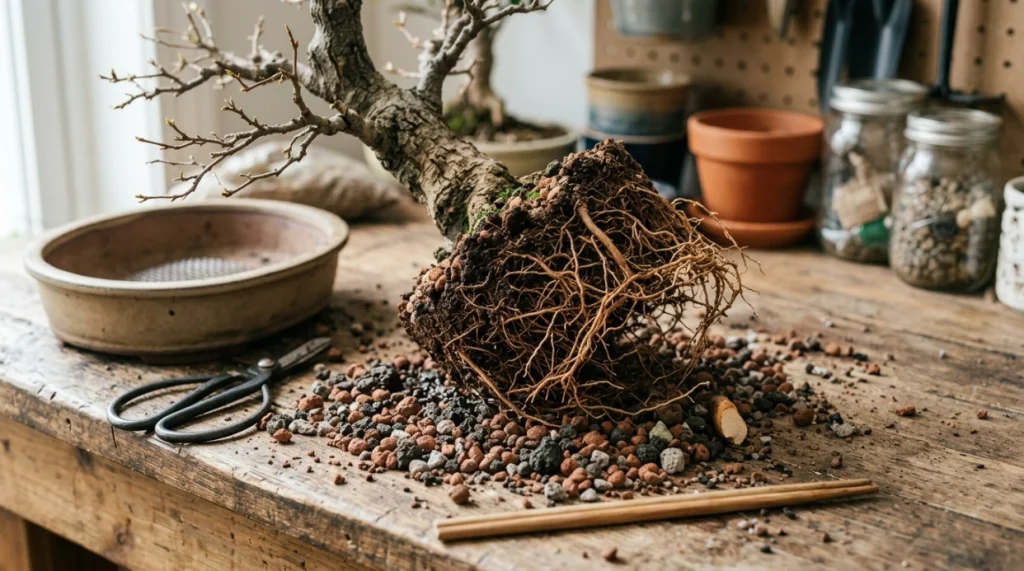
Brown bonsai roots can come from normal aging, soil staining, drought injury, excessive moisture, poor drainage, damaged roots, or root disease. The surrounding conditions help separate harmless discoloration from trouble.
1. Normal root aging and natural coloration
Older woody roots usually become darker than fresh feeder roots. The outer surface may turn tan or brown as the root matures.
Particles such as akadama, bark, organic matter, and other substrates can also discolor root surfaces. A stained but firm root is not automatically dead.
2. Too much moisture around the roots
Persistent saturation is one of the most important causes to investigate. Roots need both water and oxygen.
When small air spaces stay filled with water, oxygen availability falls. Root growth can weaken before the foliage shows obvious damage.
- Watering again while the root zone is still wet
- Blocked drainage holes
- A pot sitting continuously in collected water
- Dense, broken-down substrate
- A soil mix that retains too much moisture for the climate
This is why I avoid watering bonsai strictly by calendar. I check the actual moisture condition of each tree instead.
3. Compacted or poorly draining bonsai soil
A good bonsai substrate must balance water retention with drainage and aeration. Bonsai Empire’s soil guidance emphasizes these same three functions.
As organic components break down, small particles can fill air spaces. Water then moves more slowly through the root ball.
- Akadama: Holds moisture while providing particle structure, although it eventually breaks down.
- Pumice: Holds some moisture while maintaining useful pore space.
- Lava rock: Helps preserve drainage and structural stability.
- Fine organic material: Can retain useful moisture but may compact when used too heavily.
4. Roots that became too dry
Brown roots can also result from the opposite problem. Fine roots may die when a bonsai remains dry for too long.
Drought-damaged roots tend to become thin, brittle, or shriveled rather than waterlogged and mushy. That difference is useful during diagnosis.
5. Root rot and root pathogens
Root rot describes declining or decaying root tissue. It can develop from prolonged oxygen-poor conditions and may also involve pathogens such as Pythium or Phytophthora.
The University of Maryland’s guidance on root rot in container plants describes diseased roots as brown to black and often soft or mushy. Wilting may occur even while the growing medium remains moist.
6. Repotting or mechanical root damage
Recently handled roots can brown after being torn, crushed, excessively trimmed, or exposed during repotting. Fine feeder roots are particularly delicate.
Some loss after root work is expected, but widespread decline suggests the tree experienced more stress than it could quickly replace.
Section Takeaway: Brown roots have several possible causes. Texture, drainage, soil moisture, smell, and foliage symptoms are more useful than color by itself.
How Can You Tell Healthy Brown Roots From Root Rot?
Healthy brown roots are generally firm and structurally intact. Rotting roots commonly become soft, weak, dark, or easy to strip apart.
I use a simple comparison rather than relying on a single symptom.
| Check | Usually Healthy | Possible Root Rot |
|---|---|---|
| Color | White, cream, tan, reddish, or natural brown | Dark brown to black, especially with other symptoms |
| Texture | Firm and resilient | Soft, mushy, limp, or collapsing |
| Outer tissue | Remains intact | May slide or peel away easily |
| Smell | Mild, earthy smell | Sour, stagnant, or unpleasant odor |
| Soil condition | Moisture changes normally between watering | Remains soggy or drains unusually slowly |
| Tree growth | Normal buds, leaves, needles, and shoots | Weak growth, yellowing, wilting, or dieback |
A small patch of dark root tissue does not necessarily mean the entire root system is failing. Distribution matters.
Inspect several areas if the season and tree condition allow it. Widespread soft roots are much more concerning than one old brown structural root.
How Do You Fix Brown or Rotting Bonsai Roots?
The correct solution depends on whether the roots are simply brown or actively deteriorating. Do not perform emergency root surgery just because the roots look darker than expected.
If the roots are firm and the tree looks healthy
Leave healthy roots alone. Correct any obvious watering or drainage problem and continue observing the tree.
- Check whether water exits the drainage holes freely.
- Allow the substrate to approach the appropriate moisture level before watering again.
- Keep the tree in the light and location appropriate for its species.
- Watch new shoots, leaves, needles, and buds for continued healthy growth.
If roots are soft, rotten, or collapsing
First remove the environmental cause. Continuing to saturate damaged roots will not help them recover.
If repotting is seasonally appropriate and the tree can tolerate root work, inspect the root system carefully. Remove only clearly dead or decomposed tissue with clean, sharp tools.
Pro tip: Cutting live bonsai roots is irreversible. If the tree is valuable, weak, unfamiliar, or badly damaged, work with an experienced grower or local bonsai club before making major cuts.
Replace exhausted or waterlogged growing media with an appropriate free-draining bonsai substrate. Make sure drainage holes remain unobstructed.
Follow species-specific timing whenever possible. The bonsai repotting guide notes that many trees are safest to repot around early spring as buds begin to swell, although exact timing varies by species and climate.
After repotting
The tree needs stability while new roots establish. Avoid combining major root work with unnecessary styling stress.
- Protect the tree from extreme heat and drying winds.
- Keep moisture consistent without maintaining soggy conditions.
- Secure the tree so new roots are not repeatedly disturbed.
- Avoid heavy pruning or wiring during early recovery.
- Resume normal feeding according to species, season, and recovery.
Do not expect damaged roots to become healthy again. Recovery depends on the bonsai producing new functional roots.
How Do You Prevent Brown Roots From Coming Back?
Prevention comes down to maintaining the right balance of moisture, drainage, oxygen, temperature, and root space. Healthy roots should never spend long periods either waterlogged or bone dry.
Water the tree, not the calendar
A bonsai may need water more often during hot, windy weather and less during cool or dormant periods. Pot size, species, foliage mass, substrate, and sun exposure all change drying speed.
Check the substrate itself before watering. Then water thoroughly enough to wet the complete root zone.
Use substrate that keeps its structure
Particle size matters because spaces between particles hold both water and air. A mix that collapses into dense mud becomes harder to manage.
- Choose components suited to your tree and climate.
- Sift excessive dust from granular substrates when appropriate.
- Watch how quickly water penetrates and exits the pot.
- Refresh old substrate when compaction becomes noticeable.
Keep drainage holes working
Water should be able to leave a bonsai pot freely. Roots cannot compensate for a container that traps excess water indefinitely.
Check drainage when water suddenly starts pooling longer than usual. Slow drainage can indicate compacted substrate or a root-bound tree.
Avoid unnecessary root disturbance
Healthy fine roots are valuable. Routine checking should not mean repeatedly pulling a bonsai apart to inspect it.
Use above-ground symptoms and drainage behavior first. Disturb the root ball when there is a genuine reason.
When Should You Repot or Get Help?
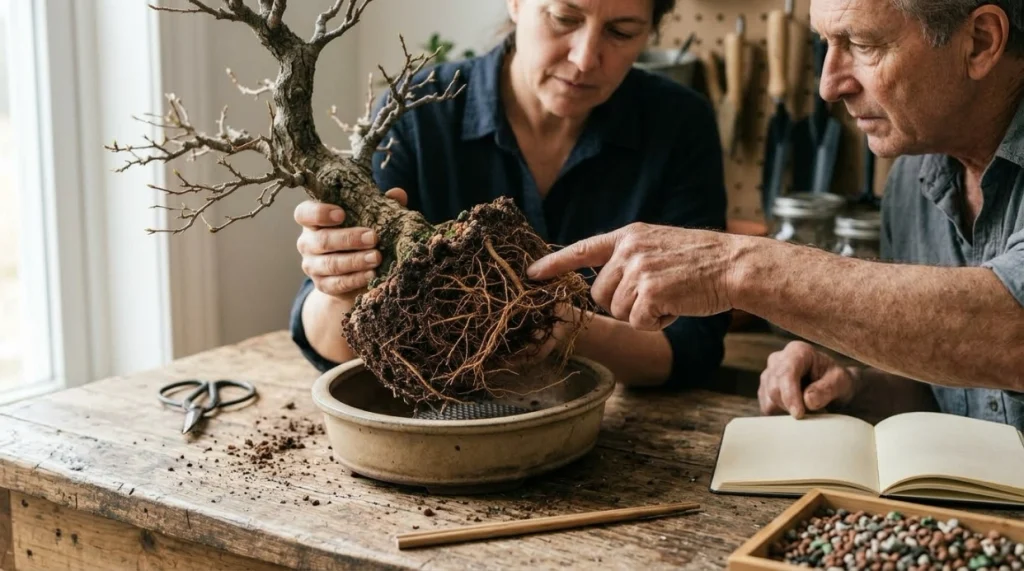
Consider repotting when the substrate has broken down, drainage has declined, roots tightly circle the container, or confirmed dead roots need attention. Timing still matters.
An otherwise healthy tree with firm brown roots usually does not need an emergency repot. Waiting for the proper seasonal window may be safer.
Get experienced help when:
- A valuable or old bonsai has widespread root loss.
- You cannot identify whether dark roots are normal for the species.
- The tree is weak and the normal repotting season has passed.
- You suspect a serious root disease rather than simple overwatering.
- Major root pruning would be required to remove damaged tissue.
The American Bonsai Society is a useful starting point for educational resources and finding experienced bonsai communities. Local growers can also help you match repotting timing to your climate.
When disease is suspected, remember that similar foliage symptoms can have different causes. Yellow leaves or wilting alone cannot prove root rot.
Section Takeaway: Repot because the root system or substrate needs intervention, not simply because roots are brown. When the tree is badly weakened, careful diagnosis matters more than aggressive treatment.
Frequently Asked Questions
Are brown roots normal on a bonsai?
Yes, brown roots can be normal. Mature roots and the roots of some plant species are naturally darker than fresh white feeder roots. Firm texture, healthy foliage, active growth, and normal drainage are more useful signs of health than root color alone.
What color should healthy bonsai roots be?
Healthy roots may be white, cream, tan, reddish, or brown depending on species, age, and growing medium. Fresh feeder roots are often lighter, but there is no single healthy color that applies to every bonsai species.
What do rotten bonsai roots look like?
Rotten roots are often dark brown or black and may feel soft, mushy, or limp. Their outer tissue can sometimes pull away easily. A sour smell, persistently wet substrate, yellowing foliage, wilting, and weak growth strengthen the diagnosis.
Can a bonsai recover from root rot?
A bonsai may recover when enough healthy root tissue remains and the underlying moisture or drainage problem is corrected early. Severely damaged root systems have a poorer outlook because dead roots cannot recover; the tree must produce new functional roots.
Should I cut off every brown bonsai root?
No. Never remove a root purely because it is brown. Cut only tissue that you can reasonably identify as dead, decomposing, or diseased, and perform significant root work during an appropriate season for the species whenever possible.
Can overwatering cause brown bonsai roots?
Yes. Persistently wet substrate can reduce oxygen around the roots, causing root decline and creating conditions favorable to some root diseases. The bigger issue is prolonged saturation, not simply the amount of water delivered during one thorough watering.
Can underwatering also make bonsai roots brown?
Yes. Roots that remain too dry can die and become brown, thin, brittle, or shriveled. Check both moisture extremes before diagnosing the problem because drought damage and excess-water damage can produce similar symptoms in the foliage.
The Bottom Line
Brown roots on a bonsai are a reason to inspect, not panic. Firmness, root structure, drainage, moisture, smell, and the tree’s overall growth provide the real diagnosis.
If the roots are firm and the bonsai is growing well, normal coloration may be all you’re seeing. If they’re soft, collapsing, foul-smelling, and surrounded by soggy substrate, correct the root-zone problem quickly and use careful, species-appropriate repotting when necessary.
