Is My Chinese Elm Bonsai Dying? Signs and How to Save It

A chinese elm bonsai dying is a common worry because this tree reacts so dramatically to stress. A Chinese elm (Ulmus parvifolia) can drop a large share of its leaves within days after drying out, being moved, getting cold or sitting in a dark room. That looks alarming, but it is often a survival response. Chinese elm is one of the toughest and most forgiving bonsai, and it buds back readily from bare branches once the cause is fixed, as long as the roots are still alive.
In this guide
This guide explains how to tell whether your Chinese elm is dying or just stressed, the most common causes and a step-by-step rescue plan.
Is it dying or just stressed?
Usually stress, recoverable:
- Leaves yellowing and dropping after a move, a hot day or a cold night
- Heavy leaf drop in autumn or winter on an outdoor tree (it is semi-evergreen to deciduous in cold climates)
- Twigs that bend and are green under the bark
- Small buds visible along the branches
Serious, act now:
- Soil that smells sour and stays wet for days
- Roots that are black, soft and fall apart
- Twigs that snap dry and are brown inside
- Wrinkled or loose bark on the trunk
- No green under the bark anywhere
How to check if your Chinese elm is alive
Scratch test
Gently scratch a tiny patch of bark on a thin twig with your fingernail. Bright green and moist means alive. Brown and dry means that part is dead. Work back toward the trunk until you find green.
Bend test
Living twigs bend. Dead twigs snap with a dry crack.
Root check
Slide the tree out of the pot. Healthy roots are firm and light brown. Rotting roots are dark, mushy and smell bad. If most roots are rotten, read our guide to root rot in bonsai before doing anything else.
6 common reasons a Chinese elm bonsai is dying
1. The soil dried out
Chinese elm is thirsty in the growing season. A small pot can dry out in an afternoon, especially near heating or in summer sun. The tree drops leaves fast, and repeated drying kills fine roots.
Fix: soak the pot in a basin of water for ten minutes, let it drain and check the soil every day from now on. Our Chinese elm bonsai care guide explains the watering rhythm through the seasons.
2. Overwatering and root rot
Constantly wet soil, often from dense potting mix or a pot without drainage, suffocates the roots. Leaves yellow and drop, and the tree weakens week by week.
Fix: let the topsoil dry slightly between waterings, check the drainage holes and repot into a gritty mix if the roots are rotting. Our guide to the best soil for Chinese elm bonsai explains what to use.
3. Not enough light
Indoor Chinese elms often sit too far from a window. With too little light, they shed leaves and grow weak, pale shoots before slowly declining.
Fix: move the tree right next to the brightest window, add a grow light in winter, or put it outdoors in the warm months. Our guide on how much light a bonsai tree needs explains the levels.
4. Sudden changes
Moving a Chinese elm from a greenhouse to a store, from a store to your home, or from outdoors to indoors can cause heavy leaf drop. So can a cold draft or a heat wave.
Fix: pick a good spot and leave the tree there. Avoid moving it repeatedly.
5. Pests
Scale insects, aphids and spider mites are the most common pests on Chinese elm, especially indoors. Scale appears as small brown bumps on twigs, aphids cluster on new shoots, and spider mites leave fine webbing and speckled leaves.
Fix: rinse the tree and treat with insecticidal soap, neem oil or horticultural oil. See our guide to scale on bonsai trees and spider mites on bonsai trees.
6. Winter damage outdoors
Chinese elm is hardy, but roots in a small pot can freeze much harder than in the ground. Damage shows in spring when buds fail to open.
Fix: protect outdoor trees in winter by placing the pot on the ground in a sheltered spot or in an unheated shed or garage.
Chinese elm is notably resistant to Dutch elm disease, which devastated many other elms. The RHS guide to Dutch elm disease explains the disease, but it is rarely the cause of decline in a Chinese elm bonsai.
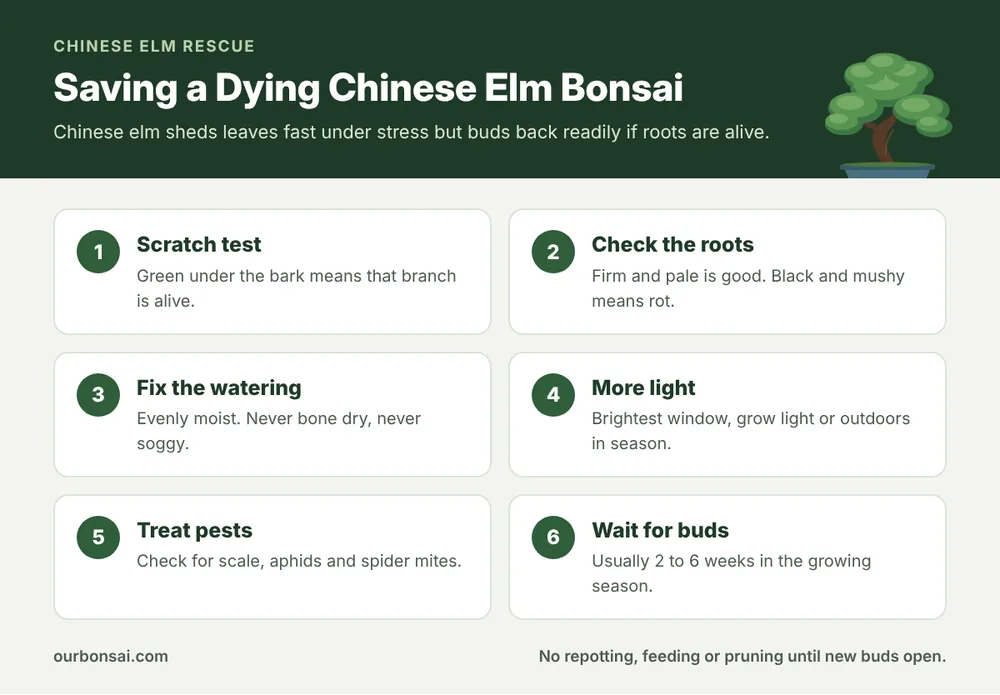
How to save a dying Chinese elm bonsai
- Diagnose first. Scratch test, roots, soil and pests.
- Fix the watering. Soak a dry tree. Let a waterlogged tree dry slightly.
- Repot only if roots are rotting. Trim dead roots and use fresh gritty soil.
- Move it into good light and keep it there.
- Treat pests if you found any.
- Cut back dead twigs only once you are sure they are dead.
- Do not feed until new leaves have formed, then feed at half strength.
- Raise humidity indoors with a humidity tray.
- Be patient. Buds usually appear in two to six weeks in the growing season.
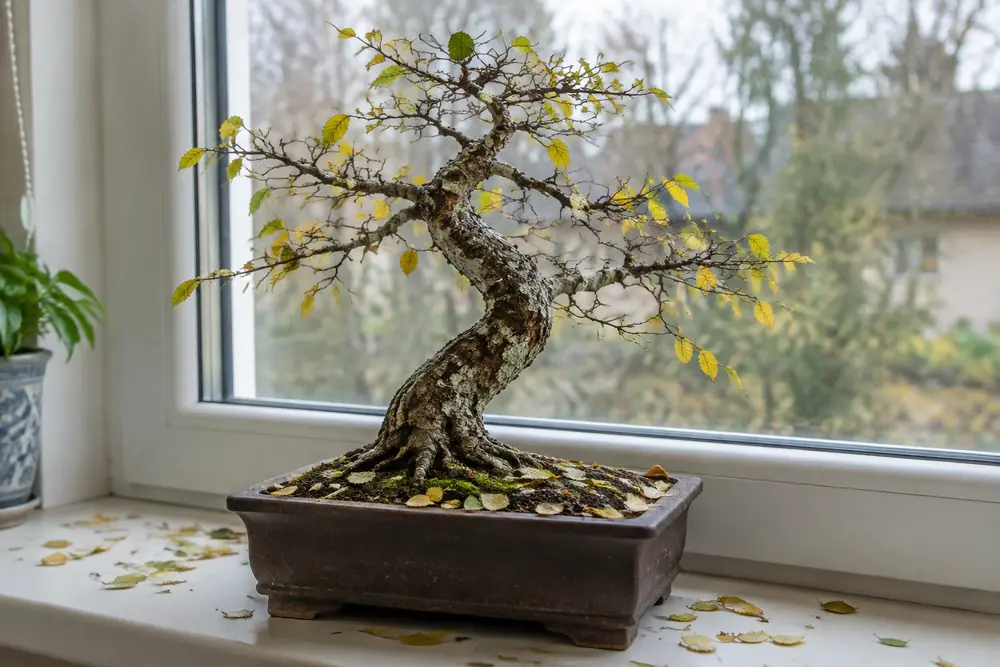
Recovery timeline
| Time | What to expect |
|---|---|
| 1 to 2 weeks | Leaf drop slows or stops |
| 2 to 6 weeks | Tiny buds swell along branches and trunk |
| 4 to 8 weeks | New leaves open, often small at first |
| Next season | Normal growth, ready for light pruning |
For an outdoor tree rescued in autumn or winter, buds will not appear until spring. Do not give up on it before late spring if the bark is still green.
Indoor vs outdoor Chinese elm
Chinese elm is often sold as an indoor bonsai, but it grows best outdoors in most temperate climates, with a cool winter rest and protection from hard frost. Indoors, it can survive and grow well with very bright light and steady care. Many struggling indoor elms recover dramatically when moved outside for spring and summer. Our Chinese elm bonsai care guide covers both approaches.
Preventing problems
- Check the soil daily and water thoroughly when the top is just dry
- Use gritty, fast-draining soil
- Give strong light, indoors or out
- Keep the tree in one good spot
- Check for pests every couple of weeks
- Feed through the growing season, as in our guide to the best Chinese elm bonsai fertilizer
FAQ: chinese elm bonsai dying
Why is my Chinese elm losing all its leaves?
Usually it dried out, was moved, got cold or is short of light. Check the scratch test. If twigs are green, it can recover.
Can a Chinese elm bonsai come back from no leaves?
Yes, often. It buds back well from bare wood if the roots are alive. Keep it bright, evenly moist and wait.
Should I repot a dying Chinese elm?
Only if the roots are rotting. Otherwise, repotting adds stress at the wrong time.
Is my outdoor Chinese elm dead in winter?
Probably not. In cold climates it drops many or all leaves in winter. Check that the buds are firm and the twigs green under the bark.
Final thoughts
A Chinese elm bonsai dying is often a stressed tree, not a lost one. Use the scratch test and check the roots, then fix watering, light and pests. Keep the tree stable, skip feeding and pruning, and give it a few weeks. This tough species usually rewards patience with a full head of new leaves.