Fungal Diseases in Bonsai Trees: Complete Guide
Quick Answer
Fungal diseases in bonsai trees can affect leaves, shoots, bark, and roots. Common problems include powdery mildew, fungal leaf spots, anthracnose, gray mold, cankers, and several root rots. Start by confirming that the symptoms fit a disease rather than watering stress or insects; this bonsai pest and disease guide provides useful visual context.
Signs to Check First
- Leaf spots: Look for expanding brown, black, tan, or reddish lesions rather than uniform yellowing.
- White coating: A powdery film on leaves can point toward powdery mildew.
- Soft roots: Brown or black mushy roots suggest serious root damage or root rot.
- Branch dieback: Dead shoots combined with sunken bark can indicate a canker or related disease.
- Rapid spread: New lesions appearing on neighboring leaves strengthen the case for an infectious problem.
What to Do Immediately
- Separate the affected bonsai, inspect roots and foliage, remove badly diseased debris, correct excess moisture, and identify the problem before applying a fungicide.
When a bonsai develops black spots, white powder, wilting, or dying branches, fungus is an easy first suspect. Yet many bonsai fungal infections look surprisingly similar to overwatering, root stress, pests, or seasonal leaf loss.
I treat those symptoms as clues rather than a final diagnosis. This guide explains what to look for, which diseases matter most, and how to respond without stressing the tree further.
In This Guide
- What Is a Fungal Disease in a Bonsai Tree?
- What Fungal Diseases Are Most Common in Bonsai?
- How Can You Tell Fungus From Other Bonsai Problems?
- Why Do Fungal Diseases Develop on Bonsai?
- How Do You Treat a Fungal Disease on Bonsai?
- How Can You Prevent Bonsai Fungal Diseases?
- Frequently Asked Questions
What Is a Fungal Disease in a Bonsai Tree?
A fungal disease occurs when a disease-causing fungus infects susceptible plant tissue and begins damaging it. The pathogen may attack leaves, young shoots, bark, roots, or several areas at once.
Definition: A bonsai fungal disease is an infectious plant disorder caused by a pathogenic fungus invading or damaging living bonsai tissue. Some similar diseases are caused by fungus-like organisms called oomycetes, including Phytophthora and Pythium.
The distinction matters. A white patch on bark does not automatically mean a damaging fungus, and mushrooms in the soil do not automatically prove the roots are diseased.
Plant pathologists often explain disease with the plant disease triangle. Disease develops when a susceptible host, a suitable pathogen, and favorable environmental conditions occur together.
- Host: The bonsai species must be vulnerable to that particular pathogen.
- Pathogen: Disease-causing spores or other infectious material must be present.
- Environment: Moisture, temperature, and other conditions must support infection.
This explains why changing growing conditions can matter as much as spraying. Reducing long periods of wet foliage, for example, can remove one side of the disease triangle.
Bonsai do not develop fungi simply because they are miniature trees. They can suffer many of the same diseases as full-sized examples of the same species.
The small container changes the stakes. Poor drainage, excess irrigation, or damaged roots can affect a bonsai quickly because its root system has limited space.
Section Takeaway: A fungal disease needs more than visible fungus. Look at the tree, the suspected pathogen, and the growing conditions together before deciding how to treat it.
What Fungal Diseases Are Most Common in Bonsai?
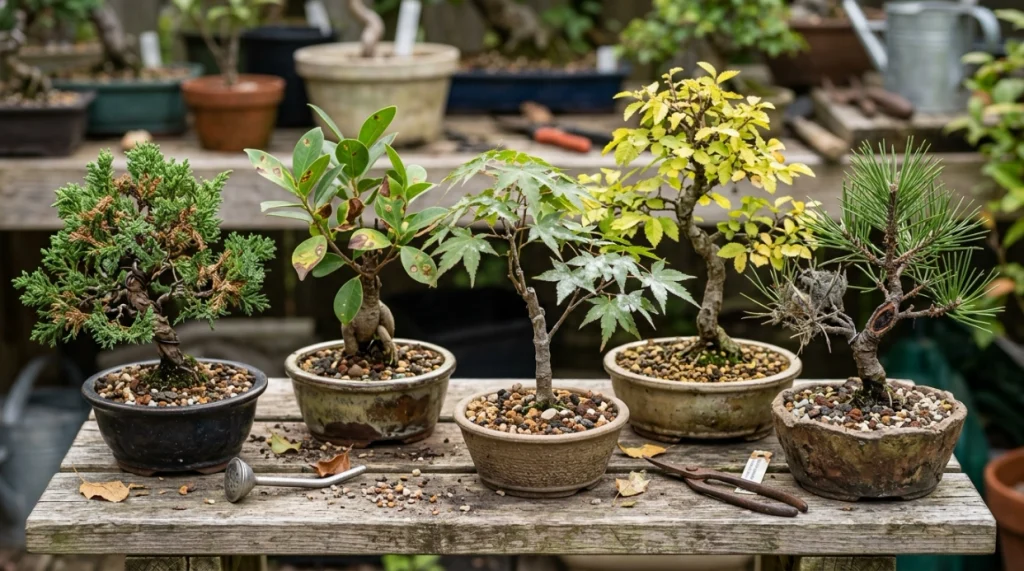
The most useful way to identify a possible fungal problem is by its location and symptom pattern. Leaf diseases look different from root rots, cankers, and surface molds.
Here are the main groups I would investigate first.
| Problem | Typical Signs | Where It Appears | Conditions Often Involved |
|---|---|---|---|
| Powdery mildew | White or gray powdery growth, distorted leaves | Leaves and young shoots | Humid canopy, restricted airflow |
| Fungal leaf spots | Brown, black, tan, or reddish lesions | Foliage | Wet foliage and infected debris |
| Anthracnose | Irregular lesions, leaf blight, shoot dieback | Leaves and young stems | Wet conditions favorable to the pathogen |
| Gray mold | Soft affected tissue with gray fuzzy growth | Flowers, leaves, shoots, dead tissue | High humidity and poor air movement |
| Root rot | Wilting, yellowing, weak growth, brown or soft roots | Root system and lower trunk | Persistently wet, poorly aerated substrate |
| Canker diseases | Sunken bark, dead twigs, localized branch dieback | Branches and trunk | Wounds, stressed tissue, susceptible hosts |
What does powdery mildew look like on bonsai?
Powdery mildew usually appears as white or gray powder-like growth across leaf surfaces. Infected young leaves may curl, distort, or become stunted.
Do not confuse it with dried mineral residue from hard water. Mineral deposits usually follow water-droplet patterns and do not spread through new foliage.
The University of Minnesota’s powdery mildew guidance emphasizes airflow, canopy management, and avoiding excessive nitrogen growth as important controls.
What do fungal leaf spots look like?
Fungal leaf spots usually produce distinct lesions rather than uniform discoloration. Their shape, color, margin, and distribution vary with the pathogen and tree species.
- Look for spots that enlarge over time.
- Check whether several leaves show similar patterns.
- Inspect both sides of affected foliage.
- Note whether damaged leaves fall prematurely.
- Look for lesions spreading from leaves into young shoots.
A single brown patch after hot sun does not prove infection. Repeating lesions on fresh foliage deserve closer attention.
Is bonsai root rot always fungal?
No. “Root rot” describes damaged and decaying roots, but several different organisms and environmental problems can contribute.
Phytophthora and Pythium are especially important examples. They are oomycetes, or water molds, rather than true fungi.
That technical difference matters when choosing treatments. A product labeled for one pathogen group may not control another.
Penn State’s Phytophthora root rot guidance notes that poorly drained, wet media strongly favor these pathogens. Container sanitation and good drainage are central prevention measures.
For some Phytophthora affecting woody ornamentals, Penn State reports infection across roughly 15–28°C, with an optimum near 22°C. Those figures should not be treated as universal for every pathogen or bonsai species.
What about black sooty growth?
Black material covering leaves is not always a primary infection. Sooty mold commonly grows on sugary honeydew left by sap-feeding insects.
Check closely for scale, aphids, mealybugs, or whiteflies before reaching for a fungicide. Treating only the black coating can leave the underlying pest untouched.
Section Takeaway: Match the symptom to its location. Powdery leaves, expanding lesions, dying bark, and rotting roots represent different problems and should not receive identical treatment.
How Can You Tell Fungus From Other Bonsai Problems?
You cannot diagnose every plant disease from one symptom. Yellow leaves, for example, can result from disease, watering errors, poor light, root damage, pests, or seasonal changes.
I start by asking whether the damage has a consistent pattern. Infectious diseases often produce repeatable lesions or progressive damage rather than random stress symptoms.
- Uniform yellowing: Investigate watering, roots, light, and nutrition before assuming fungus.
- Sticky leaves: Inspect for aphids, soft scale, mealybugs, or whiteflies.
- Fine webbing: Check for spider mites before treating for fungal disease.
- White cottony clusters: Look for mealybugs or woolly insects.
- Crispy leaf edges: Consider drought, heat, fertilizer salts, or root damage.
- Defined spreading lesions: A leaf disease becomes more plausible.
- Wilting in wet soil: Investigate root health rather than adding more water.
Roots provide some of the most useful clues. Healthy fine roots are generally firm, while seriously rotted roots may become dark, soft, or easily damaged.
A bad smell alone is not enough for a diagnosis. It does tell me that drainage, decomposition, and root health deserve immediate attention.
Diagnosis tip: Photograph the tree before treatment. Take close images of both leaf surfaces, the trunk base, the substrate, and any affected roots so you can compare changes later.
When the diagnosis remains uncertain, avoid repeatedly applying unrelated pesticides. Plant disease laboratories, horticulture extension services, experienced nurseries, and bonsai clubs can help with difficult cases.
Section Takeaway: A symptom is evidence, not a diagnosis. Check insects, roots, watering, environmental stress, and disease patterns before deciding fungus is responsible.
Why Do Fungal Diseases Develop on Bonsai?
Many plant diseases become serious only when the environment favors infection. Moisture is one of the most important factors for numerous fungal and oomycete diseases.
That does not mean humidity automatically makes a bonsai sick. The pathogen and a susceptible host still need to be present.
Does wet foliage increase fungal disease risk?
For many foliar pathogens, prolonged leaf wetness helps spores germinate and infect plant tissue. Risk depends on the pathogen, temperature, species, and length of the wet period.
This is why I avoid keeping foliage unnecessarily wet overnight. Morning watering gives leaves and shoots more opportunity to dry.
Can poor airflow cause bonsai fungus?
Poor airflow does not create a pathogen from nothing. It can keep foliage humid and wet for longer, which may make conditions more favorable for some diseases.
- Avoid packing bonsai tightly together.
- Remove accumulated dead foliage from dense canopies.
- Give indoor tropical bonsai suitable ventilation.
- Keep the species’ actual light and temperature needs in mind.
Do not sacrifice healthy growing conditions simply to create stronger airflow. A sun-sensitive or tropical species still needs an appropriate environment.
Can overwatering cause fungal root rot?
Overwatering and poor drainage can damage roots even without a pathogen. Saturated media also reduce root-zone oxygen and favor several root-disease organisms.
This combination is why chronically wet bonsai soil concerns me more than one isolated heavy watering. The root ball needs a workable balance of moisture and air.
Can pruning spread disease?
Contaminated tools can move some plant pathogens between trees. Diseased leaves and cut branches can also remain sources of infectious material.
- Clean tools after working on suspicious tissue.
- Do not leave diseased clippings beneath the tree.
- Keep benches and growing areas reasonably clean.
- Inspect new bonsai before placing them among established trees.
A stressed tree can also have less capacity to recover from infection. Severe root work, drought, heat injury, and badly timed pruning may compound an existing problem.
Section Takeaway: Moisture, poor drainage, prolonged leaf wetness, contaminated material, and plant stress can all contribute to disease development. Prevention means managing those conditions before symptoms appear.
How Do You Treat a Fungal Disease on Bonsai?
Successful treatment starts with identification, not the strongest chemical available. A fungicide cannot repair dead tissue and will not correct waterlogged roots.
Use this sequence before escalating treatment.
- Isolate the bonsai. Move a suspicious tree away from the rest of your collection while you investigate.
- Inspect the entire tree. Check leaves, shoots, branch unions, trunk, substrate, drainage holes, and visible roots.
- Remove fallen debris. Discard badly diseased leaves and dead material rather than leaving them around the pot.
- Correct the environment. Improve drainage, airflow, light, or watering practices where appropriate for the species.
- Identify the likely disease. Separate powdery mildew, leaf spots, root diseases, cankers, and insect-related sooty mold.
- Use treatment only when justified. Choose a product labeled for the plant and target problem, then follow its directions exactly.
- Monitor new growth. Judge recovery by whether fresh foliage and shoots remain healthy, not whether old damage disappears.
Should you remove infected bonsai leaves?
Removing heavily diseased foliage can reduce infected material when the tree has enough healthy foliage remaining. Avoid stripping a weak bonsai simply to make it look clean.
Sanitize cutting tools when moving between affected and healthy plants. Dispose of suspicious material away from your bonsai benches.
Pro tip: Cutting living branches is irreversible. When a valuable branch, trunk section, or major design feature is involved, get advice from an experienced grower or local bonsai club before making aggressive cuts.
Should you repot a bonsai with root rot?
Do not automatically repot every sick bonsai. Repotting is stressful, and disturbing weak roots at the wrong season can make recovery harder.
Emergency root work may become reasonable when drainage has failed or severe root decay is confirmed. The correct decision depends heavily on species, season, and remaining root health.
If roots must be inspected, distinguish firm living roots from soft, collapsing, or badly discolored tissue. Keep as much healthy root system as the situation allows.
Pro tip: Major root pruning can kill a weakened bonsai. If you are unsure how much root tissue remains viable, consult an experienced grower before cutting.
Should you spray fungicide on a bonsai?
Sometimes, but only after narrowing the diagnosis. Fungicides vary greatly in the organisms and diseases they control.
A product intended for powdery mildew may not be appropriate for a root disease. An insecticide will not solve a fungal leaf spot.
- Read the complete pesticide label.
- Confirm the plant and intended use are permitted.
- Follow dilution and application instructions.
- Observe temperature and sunlight restrictions.
- Use required protective equipment.
- Keep products away from children and pets.
More product is not better. Overapplication can damage foliage while doing nothing to correct the conditions that allowed disease to develop.
Can old fungal damage heal?
Existing leaf spots usually remain visible until the damaged foliage is shed or removed. Dead bark and necrotic tissue also do not become living tissue again.
Instead, look for healthy new growth and a halt in symptom progression. Those are more useful signs of recovery.
Recovery check: Mark or photograph several affected leaves. If fresh lesions keep appearing on previously healthy foliage, the problem is still active or the original diagnosis may be wrong.
Severe root and vascular diseases are more serious. Once much of the root system or trunk transport tissue is destroyed, recovery becomes far less predictable.
Section Takeaway: Isolate, diagnose, clean up, correct the growing environment, and then treat the identified disease. Healthy new growth matters more than trying to erase old symptoms.
How Can You Prevent Bonsai Fungal Diseases?
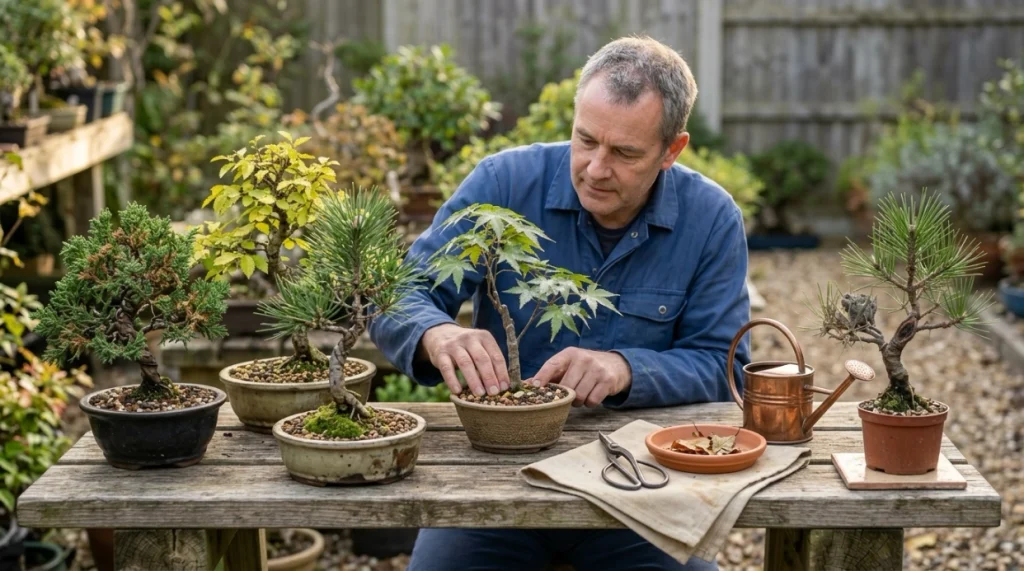
Prevention is easier than rescuing a badly weakened bonsai. Most of my routine focuses on catching small changes before they become collection-wide problems.
As of 2026, that basic approach remains consistent with modern integrated plant-health management: identify problems early and correct cultural conditions before relying on pesticides.
Water the tree, not the calendar
A fixed watering schedule cannot account for changing heat, wind, species, pot size, or substrate. Check the actual moisture condition before watering.
Free-draining bonsai substrate is especially important because roots require oxygen as well as water. A pot that stays saturated deserves investigation.
Keep the canopy and growing area clean
- Remove fallen diseased leaves.
- Do not allow dead foliage to collect inside dense branches.
- Clean contaminated tools.
- Avoid sharing dirty water containers between sick and healthy trees.
- Wash or replace contaminated pots when appropriate.
Sanitation will not eliminate every spore. It reduces avoidable sources of inoculum and makes new symptoms easier to spot.
Give each species the conditions it needs
Junipers, maples, ficus, azaleas, pines, and other bonsai do not share identical care requirements. Light, temperature, winter dormancy, watering, and substrate needs vary widely.
A healthy environment also makes troubleshooting easier. When basic care is correct, unusual symptoms become more meaningful.
Inspect new trees before mixing collections
New bonsai can carry insects or disease without obvious symptoms on purchase day. Keep them separate while you watch for suspicious changes.
Look beneath foliage, along branch joints, around the trunk base, and across the substrate. Repeat the inspection rather than relying on one quick check.
Protect pruning wounds and avoid unnecessary damage
Use clean, sharp bonsai tools and make purposeful cuts. Ragged wounds and repeated unnecessary damage create more stressed tissue to manage.
Pruning timing should match the species. Do not copy a technique from a pine directly onto a tropical ficus or deciduous maple.
Ask for help before sacrificing an important tree
A photograph cannot always separate fungal disease from bacterial problems, pests, nutrient disorders, or environmental injury. Laboratory diagnosis may sometimes be necessary.
For difficult trees, an experienced nursery or a club listed through the American Bonsai Society can be useful. Local growers often understand the diseases and weather patterns common in your region.
Section Takeaway: Good drainage, correct watering, clean tools, airflow, regular inspection, and species-appropriate care form the strongest first line of defense against bonsai fungal disease.
Frequently Asked Questions
Can fungus kill a bonsai tree?
Yes, some fungal and fungus-like diseases can kill a bonsai when they severely damage roots, vascular tissue, or major branches. Minor leaf diseases are often less dangerous, especially when identified early and the tree remains vigorous.
What does fungus look like on bonsai soil?
Surface fungal growth may look white, gray, yellow, or thread-like, but visible fungus does not automatically mean the bonsai is diseased. Some fungi feed mainly on decomposing organic matter, so examine the roots and tree health before treating the surface alone.
Can overwatering cause fungus on bonsai?
Overwatering does not create fungal pathogens, but persistently wet substrate can damage roots and favor several root-disease organisms. Correcting drainage and watering is therefore essential when a bonsai remains wet for excessive periods.
Should I use hydrogen peroxide for bonsai root rot?
Do not treat hydrogen peroxide as a universal root-rot cure. Root diseases have different causes, and concentrated products can damage living tissue. Identify the root problem first and use treatments specifically labeled or professionally recommended for that situation.
Does cinnamon cure fungal disease on bonsai?
Cinnamon should not replace proper disease diagnosis or an appropriately labeled treatment. A serious infection involving roots, stems, or spreading foliage requires attention to the pathogen, affected tissue, watering, drainage, airflow, and sanitation.
Can I save a bonsai with black spots on its leaves?
Often, yes, but black spots have many possible causes. Inspect for pests, leaf lesions, watering problems, and environmental stress first. If spots continue spreading onto clean new foliage, isolate the tree and investigate infectious leaf disease more closely.
Should I remove all leaves from a bonsai with fungus?
Usually not. Complete defoliation places additional stress on many species and may remove too much photosynthetic tissue. Remove badly affected material selectively when appropriate, while preserving healthy foliage and considering the species, season, and tree strength.
Final Takeaway: Do not treat every strange mark as fungus. Identify the pattern, inspect the roots and pests, correct the growing environment, and use targeted treatment only when the evidence supports it.
A bonsai that is caught early often gives you time to respond. Regular inspection is one of the simplest ways to protect both the affected tree and the rest of your collection.
