
How to Identify Fungal Disease on Bonsai

Quick Answer
You can often identify fungal disease on bonsai by looking for repeating symptoms such as powdery white growth, expanding brown or black leaf spots, orange spore-like patches, branch dieback, or root decline while the soil remains wet. Compare the pattern with reliable plant-disease references such as the University of Maryland Extension fungal leaf spot guide before treating the tree.
Signs to check first
- Powdery coating: White or gray growth across leaves or young shoots can suggest powdery mildew.
- Expanding spots: Tan, brown, reddish, or black lesions that enlarge may indicate a leaf-spot disease.
- Colored spores: Orange, yellow, or rusty pustules can point toward a rust disease.
- Branch dieback: Localized wilting with discolored or sunken bark can indicate a canker or vascular problem.
- Root decline: Wilting despite wet soil, poor vigor, and dark decaying roots suggest a root disease or serious drainage problem.
Best confirmation tip
- Inspect several affected leaves with a 10× hand lens and compare the same symptoms across the tree before applying fungicide.
Learning how to identify fungal disease on bonsai starts with recognizing patterns, not reaching for a spray bottle. Bonsai fungus symptoms can also resemble pest damage, sun scorch, overwatering, fertilizer injury, or simple seasonal leaf drop.
I use a symptom-first approach. I check the foliage, branches, trunk, roots, soil moisture, and recent growing conditions before deciding that a bonsai has a fungal infection.
In This Guide
- What Does Fungal Disease Look Like on a Bonsai?
- How Can You Tell Fungus From Pests or Care Problems?
- Which Fungal Diseases Commonly Affect Bonsai?
- How Do You Inspect a Bonsai for Fungal Disease?
- What Should You Do After Finding Suspicious Symptoms?
- How Can You Reduce Fungal Disease Problems?
- Frequently Asked Questions
What Does Fungal Disease Look Like on a Bonsai?
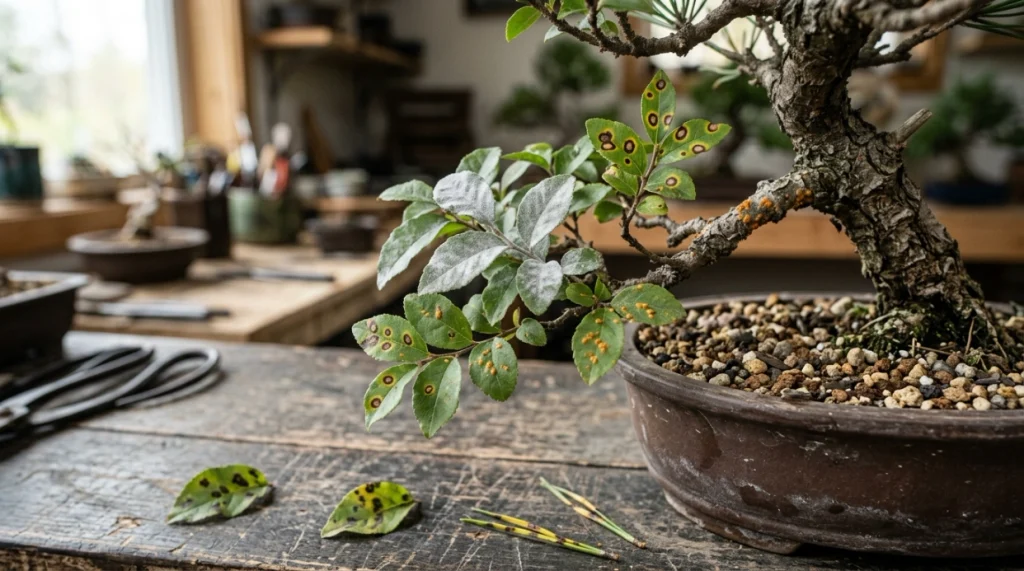
Fungal disease usually produces a repeatable pattern rather than one isolated damaged leaf. Look for similar spots, coatings, lesions, or dying tissue appearing on several leaves or branches.
Definition: A fungal disease is a plant disorder caused by a disease-producing fungus that infects living tissue. Some fungus-like organisms, including Phytophthora, are technically oomycetes rather than true fungi but are often discussed alongside fungal root diseases.
Start with the foliage. Powdery mildew can create a pale white or gray coating, while leaf-spot diseases often create distinct tan, brown, reddish, or black lesions.
The University of Minnesota Extension powdery mildew guidance describes the characteristic powdery growth and emphasizes airflow and disease monitoring.
- White or gray powder: Check both leaf surfaces and tender shoots.
- Brown or black spots: Watch whether lesions enlarge or merge.
- Yellow halos: Some leaf diseases create yellow tissue around darker lesions.
- Rust-colored material: Orange or brown pustules may release powdery spores.
- Premature leaf drop: Heavy foliar infection can weaken foliage enough to shed early.
- Localized dieback: A branch may wilt while neighboring branches remain healthy.
Roots need attention too. A declining bonsai with consistently wet substrate may have a drainage problem, root injury, or root disease rather than a simple leaf infection.
Never diagnose fungus from leaf color alone. Yellow leaves are among the least specific bonsai symptoms.
How Can You Tell Fungus From Pests or Care Problems?
Look for physical evidence that separates disease from insects and environmental stress. Fungus tends to produce lesions, coatings, spores, rotted tissue, or progressive dieback rather than visible feeding pests.
Bonsai Empire’s pest and disease overview also stresses identification because watering problems, pests, and diseases can produce overlapping symptoms.
| What You See | Possible Cause | Confirmation Clue | Common Look-Alike |
|---|---|---|---|
| White powder over leaf surface | Powdery mildew | Growth appears across living tissue and may spread | Mineral residue or mealybugs |
| Circular brown or black lesions | Fungal leaf spot | Multiple lesions enlarge or merge | Sun scorch or fertilizer injury |
| Fine webbing and stippled foliage | Spider mites | Tiny moving mites under magnification | Fungal growth |
| Sticky foliage or black surface mold | Sap-feeding pests plus sooty mold | Scale, aphids, or other insects nearby | Direct fungal leaf infection |
| Wilting while soil stays wet | Root decline or root disease | Poor feeder roots and dark decayed tissue | Compacted soil or root damage |
A single crispy leaf edge after a hot afternoon isn’t strong evidence of fungus. Neither is one yellow interior leaf on a deciduous bonsai approaching normal seasonal leaf drop.
The pattern matters most. Disease becomes more likely when similar lesions appear repeatedly and continue spreading under favorable conditions.
Which Fungal Diseases Commonly Affect Bonsai?
Several disease groups can affect bonsai because bonsai are ordinary trees and shrubs grown in containers. The exact disease risk depends heavily on the species.
Powdery Mildew
Powdery mildew usually looks like white or gray powder across foliage, young stems, or buds. It can begin in scattered patches before covering larger areas.
Don’t confuse it with hard-water residue. Mineral deposits usually follow water-droplet patterns and do not spread through living tissue.
Fungal Leaf Spots
Leaf spots may be tan, reddish, brown, gray, or black. Many develop a distinct border, and several small spots can merge into larger dead areas.
University of Maryland Extension notes that fungal leaf spots can cause extensive leaf drop and dieback when infections become severe.
Rust Diseases
Rust often creates yellow, orange, reddish, or brown structures on foliage. Some rust pustules release colored powder when disturbed.
The host species is critical when identifying rust. Different rust fungi infect different groups of plants and may have complex life cycles.
Cankers and Fungal Dieback
A canker is a localized area of dead or damaged bark and cambium. It may look sunken, cracked, darkened, or sharply different from surrounding healthy bark.
A branch beyond an active canker can weaken or die because water-conducting tissue has been damaged.
Root Rot and Phytophthora-Type Problems
Root diseases are harder to diagnose because the important symptoms are below the soil surface. Above-ground warning signs include yellowing, weak growth, wilting, and progressive branch decline.
Penn State Extension’s Phytophthora root rot guidance emphasizes well-drained growing media and clean containers because prolonged wet conditions strongly increase root-disease problems in container-grown woody plants.
Remember that Phytophthora is an oomycete, or water mold, rather than a true fungus. The distinction matters when obtaining a professional diagnosis or choosing a labeled treatment.
Section Takeaway: Fungal disease is a category, not one diagnosis. Identify the symptom pattern and bonsai species before deciding what disease you are dealing with.
How Do You Inspect a Bonsai for Fungal Disease?
Inspect the whole tree systematically. I prefer working from the foliage downward so I don’t miss subtle symptoms while focusing on the most obvious damaged area.
- Move the bonsai into bright indirect light. Natural-looking illumination makes subtle discoloration easier to see.
- Inspect upper leaf surfaces. Look for powder, spots, halos, dead tissue, and unusual discoloration.
- Turn several leaves over. Check for spores, pests, eggs, webbing, and lesions underneath.
- Use a 10× hand lens. Magnification helps separate fungal structures from tiny insects and debris.
- Check new growth. Distorted or dying shoots can reveal an active problem sooner than mature foliage.
- Inspect branches and trunk. Look for sunken bark, cracks, discoloration, oozing tissue, or localized dieback.
- Check soil moisture. Note whether the substrate stays wet unusually long after watering.
- Inspect exposed roots and drainage holes. Healthy feeder roots and severely decayed roots look very different.
- Photograph suspicious areas. Use the same lighting and angle so you can compare progression over several days.
One habit I recommend is photographing a few marked lesions every 48 hours. An expanding lesion tells you much more than staring at one damaged leaf once.
Also inspect nearby plants. Similar symptoms appearing across several trees can point toward a shared pathogen, contaminated tools, or environmental conditions.
Pro tip: Avoid cutting into major roots, trunks, or valuable branches simply to investigate disease. Irreversible work is safer after consulting an experienced grower, local bonsai club, or plant-diagnostic service.
What Should You Do After Finding Suspicious Symptoms?
Start by isolating the affected bonsai when an infectious disease is reasonably possible. Separation reduces the chance of contaminated leaves, splashing water, or tools carrying a problem into the rest of your collection.
- Stop unnecessary misting: Don’t keep diseased foliage wet without a species-specific reason.
- Improve airflow: Give the canopy space and avoid crowding trees together.
- Remove fallen debris: Dead leaves around the pot can harbor disease material.
- Clean tools: Disinfect pruning equipment before using it on another tree.
- Review watering: Check whether the root zone remains wet longer than expected.
- Confirm the diagnosis: Use a university extension service or plant clinic when symptoms are severe or unclear.
Don’t automatically spray a broad-spectrum fungicide. Different diseases respond differently, and many products protect healthy tissue rather than repairing tissue already damaged.
If treatment is appropriate, use a product specifically labeled for the plant and disease involved. Follow the entire pesticide label, including application rate, timing, protective equipment, and temperature restrictions.
Severely affected roots or branches require more caution. Cutting already stressed tissue can add another layer of stress to the bonsai.
Pro tip: If significant live roots or structural branches may need removal, get species-specific advice before cutting. Bonsai recovery depends heavily on season, vigor, and how much living tissue remains.
How Can You Reduce Fungal Disease Problems?
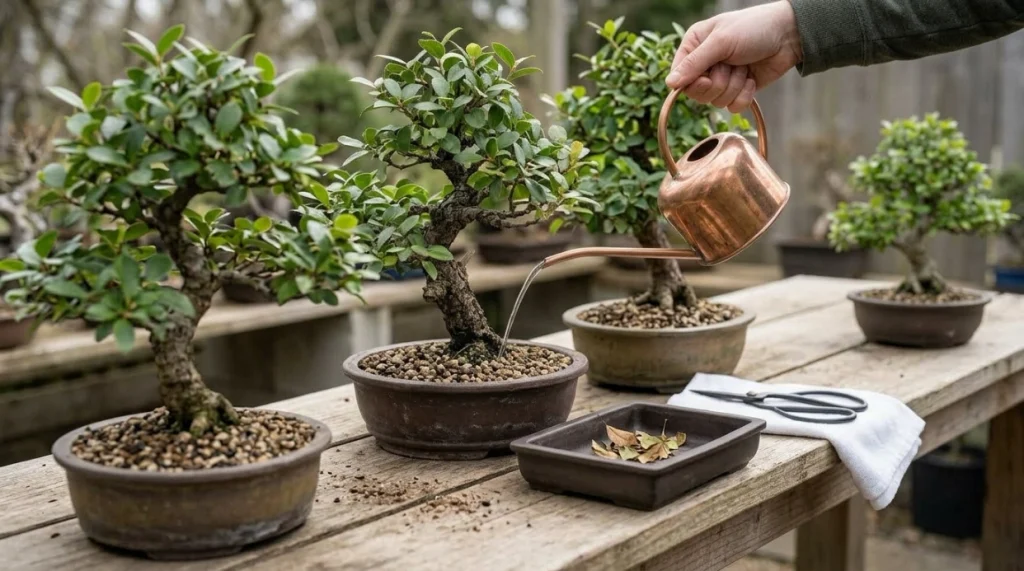
Prevention starts with the growing environment. Healthy roots, suitable light, appropriate watering, clean tools, and airflow make disease problems easier to prevent and detect.
- Water according to need: Check the substrate rather than following a rigid calendar.
- Maintain drainage: Bonsai substrate should drain while still meeting the species’ moisture needs.
- Keep foliage from staying wet unnecessarily: Long periods of leaf wetness can favor several foliar diseases.
- Provide airflow: Avoid tightly packing foliage and pots together.
- Remove dead material: Clear fallen diseased leaves and dead twigs from the growing area.
- Disinfect tools: Clean equipment after working on a suspicious or infected tree.
- Quarantine new trees: Inspect new bonsai before placing them among an established collection.
- Inspect regularly: Catching five suspicious spots is easier to manage than discovering widespread dieback.
As of 2026, the most useful diagnostic principle remains simple: identify the pattern before treating the pathogen. Good bonsai care reduces stress, but even well-maintained trees can still develop disease.
I treat unusual foliage as evidence, not a diagnosis. That mindset prevents unnecessary chemical treatments and makes real disease easier to recognize early.
Frequently Asked Questions
What are the first signs of fungus on a bonsai?
Early signs can include powdery white growth, small repeating leaf spots, unusual orange or brown spore-like areas, localized twig dieback, or foliage that declines despite otherwise suitable care. Examine multiple affected areas because one damaged leaf rarely proves a fungal infection.
Does white stuff on bonsai leaves always mean fungus?
No. White material can be powdery mildew, but it may also be mineral residue, mealybugs, scale coverings, dried spray residue, or other material. Check whether it is growing from the leaf tissue and inspect it with magnification before treating.
Can overwatering cause fungus on bonsai?
Overwatering does not automatically create a fungal infection, but persistently wet and poorly aerated root conditions can favor root decline and certain disease organisms. Fixing drainage and watering practices is therefore an important part of root-disease prevention.
Should I remove leaves with fungal spots?
Removing heavily affected leaves can reduce diseased material on some bonsai, but avoid stripping a weak tree of too much foliage at once. The safest approach depends on the species, disease severity, season, and overall vigor.
Can fungal disease spread between bonsai trees?
Yes, some plant diseases can spread through spores, splashing water, infected debris, contaminated tools, or infected plant material. Isolating a suspicious tree and cleaning tools are sensible precautions while you confirm the cause.
Will fungicide cure an infected bonsai leaf?
Usually not. Dead or visibly damaged plant tissue normally does not become healthy again. Many fungicides work mainly by protecting uninfected tissue or slowing further infection, so correct identification and label-directed timing matter.
When should I ask an expert to identify the disease?
Seek diagnostic help when valuable branches are dying, the root system appears badly damaged, symptoms spread quickly, or you cannot separate disease from pest or environmental injury. A university extension plant clinic or experienced bonsai specialist can help narrow the cause.
Final takeaway: Identifying fungal disease on bonsai is mostly careful observation. Look for repeatable patterns, rule out pests and environmental stress, inspect the entire tree, and confirm uncertain diagnoses before treatment.
Early detection gives you the most options. Make a quick foliage, branch, and soil inspection part of your normal bonsai care routine so subtle changes are easier to spot.
