
Small Brown Bugs on Bonsai: Common Causes

Quick Answer
Small brown bugs on bonsai are most often scale insects, spider mites, aphids, or soil-associated insects. Fixed brown bumps strongly suggest scale, while moving dots with pale leaf speckling can indicate spider mites; comparing your symptoms with a reliable bonsai pest identification guide can help confirm the problem before treatment.
Signs to check first
- Fixed brown bumps: Scale insects often remain attached to leaves, twigs, or stems.
- Moving brown specks: Spider mites may look like tiny brown or reddish dots without magnification.
- Sticky leaves: Aphids and soft scale can produce sugary honeydew.
- Fine webbing: Webbing plus pale stippling makes spider mites a strong suspect.
- Clusters on shoots: Soft-bodied brown insects around tender growth may be aphids.
- Bugs near soil: Soil insects need a different diagnosis from pests feeding on leaves and stems.
Best confirmation tip
- Inspect several affected areas with a 10× hand lens before spraying anything.
Finding small brown bugs on bonsai can be confusing because several pests look similar at first glance. Tiny brown bugs on bonsai may also appear different depending on their age and where they’re feeding.
I start with location, movement, and plant damage rather than color alone. Those three clues usually narrow the possibilities faster than trying to identify a pest from its shade of brown.
In This Guide
- What Are the Small Brown Bugs on My Bonsai?
- Is It Scale, Spider Mites, Aphids, or Something Else?
- Where Do Small Brown Bugs on Bonsai Come From?
- How Do You Identify Brown Bugs Without Harming the Tree?
- How Do You Get Rid of Small Brown Bugs on Bonsai?
- How Can You Prevent Brown Bugs From Coming Back?
- Frequently Asked Questions
What Are the Small Brown Bugs on My Bonsai?
The most likely suspects are scale insects, spider mites, or aphids. The exact answer depends on whether the pests move, where they gather, and what damage appears nearby.
Definition: A bonsai pest is an insect or mite that feeds on leaves, shoots, bark, roots, or plant sap and can reduce the tree’s health or vigor.
Brown scale insects
Scale should be your first suspect when the “bugs” look like brown, tan, or gray bumps glued to stems or leaves. Adult scale often looks more like part of the bark than an insect.
- Movement: Mature individuals usually appear stationary.
- Location: Check stems, leaf veins, twigs, branch forks, and protected crevices.
- Residue: Soft scale may produce sticky honeydew.
- Damage: Yellow leaves, weaker growth, premature leaf drop, or twig decline can occur.
The UC Integrated Pest Management scale guide notes that scale insects often appear as circular, oval, or elongated bumps and may be easy to overlook.
Spider mites
Spider mites aren’t insects. They’re tiny arachnids related to spiders, and adults can be less than 1/20 inch long.
Without magnification, they may look like tiny brown, reddish, yellowish, or dark moving dots.
- Classic damage: Fine pale stippling across leaves.
- Advanced damage: Bronzing, yellowing, drying, or leaf drop.
- Strong clue: Fine silk webbing between leaves or small twigs.
- Favorite location: Leaf undersides.
As of 2026, these remain among the common pests growers should check when unexplained leaf damage appears.
Brown or dark aphids
Not every aphid is green. Aphids can also be brown, reddish, black, yellow, or other colors.
They usually gather around soft new growth instead of spreading evenly across old woody branches.
- Look around shoot tips and developing leaves.
- Check for curled or distorted new growth.
- Feel for sticky honeydew on leaves below the colony.
- Watch for ants visiting the affected area.
Section Takeaway: Fixed brown bumps suggest scale. Moving specks with stippling or webbing point toward mites, while clustered soft insects on new growth are more likely aphids.
Is It Scale, Spider Mites, Aphids, or Something Else?
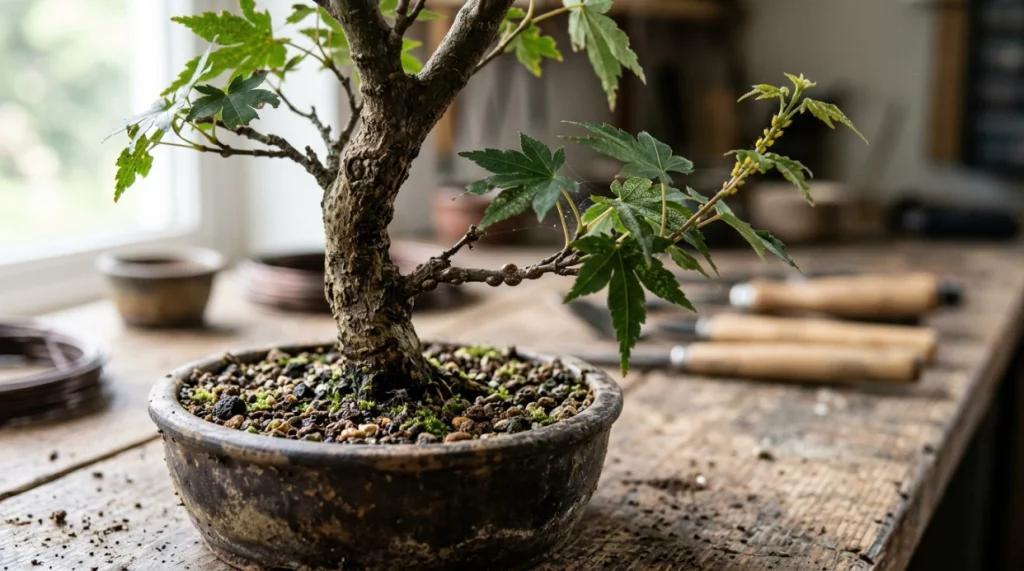
You can usually separate common bonsai pests by combining appearance with damage. Don’t rely on color by itself.
| Possible Pest | What You See | Movement | Main Clue | Where to Check |
|---|---|---|---|---|
| Scale | Brown, tan, gray, or waxy bumps | Usually fixed when mature | Attached bumps; sometimes honeydew | Stems, veins, bark, twigs |
| Spider mites | Tiny moving dots | Slow but visible with magnification | Stippling and fine webbing | Leaf undersides |
| Aphids | Soft, pear-shaped insects | Can crawl | Colonies, honeydew, curled growth | Tender shoots and buds |
| Fungus gnats | Small dark flies | Fly around pot | Associated with moist growing media | Soil surface and pot area |
| Harmless soil organisms | Tiny crawling or jumping organisms | Often active after watering | Little or no plant damage | Organic matter and soil surface |
Spider mites become especially suspicious when leaves develop tiny pale dots before turning bronze or yellow. The UC IPM spider mite guide recommends checking leaf undersides and using magnification.
A stationary brown mark deserves a different test. Look closely before scraping because normal bark, old pruning marks, and buds can sometimes resemble scale.
Where Do Small Brown Bugs on Bonsai Come From?
Pests rarely appear because bonsai itself creates them. They usually arrive from another plant, nursery stock, outdoor exposure, tools, pots, or nearby vegetation.
Indoor trees aren’t automatically protected. Tropical bonsai such as ficus can still develop scale, aphids, mealybugs, and spider mites indoors.
New plants are a common route
A recently purchased tree may carry pests that aren’t obvious during the first inspection. Eggs and immature stages can hide under leaves or deep inside branch forks.
- Inspect new bonsai before placing them beside established trees.
- Check both leaf surfaces in strong light.
- Look along stems and branch junctions.
- Inspect neighboring plants if one tree is infested.
Warm, dry conditions can favor mites
Spider mite problems often become more noticeable during warm, dry conditions. Water-stressed plants can also suffer more obvious mite injury.
Don’t respond by keeping bonsai soil constantly wet. Correct watering should still match the species, season, pot size, and growing medium.
Persistently damp soil can attract different pests
Tiny insects around the soil aren’t necessarily the same pests feeding on your foliage. Small flies around a consistently damp pot may suggest fungus gnats.
The key distinction is simple: determine whether the organism is living around the soil or actively damaging the bonsai itself.
How Do You Identify Brown Bugs Without Harming the Tree?
Use observation before treatment. A five-minute inspection often tells you more than spraying first and trying to identify dead insects later.
- Isolate the tree. Move it away from other susceptible plants while you investigate.
- Use bright light. Natural daylight or a strong white lamp makes small pests easier to see.
- Inspect leaf undersides. Mites and several sap-feeding pests hide there.
- Check new growth. Aphids often concentrate around tender shoots and buds.
- Study woody tissue. Look for repeated brown or tan bumps that resemble scale.
- Use a 10× hand lens. Magnification can reveal legs, bodies, webbing, crawlers, or wax.
- Inspect the soil separately. Note whether insects jump, crawl, or fly when you water.
For mites, I also like the white-paper test. Hold white paper beneath suspicious foliage and gently tap the branch.
Moving dots on the paper deserve a closer look with magnification. Don’t assume every fallen speck is a pest.
The UC IPM houseplant diagnostic guide also emphasizes correct pest identification before choosing a control method.
How Do You Get Rid of Small Brown Bugs on Bonsai?
Treatment should match the pest you’ve identified. Bonsai leaves, fine twigs, and limited root systems can be stressed by unnecessary chemical treatments.
Start with physical removal when practical
Small infestations may be manageable without aggressive treatment. This is especially useful when only a few leaves or branches are affected.
- Rinse suitable foliage with a controlled stream of water.
- Wipe accessible aphids or soft-bodied pests away carefully.
- Remove reachable scale manually without damaging bark.
- Clean fallen leaves and debris from around the pot.
- Keep the affected bonsai isolated during follow-up inspections.
Consider insecticidal soap or horticultural oil when appropriate
These treatments can help with several soft-bodied insects, mites, and susceptible scale stages. Coverage matters because contact treatments must reach the pest.
Always choose a product labeled for the plant and target pest. Follow its directions exactly.
- Test a small area before treating the entire bonsai.
- Avoid treating a drought-stressed tree.
- Avoid spraying during excessive heat or intense direct sunlight unless the label permits it.
- Pay special attention to leaf undersides and protected branch joints.
- Repeat only according to the product label and pest life cycle.
Important: Don’t combine pesticides, oils, soaps, or homemade mixtures unless their labels specifically allow it. A treatment that kills pests can still damage sensitive foliage when applied incorrectly.
Don’t expect one treatment to solve every scale infestation
Scale is challenging because mature insects have protective coverings. Young mobile stages, called crawlers, are often more vulnerable to treatment.
Inspect the bonsai again after treatment rather than assuming the problem has ended.
How Can You Prevent Brown Bugs From Coming Back?
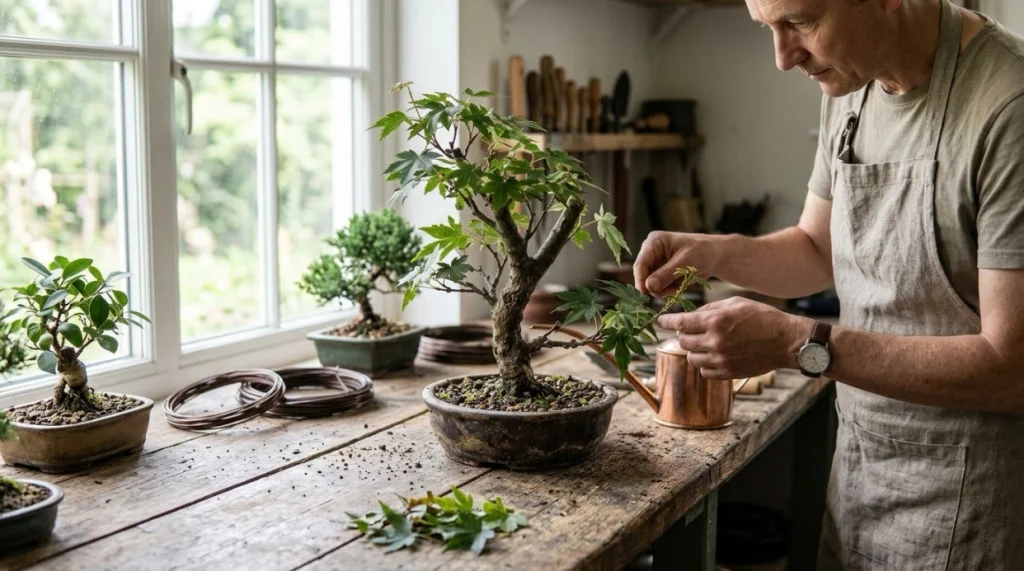
Prevention depends more on regular inspection than spraying. Catching ten pests is easier than dealing with hundreds hidden throughout a dense canopy.
- Inspect weekly: Check leaves, shoots, bark, and branch forks during active growth.
- Quarantine newcomers: Keep new or suspicious plants away from your established collection.
- Maintain airflow: Avoid crowding indoor tropical bonsai together.
- Water correctly: Don’t keep the growing medium permanently saturated just to discourage mites.
- Reduce plant stress: Match light, water, temperature, and fertilizer to the species.
- Keep the area clean: Remove dead leaves and plant debris that make inspection harder.
- Check neighboring plants: A nearby houseplant can act as a pest reservoir.
Healthy growing conditions don’t make a bonsai immune to pests. They do make unusual changes easier to spot and help the tree cope with minor damage.
If you’re still uncertain about identification, a local bonsai club can be useful. The American Bonsai Society provides resources for finding bonsai communities and educational support.
Frequently Asked Questions
Are tiny brown bugs on bonsai always harmful?
No. Some tiny organisms around the growing medium may feed on decaying organic matter instead of living bonsai tissue.
Look for leaf damage, honeydew, webbing, distortion, or colonies before deciding an organism is harmful.
What are the small brown bumps on my bonsai branches?
Small brown bumps firmly attached to branches may be scale insects, especially when similar bumps appear repeatedly on leaves and stems. Sticky honeydew, yellow foliage, or tiny mobile crawlers provide additional evidence.
Can spider mites look brown?
Yes. Spider mites may appear brown, reddish, yellowish, or dark when viewed without magnification.
Fine leaf stippling and webbing are more useful identification clues than color alone.
Why are tiny brown bugs appearing after I water my bonsai?
Water can drive soil-associated organisms toward the surface, making them suddenly noticeable. Their appearance doesn’t automatically mean they’re attacking the tree.
Identify whether they fly, jump, or crawl and check whether roots or foliage show actual damage.
Should I repot a bonsai because I found small bugs?
Usually not. Repotting can add unnecessary stress when the pest lives mainly on foliage or stems.
Consider root-zone intervention only when evidence points to a genuine soil or root problem and the timing is appropriate for that bonsai species.
Can I spray neem oil on every bonsai species?
Don’t assume every bonsai tolerates every oil or pesticide equally well. Check the product label, species sensitivity, temperature restrictions, and application directions before treating the entire tree.
How quickly should I treat brown bugs on my bonsai?
Inspect and isolate the tree as soon as practical, but identify the pest before choosing a pesticide. A small confirmed infestation is usually easier to manage than one allowed to spread through nearby plants.
Final takeaway: Small brown bugs on bonsai are commonly scale insects, spider mites, or aphids, but color alone can’t confirm the diagnosis. Check movement, location, honeydew, webbing, and leaf damage first, then use the least disruptive treatment that matches the pest.
Make inspection part of your normal watering routine. A few extra minutes with a hand lens can prevent a minor pest problem from becoming a much larger one.
