Why Is My Bonsai Bark Changing Color?
Quick Answer
Bonsai bark can change color because of normal aging, wet bark, seasonal changes, algae, moss, lichen, mineral deposits, pests, or damaged tissue. Color alone rarely proves something is wrong, so compare the bark’s texture, moisture, location, and the tree’s overall health before treating it. For general species-specific care, the Bonsai Empire care resources can also help you compare normal bark development with a real problem.
What the color may be telling you
- Brown to gray: Often normal as young stems mature and develop true bark.
- Darker when wet: Usually temporary if the bark returns to its normal shade after drying.
- Green coating: Often points to algae, moss, or another surface organism in damp conditions.
- White or gray patches: May be mineral residue, lichen, scale insects, or superficial fungal growth.
- Black and soft: More concerning when discoloration is paired with sunken, mushy, cracked, or dying tissue.
- Localized sunken patches: May indicate an old wound, dead bark, or a canker that needs closer identification.
Confirm before treating
- Photograph the area, let wet bark dry, check whether it remains firm, and inspect the foliage and soil before using any treatment.
When I see bonsai bark changing color, I don’t diagnose the tree from color alone. I’ve seen healthy trunks look almost black after watering, while genuinely damaged bark sometimes begins as a small dull patch.
The useful clues are texture, location, moisture, species, and what the foliage is doing. This guide will help you separate normal bonsai bark color changes from signs that deserve action.
In This Guide
Is It Normal for Bonsai Bark to Change Color?
Yes. A changing bark color can be a completely normal part of a bonsai tree maturing.
Bark maturation is the gradual development of protective outer tissue as a young trunk or branch ages. Tender green stems often become tan, brown, gray, reddish, or darker as woody tissue develops.
I notice this clearly on young junipers. Fresh growth begins green, then gradually becomes light brown before developing the older bark texture we expect from mature branches.
- Young growth: Often green, smooth, and flexible.
- Maturing shoots: Usually become tan, reddish brown, or light brown.
- Older wood: May become gray, dark brown, flaky, plated, or textured.
- Aged trunks: Often develop multiple shades rather than one uniform color.
Different species age differently. Chinese elm, juniper, pine, maple, ficus, azalea, and other common bonsai species should not be expected to develop identical bark.
Season also matters. Bark may look different after rain, during winter dormancy, after strong summer growth, or when old surface tissue begins weathering.
As of 2026, the safest troubleshooting approach remains the same: identify the species and evaluate several symptoms together. The American Bonsai Society also provides species resources and access to bonsai clubs when local identification is needed.
Section Takeaway: A gradual change from green young tissue to brown, gray, or textured bark is often normal maturation. Sudden localized discoloration deserves a closer look.
What Do Different Bonsai Bark Colors Mean?
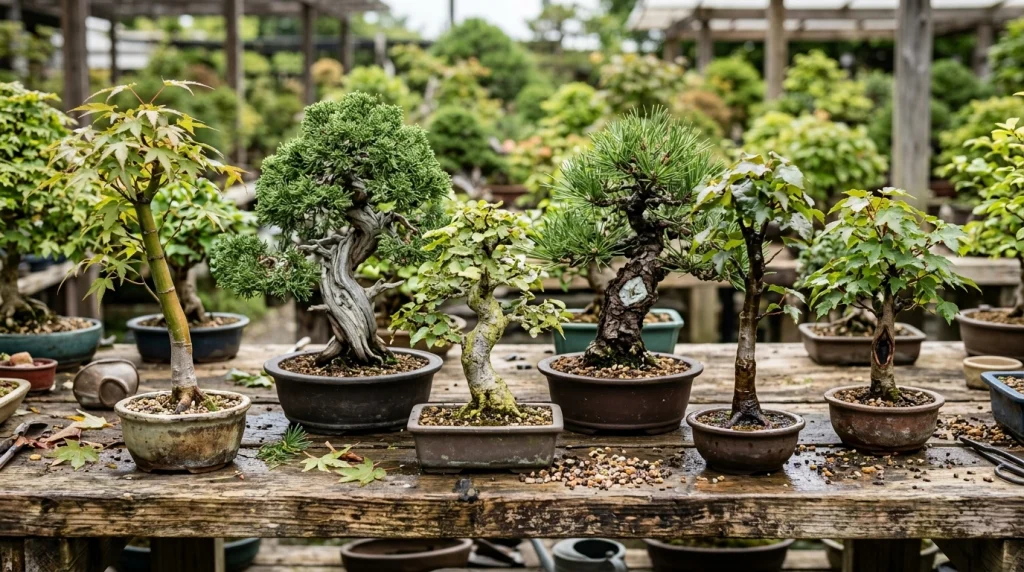
The same color can have several causes. Texture and surrounding symptoms usually tell me more than the shade itself.
| Bark Appearance | Possible Explanation | What to Check | Concern Level |
|---|---|---|---|
| Green becoming brown | Normal woody maturation | Normal foliage and firm stem | Usually low |
| Gray or silver | Mature bark, lichen, weathering, or deposits | Whether color sits on the surface | Usually low |
| Green film | Algae or moss | Shade, airflow, and persistent moisture | Low unless other symptoms occur |
| White crust or patches | Minerals, lichen, pests, or fungal growth | Texture and presence of insects | Variable |
| Black but firm | Wet bark, natural color, weathering, or surface growth | Whether it fades after drying | Variable |
| Black and soft | Damaged or decaying tissue | Roots, odor, drainage, foliage decline | High |
| Sunken brown or black patch | Wound, dead tissue, or possible canker | Expansion, cracking, ooze, and dieback | Moderate to high |
Why does bonsai bark look darker after watering?
Water can make textured bark look much darker because the wet surface reflects light differently. I’ve watched pale gray trunks become deep brown within seconds of watering.
Let the bark dry normally. If its usual color returns and the tissue stays firm, temporary darkening is much less concerning.
Why is my bonsai bark turning white?
White bark discoloration may come from mineral residue, lichen, scale insects, mealybugs, or superficial fungal material. A hard crust behaves differently from fuzzy growth or individual waxy insects.
Don’t scrub first and identify later. Examine the material closely before deciding what needs removing.
Why is the bark becoming green?
A green film often points to algae or moss growing where bark remains shaded and damp. These organisms can live on the bark surface without directly feeding on the tree.
Heavy growth can still be useful information. It may reveal low airflow, excessive shade, frequent misting, or a trunk base that stays damp for long periods.
Is It Surface Growth or a Bark Disease?
Surface organisms and damaged bark can look surprisingly similar in photographs. The key difference is often whether the underlying bark remains firm and structurally sound.
The University of Minnesota Extension notes that lichens can produce gray, green, yellow, orange, red, and other colorful patches on bark. Lichens themselves do not normally harm trees.
- Lichen: Usually crusty, leafy, or branching and firmly attached.
- Algae: Often forms a green or dark surface film in damp conditions.
- Moss: Produces soft green growth, especially around humid trunk bases.
- Mineral deposits: Often form a pale, hard residue where water repeatedly evaporates.
- Scale insects: May resemble small brown, white, or gray bumps attached to bark.
- Sooty mold: Can create a dark coating where honeydew from sap-feeding insects is present.
A disease-related lesion is more concerning when the bark becomes sunken, cracked, loose, soft, or progressively larger. Branch decline above the affected area increases my concern.
Some cankers can also discolor the underlying sapwood. Because pathogens and symptoms vary by tree species, I avoid naming a disease from bark color alone.
University Extension diagnostic resources are useful for comparing bark symptoms with recognized tree disorders. Their horticulture and plant-health resources provide a stronger basis than guessing from color alone.
Section Takeaway: Surface color on firm bark is often less serious than discoloration accompanied by damaged tissue. Always check the bark beneath or around the visible change without aggressively scraping it.
How Do I Diagnose Bonsai Bark Discoloration?
I use a simple order that moves from observation to increasingly invasive checks. This keeps me from disturbing roots because of a harmless surface change.
- Photograph the bark. Use the same lighting and angle so you can tell whether the patch expands.
- Let wet bark dry. See whether a dark area returns to its original shade.
- Check firmness gently. Healthy-looking firm bark is more reassuring than soft or collapsing tissue.
- Look at the whole canopy. Note yellow leaves, wilting, weak growth, leaf loss, or dying branches.
- Inspect the soil. Check whether water enters the root ball and exits the drainage holes freely.
- Look for pests. Examine bark crevices, branch junctions, leaf undersides, and new growth.
- Check the trunk base. Remove loose debris that hides the root flare without disturbing healthy roots.
What does the soil have to do with bark color?
Poor drainage can keep the root zone and lower trunk damp for too long. That may encourage surface growth and can contribute to root stress.
Overwatering is not simply giving a tree lots of water at one time. The bigger problem is a root zone that remains inadequately aerated for too long.
- Dense or decomposed substrate can drain slowly.
- Blocked drainage holes can trap excess water.
- A root-bound tree may drain differently than it once did.
- Low temperatures can dramatically slow drying.
- Different species use water at different rates.
A bonsai growing in a free-draining substrate may need frequent watering during hot weather. A tree in dense organic soil may stay wet much longer.
Should I perform a scratch test?
A scratch test exposes tissue beneath the bark, so I don’t use it casually across a visible trunk. Unnecessary scratching can damage bark and reduce the appearance of an otherwise healthy bonsai.
If confirming whether a small branch is alive is necessary, keep the test tiny and inconspicuous. Green, moist living tissue can be encouraging, but species and season still matter.
Pro tip: Cutting bark, carving lesions, or removing live wood is irreversible. For an old, valuable, collected, or severely declining bonsai, ask an experienced grower or local bonsai club before cutting.
When Should I Worry About Bark Color Changes?
I become more concerned when discoloration appears together with structural damage or whole-tree decline. One strange color on otherwise firm bark is much weaker evidence.
- Soft or mushy bark: Tissue may be deteriorating rather than merely changing color.
- Sunken areas: Localized dead tissue or a canker may be developing.
- Cracks around a spreading patch: Watch the margins closely.
- Oozing fluid: Wounds and several disorders can produce wet or stained bark.
- Foul odor: A rotten smell near the roots or trunk base deserves investigation.
- Branch dieback: Bark changes paired with dying branches suggest a wider problem.
- Persistent saturated soil: Root-zone health should be evaluated.
- Soft decaying roots: Root problems may be contributing to above-ground decline.
Do not assume brown or dark roots are dead solely from color. Root color varies, while softness, tissue breakdown, odor, and loss of fine roots provide stronger clues.
Should I immediately repot a bonsai with discolored bark?
Usually not. Bark discoloration by itself is not enough reason for emergency repotting.
Repotting becomes more justified when drainage has failed, substrate has badly decomposed, or root deterioration is strongly suspected. Correct seasonal timing also matters.
Pro tip: Root pruning removes functioning tissue as well as bad roots if identification is careless. Avoid aggressive root work on a stressed bonsai unless you have a clear reason and know the species’ correct repotting window.
Should I spray fungicide on discolored bark?
Not without identifying a fungal problem. Fungicide cannot correct compacted soil, unsuitable light, mineral residue, algae, or an insect infestation.
I also avoid automatically applying bleach, concentrated vinegar, disinfectants, or peroxide to living bark. Treating an unidentified color change can injure tissue while leaving the real cause untouched.
Section Takeaway: Softness, sinking, cracking, foul odors, declining foliage, and poor roots make bark discoloration more significant. Diagnose the underlying problem before repotting, cutting, or spraying.
How Can I Prevent Unhealthy Bark Changes?
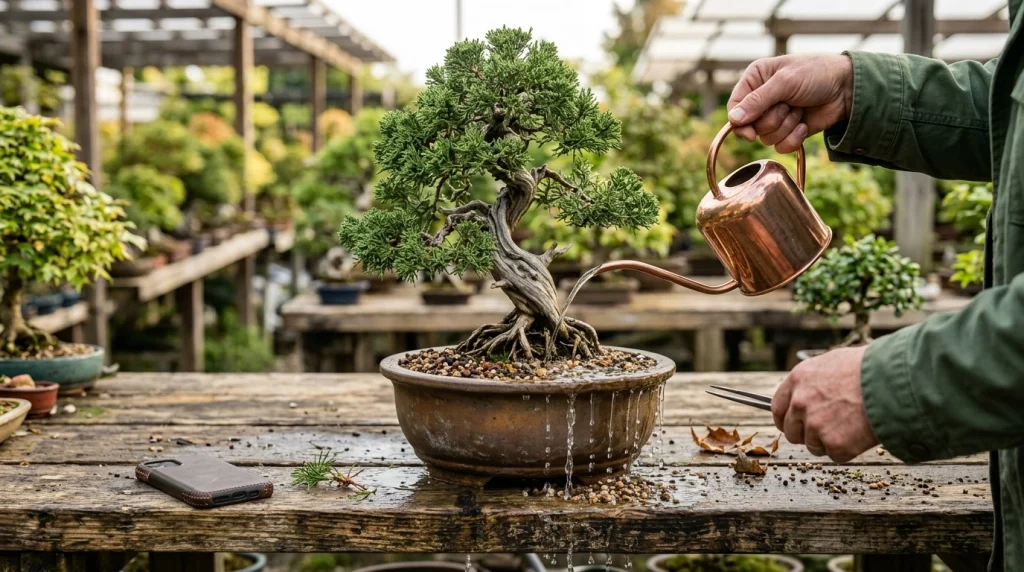
You can’t prevent natural bark maturation, and you shouldn’t try. The goal is to reduce avoidable stress while keeping the trunk easy to inspect.
Water according to the tree, not the calendar
Check the substrate before watering. Weather, pot size, root density, soil composition, and species all affect how quickly a bonsai dries.
Water thoroughly when needed, then allow excess water to drain. Don’t deliberately keep the trunk and root flare wet throughout the day.
Give the tree appropriate light and airflow
Proper placement helps foliage function and lets wet surfaces dry naturally. Species that belong outdoors generally should not be kept permanently inside just because they are bonsai.
Good airflow also reduces long periods of stagnant moisture around dense foliage and bark.
Keep the lower trunk visible
I like moss on many bonsai displays, but I don’t let thick moss permanently hide the trunk base. Exposed nebari, meaning the visible surface-root structure, is easier to inspect.
Remove dead leaves and decomposing organic debris sitting against the bark. Don’t scrape healthy bark while cleaning.
Inspect the tree every time you water
A ten-second inspection catches many problems early. Look at new growth, leaf undersides, branch junctions, trunk texture, soil moisture, and drainage.
Taking an occasional photograph is useful too. Slow changes that are hard to notice day by day become obvious when photographs are compared a month apart.
For access to experienced growers, clubs, and education programs, the American Bonsai Society can be a useful starting point when an unusual symptom needs hands-on assessment.
Frequently Asked Questions
Why is my bonsai trunk changing from green to brown?
Green young stems commonly become brown as they mature and produce woody bark. If the change is gradual, the tissue stays firm, and growth remains healthy, it is usually normal development rather than disease.
Why does my bonsai bark turn black when I water it?
Wet bark often appears much darker than dry bark. Let it dry naturally and compare the color again; persistent blackening becomes more concerning when the bark also feels soft, sunken, cracked, or damaged.
Why does my bonsai have white patches on its bark?
White patches can be mineral deposits, lichen, scale insects, mealybugs, or superficial fungal material. Check whether the material is hard, fuzzy, waxy, crusty, or made of individual insects before applying any treatment.
Is green bark on a bonsai a sign of disease?
Not necessarily. Green surface color is often algae or moss encouraged by moisture and shade, while some young stems are naturally green. Check whether the discoloration sits on firm bark and review light, airflow, and moisture conditions.
Can overwatering change bonsai bark color?
Persistently wet conditions can encourage algae, moss, and other surface growth around the lower trunk. More serious root or crown problems may also occur in poorly aerated soil, so examine drainage and overall tree health instead of judging watering from bark color alone.
Should I remove lichen from bonsai bark?
Lichen growing on bark does not automatically mean the tree is diseased. If removal is desired for appearance or inspection, avoid aggressive scraping that damages bark, especially on thin-barked species and old specimens.
Can bark discoloration mean my bonsai is dying?
Color alone cannot tell you that a bonsai is dying. Discoloration is more concerning when combined with soft tissue, expanding lesions, poor drainage, rotten roots, severe wilting, branch dieback, or other signs of declining health.
Final Takeaway
Bonsai bark changing color is often part of normal aging, moisture changes, or harmless surface growth. The color becomes more meaningful only when you compare it with texture, drainage, foliage, roots, species, and recent care.
Start with observation, not treatment. If the bark remains firm and the tree grows normally, monitor it; if the tissue becomes soft, sunken, cracked, or increasingly damaged, get a more specific diagnosis before making irreversible changes.
