
Brussel’s Fukien Tea Bonsai Review 2026

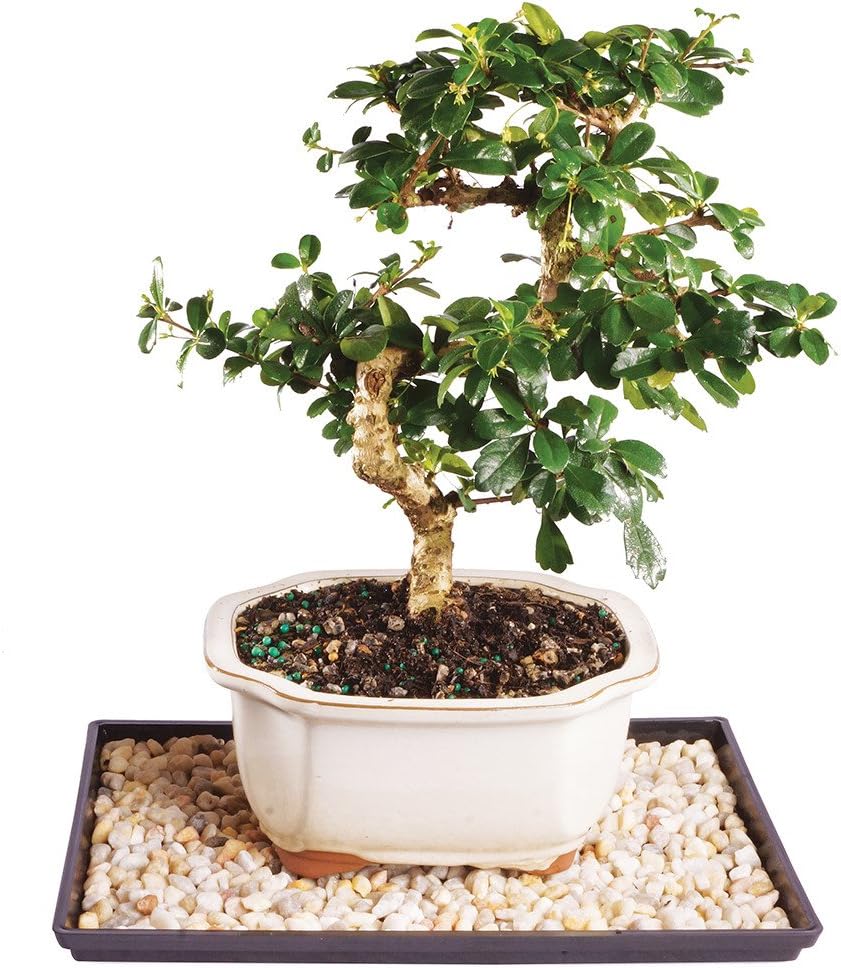
Brussel’s Bonsai Fukien Tea is a compact live bonsai aimed at buyers who want something more distinctive than an ordinary indoor houseplant. The current Amazon listing for ASIN B078SKNZZQ identifies it as a six-year-old small tree measuring roughly 6 to 8 inches tall. Its appeal comes from a textured, mature-looking trunk, glossy dark-green foliage, and the possibility of tiny white flowers. However, Fukien Tea is also less forgiving than ficus or jade, so this is a bonsai that rewards consistent light, watering, and temperature rather than neglect.
Quick Overview and Specifications
| Feature | Details |
|---|---|
| Product | Brussel’s Bonsai Fukien Tea |
| Model | CT-0116FT / CT0116FT |
| Species | Fukien Tea, commonly sold as Carmona microphylla |
| Advertised Age | 6 years |
| Advertised Height | Approximately 6–8 inches |
| Placement | Indoor bonsai; requires strong light |
| Included | Ceramic container, humidity tray, decorative rocks, soil and care instructions |
| Notable Trait | Glossy foliage, textured bark and small white flowers |
First Impressions
The strongest first impression is that this is already a recognizable bonsai rather than a seedling or starter stick. The small leaves suit the tree’s proportions, while the irregular bark and trunk movement create more visual age than its six-year specification might suggest. It also arrives in a ceramic container instead of a plastic nursery pot, so there is little setup required.
Live plants inevitably vary, and this matters here. Canopy density, trunk curves and exact pot appearance may differ from the product photo. Retail buyer feedback also ranges from trees arriving healthy and blooming to specimens losing leaves following delayed or stressful shipping. Before making major changes after delivery, following a sensible indoor bonsai care routine is preferable to immediately repotting or heavily pruning a stressed tree.
Performance & Feel
For a live bonsai, performance means how well the tree maintains compact foliage and responds to routine pruning and indoor care. Fukien Tea naturally has small, leathery leaves, which helps preserve convincing miniature proportions without aggressive leaf-reduction work.
The challenge is moisture management. It dislikes being allowed to dry completely but also performs poorly when roots remain waterlogged. That narrower comfort zone is why it demands more attention than a drought-tolerant jade. Good drainage, checking the soil rather than following a rigid calendar, and keeping the tree away from heating or air-conditioning drafts are important.
Flowering Potential & Indoor Care Demands
Flowers are the main feature that distinguishes Fukien Tea from many ordinary starter bonsai. Brussel’s describes white spring blooms, while horticultural references note that healthy Carmona can flower repeatedly under favorable conditions. Strong light is especially important; a dim desk several feet from a window is unlikely to produce the same dense growth or bloom performance shown in promotional photography.
If natural light is weak, a proper indoor bonsai lighting setup can make placement more practical. The species belongs to the warmer group of tropical bonsai species, so protection from cold drafts and sudden temperature changes is equally important.
Durability
A healthy Fukien Tea can be maintained for many years, but the meaningful durability question is how well this particular mailed plant survives the transition into your home. That is where feedback is mixed. Positive buyers frequently mention careful packaging and healthy arrival, while negative reviews commonly mention leaf loss, damaged plants or trees declining shortly after shipping.
Once acclimated, long-term success depends more on growing conditions than on the ceramic pot or accessories. Avoid unnecessary repotting immediately after delivery, inspect regularly for pests, provide drainage, and stabilize light and watering before beginning significant styling.
Value for Money
The bundle has clear value because you are buying an established tree rather than waiting years for seeds to develop. The ceramic pot, humidity tray and decorative material also reduce the number of accessories needed on day one. Amazon’s current page may not always have a featured offer, so value should be judged against the live price when purchasing rather than an old advertised figure.
The trade-off is risk: a live mailed plant cannot provide the consistency of a manufactured product. Buyers paying primarily for an exact shape matching the listing photograph may be disappointed by normal biological variation.
Comparison to Similar Indoor Bonsai
The Brussel’s Golden Gate Ficus is the stronger alternative for a first-time owner. Ficus tolerates indoor conditions and minor care errors better, although it lacks the distinctive Fukien Tea flowers.
The Brussel’s Dwarf Jade is even more forgiving if missed watering is your main concern because its succulent foliage stores moisture. The Fukien Tea wins on fine foliage, textured bark and flowering character, but asks for more precise care than either competitor.
Pros & Cons
Pros
- Established six-year bonsai
- Compact 6–8-inch size
- Glossy naturally small leaves
- Attractive textured bark
- White flowering potential
- Ceramic pot and humidity tray included
Cons
- More care-sensitive than ficus or jade
- Shipping stress may cause leaf loss
- Individual trees vary from product photos
- Needs strong light for best growth
- Dislikes both prolonged dryness and soggy soil
Who Should Buy This?
Buy this Fukien Tea if you already understand basic plant watering, have a bright window or grow light, and want a bonsai with more ornamental character than a basic foliage-only tree. It also suits someone who prefers receiving an established bonsai instead of starting from seed. For broader alternatives, this guide to good bonsai trees for indoors helps compare species by care level.
Skip it if the intended location is dark, you travel frequently, or you specifically want a bonsai that tolerates forgotten watering.
Frequently Asked Questions
Is the Brussel’s Fukien Tea a real live bonsai?
Yes. It is a living Fukien Tea tree that arrives already trained and planted in a bonsai-style ceramic container.
How large is this model?
The current Amazon listing describes this ASIN as a six-year-old small bonsai approximately 6 to 8 inches tall.
Does Fukien Tea actually produce flowers?
Yes. Small white flowers are characteristic of the species, although bloom frequency depends heavily on light, temperature and overall plant health.
Is it suitable for complete beginners?
It can be grown by a committed beginner, but Golden Gate Ficus or Dwarf Jade is generally more tolerant of watering and environmental mistakes.
How often should it be watered?
Do not use a fixed schedule. Check the soil regularly and water thoroughly when it begins approaching dryness, allowing excess water to drain freely.
Should I repot it immediately after delivery?
Usually no. Allow the tree to recover from shipping and acclimate first unless there is an urgent drainage, root or container problem.
Final Verdict
Brussel’s Bonsai Fukien Tea stands out because it combines a compact display-ready size with glossy miniature foliage, aged-looking bark and genuine flowering potential. Those qualities give it more character than many mass-market indoor bonsai. The downside is equally clear: Fukien Tea is sensitive, and retailer reviews show that shipping condition and post-delivery survival can vary.
For a grower with strong indoor light and disciplined watering, the 7.8/10 rating reflects an attractive and rewarding bonsai. For someone wanting the easiest possible first tree, a ficus or dwarf jade remains the safer choice.
As an Amazon Associate, we earn from qualifying purchases…
