Azalea Bonsai Root Rot: Causes, Signs and Fix

Azalea bonsai root rot usually shows up as a tree that wilts or drops leaves even though the soil is wet. Underneath, the fine roots have turned dark brown, soft and sour-smelling. The fix is to unpot the tree, rinse the root ball, cut away every mushy root back to firm pale tissue, repot into fresh kanuma soil in a pot that drains fast, keep it in bright shade for 3 to 4 weeks, and water only when the top centimeter dries. The most common culprit is Phytophthora, a water mold that thrives when azalea roots sit in waterlogged, poorly aerated soil.
In this guide
Why azaleas are so prone to root rot
Satsuki and Kurume azaleas have a root system unlike most bonsai. Instead of a few thick roots with feeder roots at the ends, they form a dense mat of very fine, almost hair-like roots close to the surface. That mat is excellent at taking up water and nutrients from acidic forest soil. It is also very short of oxygen if the soil stays saturated.
When air spaces in the soil fill with water for days at a time, roots start to die. Dead roots then become an entry point for water molds like Phytophthora cinnamomi, which is a well-known cause of root rot in rhododendrons and azaleas. Once it is established, it spreads through the remaining roots.
Common triggers:
- Old kanuma that has broken down into mush after 3 or more years.
- A pot sitting in a saucer of water.
- Watering on a schedule through cool, cloudy weeks.
- Garden soil or peat-heavy mixes that never dry.
- A pot with small or blocked drainage holes.
- Hard, alkaline water that slowly damages roots and weakens the tree.
Signs of azalea bonsai root rot
| Sign | What it looks like | Could also be |
|---|---|---|
| Wilting in wet soil | Leaves droop and do not recover after evening | Heat stress if soil is dry |
| Leaf yellowing and drop | Older leaves first, then whole shoots | Iron deficiency (chlorosis) |
| Dull, gray-green leaves | Lose their shine | Underwatering, spider mites |
| Branch dieback | One side of the tree dies first | Trunk damage, borers |
| Dark roots | Brown to black, soft, outer skin slides off | Nothing else; this confirms it |
| Sour or musty smell | From the soil after watering | Anaerobic soil |
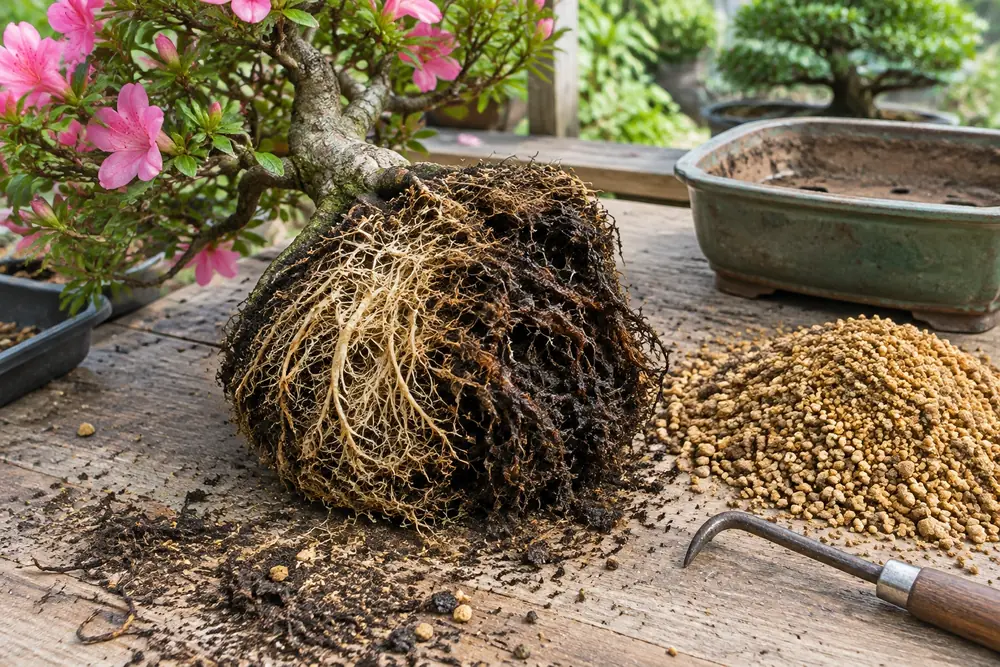
The only sure test is to look at the roots. Slide the tree out of its pot on a cool, overcast day and check the outer edge of the root ball.
How to fix azalea bonsai root rot, step by step
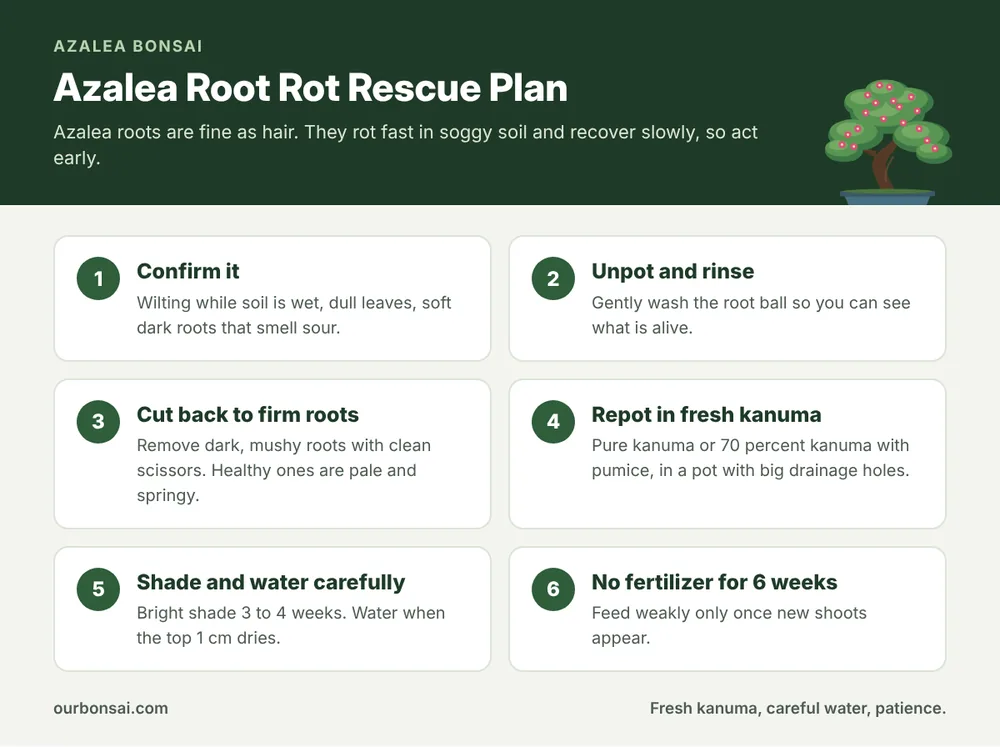
- Gather what you need. Fresh kanuma (or a mix of about 70 percent kanuma and 30 percent pumice), sharp clean scissors, a chopstick, a bucket of rainwater or low-lime water, and a clean pot with large drainage holes.
- Unpot the tree. Run a knife round the pot edge, cut any tie wires, and lift the tree out.
- Rinse the root ball. Dip it in the bucket and work old soil out gently with the chopstick. Azalea roots are fragile; do not rake hard.
- Sort the roots. Healthy roots are light tan to white, fine and springy. Rotten ones are dark, soft and slimy, and the outer layer slips off when pinched.
- Cut away the rot. Remove every dark, mushy root back to firm tissue. Sterilize the scissors with rubbing alcohol between cuts if the rot is widespread.
- Thin the top in proportion. If you lost half the roots, remove some of the foliage and all flower buds so the tree has fewer leaves to support.
- Repot. Fill the pot with fresh kanuma, set the tree a little higher than before, and work soil around the roots with the chopstick. Tie it in firmly so it cannot rock.
- Water once thoroughly until it runs clear from the holes.
Some growers also use a fungicide labeled for Phytophthora on ornamentals (products based on phosphonate or mefenoxam are common). Follow the label exactly, and remember that no product rescues a tree still sitting in soggy soil.
Aftercare for the next 6 weeks
- Bright shade, no direct afternoon sun. Damaged roots cannot keep up with water loss.
- Shelter from wind and heavy rain.
- Water carefully. Wait until the top 1 cm of kanuma turns lighter in color. Kanuma changes from dark brown when wet to pale yellow when dry, which makes this easy.
- No fertilizer until new shoots appear, then start at quarter to half strength with an acid feed.
- Do not prune further or wire until it is clearly growing.
Recovery is slow. Expect 4 to 8 weeks before new growth, and a full season before the tree is back to normal.
How to prevent root rot coming back
Repot every 2 to 3 years. Kanuma breaks down faster than akadama. Once water starts sitting on the surface after you water, the soil has collapsed.
Use the right soil. Kanuma is the standard for a reason: it is acidic, holds moisture but drains well. Our list of the best soil for azalea bonsai compares options, and the Kanuma bonsai soil review explains the material.
Never leave water in the saucer. Empty it 10 minutes after watering.
Water by color and feel, not by day. Azaleas like evenly moist soil, which is not the same as wet.
Use soft water. Rainwater keeps the pH low and helps roots stay healthy.
For root rot in other species and the general pattern, see our main guide to root rot in bonsai.
Frequently asked questions
Can an azalea bonsai recover from root rot?
Yes, if at least a third of the roots are still firm and healthy and you catch it early. Trees with almost no healthy roots left rarely survive, but they are still worth a rescue repot.
Should I repot an azalea with root rot in summer?
Normally azaleas are repotted in spring or right after flowering. Root rot is an emergency, so repot whenever you find it, but give extra shade and shelter if it is hot.
How do I tell root rot from overwatering?
Overwatering is the cause; root rot is the result. A tree that has been too wet for a short time often recovers if you let it dry a little. Once roots are dark and soft, they are dead and need to be removed.
Is root rot contagious to my other bonsai?
Phytophthora can spread through splashing water, shared tools and reused soil. Do not reuse the old soil, wash the pot with hot soapy water, and clean your scissors.
Final thoughts
Root rot in azaleas is almost always a soil and water problem first. Catch it early, cut cleanly, give fresh kanuma, and water with more patience than before. For general azalea background, see Clemson Extension’s azalea care factsheet, and our bonsai diseases guide covers other problems that can look similar.