How to Keep Bonsai Alive: 10 Rules That Actually Work

This post contains affiliate links. As an Amazon Associate, OurBonsai earns from qualifying purchases at no extra cost to you. Read our disclosure.
In this guide
If you want to keep bonsai alive for years rather than months, you do not need special talent or expensive tools. Most bonsai die from the same handful of mistakes: the wrong tree in the wrong place, too little light, watering on a schedule and the wrong soil. Get those right and you have solved most of the problem. The ten rules below cover everything that matters, in order of importance.
They apply to the common beginner trees, like ficus, Chinese elm, juniper, jade and Japanese maple. Where a rule differs between indoor and outdoor trees, you will find both.
Why bonsai die
It helps to understand what goes wrong. A bonsai lives in a very small amount of soil, so it has almost no buffer. A houseplant in a big pot can survive a week of neglect. A bonsai can dry out in an afternoon or drown in a week of soggy soil. Add the wrong light or a missed winter rest, and a healthy tree can decline quickly. Our article on why growing a bonsai tree is fun explains why the effort is worth it.
10 rules to keep bonsai alive
1. Put the right tree in the right place
This rule alone prevents a huge share of bonsai deaths. Junipers, pines, maples, elms and azaleas are outdoor trees that need sun, wind and a cold winter. They die slowly indoors. Ficus, jade, schefflera and other tropicals can live indoors. Find out what species you have. Our guides to most popular indoor bonsai trees and types of outdoor bonsai trees help you check.
2. Give it strong light
Bonsai need far more light than most houseplants. Indoors, the spot right next to your brightest window is the minimum. Outdoors, give full sun or bright light with some afternoon shade in very hot climates. If your home is dark, use a grow light. Our guide on how much light a bonsai tree needs explains how to judge it.
3. Check the soil every day
This is a one-minute habit that saves trees. Push your finger about 1 cm into the soil. If it feels just dry, water. If it is damp, wait. Never water on a fixed day of the week.
4. Water thoroughly
When you water, water properly. Soak the whole soil surface until water runs out of the drainage holes, wait a minute and repeat. Small sips leave dry pockets around the roots. If the soil has dried out completely, soak the pot in a basin of water for ten minutes.
5. Use proper bonsai soil
Bonsai soil is gritty and fast draining, made of particles like akadama, pumice and lava rock. Regular potting soil stays wet, compacts and suffocates roots. Our comparison of bonsai soil vs regular soil explains the difference.
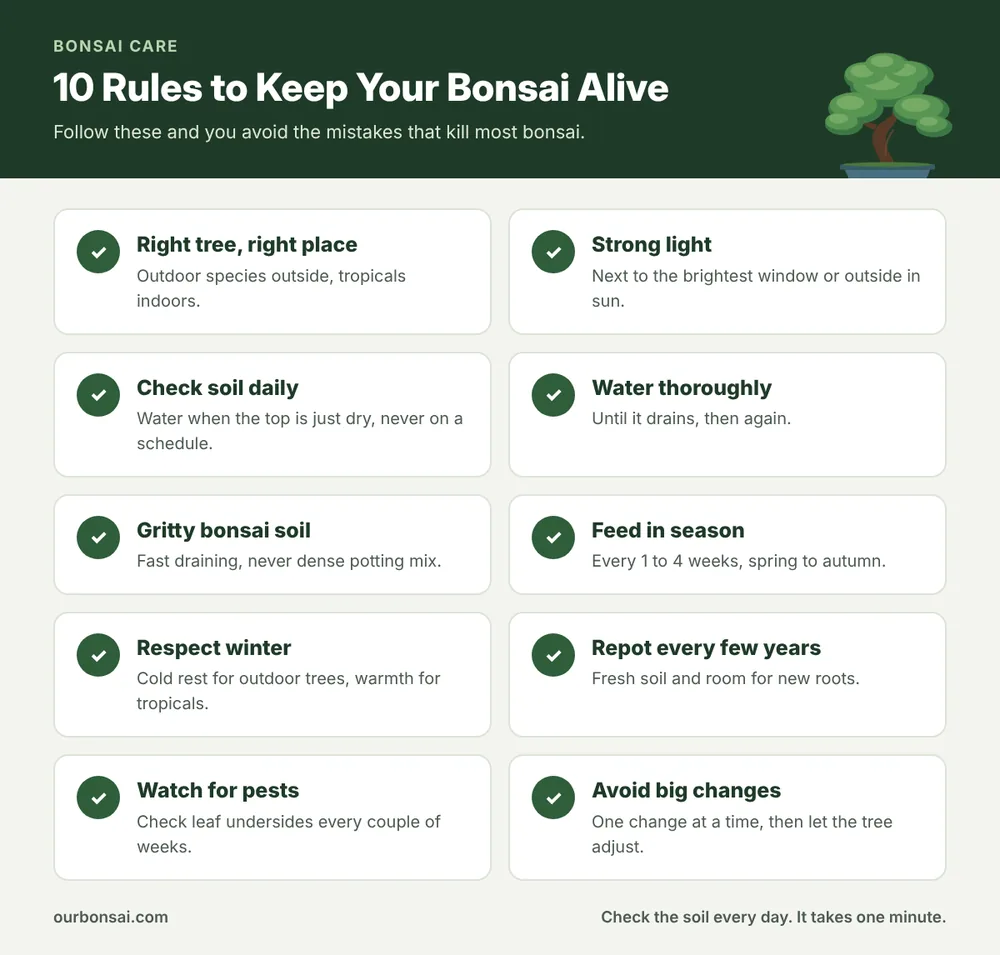
6. Feed during the growing season
Bonsai soil holds few nutrients. Feed every one to four weeks from spring to autumn, depending on the product, and reduce or stop in winter. Never feed a sick, dry or freshly repotted tree. A simple balanced bonsai fertilizer is all most trees need. Our guide to bonsai fertilizer pellets or liquid compares the two main types.
7. Respect the seasons
Outdoor species need a winter rest in the cold. Protect their roots from hard frost by putting the pot on the ground in a sheltered spot or in an unheated shed, but do not bring them into a warm house. Tropical species must stay warm, usually above 50 to 60 °F (10 to 15 °C), with extra light in winter. The USDA plant hardiness zone map helps you judge what your outdoor trees will face.
8. Repot every few years
Over time, roots fill the pot and the soil breaks down. Water stops soaking in, and the tree slowly starves. Repot young trees every two to three years and older trees every three to five, usually in early spring for outdoor species and late spring for tropicals.
9. Watch for pests
Spider mites, aphids, scale and mealybugs are easy to fix early and hard to fix late. Every couple of weeks, look under a few leaves and along the stems for webbing, sticky residue, bumps or white fluff. Our overview of bonsai pests and diseases helps you identify what you find.
10. Make one change at a time
Moving, repotting, hard pruning and changing the watering routine all stress a tree. Do one at a time and let the tree recover before the next. New bonsai especially need a few quiet weeks to settle in.
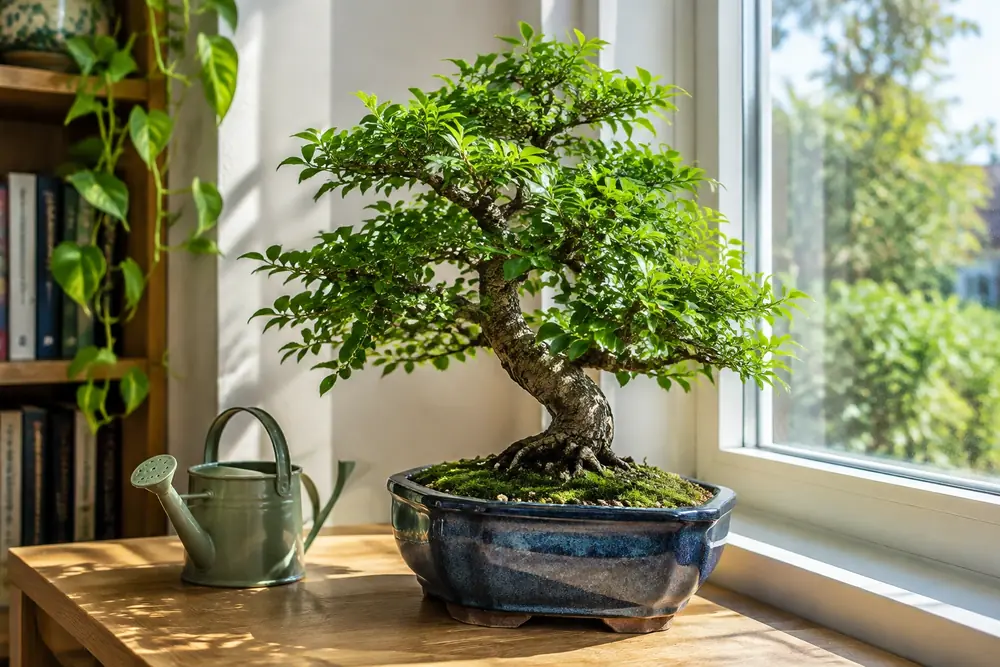
A simple care calendar
Putting the rules on a calendar makes them automatic:
| Month (Northern Hemisphere) | Main tasks |
|---|---|
| March to April | Repot if due, start feeding, move outdoor trees into full sun |
| May to June | Trim new shoots, check soil daily, watch for aphids |
| July to August | Water daily or twice daily, shade in heat waves, check for spider mites |
| September to October | Reduce feeding, bring tropicals indoors before nights get cold |
| November to February | Protect outdoor tree roots from hard frost, give tropicals extra light |
In the Southern Hemisphere, shift each task by six months.
What to do if you are going away
Holidays are a classic time for bonsai to die. For a weekend, water thoroughly before you leave and move the tree out of direct sun. For longer trips, ask a friend to check the soil every day and show them how to water, or set up an automatic drip system. Our review of the best automatic watering systems for bonsai compares options. Grouping trees together in light shade, with their pots on a tray of damp gravel, also slows drying.
Indoor vs outdoor bonsai: what changes
| Topic | Indoor tropical bonsai | Outdoor bonsai |
|---|---|---|
| Light | Brightest window, grow light in winter | Full sun or bright light outside |
| Watering | Check daily, dries slower indoors | Check daily, often daily in summer |
| Winter | Keep warm and bright | Cold rest with root protection |
| Humidity | Humidity tray helps | Usually fine outdoors |
| Common mistake | Too dark | Brought indoors |
Warning signs to act on quickly
- Leaves wilting even though the soil is wet
- Sudden heavy leaf drop
- Leaves yellowing across the tree
- Soil that smells sour or stays wet for days
- Sticky leaves, webs or white fluff
- Branches that snap dry instead of bending
If you see these, our guide to bonsai leaves turning yellow or brown and our main bonsai care guide will help you find the cause.
FAQ: keep bonsai alive
What is the most common reason bonsai die?
Watering mistakes, closely followed by keeping outdoor species indoors and too little light.
How often should I water to keep my bonsai alive?
As often as the soil needs. Check daily and water thoroughly when the top is just dry. That can be daily in summer and every few days in winter.
Can I keep a bonsai alive indoors?
Yes, if it is a tropical species and gets strong light from a window or grow light. Outdoor species like junipers will not survive long indoors.
How long can a bonsai live?
With good care, decades and sometimes centuries. Many bonsai outlive their owners.
Final thoughts
To keep bonsai alive, focus on the basics: the right species in the right place, strong light, daily soil checks, thorough watering and proper soil. Add regular feeding, seasonal care and occasional repotting, and your tree has every chance to thrive for decades. Start with these ten rules and the rest of bonsai becomes much easier.