Is My Bougainvillea Bonsai Dying? Signs and How to Save It

This post contains affiliate links. As an Amazon Associate, OurBonsai earns from qualifying purchases at no extra cost to you. Read our disclosure.
In this guide
A bougainvillea bonsai dying is a common fear, especially in winter, because this tree can drop nearly all its leaves and bracts in a matter of days. The surprising thing about bougainvillea is that a bare tree is often perfectly alive. In cool, dry or dim conditions, it behaves almost like a deciduous plant and sheds leaves to rest. The real danger signs are rotting roots, shriveled bark and branches that are dry all the way through.
This guide helps you tell a resting bougainvillea from a dying one, explains the most common causes of decline and gives you a step-by-step rescue plan.
Is my bougainvillea dying or just resting?
Bougainvillea is native to South America, where many regions have a dry season. During cool or dry periods, it often drops leaves and stops flowering, then pushes new growth when warmth and light return. As a bonsai indoors in winter, the same thing happens.
Usually resting:
- Leaves yellow and drop in autumn or winter
- The tree is in a cool or dim spot
- Twigs are flexible and green under the bark
- Small buds are visible at leaf joints
Real danger:
- Soil is wet and smells sour
- Roots are black, soft and pull apart
- Bark is wrinkled or soft near the soil line
- Twigs snap dry and are brown inside
- No green tissue anywhere when scratched
How to check if your bougainvillea is alive
The scratch test
Scratch a tiny patch of bark on a thin twig with your fingernail. Bright green and moist means alive. Brown and dry means that twig is dead. Work back toward the trunk until you find green. Bougainvillea often dies back at the tips but stays alive lower down.
The bend test
Live twigs bend. Dead ones snap with a dry crack.
Check the roots
Ease the tree out of the pot. Healthy roots are firm and light colored. Rotting roots are dark, mushy and smell bad.
6 reasons a bougainvillea bonsai is dying
1. Overwatering and root rot
The number one killer. Bougainvillea is naturally drought tolerant and likes to dry out slightly between waterings. In dense soil, in a cool room or in winter, constantly wet soil quickly rots its roots. Leaves yellow and drop, then branches die back.
Fix: stop watering until the top 2 to 3 cm of soil is dry. If the roots are rotting, trim the dead parts and repot into a gritty mix. Our guide to the best soil for bougainvillea bonsai explains what to use, and our guide to root rot in bonsai walks through the rescue.
2. Cold
Bougainvillea is a tropical plant. Below about 50 °F (10 °C), it struggles, and frost kills the top growth. Cold combined with wet soil is especially deadly.
Fix: keep it warm, ideally 65 to 85 °F (18 to 29 °C) in the growing season and no lower than 50 °F in winter. Move it away from cold windows and drafts at night.
3. Too little light
Bougainvillea needs full sun to grow and flower. Indoors in winter, light levels are often far too low. The tree drops leaves and stops growing, and if it is also kept wet, the roots rot.
Fix: move it to the sunniest window you have and add a grow light if needed. Our guide to the best indoor grow lights for bonsai helps you choose. A full spectrum LED grow light on a 12 to 14 hour timer makes a big difference in winter.
4. Root disturbance
Bougainvillea dislikes having its roots disturbed. Heavy root pruning, or repotting at the wrong time of year, can cause dramatic leaf drop and dieback.
Fix: keep the tree warm, bright and slightly on the dry side. Do not fertilize until new shoots appear. Next time, repot only in late spring or early summer and remove no more than about a quarter of the roots.
5. Pests
Aphids, mealybugs and caterpillars (including bougainvillea loopers) feed on new growth and leaves. Mealybugs hide in leaf joints as white, fluffy spots.
Fix: rinse the tree and treat with insecticidal soap or neem oil. See our guide to mealybugs on bonsai trees.
6. Drought
Although drought tolerant, a bougainvillea in a small bonsai pot can still dry out too much in summer heat. Leaves wilt, crisp and fall.
Fix: water thoroughly and check daily during hot weather. Water when the top 2 cm of soil is dry, not when the whole pot is dust dry.
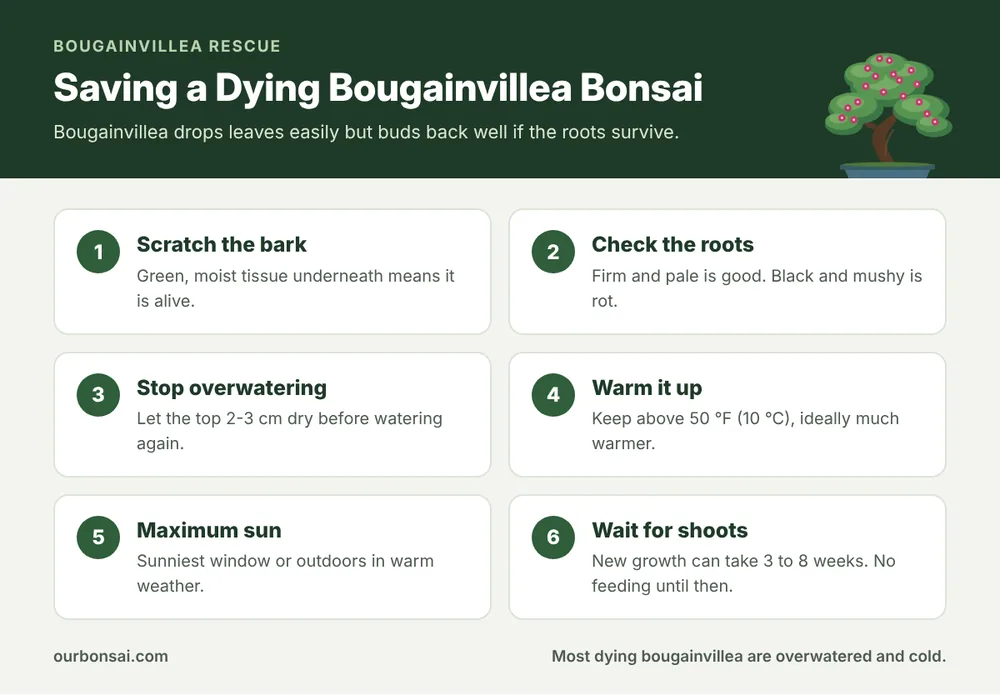
How to save a dying bougainvillea bonsai
- Diagnose. Scratch test, roots and soil.
- Fix root rot if present. Trim dead roots, repot into gritty soil, water once and then let it dry slightly.
- Warm it up. At least 60 °F (15 °C) during recovery.
- Give it maximum light. Sunniest window or a grow light.
- Water sparingly. A bare tree uses very little water. Let the top dry well between waterings.
- Cut back dead wood. Once you are sure a twig is dead, cut back to green tissue.
- No fertilizer until new shoots are a few centimeters long.
- Be patient. New shoots often appear in three to eight weeks.
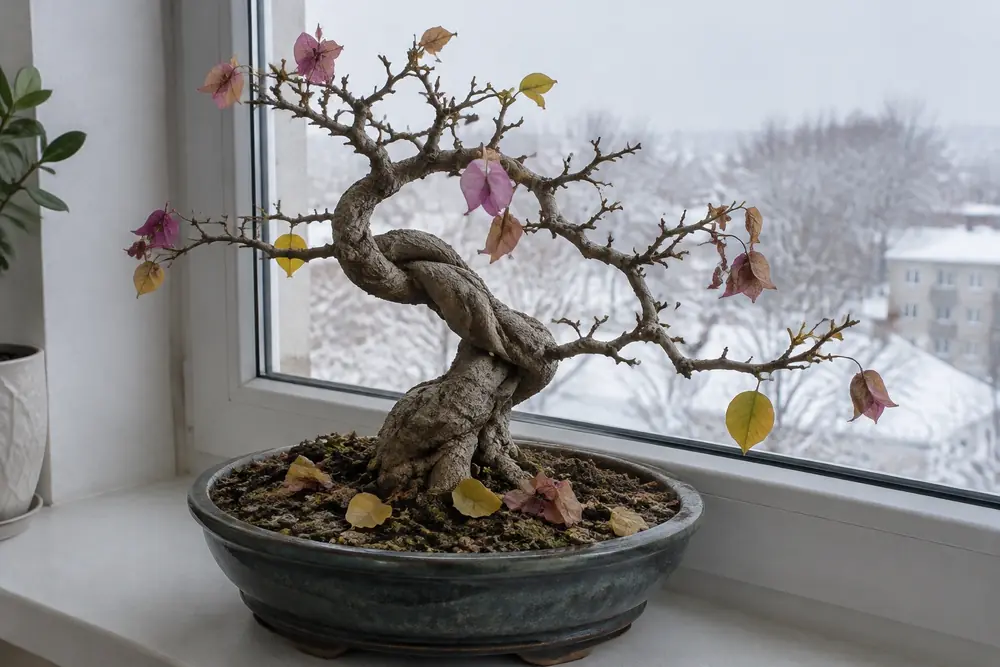
Recovery timeline
| Time | What to expect |
|---|---|
| 1 to 2 weeks | Leaf drop stops, soil drying out properly |
| 2 to 8 weeks | Small reddish or green buds at leaf joints and along branches |
| 2 to 3 months | New shoots and leaves, growth picks up |
| Next warm season | Flowering resumes in full sun |
In winter, recovery may wait until spring brings more warmth and light. Do not give up on a bare tree before late spring if the bark is still green.
Winter care so it does not die next year
Most bougainvillea bonsai that die do so in their first winter. A simple winter routine prevents it:
- Bring it indoors before night temperatures fall below about 50 °F (10 °C).
- Pick the sunniest spot in the house, usually a south-facing window, and add a grow light if days are short.
- Water much less. Check the soil and water only when the top few centimeters are dry. In a cool room this may be once every one to two weeks.
- Do not feed from late autumn until growth restarts in spring.
- Expect some leaf drop. It is normal for bougainvillea to rest in winter. Keep the bark healthy and the roots on the dry side.
- Move it back outdoors in late spring once nights stay warm, starting in light shade for a week.
Preventing problems
- Gritty, fast-draining soil and a pot with good drainage
- Water when the top 2 cm is dry, less in winter
- Full sun, outdoors in warm months if possible
- Warmth above 50 °F all year
- Repot only in late spring or early summer
- Check for pests every couple of weeks
For styling ideas once your tree is strong again, see our guide to bougainvillea bonsai styles. The Clemson University bougainvillea fact sheet also has useful background on the plant’s needs.
FAQ: bougainvillea bonsai dying
Why did my bougainvillea bonsai lose all its leaves?
Usually cold, low winter light or overwatering. It is often just resting. Check that the twigs are green under the bark.
Can a bougainvillea bonsai come back after losing all its leaves?
Yes, very often. Keep it warm, bright and on the dry side, and new shoots usually appear within a few weeks.
Should I water a bare bougainvillea?
Sparingly. Without leaves it uses little water. Water only when the top few centimeters of soil are dry.
Why is my bougainvillea dying after repotting?
It dislikes root disturbance. Keep it warm and bright, water carefully, do not fertilize and wait for new growth.
Final thoughts
A bougainvillea bonsai dying is often a bougainvillea resting. The scratch test tells you which. If it is in real trouble, the cause is usually wet, cold roots or too little light. Fix the soil and watering, keep the tree warm and in full sun, and be patient. Bougainvillea is tough and buds back well once conditions are right. For a general rescue routine for any species, see our main bonsai care guide.