Cherry Blossom Bonsai Dropping Leaves: Causes and Fixes

This post contains affiliate links. As an Amazon Associate, OurBonsai earns from qualifying purchases at no extra cost to you. Read our disclosure.
In this guide
- Normal autumn drop
- When dropping leaves is a problem
- 7 causes of cherry blossom bonsai dropping leaves
- Leaf drop on a newly bought cherry bonsai
- Clearing fallen leaves properly
- What to do right now
- Will early leaf drop affect flowering?
- Preventing early leaf drop next year
- FAQ: cherry blossom bonsai dropping leaves
- Final thoughts
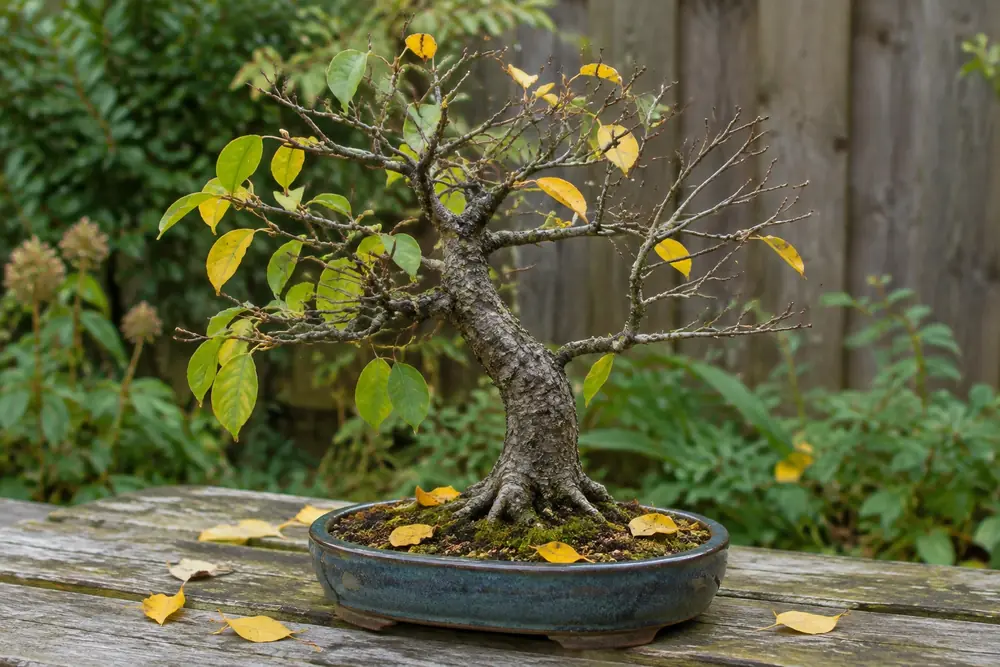
A cherry blossom bonsai dropping leaves in autumn is doing exactly what it should. Flowering cherries are deciduous: their leaves turn yellow, orange or red and fall before winter dormancy. When leaves drop in late spring or summer, though, something is wrong, and it matters more for cherries than for many other bonsai. A tree that loses its leaves early in summer has less energy to form next year’s flower buds, so early leaf drop can mean a poor display the following spring.
This guide explains how to tell normal autumn drop from a problem, the most common causes of early leaf drop and what to do about each.
Normal autumn drop
From early to mid autumn, cherry leaves color up and fall over a few weeks. The tree ends up bare, with plump flower and leaf buds along the branches. This is healthy dormancy.
Signs it is normal:
- It is autumn and nights are cooling
- Leaves color evenly before falling
- Buds remain firm and plump
- The tree was healthy through summer
When dropping leaves is a problem
- Leaves fall in late spring or summer
- Leaves have spots, holes or curling before they drop
- Leaves fall green or crispy brown
- The soil is very wet or very dry
- Branches die back along with the leaf drop
7 causes of cherry blossom bonsai dropping leaves
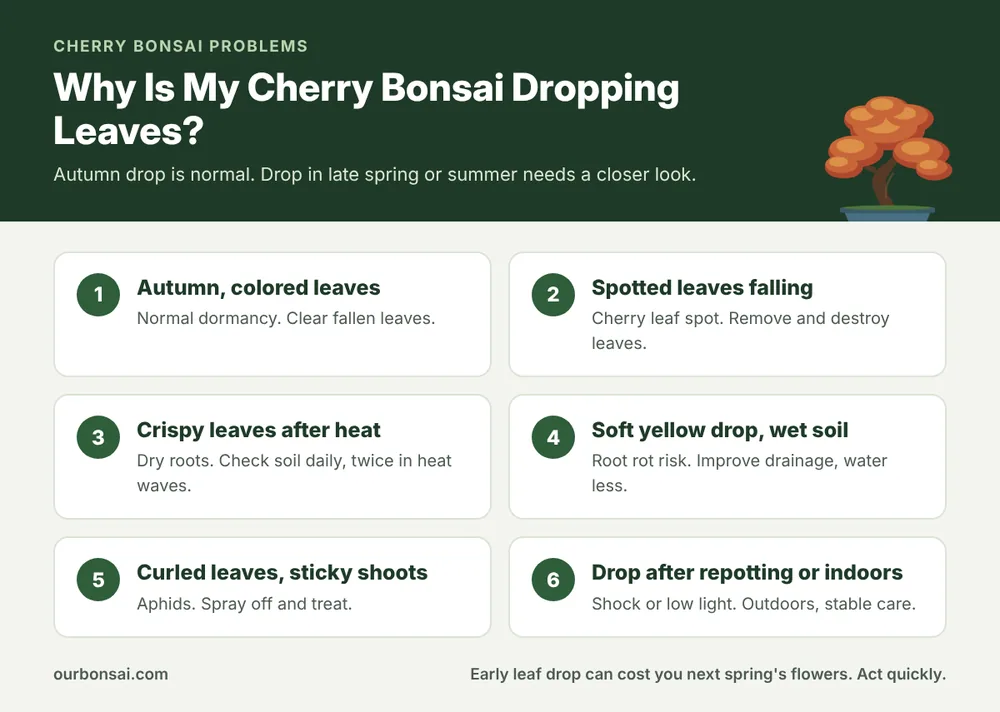
1. Cherry leaf spot
The most common cause of early summer leaf drop in cherries. A fungal disease that causes small purple to reddish-brown spots, yellowing around the spots and early leaf fall. In wet summers, a tree can be half bare by midsummer.
Fix: remove spotted leaves from the tree and collect every fallen leaf, because the fungus overwinters in leaf litter. Water the soil, not the leaves, and thin the canopy for air flow. Our guide to bonsai leaf spot disease covers treatment, including fungicides for severe cases.
2. Dry soil
Cherries in small pots dry out quickly in summer. Leaves wilt, crisp at the edges and drop, sometimes within a day or two of a dry spell.
Fix: check the soil every day and water thoroughly when the top is just dry. In heat waves, check twice. Our guide to watering bonsai in summer has more tips.
3. Overwatering and root rot
Wet, airless soil damages cherry roots. Leaves turn soft and yellow before dropping, and the soil stays wet for days.
Fix: let the topsoil dry slightly before watering. Check drainage and repot into a gritty mix if needed. Our guide to root rot in bonsai explains what to look for.
4. Heat stress
A dark pot on hot paving in full afternoon sun can overheat the roots. Leaves scorch and fall, especially on the exposed side.
Fix: give light afternoon shade in very hot weather, keep the pot off hot surfaces and consider a shade cloth during heat waves.
5. Aphids
Aphids cluster on new shoots in spring, sucking sap. Leaves curl, yellow and may drop. You may see sticky honeydew and ants.
Fix: spray them off with water and use insecticidal soap if needed. See our guide to aphids on bonsai trees.
6. Repotting shock
Cherries resent heavy root pruning. If roots are cut hard or repotting happens after the leaves have opened, the tree may drop leaves for a few weeks.
Fix: keep the tree in light shade, water evenly and do not fertilize for a month. Next time, repot in early spring as buds swell and remove no more than about a quarter of the roots.
7. Kept indoors
Cherries need outdoor light and seasons. Indoors, they drop leaves steadily and weaken.
Fix: move the tree outside into sun. Our guide to types of outdoor bonsai trees explains why.
Leaf drop on a newly bought cherry bonsai
Cherry bonsai bought in leaf from a nursery or online often drop some leaves in their first few weeks. They are adjusting to a new spot, different light and a different watering rhythm, and many have spent days in a dark shipping box. Some also arrive in dense nursery soil that stays wet.
For a new tree, put it outdoors in morning sun with light afternoon shade, check the soil daily and water only when the top is just dry. Remove any decorative moss or rocks that keep the soil surface wet. Avoid repotting until the next early spring unless the soil is waterlogged and smells sour. Most new cherries settle within three to four weeks and push fresh leaves if it is still the growing season.
Clearing fallen leaves properly
Fallen cherry leaves are not just untidy. If the tree had leaf spot, they carry fungal spores that reinfect new leaves next spring. Pick up every leaf from the pot surface, the bench and the ground around the tree. Put them in the trash, not the compost, if you saw spots. A quick clean-up each week in autumn is one of the simplest ways to keep your cherry healthy the following year.
What to do right now
- Check the season. Autumn drop is normal.
- Check the soil. Dry or soggy?
- Look at the fallen leaves. Spots mean leaf spot. Curling means aphids. Crispy means drought or heat.
- Clear fallen leaves from the pot and the area around it.
- Do the scratch test on a few twigs to make sure they are alive.
- Do not fertilize heavily a stressed tree. Fix the cause first.
Will early leaf drop affect flowering?
Possibly. Cherries form next spring’s flower buds during summer, using energy made by the leaves. A tree that loses most of its leaves by midsummer may produce fewer flower buds. If the tree pushes a second set of leaves in late summer, it may also use up energy it needs for winter.
To give it the best chance:
- Fix the cause quickly
- Keep the soil evenly moist
- Feed lightly with a balanced, lower nitrogen fertilizer once healthy leaves return
- Protect the roots well in winter
Preventing early leaf drop next year
| Habit | Prevents |
|---|---|
| Collect all fallen leaves in autumn | Leaf spot carrying over to spring |
| Water the soil, not the leaves | Leaf spot spread |
| Daily soil checks in summer | Drought drop |
| Gritty soil, empty saucers | Root rot |
| Afternoon shade in heat waves | Heat scorch |
| Check new shoots for aphids | Aphid damage |
| Repot in early spring only | Repotting shock |
A cherry that keeps healthy leaves until autumn is a cherry that flowers well. For the right soil to keep roots healthy, see our bonsai soil mix ratio guide. The Wikipedia article on Prunus serrulata has more on this species’ natural growth cycle.
FAQ: cherry blossom bonsai dropping leaves
Why is my cherry bonsai losing leaves in summer?
Most often cherry leaf spot or dry soil. Look at the leaves for spots and check the soil moisture.
Is it normal for my cherry bonsai to lose its leaves in autumn?
Yes. It is deciduous. Leaves color and fall before winter.
Will my cherry bonsai flower if it lost its leaves early?
It may flower less next spring. Fix the cause quickly and keep the tree healthy for the rest of the season.
Should I bring my cherry bonsai indoors when it loses leaves?
No. It needs a cold winter rest outdoors, with protection for the roots from hard frost.
Final thoughts
A cherry blossom bonsai dropping leaves in autumn is simply going dormant. In late spring or summer, the most common causes are leaf spot, dry soil, wet roots, heat and aphids. Act quickly, because healthy summer leaves are what build next year’s flowers. Keep the tree outdoors, water carefully and keep the area around it clean. For a broader look at sudden leaf drop on any species, see our guide on why a bonsai loses leaves suddenly.