Aphids on Bonsai Trees: Complete Guide

Quick Answer
Aphids on bonsai trees are tiny, soft-bodied insects that feed on sap, usually clustering around tender shoots and leaf undersides. Start by confirming the pest, then remove light infestations with water or manual cleaning before moving to a labeled insecticidal soap or horticultural treatment when needed; this aphid identification guide from University of Minnesota Extension can help you verify what you’re seeing.
Signs to Check First
- Tiny insects: Look for soft-bodied pests clustered on new leaves, buds, petioles, and young stems.
- Sticky leaves: Aphids excrete sugary honeydew that can make foliage and nearby surfaces feel tacky.
- Curled growth: Heavy feeding can distort, curl, or yellow developing leaves and shoots.
- White skins: Pale shed skins may remain attached to leaves after aphids molt.
- Ant activity: Ants often visit aphid colonies to collect honeydew and may help colonies persist.
What to Do
- Inspect the entire bonsai, isolate it from nearby trees when practical, remove visible aphids, and recheck fresh growth regularly.
Aphids can look minor at first, yet a colony can build quickly on the soft growth bonsai growers work hard to develop. The small canopy also means even a localized infestation becomes noticeable fast.
I approach aphids as an identification problem first and a spraying problem second. This guide covers the signs, damage, treatment choices, repeat infestations, and prevention steps that matter most for bonsai.
In This Guide
What Are Aphids, and Why Do They Attack Bonsai?
Aphids are small, soft-bodied insects that pierce plant tissue and feed on sap. Adults are commonly about 2–4 mm long, although size and color vary by species.
Definition: An aphid is a sap-feeding insect usually recognized by its pear-shaped body and two small tube-like structures, called cornicles, near the rear of its abdomen.
Aphids may be green, black, gray, yellow, red, or brown. Some adults develop wings when colonies become crowded or conditions encourage movement to another host.
Why bonsai growth attracts aphids
Aphids often concentrate on tender plant tissue because young shoots provide accessible feeding sites. Spring flushes and vigorous extensions therefore deserve close inspection.
- Fresh shoots: Expanding stems are soft and easy for aphids to feed on.
- New leaves: Colonies often shelter along petioles and leaf undersides.
- Developing buds: Tight clusters can hide between emerging leaves.
- Nitrogen-rich growth: Excessive feeding can encourage lush, soft growth that is attractive to sap-feeding pests.
- Protected canopies: Dense branching gives small insects plenty of concealed feeding sites.
Deciduous bonsai such as maples, elms, quince, and crabapple often make aphid activity easy to spot because their new growth is exposed. Other bonsai species can also host aphids, so identification matters more than the tree’s label.
The confined pot itself doesn’t create aphids. However, a bonsai’s compact canopy lets a colony affect a meaningful percentage of its active foliage in a small area.
Are aphids a normal bonsai pest?
Yes. Aphids are among the insects listed in general bonsai pest and disease guidance from Bonsai Empire, alongside scale, mites, mealybugs, and other common problems.
Finding a few aphids doesn’t mean your bonsai is unhealthy. It means you should inspect carefully and decide whether the population is stable, declining, or spreading.
How Can You Tell if a Bonsai Has Aphids?
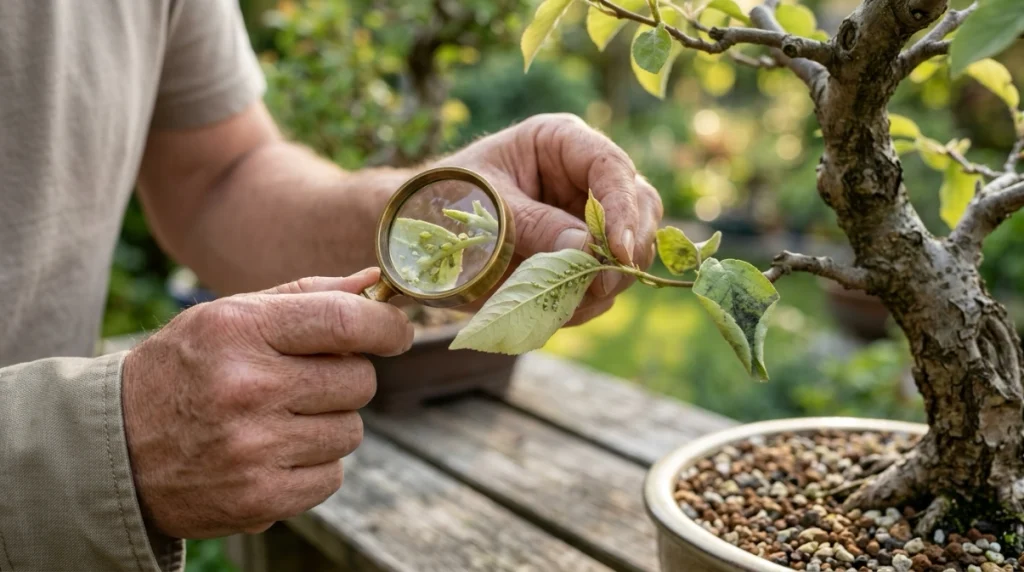
Confirm aphids by looking for both the insects and their feeding signs. Check fresh shoots first, then turn leaves over and inspect branch junctions.
A magnifying lens helps, but many colonies are visible without one. Good side lighting makes pale skins and shiny honeydew easier to see.
Common signs of aphids on bonsai
- Clusters of small insects: Aphids usually gather instead of remaining evenly scattered.
- Sticky honeydew: Leaves, pots, benches, or surfaces below the tree may feel tacky.
- Leaf curling: Feeding around developing tissue can produce twisted or folded leaves.
- Yellowing: Sustained feeding may weaken affected foliage.
- Stunted shoots: Heavily colonized new growth may stop extending normally.
- Sooty coating: Dark sooty mold can grow on sugary honeydew.
- Pale flakes: Shed aphid skins can look like tiny white insects that don’t move.
Aphids vs. other common bonsai pests
Aphids are sometimes confused with scale insects, mealybugs, whiteflies, or spider mites. The following comparison helps narrow the diagnosis before treatment.
| Pest | Typical Appearance | Main Clue | Common Location |
|---|---|---|---|
| Aphids | Soft, pear-shaped, often 2–4 mm | Honeydew, curled growth, visible colonies | New shoots and leaf undersides |
| Scale | Hard or soft bumps attached to tissue | Often appears immobile | Stems, branches, leaf veins |
| Mealybugs | White, cottony or waxy insects | Cotton-like deposits | Leaf joints and sheltered crevices |
| Spider mites | Extremely small mite-like specks | Fine webbing and stippled foliage | Mostly leaf undersides |
Penn State’s guidance on pest problems of indoor plants also notes that aphids, whiteflies, mealybugs, and soft scale can all produce sticky honeydew. Honeydew alone therefore isn’t enough for a final diagnosis.
Look directly at the insect’s body shape whenever possible. A photo enlarged on your phone can make the differences much clearer.
How Much Damage Can Aphids Do to a Bonsai Tree?
A small aphid colony usually isn’t an emergency. A rapidly expanding colony on tender growth can become damaging, especially on a young, weak, recently stressed, or heavily styled bonsai.
The biggest concern is repeated sap feeding on active shoots. That can interfere with the growth you need for branch development, ramification, or recovery.
Minor infestation vs. serious infestation
- Minor: A few aphids appear on one shoot, with no visible leaf distortion.
- Moderate: Several shoot tips contain colonies, and honeydew becomes noticeable.
- Heavy: Numerous shoots are covered, leaves curl or yellow, and new growth becomes distorted.
- Higher risk: The tree is already weakened by drought, root trouble, recent work, or another pest.
Heavy aphid feeding can cause curled leaves, yellowing, stunted shoots, and poor growth. Honeydew can also support sooty mold, leaving a dark coating on affected surfaces.
Sooty mold is usually a secondary symptom rather than the original pest. Reducing the honeydew-producing insects addresses the underlying problem.
Can aphids kill a bonsai?
Aphids alone don’t usually kill an otherwise vigorous tree when detected early. Bonsai deserves closer attention because its canopy and root system are intentionally restricted.
A severe infestation combined with dehydration, root stress, heat, or repeated defoliation can become more serious. Treat the whole tree’s condition, not just the visible insects.
How Do You Get Rid of Aphids on a Bonsai Tree?
Use the least disruptive control that matches the infestation. I prefer to work from physical removal toward labeled sprays instead of reaching for a strong pesticide immediately.
This approach protects the tree while reducing unnecessary exposure to beneficial insects. It also makes it easier to tell whether the first treatment worked.
Step 1: Separate and inspect the tree
- Move the bonsai away from nearby plants when practical, especially in an indoor collection.
- Inspect every shoot tip and unfold curled leaves carefully.
- Check leaf undersides where contact sprays can easily miss colonies.
- Look for ants and examine nearby plants for the same pest.
- Check the tree’s vigor before applying any pesticide or oil.
A stressed tree may react poorly to aggressive treatment. Correct serious watering, heat, or exposure problems at the same time.
Step 2: Remove light infestations physically
A firm stream of water can knock many aphids from foliage. Support delicate branches and shield loose bonsai soil so the spray doesn’t wash substrate from the pot.
- Direct water toward leaf undersides and shoot tips.
- Wipe or crush isolated aphids with your fingers when practical.
- Remove badly distorted leaves only when they no longer contribute useful growth.
- Reinspect hidden shoot junctions after cleaning.
Water removal is especially useful when a colony is caught early. It also washes away some honeydew and makes later inspection easier.
Step 3: Use commercial insecticidal soap when needed
Insecticidal soap can control aphids when the spray directly contacts them. These products have little or no useful residual activity after drying, so coverage matters.
Colorado State University Extension explains that insecticidal soap works best on soft-bodied pests such as aphids but may injure sensitive plants. Follow the product label and confirm that it is suitable for the plant you’re treating.
- Use a labeled product: Choose commercial insecticidal soap intended for plant pests.
- Avoid household detergent recipes: Cleaning products aren’t formulated or labeled as plant pesticides.
- Cover the insects: Reach shoots, stems, and both sides of the leaves.
- Respect the label: Follow dilution, temperature, timing, and repeat-treatment directions.
- Watch sensitive foliage: Tender leaves may react differently between species.
Step 4: Consider horticultural oil or neem-based products
Horticultural oils can suppress aphids through direct contact when the product is labeled for the plant and pest. Oils require careful application because plant sensitivity can change with species, temperature, drought stress, and product formulation.
Neem-derived products also vary. Some contain clarified oils, while others use the active compound azadirachtin, so don’t assume every product works in the same way.
- Read the full pesticide label before application.
- Don’t exceed the labeled concentration.
- Avoid spraying a drought-stressed or overheated tree unless the label specifically permits those conditions.
- Keep spray away from open flowers when pollinators are active.
- Repeat treatment only at the interval stated on the product label.
Step 5: Prune only when it benefits the tree
Removing one badly infested extension can eliminate a dense colony. Don’t sacrifice an important branch merely because a few aphids are present.
Pro tip: Before cutting live shoots that affect the design, consider whether physical cleaning can save the branch. For irreversible structural pruning, get advice from an experienced grower or local bonsai club when you’re uncertain.
What about systemic or broad-spectrum insecticides?
These products may control aphids, but they aren’t my first choice for a routine bonsai infestation. Some broad-spectrum products can also harm predatory insects that naturally suppress aphids.
Systemic insecticides can carry additional pollinator concerns, especially on flowering plants. Use any pesticide only where legally permitted and exactly according to its current label.
Section Takeaway: Start with identification and physical removal, then escalate to a labeled low-risk product if aphids persist. Thorough coverage and follow-up inspection matter more than using the strongest treatment available.
Why Do Aphids Keep Coming Back?
Recurring aphids usually mean some part of the colony survived or new aphids reached the tree. A single treatment isn’t always enough because hidden insects can escape contact.
Aphid populations can also increase quickly during favorable growing conditions. Fresh bonsai shoots give survivors another feeding site soon after treatment.
You missed protected aphids
Curled leaves can shelter aphids from water and contact sprays. Dense pads and tight branch junctions create similar hiding places.
- Open curled foliage gently during inspection.
- Look underneath every affected leaf.
- Check the newest two or three shoot sections closely.
- Inspect neighboring bonsai before returning the treated tree to its original position.
The treatment had no residual action
Insecticidal soap and many horticultural oils work mainly when they directly wet the pest. Aphids that escape coverage may remain alive after the treated foliage dries.
This doesn’t mean the product failed. It means contact treatments depend on coverage and any repeat applications allowed by the label.
Ants may be supporting the colony
Ants are attracted to the sugary honeydew aphids produce. They can protect aphid colonies from predators, so steady ant traffic deserves attention.
Look for the route ants use to reach the bonsai bench, pot, or trunk. Manage the ant problem with methods appropriate for your growing area rather than applying random chemicals to the bonsai.
New winged aphids arrived
Some aphids develop wings and disperse when populations become crowded or environmental conditions change. An outdoor bonsai can therefore be recolonized even after you removed the original infestation.
Nearby weeds, garden plants, and other bonsai can act as hosts. Treating one tree while ignoring obvious colonies around it often leads to another outbreak.
The tree is producing excessive soft growth
Overfeeding can encourage rapid, succulent growth. Aphids often favor fresh nitrogen-rich tissue, so an unnecessarily aggressive fertilizer schedule can work against pest management.
Don’t stop fertilizing a healthy bonsai simply because aphids appeared. Instead, follow a balanced feeding program appropriate for the species, season, and development goal.
Section Takeaway: Repeated aphids are usually a monitoring problem, a coverage problem, or a reinfestation problem. Recheck the entire growing area rather than repeatedly spraying the same visible leaves.
How Can You Prevent Aphids on Bonsai Trees?
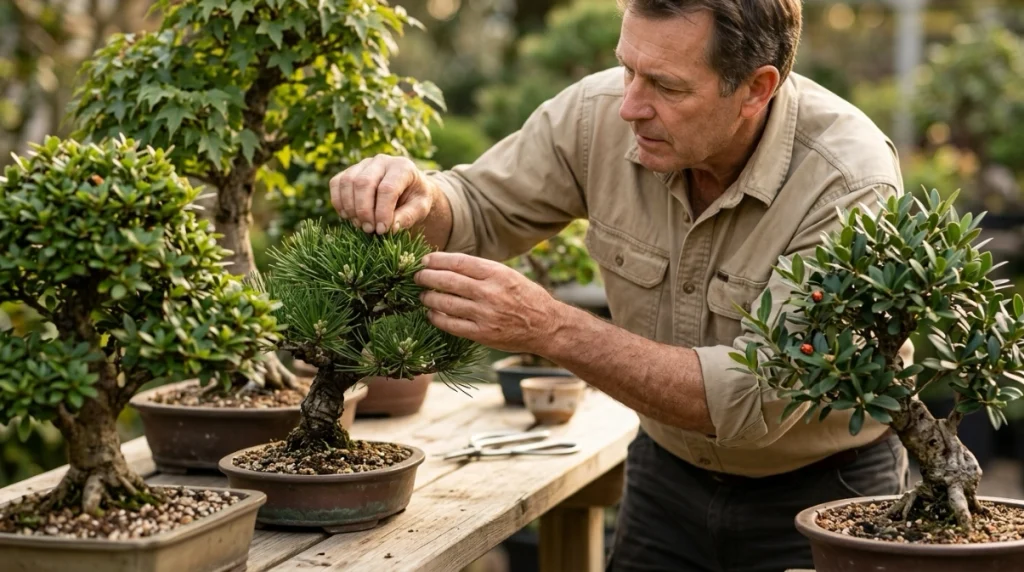
You can’t guarantee an outdoor bonsai will never encounter aphids. You can make infestations much easier to catch and much harder to establish.
Inspect new growth regularly
Focus on buds, tender shoot tips, leaf undersides, and branch junctions during active growth. Early colonies are far easier to remove than colonies hidden inside distorted foliage.
- Inspect newly purchased trees before placing them with your collection.
- Check fresh spring growth every few days during active pest periods.
- Look for honeydew before waiting for obvious leaf damage.
- Photograph suspicious pests so you can compare changes later.
Keep the bonsai vigorous without pushing soft growth
Healthy trees tolerate minor feeding better than stressed trees. Give each species suitable light, watering, drainage, and seasonal care.
Avoid fertilizing harder simply to force faster recovery from an aphid problem. Correct the pest issue first and maintain the normal feeding program for the tree.
Protect beneficial insects outdoors
Lady beetles, lacewing larvae, hoverfly larvae, and parasitic wasps can reduce aphid populations naturally. Unnecessary broad-spectrum pesticide use may remove these useful predators along with the target pest.
As of 2026, integrated pest management remains the sensible approach: identify the pest, monitor its severity, use physical controls first, and choose targeted products only when needed.
Keep tools and growing areas clean
Aphids don’t usually spread because pruning tools are dirty, but clean growing practices make pest inspection easier. Remove fallen leaves, weeds, and unnecessary plant debris around bonsai benches.
- Keep benches easy to inspect.
- Control nearby weeds that host pests.
- Separate newly acquired plants for observation when possible.
- Clean sticky honeydew from pots and benches.
- Check neighboring plants whenever one bonsai develops aphids.
The goal isn’t a sterile growing area. It’s a collection where pests are noticed before they interfere with the tree’s health or design.
FAQs About Aphids on Bonsai Trees
What kills aphids on bonsai trees?
Light infestations can often be reduced with a firm water spray or manual removal. Persistent colonies may require a commercial insecticidal soap, horticultural oil, or another pesticide labeled for both aphids and the plant being treated.
Can I use dish soap for aphids on bonsai?
It’s safer to use a commercial insecticidal soap instead of household dish detergent. Household cleaning products vary in ingredients and concentration, while registered insecticidal soaps are formulated for use on plants and provide clear label directions.
Should I remove leaves covered in aphids?
Remove a leaf or shoot only when it is badly damaged or expendable. If the foliage remains useful, washing or treating the aphids usually preserves more energy and avoids unnecessary pruning.
Why are there ants on my aphid-infested bonsai?
Aphids produce sweet honeydew that attracts ants. Ants may protect aphid colonies from natural predators, so repeated ant traffic can be a clue that aphids remain somewhere on the tree.
Do aphids live in bonsai soil?
Most aphids noticed on bonsai feed above the soil on leaves and stems. Some aphid species have unusual life cycles involving roots, so identify the actual pest if insects appear around the root zone rather than assuming they are ordinary foliage aphids.
Will aphids go away on their own?
Small outdoor populations may decline because of weather or natural predators. Don’t depend on that outcome when colonies are growing, leaves are distorting, or the bonsai is already stressed; monitor the tree and intervene when damage increases.
How often should I check a bonsai after treating aphids?
Reinspect the tree frequently during the following days and continue checking new growth. Follow the pesticide label for any repeat application rather than spraying on an arbitrary schedule.
The main takeaway: Aphids on bonsai trees are manageable when you catch them early. Confirm the insect, remove what you can physically, protect the tree from unnecessary stress, and use labeled treatments only when the colony justifies them.
Make pest inspection part of your normal watering and grooming routine. A few seconds spent checking new shoots can prevent a small colony from becoming a much larger problem.
