Olive Bonsai Winter Care: Cold Tolerance, Light and Water

This post contains affiliate links. As an Amazon Associate, OurBonsai earns from qualifying purchases at no extra cost to you. Read our disclosure.
In this guide
- How cold can an olive bonsai handle?
- Olive bonsai winter care checklist
- Why a cool winter rest helps
- The best winter spots
- Light
- Watering an olive bonsai in winter
- Fertilizer, pruning and repotting
- Common winter problems
- Preparing your olive for winter
- Bringing your olive back outside in spring
- Olive as an evergreen bonsai
- Olive winter care by climate
- Common olive winter mistakes
- FAQ: olive bonsai winter care
- Final thoughts
Olive bonsai winter care is about giving a Mediterranean tree the winter it would get in its homeland: cool, bright and fairly dry, with only light frosts. The olive (Olea europaea) is an evergreen tree with small silvery leaves and wonderfully gnarled bark, which makes it a popular bonsai. It is tougher than many people think, handling light frost, but a shallow pot exposes its roots to deeper cold than a tree in the ground. Get the balance right and your olive will stay healthy and may even flower in spring.
This guide covers how cold an olive bonsai can handle, where to keep it, how to water and how much light it needs.
How cold can an olive bonsai handle?
Olive trees in the ground survive brief frosts down to about -7 to -10°C (19 to 14°F), depending on the variety and how long the cold lasts. In a pot, the roots are more exposed.
| Temperature | What to do |
|---|---|
| Above 2°C (36°F) | Keep outdoors in full sun |
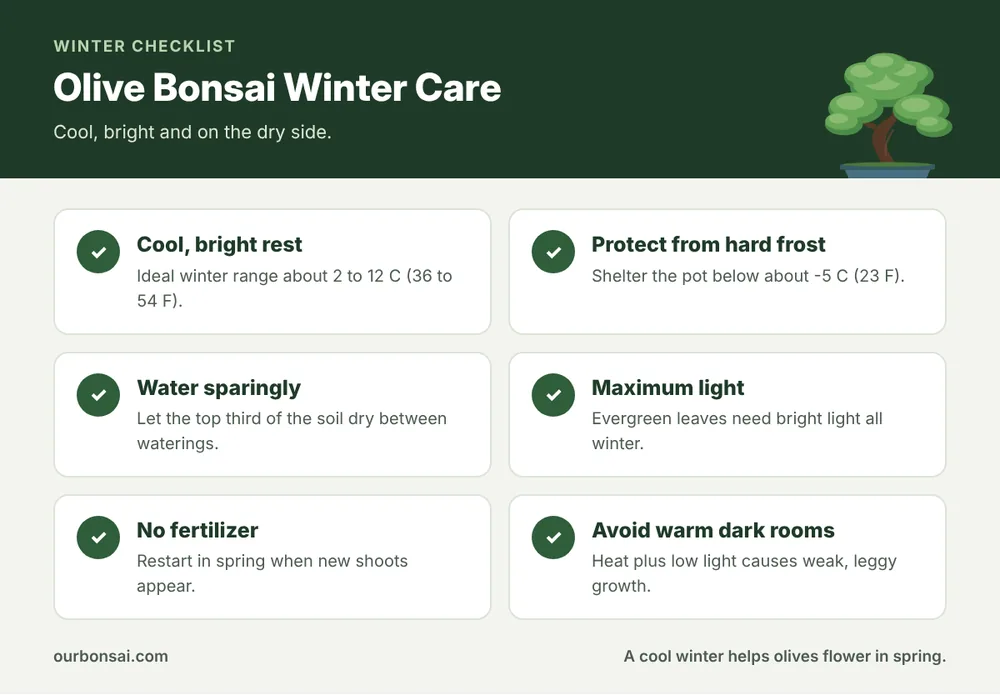
| 0 to -5°C (32 to 23°F) | Short light frosts are fine. Shelter from wind |
| Below -5°C (23°F) | Move to a cold greenhouse, porch or bright unheated room |
| Long freezes | Keep frost-free under cover, ideally just above freezing |
Check your local winter lows on the USDA plant hardiness map. In mild coastal or Mediterranean-type climates, an olive bonsai can stay outside all winter.
Olive bonsai winter care checklist
Why a cool winter rest helps
In the Mediterranean, olives experience cool winters with nights near freezing. This cool period helps the tree rest and, importantly, is what triggers flowering. Many olive varieties need a few weeks of cool temperatures, roughly below 10°C (50°F), to set flower buds. An olive kept in a warm living room all winter often grows weak, pale shoots and rarely flowers.
The best winter spots
- Outdoors in mild climates: A sunny, sheltered spot against a south-facing wall.
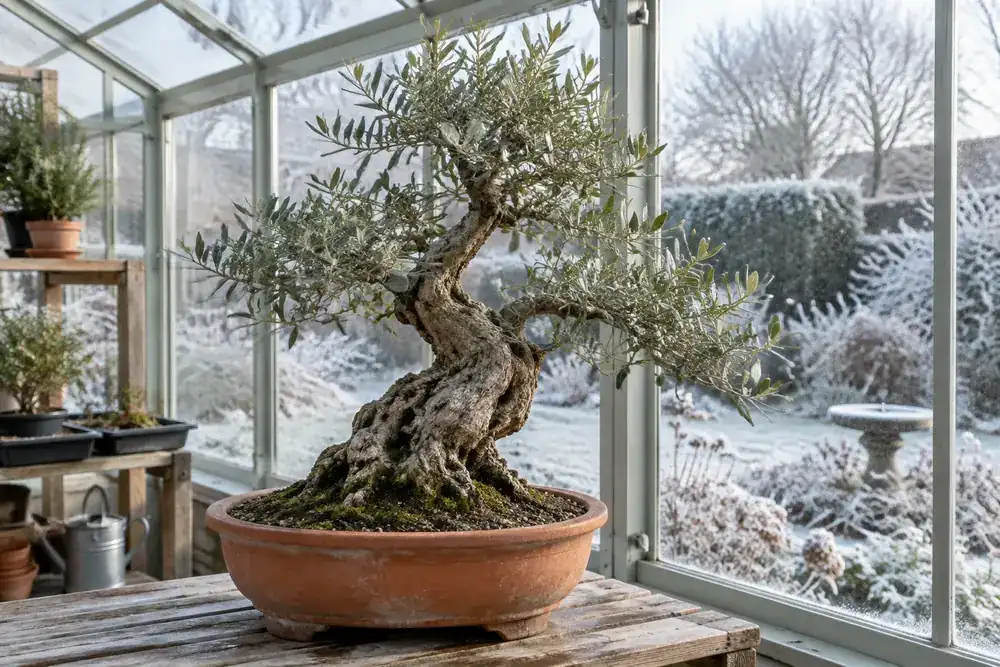
- Unheated greenhouse or cold frame: Ideal in colder regions. Bright, cool and frost-free.
- Glassed porch or conservatory: Good if it stays cool and bright.
- Indoors: Only if you have no cooler option. Choose the coolest, brightest room, right by a sunny window, away from radiators. Add a grow light if the room is dim; our guide to the best grow lights for bonsai can help.
For more ideas, see our bonsai placement guide.
Light
Olive is evergreen and loves sun. Even in winter it needs as much light as possible. Low light causes leaf drop and long, weak shoots. If your tree is under cover, choose the brightest spot available. Our guide on how much light a bonsai tree needs explains how to judge it.
Watering an olive bonsai in winter
Olives are drought-tolerant and dislike wet roots, especially in cold weather.
- Let the top third of the soil dry before watering.
- Water thoroughly, then let it drain completely.
- In cool conditions, this might be once every one to two weeks.
- Do not water a frozen pot.
A gritty, fast-draining soil is essential. A mix with plenty of pumice or lava rock works well. Our guide to bonsai soil mix ratios helps you make one.
Fertilizer, pruning and repotting
- Fertilizer: None in winter. Start again in spring when new shoots appear.
- Pruning: Olive responds well to pruning and buds back on old wood. Do major pruning in late winter or early spring, just before growth starts. Light trimming can be done through the growing season.
- Repotting: Spring, when the weather warms and the tree starts growing.
- Wiring: Spring and summer. Olive branches become stiff with age.
Common winter problems
- Leaf drop: Usually low light, a warm dark room or wet roots.
- Pale, long shoots: Too warm with too little light.
- Black or brown leaf tips: Frost damage or cold, drying wind.
- Scale insects: Common on olives, especially indoors. Look for small brown bumps on stems and leaf undersides. Our guide to scale on bonsai trees explains how to treat them.
Preparing your olive for winter
- Keep it outside in full sun through autumn so it hardens off.
- Reduce watering as nights cool.
- Stop fertilizing in early autumn.
- Check carefully for scale and other pests before moving it under cover.
- Prepare your winter spot in advance so you can move the tree quickly when frost is forecast.
You can protect it on frosty nights with a frost protection fleece if you leave it outdoors in a borderline climate.
Bringing your olive back outside in spring
Once the risk of frost below about -2°C (28°F) has passed, move the tree back to its sunny outdoor spot. If it spent winter indoors, reintroduce it to full sun gradually over one to two weeks to avoid scorching the leaves. Increase watering as growth speeds up, and start feeding when new shoots appear.
Olive as an evergreen bonsai
Olive is one of the few broadleaf evergreens that suits both outdoor and sheltered growing. Our guide to types of evergreen bonsai trees lists others. The Wikipedia page on Olea europaea has more on its natural range and climate.
Olive winter care by climate
- Mediterranean and mild coastal climates: Leave the tree outdoors all year in full sun. Water sparingly in winter rains and make sure the pot drains well.
- Cool temperate climates with regular frost: Keep it outdoors until the first hard frost is forecast, then move it to a cold greenhouse or bright, unheated room until spring.
- Cold continental climates: Plan on a bright, frost-free shelter from late autumn to mid-spring. A grow light helps if the shelter is dim.
Common olive winter mistakes
- Keeping the tree in a warm, dim living room all winter.
- Watering on a weekly schedule regardless of the soil.
- Leaving it out during a long, hard freeze.
- Moving it straight from indoors into full spring sun.
- Ignoring scale insects until the tree is heavily infested.
FAQ: olive bonsai winter care
Can olive bonsai stay outside in winter?
In mild climates with only light frosts, yes. Where temperatures fall below about -5°C (23°F) for long, move it to a bright, frost-free spot.
Can I keep my olive bonsai indoors in winter?
You can, but a cool, bright room is far better than a warm one. Warmth plus low light weakens olives.
Why is my olive bonsai dropping leaves in winter?
Usually not enough light, roots kept too wet, or the shock of moving into warm indoor air.
Will my olive bonsai flower?
Mature olives can flower in late spring if they get a cool winter rest and plenty of sun.
Final thoughts
Olive bonsai winter care is simple once you think Mediterranean: keep the tree cool, bright and slightly dry, and protect it from hard frost. An unheated greenhouse or sunny, sheltered spot is ideal, while a warm, dark living room is the worst choice. Do this, and your olive will come into spring strong and ready to grow. For other trees that winter outdoors, see our guide to outdoor bonsai tree types.