How Often to Water Chinese Elm Bonsai (Indoor & Outdoor)

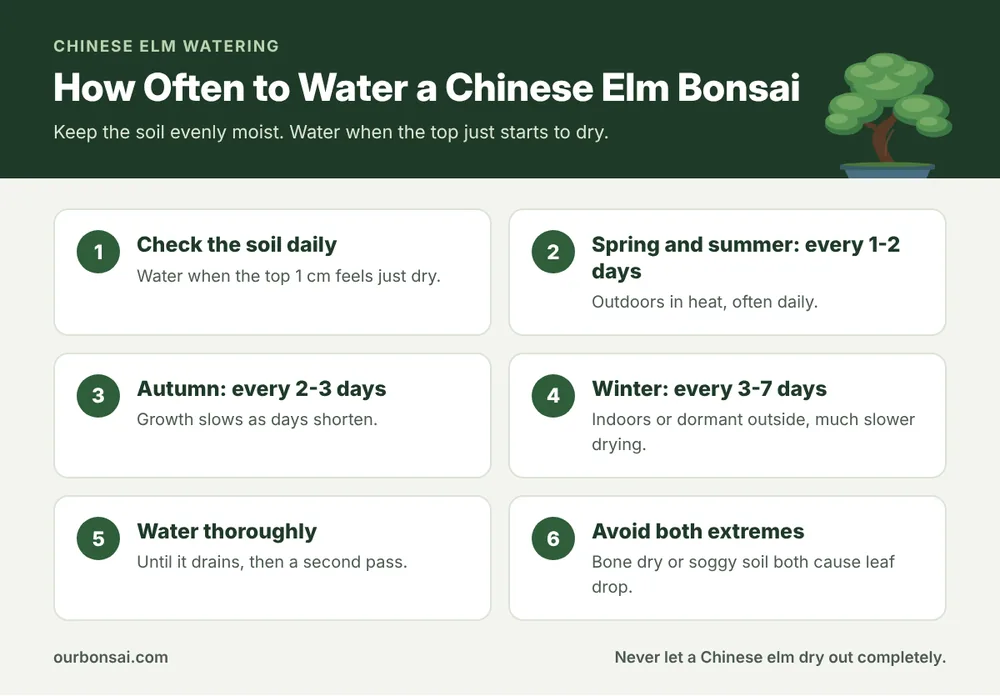
If you are wondering how often to water chinese elm bonsai, the short answer is: check the soil every day and water when the top centimeter is just starting to dry. In spring and summer that is usually every one to two days, and daily outdoors in hot weather. In autumn and winter, when growth slows, it may be every three to seven days. Chinese elm likes evenly moist soil. It tolerates small mistakes better than most bonsai, but a root ball that dries out completely causes quick leaf drop.
In this guide
- Why Chinese elm needs steady moisture
- How often to water chinese elm bonsai by season
- How to tell when your Chinese elm needs water
- How to water a Chinese elm bonsai
- Indoor vs outdoor Chinese elm
- Winter watering
- The right soil makes watering easier
- Water quality for Chinese elm
- Signs of overwatering and underwatering
- Common watering mistakes
- Watering after repotting and pruning
- FAQ: how often to water chinese elm bonsai
- Final thoughts
The Chinese elm (Ulmus parvifolia) is one of the most popular bonsai trees, partly because it is so forgiving. It can live outdoors in most temperate climates and indoors in a bright window, which is why watering advice varies so much. This guide covers both situations, explains how to tell when your tree needs water and lists the mistakes to avoid.
Why Chinese elm needs steady moisture
Chinese elms grow fast and carry dense canopies of small leaves. In the growing season, they use a lot of water. Their fine roots fill the pot quickly, and a root-bound elm can dry out in a single afternoon.
At the same time, constantly wet soil causes problems. Roots without oxygen begin to rot, and the tree responds with yellow leaves and leaf drop. The goal is the middle ground: soil that is damp, never dusty and never waterlogged.
How often to water chinese elm bonsai by season
| Season | Outdoors | Indoors (bright window) |
|---|---|---|
| Spring | Every 1 to 2 days | Every 2 to 3 days |
| Summer | Daily, sometimes twice | Every 1 to 2 days |
| Autumn | Every 2 to 3 days | Every 2 to 4 days |
| Winter | Every 4 to 7 days (dormant) | Every 3 to 5 days |
These are starting points. Pot size, soil mix, sun, wind and indoor heating all change the rhythm. Always check before watering.
How to tell when your Chinese elm needs water
Finger test
Push a finger about 1 cm into the soil near the edge of the pot. If it feels just dry, water. If it feels damp, wait.
Chopstick test
Push a wooden chopstick into the soil and leave it for ten minutes. A dark, damp chopstick means there is still water in the root zone.
Pot weight
Lift the pot right after watering and again when it seems dry. You will quickly learn the difference.
Moisture meter
A soil moisture meter is a helpful backup while you learn, especially for indoor trees.
How to water a Chinese elm bonsai
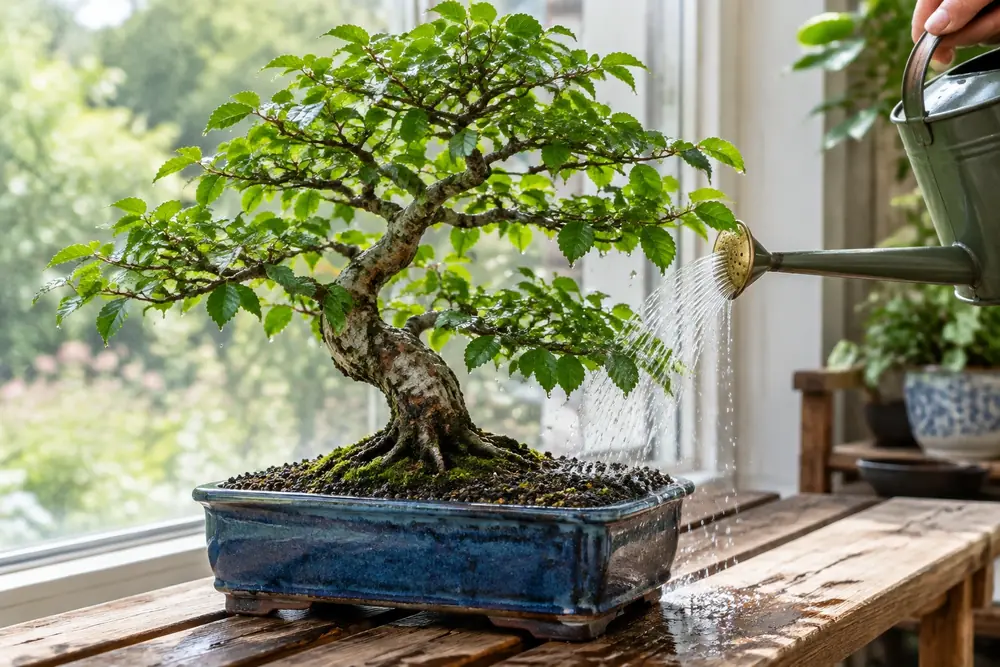
- Use a watering can with a fine rose, such as a Japanese watering can for bonsai, so the soil is not washed out.
- Water over the whole soil surface until water runs from the drainage holes.
- Wait a minute or two, then water again so the soil absorbs it fully.
- Let the pot drain. Never leave it standing in a full saucer.
- If the soil has dried out badly and water runs straight off, soak the pot in a basin for ten minutes, then drain.
Indoor vs outdoor Chinese elm
Outdoors
In most temperate climates, Chinese elm does best outdoors. It gets more light, grows stronger and has a natural winter rest. Outdoors, the soil dries faster from sun and wind, so check daily from spring to autumn. In summer heat, small pots may need water twice a day. Our guide to watering bonsai in summer has tips for heat waves.
Indoors
Many Chinese elms are sold as indoor bonsai. Indoors, they dry more slowly, but heating makes the air dry and can dry the soil surface quickly while the bottom stays wet. Check daily, use a humidity tray and keep the tree in your brightest window. Our Chinese elm bonsai care guide covers indoor placement and light in detail.
Winter watering
Outdoor Chinese elms go dormant and may drop some or all leaves in cold winters. Water when the soil starts to dry, preferably on mild days, and protect the roots from hard frost by placing the pot on the ground in a sheltered spot. Never let a dormant tree dry out completely.
Indoor elms keep growing slowly through winter. They need less water than in summer, but central heating can dry them faster than you expect. Our guide to watering indoor bonsai in winter explains how to balance this.
The right soil makes watering easier
Chinese elm grows best in a gritty bonsai mix that drains quickly but holds some moisture. Dense potting soil stays wet in the middle of the pot and is the main cause of overwatering problems. Our guide to the best soil for Chinese elm bonsai explains good mixes.
Water quality for Chinese elm
Chinese elm is not fussy about water. Ordinary tap water is fine in most areas. If your water is very hard, you may notice white crust on the soil surface and pot over time. Flush the pot every month or two by watering slowly for a couple of minutes with rain water or filtered water, letting it run freely through the drainage holes. This washes out excess salts from water and fertilizer. Avoid water from a water softener, which contains sodium that harms roots. Room-temperature water is kindest to indoor elms, especially in winter.
Signs of overwatering and underwatering
| Sign | Likely cause | What to do |
|---|---|---|
| Leaves wilt, soil dry | Underwatering | Water now, check daily |
| Sudden leaf drop after a hot day | Root ball dried out | Soak the pot, water more often |
| Crispy brown leaf edges | Repeated drying, dry air | Water evenly, add humidity |
| Yellow leaves, soil wet for days | Overwatering | Water less, check drainage |
| Sour smell, dark roots | Root rot | Repot into fresh gritty soil |
Common watering mistakes
- Watering on a fixed schedule. Check daily instead.
- Small sips. Always water until it drains.
- Letting it dry out in summer. Elms drop leaves fast when dry.
- Dense potting soil. Stays wet and suffocates roots.
- Watering a dormant outdoor tree as in summer. It needs much less.
Watering after repotting and pruning
After repotting, water thoroughly once and keep the tree out of strong sun and wind for two weeks. The soil may dry more slowly at first because there are fewer roots, so check carefully before watering again. After heavy pruning or defoliation, the tree also uses less water until new leaves appear. In both cases, avoid soggy soil while still keeping the root ball from drying out.
FAQ: how often to water chinese elm bonsai
Should I water my Chinese elm bonsai every day?
In summer, often yes, especially outdoors. In spring, autumn and winter, usually less. Always check the soil first.
Can I mist my Chinese elm instead of watering?
No. Misting adds a little humidity but does not water the roots. Water the soil thoroughly.
Why is my Chinese elm dropping leaves after watering?
Either it dried out before you watered, or it is being kept too wet. Check how damp the soil is a day after watering.
How often should I water an indoor Chinese elm in winter?
Usually every three to five days, but heating changes everything. Check the soil daily.
Final thoughts
So, how often to water chinese elm bonsai? Check daily, water when the topsoil is just dry, and expect every one to two days in the growing season and every few days in winter. Use gritty soil, water thoroughly and never let the root ball dry out completely. For more on this species, see the Wikipedia article on Ulmus parvifolia and our guide to the best Chinese elm bonsai fertilizer.